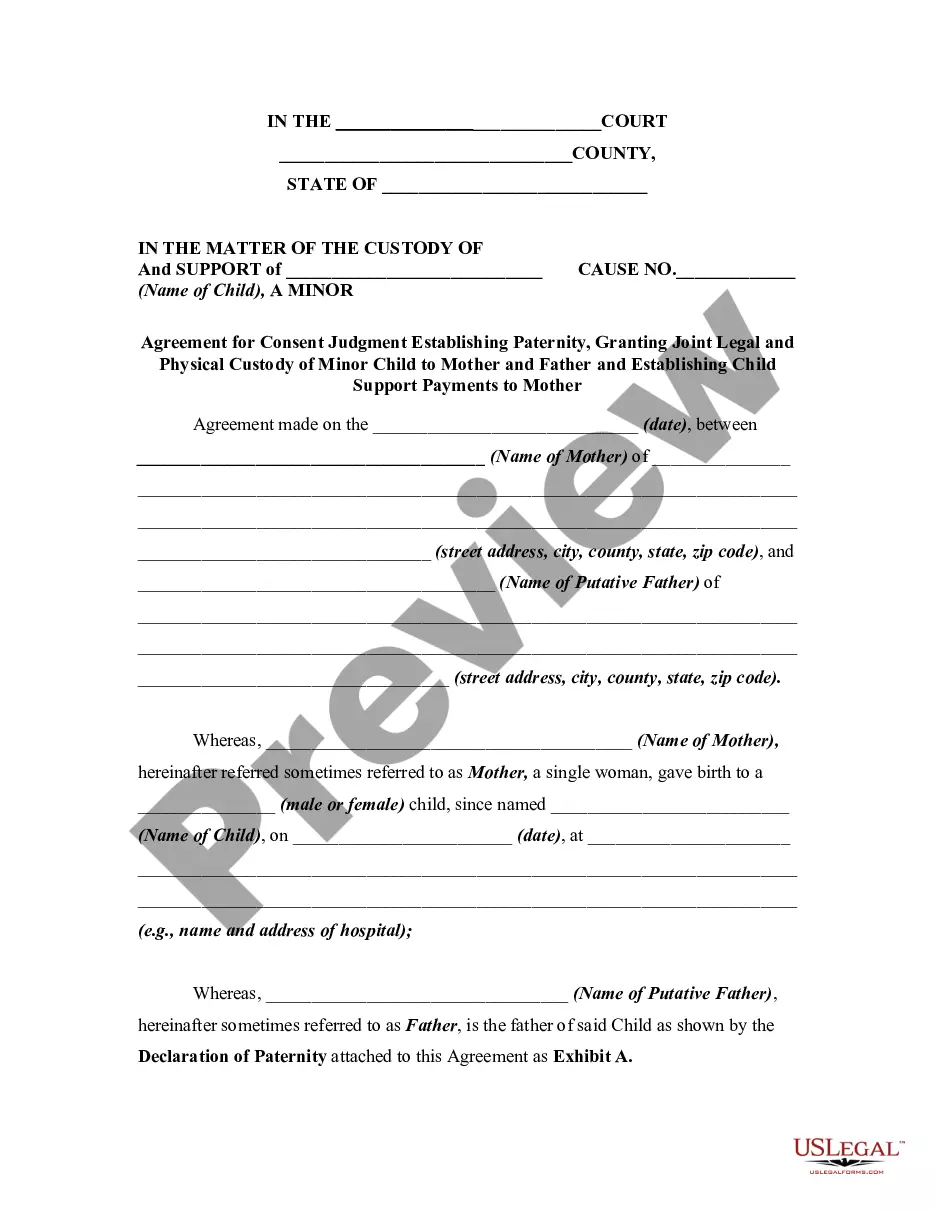
Child Custody County With Restraining Order
Description
Get your form ready online
Our built-in tools help you complete, sign, share, and store your documents in one place.
Make edits, fill in missing information, and update formatting in US Legal Forms—just like you would in MS Word.
Download a copy, print it, send it by email, or mail it via USPS—whatever works best for your next step.
Sign and collect signatures with our SignNow integration. Send to multiple recipients, set reminders, and more. Go Premium to unlock E-Sign.
If this form requires notarization, complete it online through a secure video call—no need to meet a notary in person or wait for an appointment.
We protect your documents and personal data by following strict security and privacy standards.

Make edits, fill in missing information, and update formatting in US Legal Forms—just like you would in MS Word.

Download a copy, print it, send it by email, or mail it via USPS—whatever works best for your next step.

Sign and collect signatures with our SignNow integration. Send to multiple recipients, set reminders, and more. Go Premium to unlock E-Sign.

If this form requires notarization, complete it online through a secure video call—no need to meet a notary in person or wait for an appointment.

We protect your documents and personal data by following strict security and privacy standards.
Looking for another form?






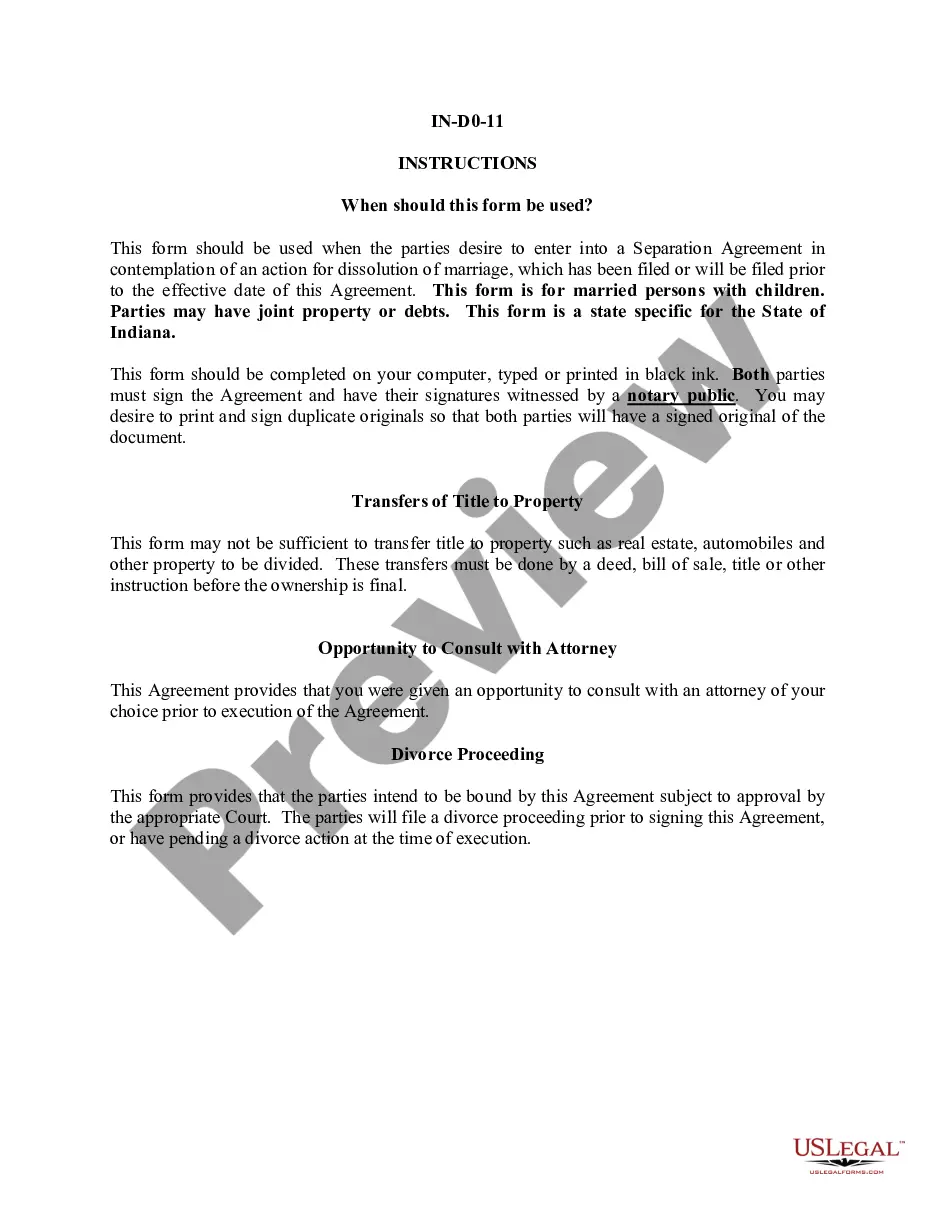



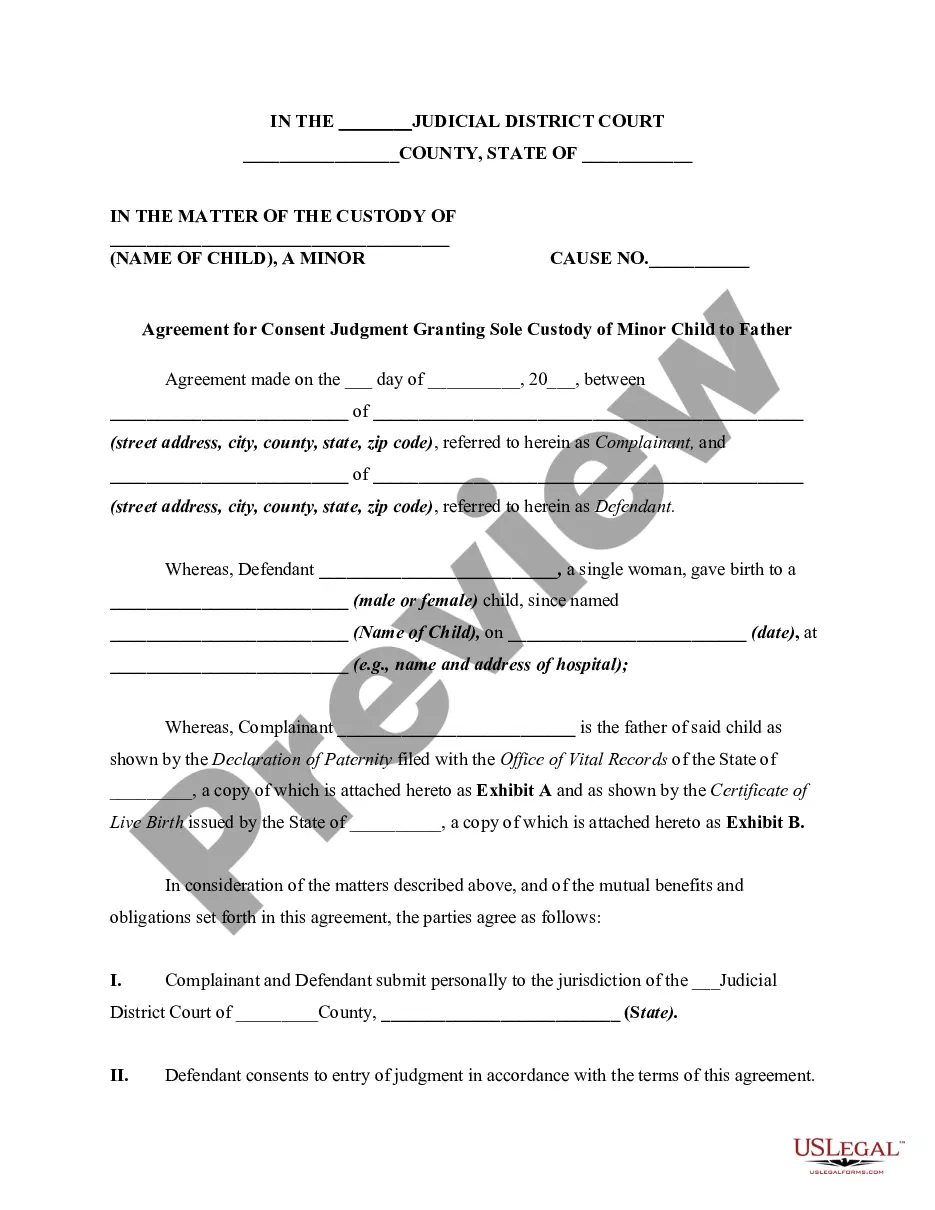
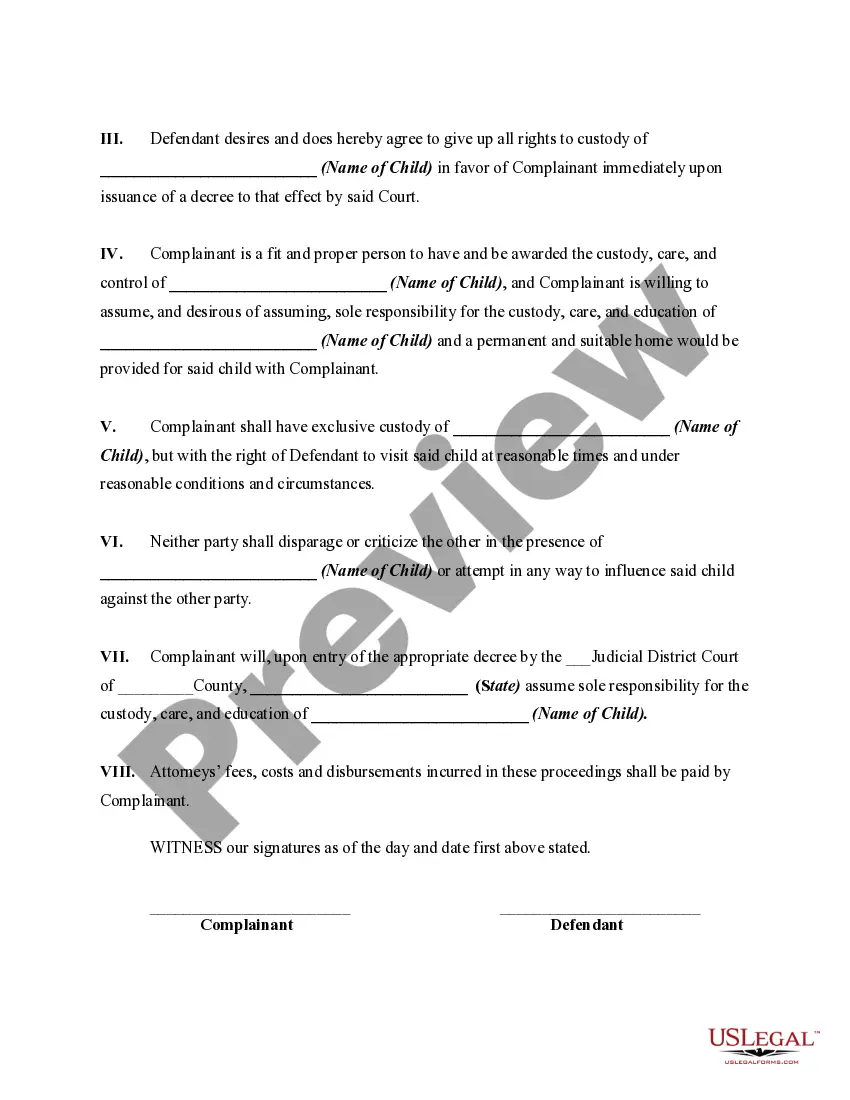
How to fill out Agreement For Consent Judgment Granting Sole Custody Of Minor Child To Father?
Locating a reliable source for the latest and pertinent legal templates is a significant part of navigating bureaucracy. Selecting the appropriate legal documents requires precision and meticulousness, which is why it is essential to obtain samples of Child Custody County With Restraining Order solely from trustworthy sources, such as US Legal Forms. An incorrect template will squander your time and prolong the issue you are facing. With US Legal Forms, you have minimal concerns. You can access and review all the details regarding the document’s application and suitability for your situation and in your jurisdiction.
Consider the following steps to finalize your Child Custody County With Restraining Order.
Once you have the form on your device, you can modify it using the editor or print it out and complete it manually. Eliminate the stress associated with your legal paperwork. Browse the vast US Legal Forms library to discover legal templates, assess their applicability to your situation, and download them instantly.
- Use the catalog navigation or search bar to locate your template.
- Examine the form’s description to determine if it fulfills the requirements of your state and locality.
- Review the form preview, if available, to confirm that the template is what you are seeking.
- Return to the search and find the appropriate document if the Child Custody County With Restraining Order doesn’t meet your specifications.
- If you are confident about the form’s applicability, download it.
- If you are a registered user, click Log in to verify and access your chosen templates in My documents.
- If you do not have an account yet, click Buy now to acquire the template.
- Choose the pricing option that fits your requirements.
- Proceed to the registration to complete your purchase.
- Conclude your purchase by selecting a payment method (credit card or PayPal).
- Choose the document format for downloading Child Custody County With Restraining Order.
Form popularity
FAQ
Both forms of legal action prohibit contact by one party to the other. One of the main differences is that restraining orders often last up to one year and are temporary. No-contact agreements are binding contracts that can be removed only by the district attorney or the judge who is working the case.
Known as a protective order under the Texas Family Code, a restraining order is an official court document that orders the abuser to avoid contact with the victim or risk facing legal consequences, such as contempt of court. Its purpose is to protect victims from further abuse.
A Temporary Restraining order is signed without any type of hearing or a chance for both sides to present their case to the judge. Therefore, it is both limited in time and scope. A Temporary Restraining Order cannot set out any orders for child custody, child support, or spousal support.
The Texas Family Code permits courts to issue emergency child custody orders under certain circumstances. Specifically, the court may issue an ex parte order, which is an order issued without notice or a hearing, if it deems such an order necessary for the protection of a child.
If one parent keeps a child away from the other parent when there is not a court order, there is no way to force visitation to happen. Without a court order, neither parent can file an enforcement action. An enforcement action cannot be used to enforce an informal agreement between the parents.