Corporate Dividend Policy With Answers
Description
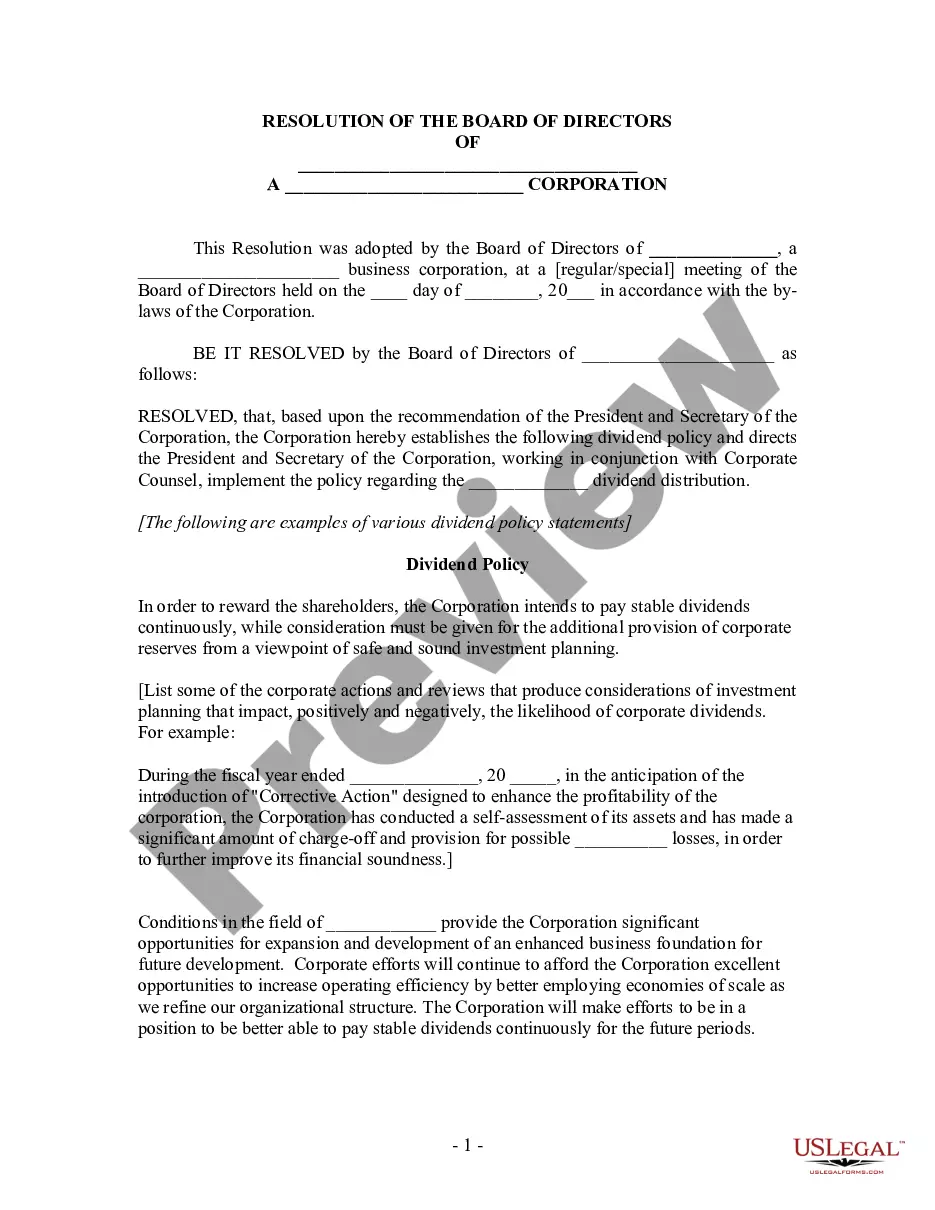
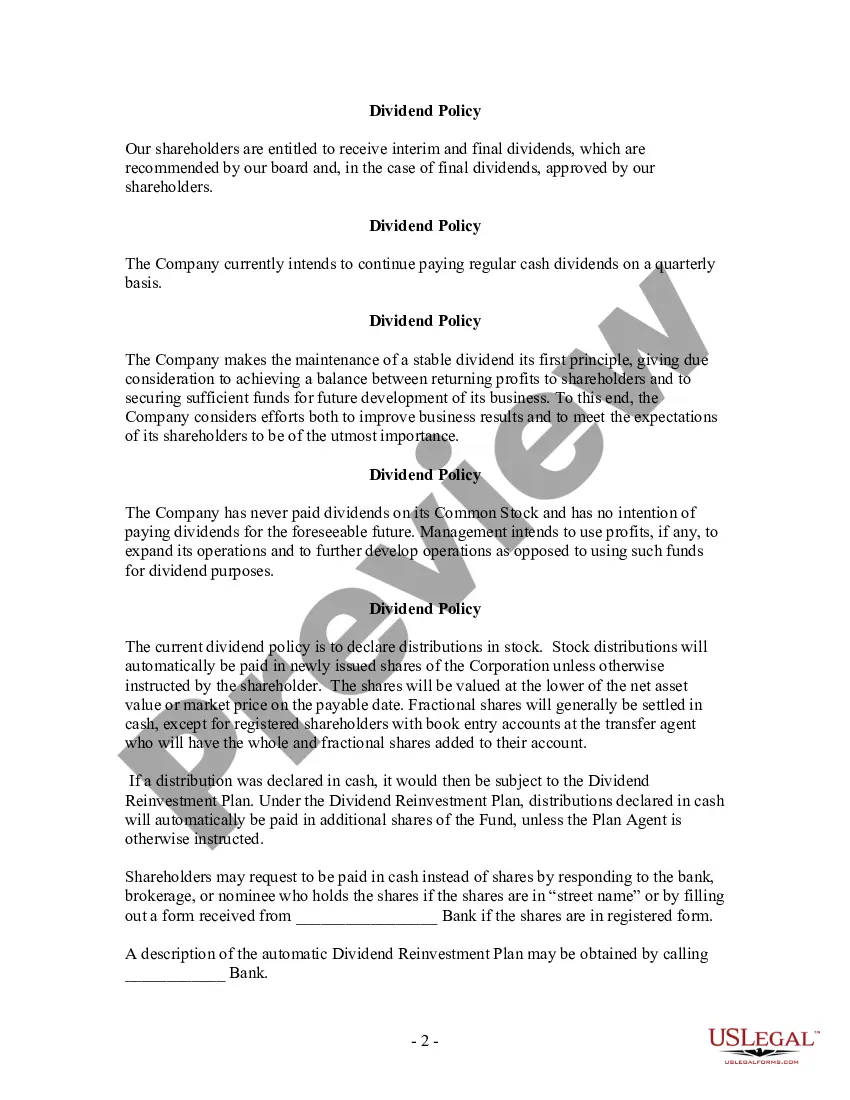
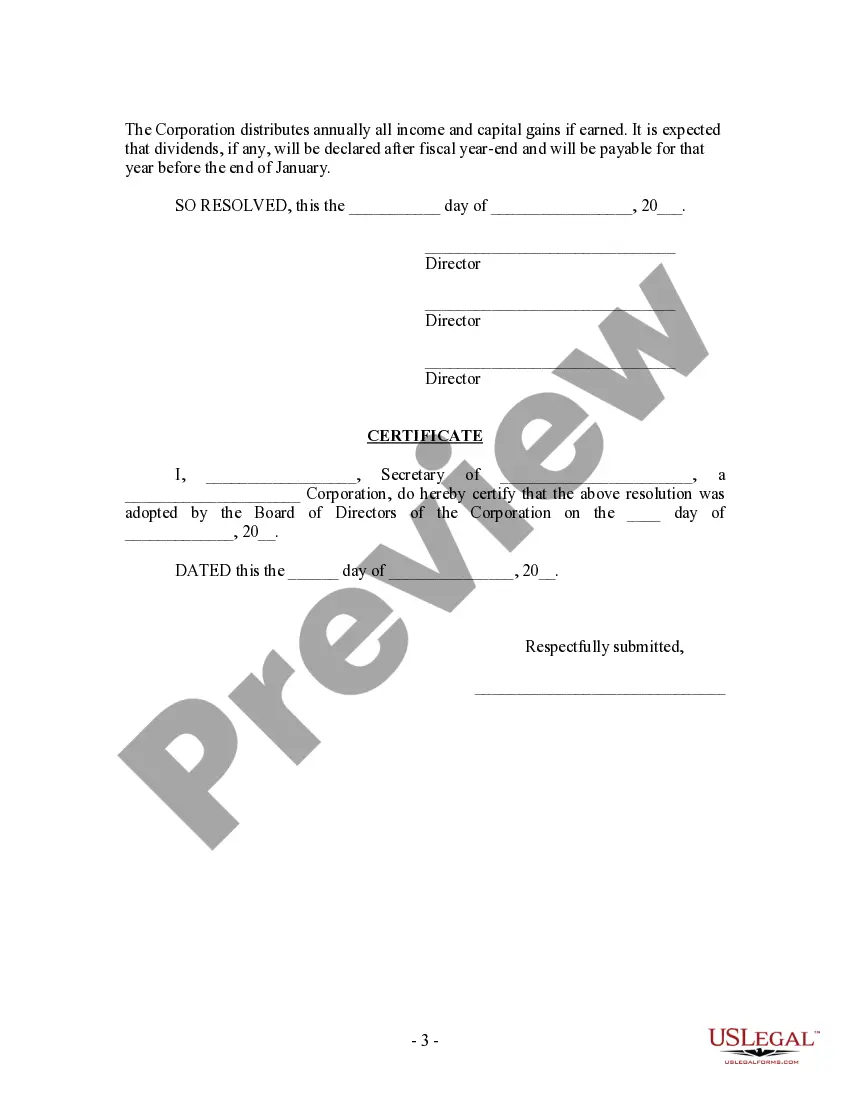
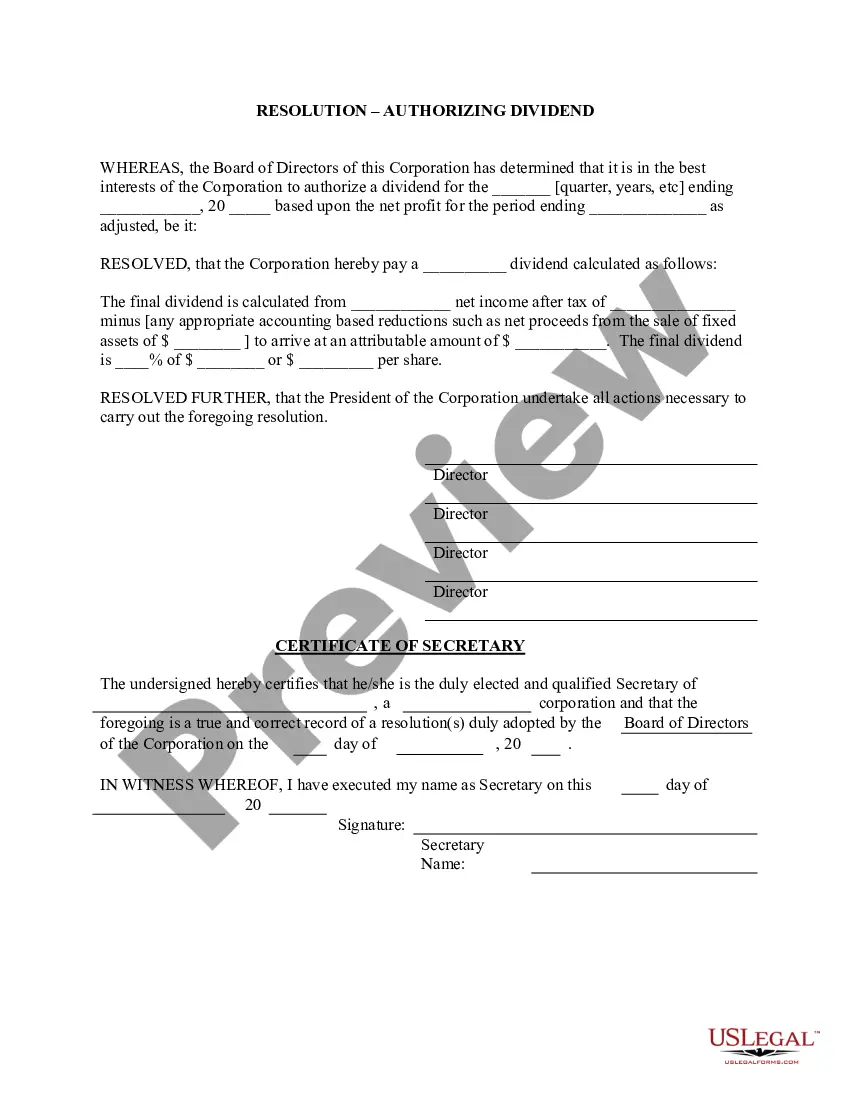
Get your form ready online
Our built-in tools help you complete, sign, share, and store your documents in one place.
Make edits, fill in missing information, and update formatting in US Legal Forms—just like you would in MS Word.
Download a copy, print it, send it by email, or mail it via USPS—whatever works best for your next step.
Sign and collect signatures with our SignNow integration. Send to multiple recipients, set reminders, and more. Go Premium to unlock E-Sign.
If this form requires notarization, complete it online through a secure video call—no need to meet a notary in person or wait for an appointment.
We protect your documents and personal data by following strict security and privacy standards.

Make edits, fill in missing information, and update formatting in US Legal Forms—just like you would in MS Word.

Download a copy, print it, send it by email, or mail it via USPS—whatever works best for your next step.

Sign and collect signatures with our SignNow integration. Send to multiple recipients, set reminders, and more. Go Premium to unlock E-Sign.

If this form requires notarization, complete it online through a secure video call—no need to meet a notary in person or wait for an appointment.

We protect your documents and personal data by following strict security and privacy standards.
Looking for another form?








How to fill out Dividend Policy - Resolution Form - Corporate Resolutions?
Getting a go-to place to access the most recent and appropriate legal templates is half the struggle of dealing with bureaucracy. Discovering the right legal documents requirements precision and attention to detail, which explains why it is vital to take samples of Corporate Dividend Policy With Answers only from reliable sources, like US Legal Forms. An improper template will waste your time and delay the situation you are in. With US Legal Forms, you have very little to worry about. You can access and check all the information regarding the document’s use and relevance for the circumstances and in your state or county.
Consider the following steps to finish your Corporate Dividend Policy With Answers:
- Utilize the library navigation or search field to find your template.
- View the form’s information to ascertain if it fits the requirements of your state and area.
- View the form preview, if there is one, to ensure the template is definitely the one you are searching for.
- Return to the search and locate the right document if the Corporate Dividend Policy With Answers does not fit your requirements.
- When you are positive about the form’s relevance, download it.
- When you are an authorized customer, click Log in to authenticate and access your picked forms in My Forms.
- If you do not have a profile yet, click Buy now to obtain the form.
- Pick the pricing plan that suits your needs.
- Go on to the registration to complete your purchase.
- Complete your purchase by choosing a payment method (bank card or PayPal).
- Pick the document format for downloading Corporate Dividend Policy With Answers.
- Once you have the form on your gadget, you may modify it with the editor or print it and finish it manually.
Eliminate the headache that accompanies your legal paperwork. Check out the comprehensive US Legal Forms catalog to find legal templates, examine their relevance to your circumstances, and download them on the spot.
Form popularity
FAQ
Example: if a company adopts a 30% payout ratio and if EPS is Rs 100, then shareholder having 10 shares will receive Rs. 300 as dividend under this policy.
2. Stable dividend policy. Under the stable dividend policy, the percentage of profits paid out as dividends is fixed. For example, if a company sets the payout rate at 6%, it is the percentage of profits that will be paid out regardless of the amount of profits earned for the financial year.
To calculate the dividend payout ratio, the formula divides the dividend amount distributed in the period by the net income in the same period. For example, if a company issued $20 million in dividends in the current period with $100 million in net income, the payout ratio would be 20%.
On average, the typical dividend yield tends to range between 2% and 5% for most companies.
If a company announces a dividend as a dollar amount, the dividend is calculated by multiplying the number of shares you own by the amount of the dividend paid. So if you own 1,000 shares of a company, and that company pays a dividend per share of $0.68, you would be paid $668.