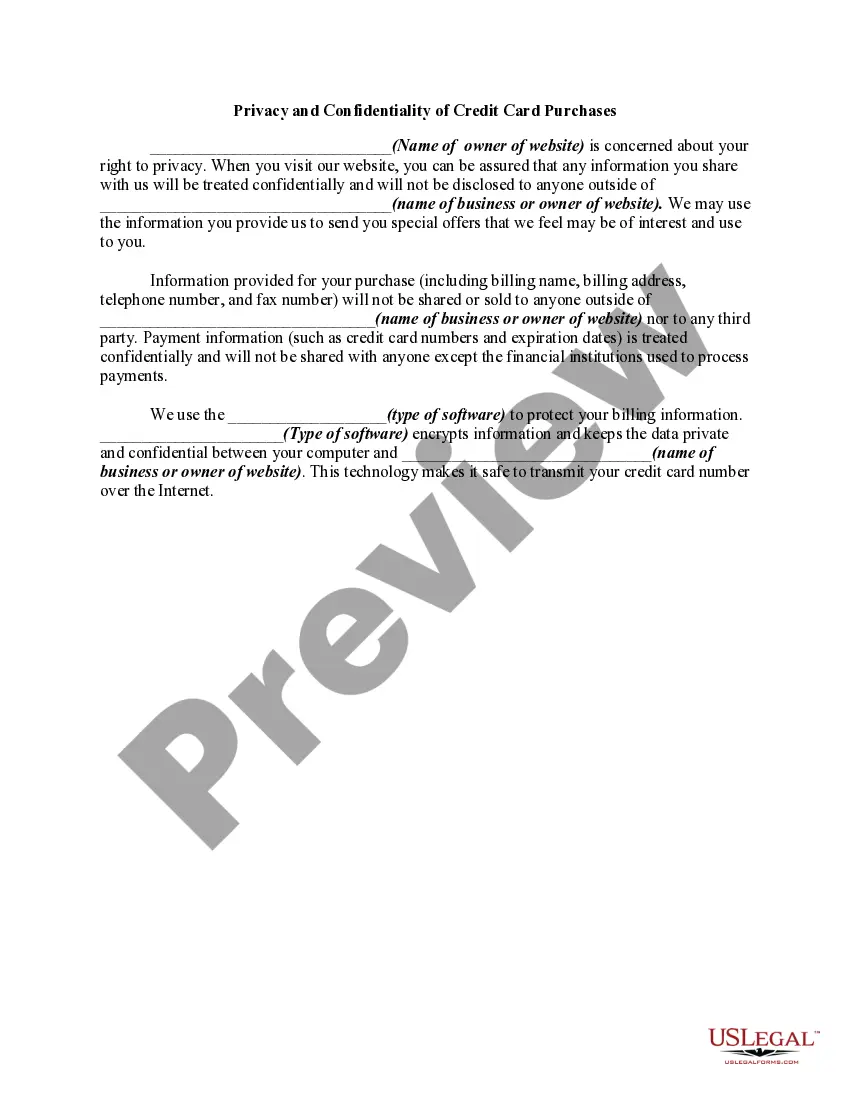
Privacy Confidentiality And Disclosure Legislation
Description
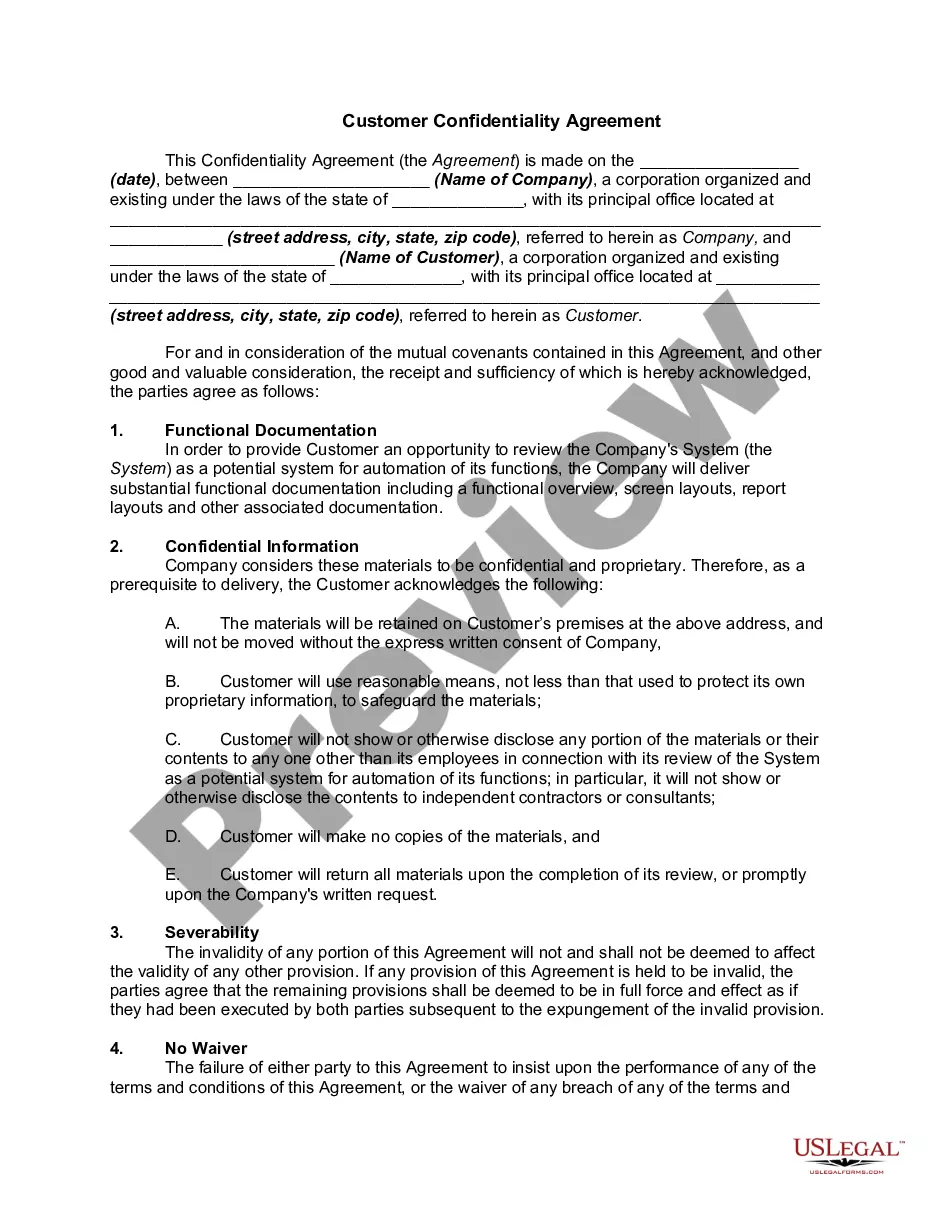
Get your form ready online
Our built-in tools help you complete, sign, share, and store your documents in one place.
Make edits, fill in missing information, and update formatting in US Legal Forms—just like you would in MS Word.
Download a copy, print it, send it by email, or mail it via USPS—whatever works best for your next step.
Sign and collect signatures with our SignNow integration. Send to multiple recipients, set reminders, and more. Go Premium to unlock E-Sign.
If this form requires notarization, complete it online through a secure video call—no need to meet a notary in person or wait for an appointment.
We protect your documents and personal data by following strict security and privacy standards.

Make edits, fill in missing information, and update formatting in US Legal Forms—just like you would in MS Word.

Download a copy, print it, send it by email, or mail it via USPS—whatever works best for your next step.

Sign and collect signatures with our SignNow integration. Send to multiple recipients, set reminders, and more. Go Premium to unlock E-Sign.

If this form requires notarization, complete it online through a secure video call—no need to meet a notary in person or wait for an appointment.

We protect your documents and personal data by following strict security and privacy standards.
Looking for another form?
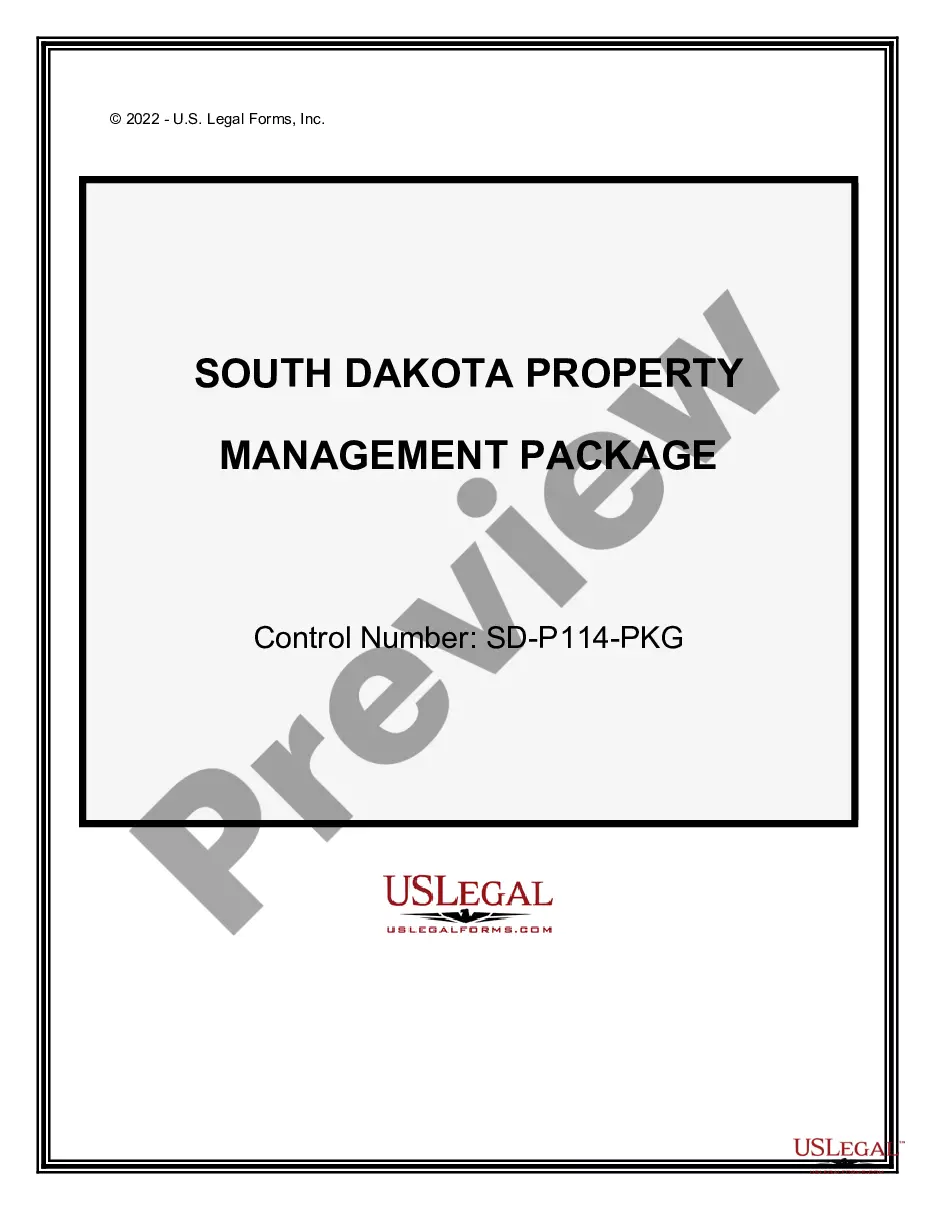







How to fill out Privacy And Confidentiality Of Credit Card Purchases?
Creating legal documents from the ground up can sometimes feel overwhelming.
Certain situations might entail hours of investigation and substantial financial expenditure.
If you’re seeking a simpler and more cost-effective method of preparing Privacy Confidentiality And Disclosure Legislation or any other forms without facing obstacles, US Legal Forms is always within your reach.
Our online collection of over 85,000 current legal documents encompasses nearly every facet of your financial, legal, and personal matters.
Before diving straight into downloading Privacy Confidentiality And Disclosure Legislation, consider these recommendations: Verify the form preview and descriptions to ensure you’re on the right document. Confirm that the form you choose complies with your state and county regulations. Select the most suitable subscription plan to purchase the Privacy Confidentiality And Disclosure Legislation. Download the document and then complete, validate, and print it. US Legal Forms boasts an impeccable reputation and over 25 years of expertise. Join us today and make document execution effortless and efficient!
- With just a few clicks, you can promptly access state- and county-compliant forms expertly crafted for you by our legal professionals.
- Utilize our website whenever you need dependable and trustworthy services to easily find and download the Privacy Confidentiality And Disclosure Legislation.
- If you are already familiar with our services and have previously registered an account with us, simply Log In to your account, find the form and download it directly or retrieve it again later in the My documents section.
- Don't have an account? No problem. It requires just a few minutes to establish one and browse the catalog.
Form popularity
FAQ
The Office of Public Guardian (OPG) provides guardianship and conservatorship services for adults* who are unable to make basic life decisions for themselves due to conditions such as aging-related illness, intellectual disabilities, brain injuries and mental illness.
A guardian is a person or institution appointed by a court to make decisions about the care of another, who is called a ?ward.? A conservator is a person or institution appointed by the court to manage the property and financial affairs of a ward.
Petition to appoint a guardian The petitioner must file the petition in the county in which the respondent resides or is present. Are you filing in Utah County? If yes, you must file your papers with the Provo Courthouse. Deliver your papers to the courthouse or email them to ProvoFiling@utcourts.gov.
You can only get a Guardianship and conservatorship by filing a case with a Court. If the guardianship is for an adult, the Court will appoint an attorney to represent that person. If the guardianship is for a child, the court may appoint a lawyer to represent the child if it is in the child's best interest.
The State of Utah allows for two types of guardianship. These include a plenary (full) or limited guardianship. A Plenary guardianship transfers all rights from a ward to a guardian.
Limited or full appointment You might have authority to make decisions about certain things, called a limited guardianship. Or you might have authority to make decisions about all aspects of the protected person's life, called a plenary or full guardianship.
In Utah, a guardian primarily has the court-appointed power to provide for the physical well-being of a protected person and a conservator is the court-appointed individual or entity to provide for the financial well-being of the protected person.