Policy Use Computers Form Template With Email
Description
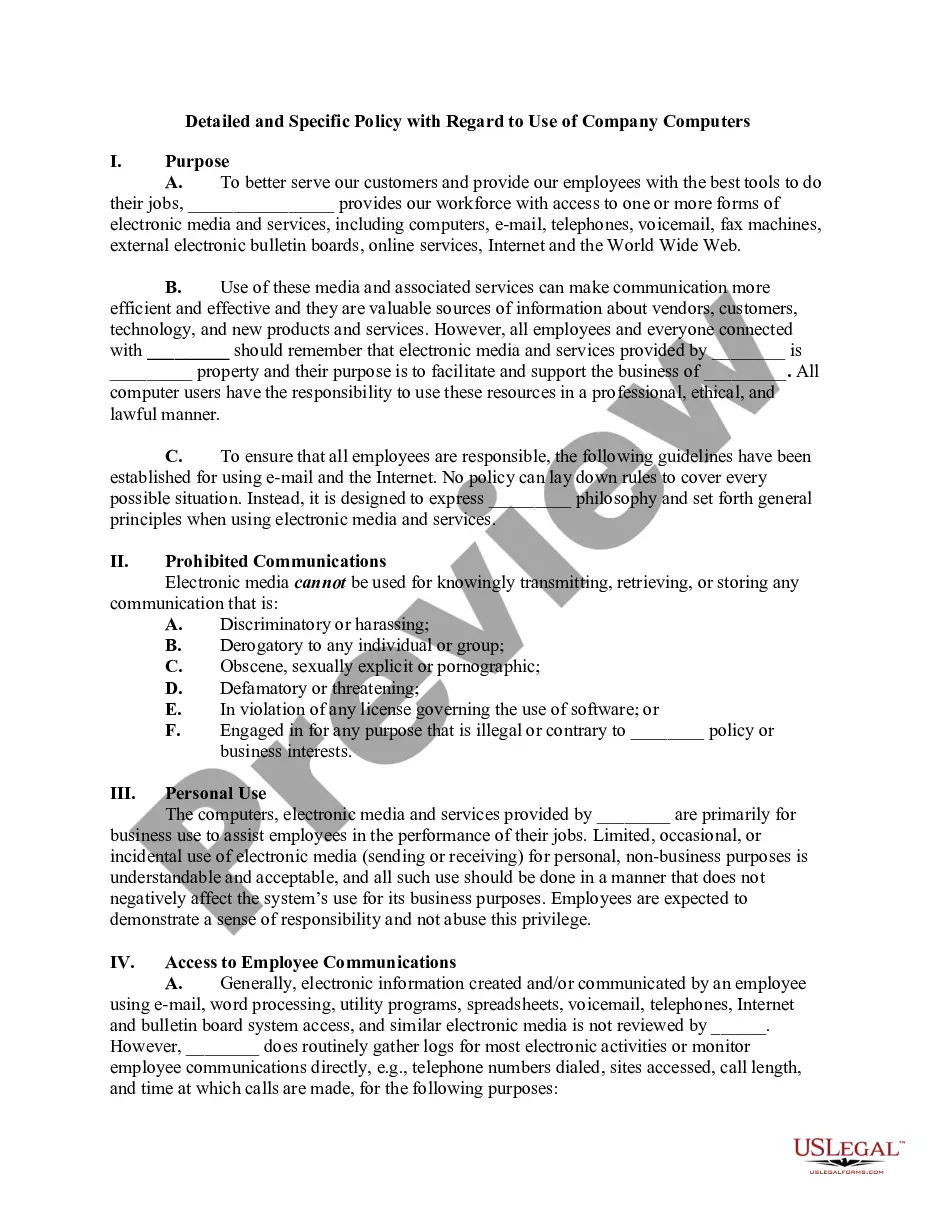
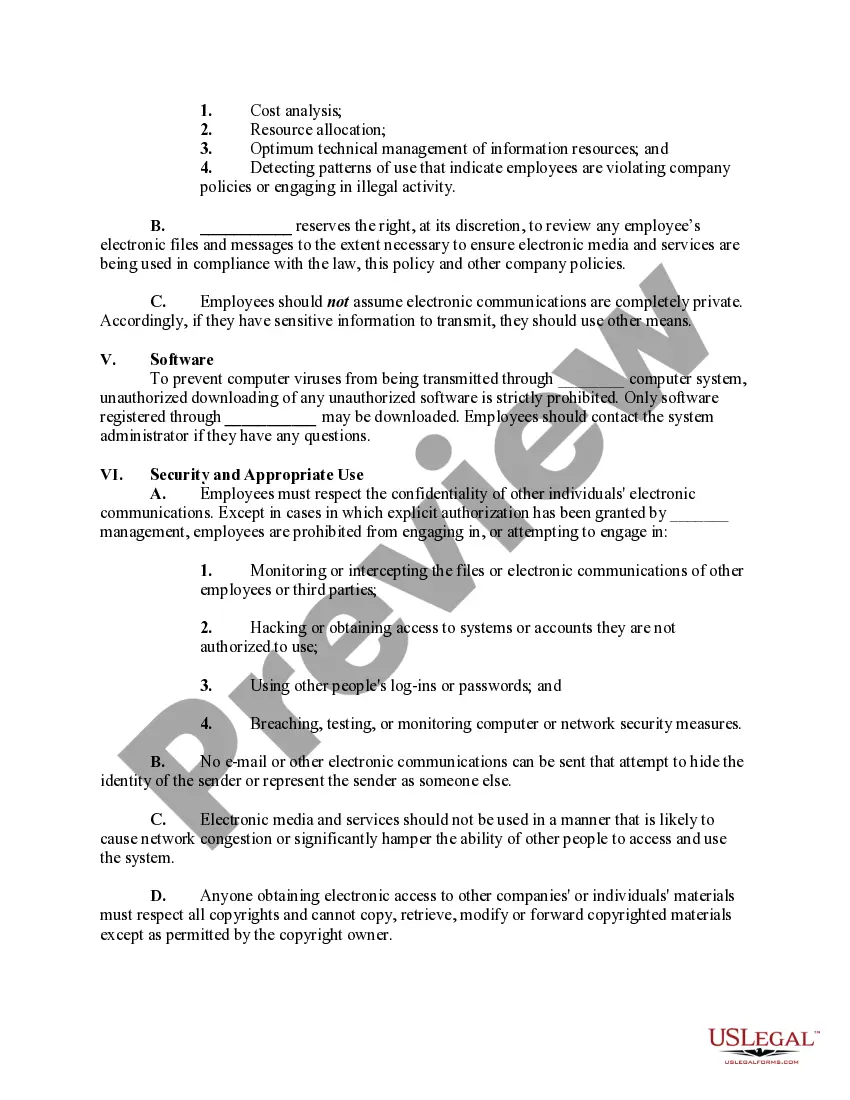
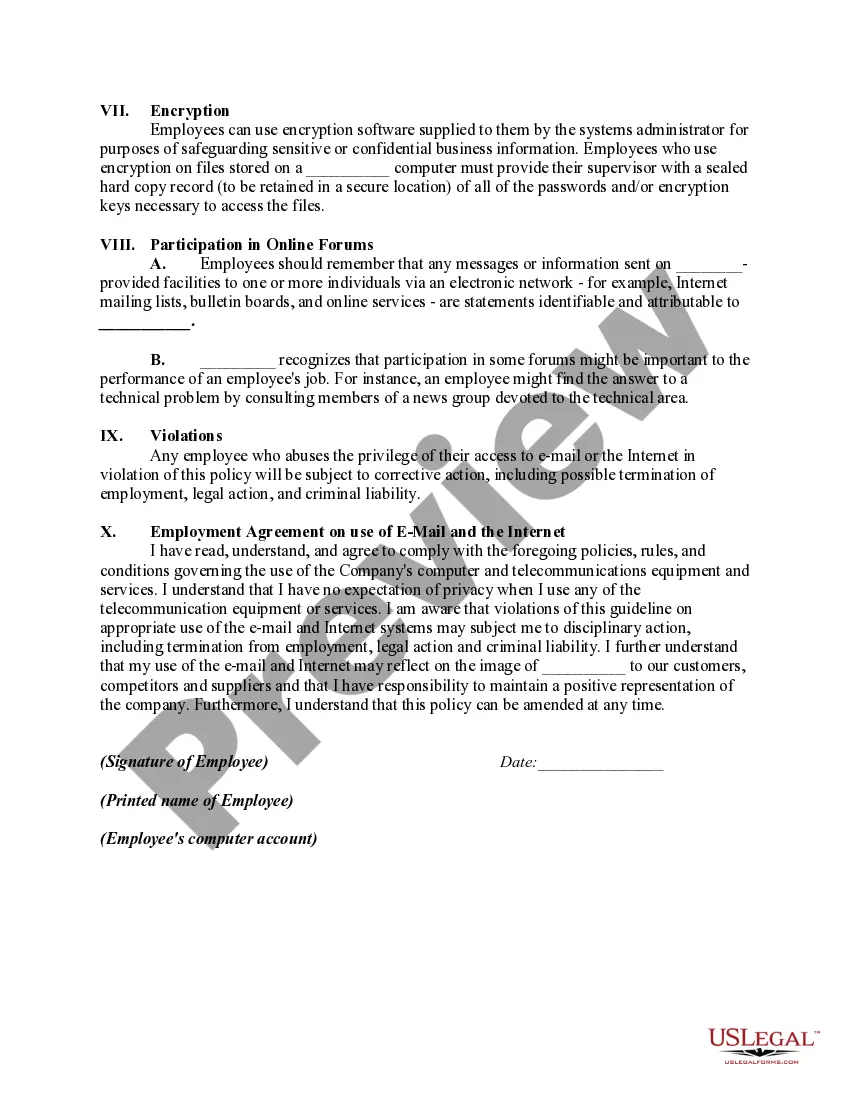
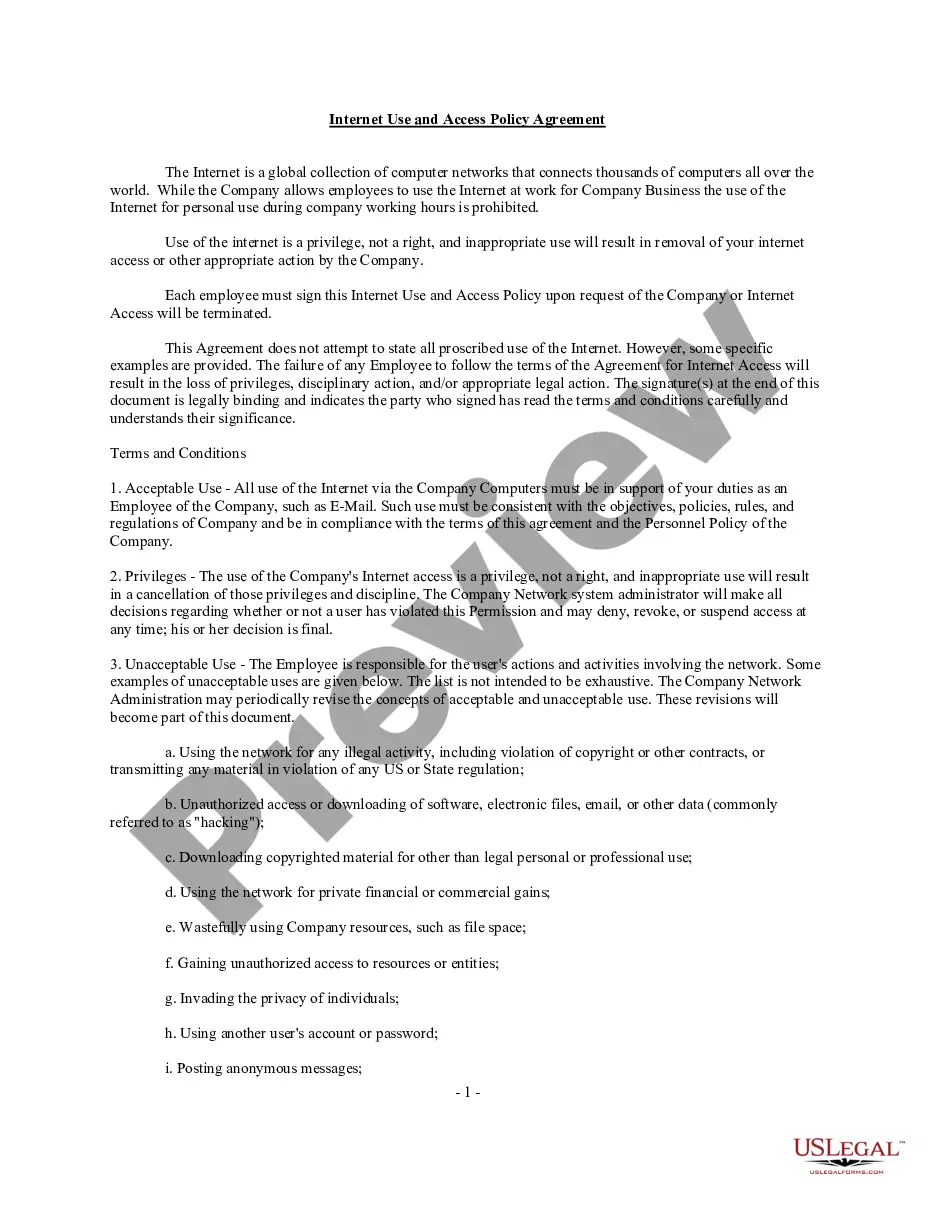

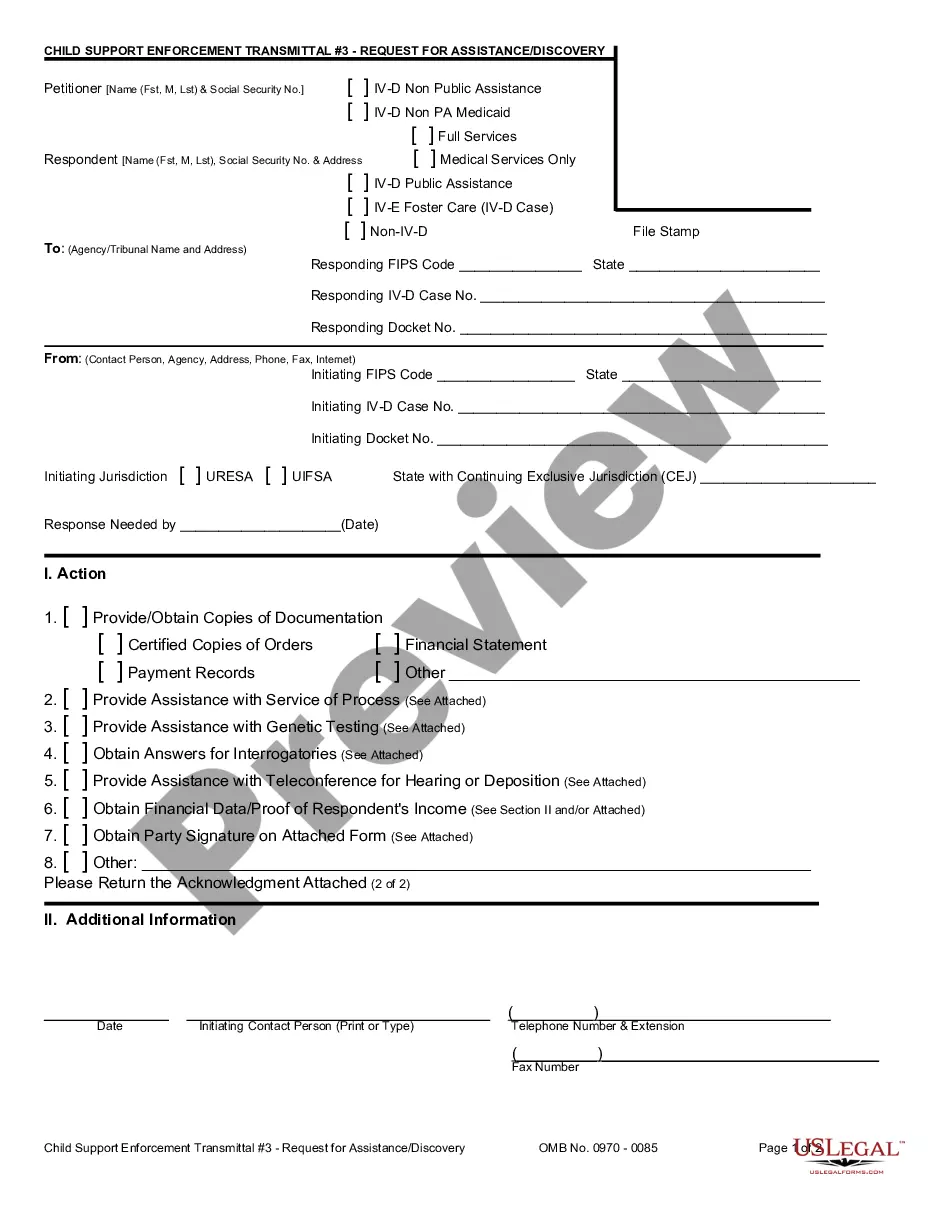


How to fill out Detailed And Specific Policy With Regard To Use Of Company Computers?
Locating a reliable source for the latest and pertinent legal templates is half the challenge of navigating bureaucracy.
Identifying the correct legal documents requires accuracy and meticulousness, which is why it is essential to obtain samples of Policy Use Computers Form Template With Email solely from trustworthy sources, such as US Legal Forms. An incorrect template will consume your time and hinder your current situation. With US Legal Forms, you have minimal concerns.
Eliminate the hassle associated with your legal documentation. Browse the comprehensive US Legal Forms catalog to discover legal templates, verify their applicability to your situation, and download them instantly.
- Use the directory navigation or search bar to find your template.
- Access the form’s details to verify if it meets your state and regional criteria.
- View the form preview, if available, to ensure it is the one you seek.
- Return to the search to find the suitable document if the Policy Use Computers Form Template With Email does not meet your specifications.
- Once you are certain of the form’s relevance, download it.
- If you are a registered user, click Log in to verify and access your selected forms in My documents.
- If you do not yet have an account, click Buy now to purchase the form.
- Select the pricing option that fits your needs.
- Proceed to registration to complete your order.
- Conclude your transaction by selecting a payment method (credit card or PayPal).
- Choose the file format for downloading Policy Use Computers Form Template With Email.
- After you have the form on your device, you can edit it using the editor or print it and complete it manually.
Form popularity
FAQ
Every employee of [Company Name] is responsible for the content of all text, audio, video or image files that he or she places or sends over the company's internet and email systems. No email or other electronic communications may be sent that hide the identity of the sender or represent the sender as someone else.
Cannot harass, threaten, sexually harass, or send offensive, vulgar, or obscene material on company computers. Are not allowed to use company computers for playing video or other games. Cannot communicate company secrets?or confidential and privileged information?to anyone unless authorized to do so.
An acceptable use policy should include: a general statement regarding the safe and fair use of email and the internet. code of conduct setting out acceptable user behaviour, eg what websites the users may visit, how they should log on to the network, etc.
A computer use policy can cover a number of areas, including the hours during which the internet can be used, the kinds of things that can and can't be done and the limits on computer use for personal reasons.
An AUP sets rules related to an organization's IT security policies. These include rules around accessing restricted information; changing access data, such as passwords; opening questionable email attachments; using public Wi-Fi services; and using company approved authentication procedures. Non-employee users.