Policy Regard Computers Sample Within The Organization
Description
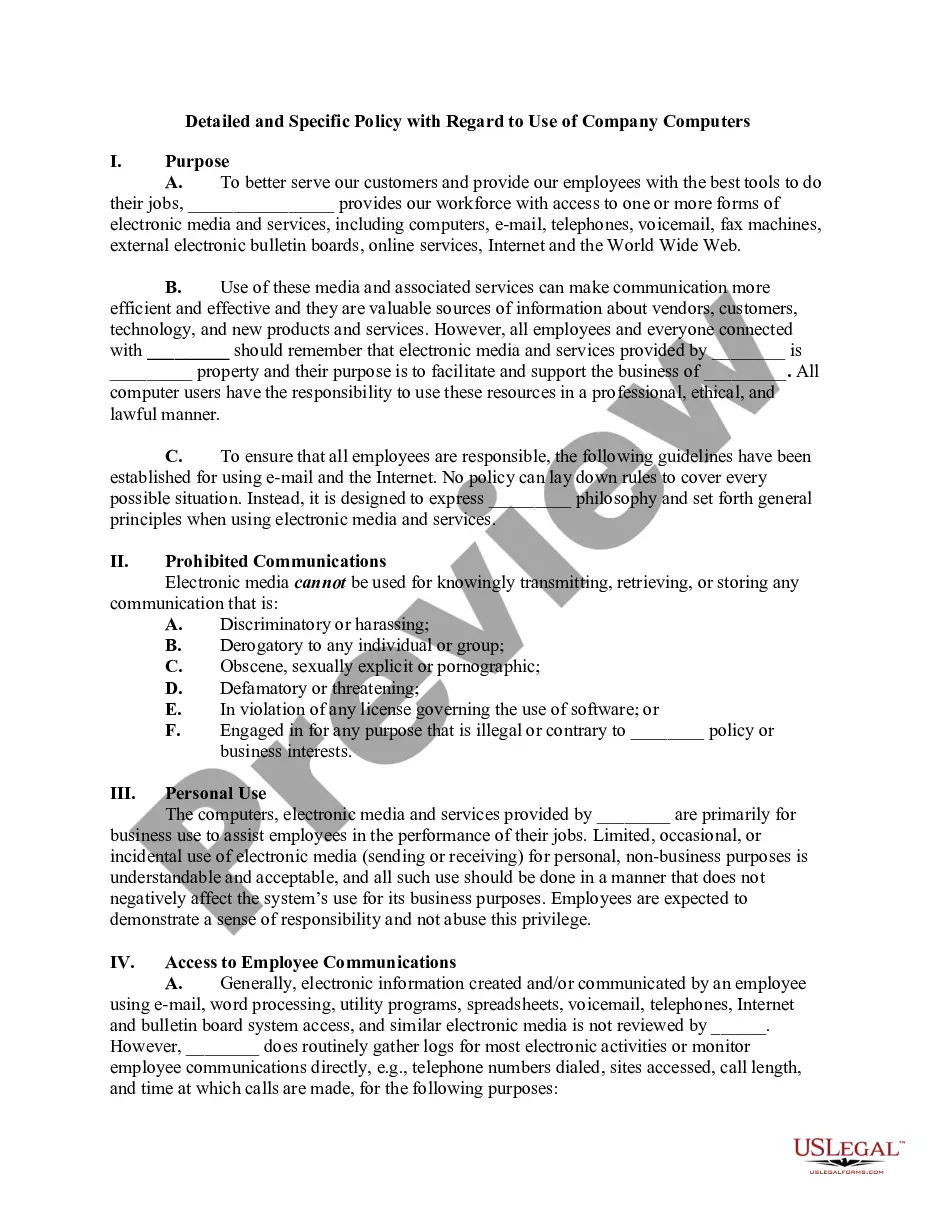
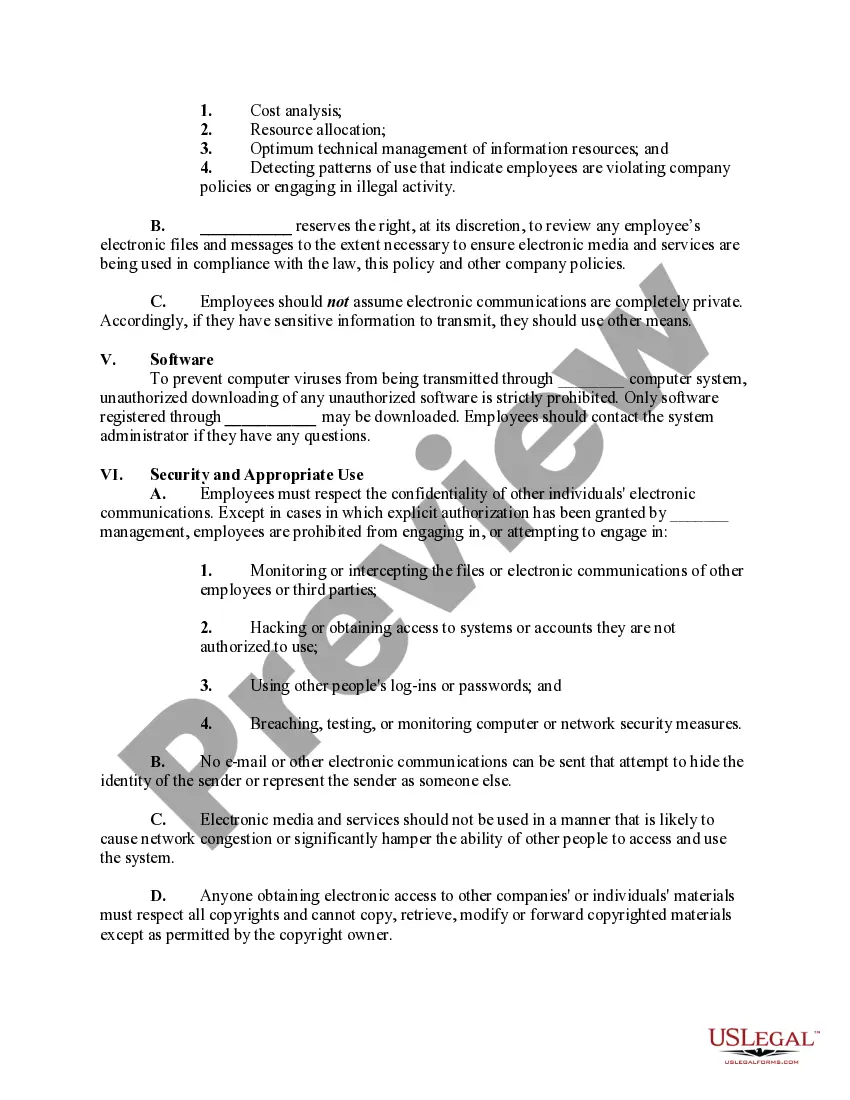
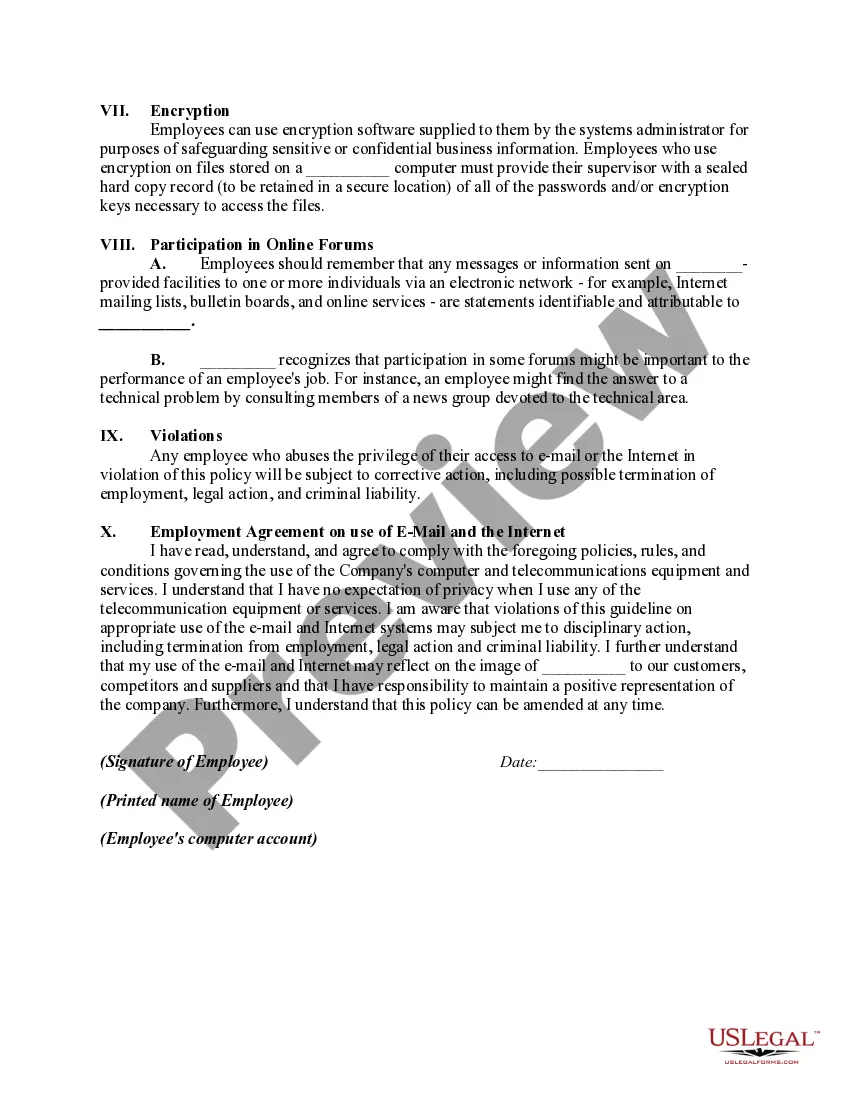
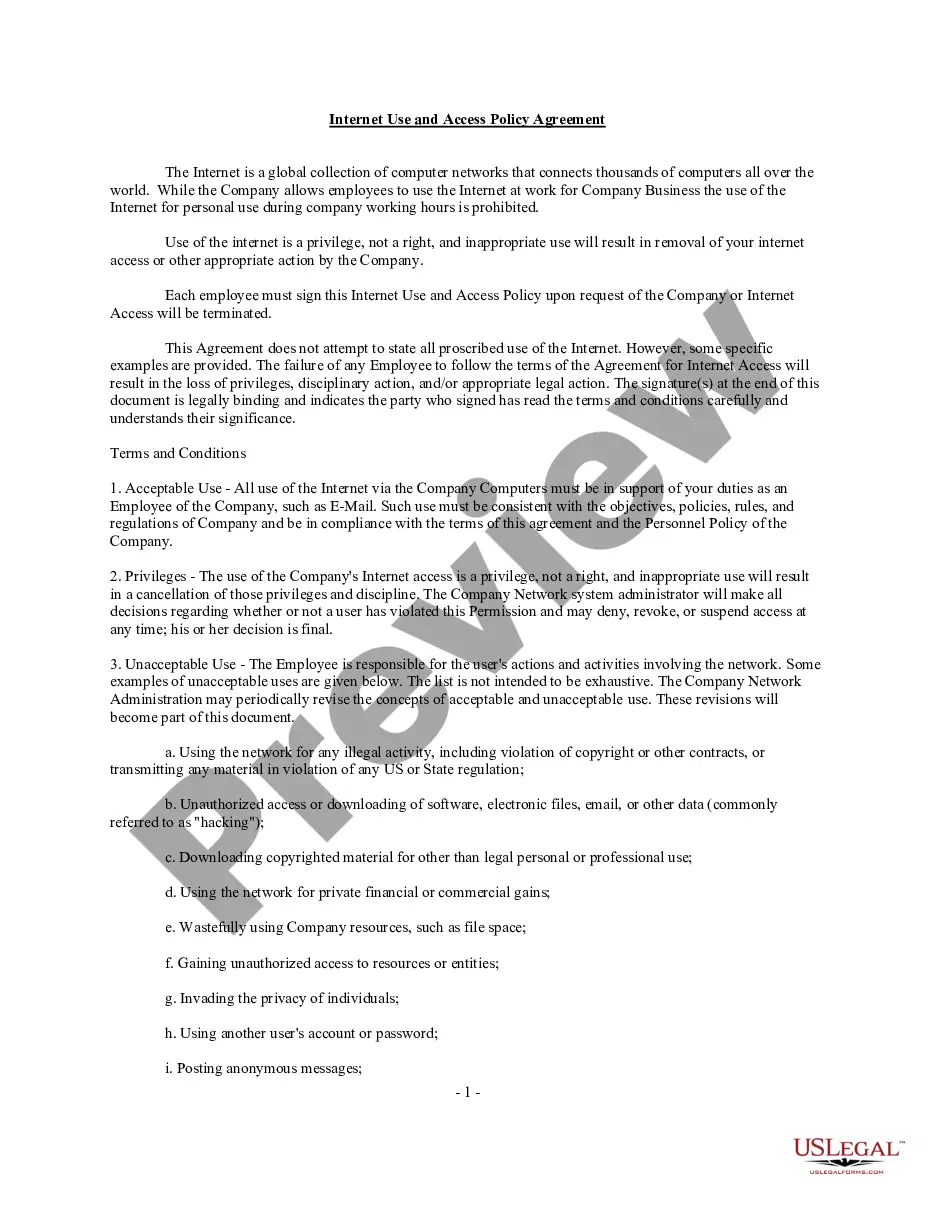



How to fill out Detailed And Specific Policy With Regard To Use Of Company Computers?
Whether for business purposes or for individual matters, everybody has to deal with legal situations sooner or later in their life. Filling out legal documents requires careful attention, starting with choosing the correct form sample. For example, if you pick a wrong edition of the Policy Regard Computers Sample Within The Organization, it will be turned down when you submit it. It is therefore crucial to get a reliable source of legal documents like US Legal Forms.
If you need to get a Policy Regard Computers Sample Within The Organization sample, follow these simple steps:
- Get the sample you need by utilizing the search field or catalog navigation.
- Look through the form’s description to ensure it matches your case, state, and region.
- Click on the form’s preview to see it.
- If it is the wrong document, get back to the search function to find the Policy Regard Computers Sample Within The Organization sample you need.
- Download the template if it matches your requirements.
- If you have a US Legal Forms account, just click Log in to access previously saved files in My Forms.
- In the event you don’t have an account yet, you can obtain the form by clicking Buy now.
- Pick the appropriate pricing option.
- Finish the account registration form.
- Choose your transaction method: you can use a credit card or PayPal account.
- Pick the file format you want and download the Policy Regard Computers Sample Within The Organization.
- Once it is saved, you are able to complete the form with the help of editing software or print it and finish it manually.
With a substantial US Legal Forms catalog at hand, you don’t need to spend time looking for the appropriate sample across the internet. Utilize the library’s straightforward navigation to get the proper form for any situation.
Form popularity
FAQ
Employees may not use [Company Name]'s computer systems in a way that disrupts its use by others. This includes sending or receiving excessive numbers of large files and spamming (sending unsolicited email to thousands of users).
A computer use policy can cover a number of areas, including the hours during which the internet can be used, the kinds of things that can and can't be done and the limits on computer use for personal reasons.
An AUP sets rules related to an organization's IT security policies. These include rules around accessing restricted information; changing access data, such as passwords; opening questionable email attachments; using public Wi-Fi services; and using company approved authentication procedures.
These steps will steer you in the right direction: Identify a need. IT policies should address a clear need. ... Delegate responsibility. ... Research details. ... Draft wording for policies and procedures. ... Get approval from stakeholders. ... Implement the IT policy. ... Review and revise as necessary. ... Clear purpose.
Steps for Writing An IT Policy Specify the purpose. Define the scope of the policy. Define The Components Of The IT Policy: Purchase And Installation Policy. Usage Policy for device, internet, email, and social media. IT Security - physical, network, cybersecurity, and audits. Data Security. Policy Enforcement and Sanctions.