Company Policy For Leave
Description
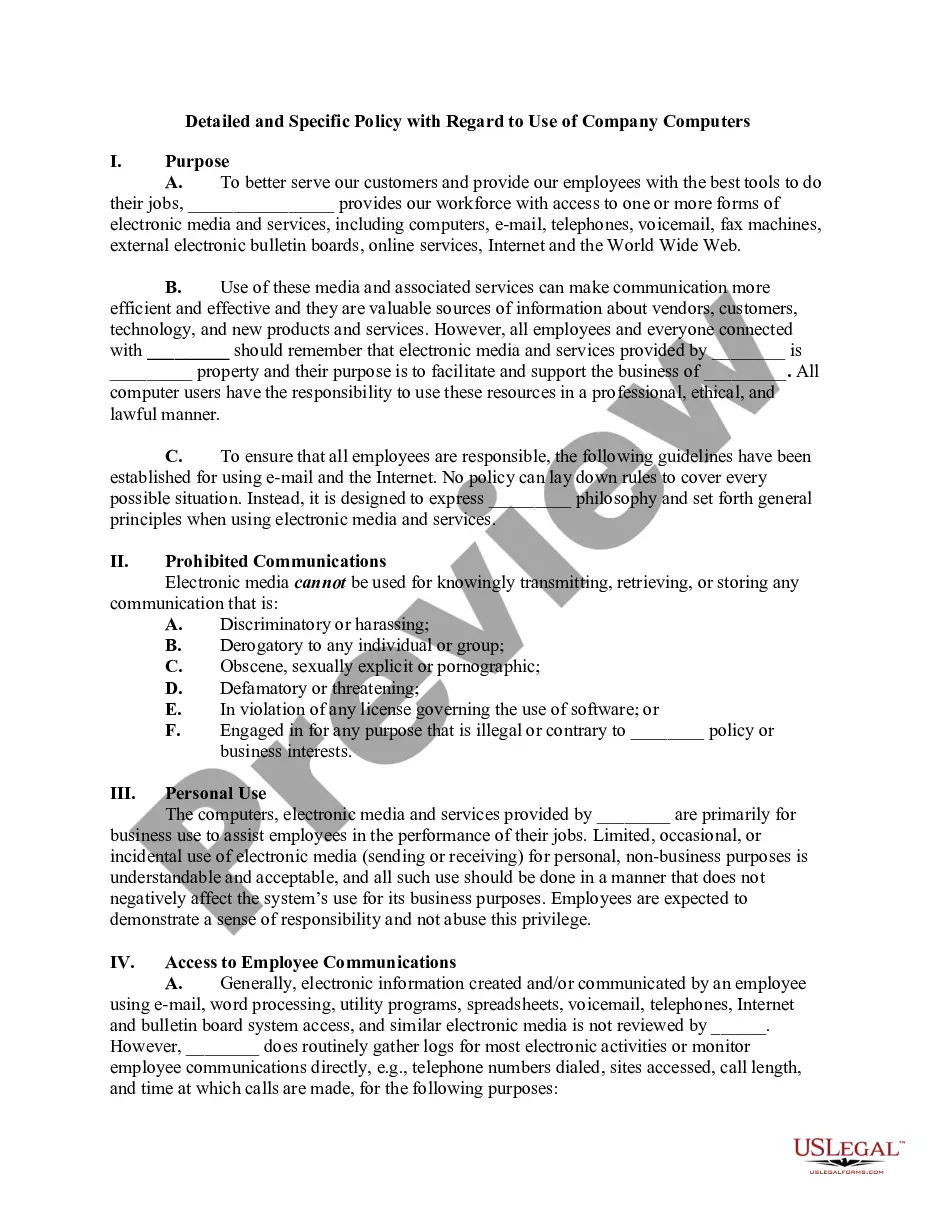
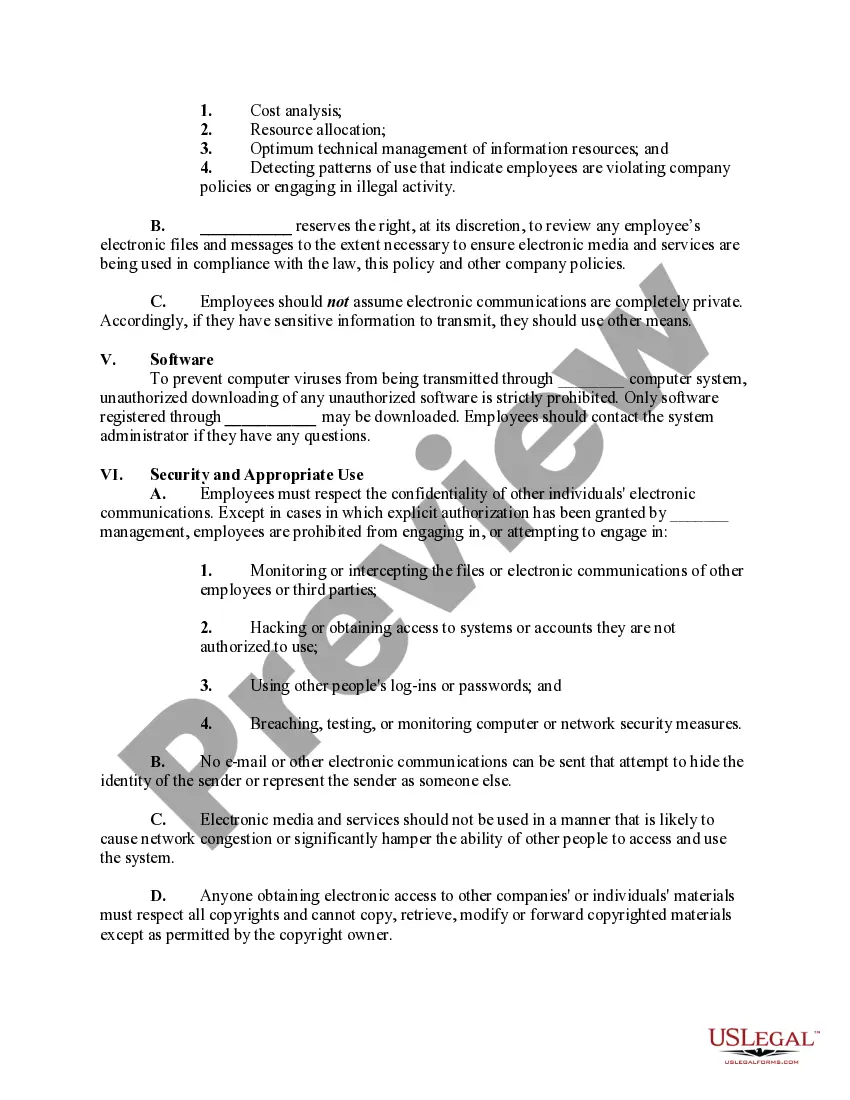
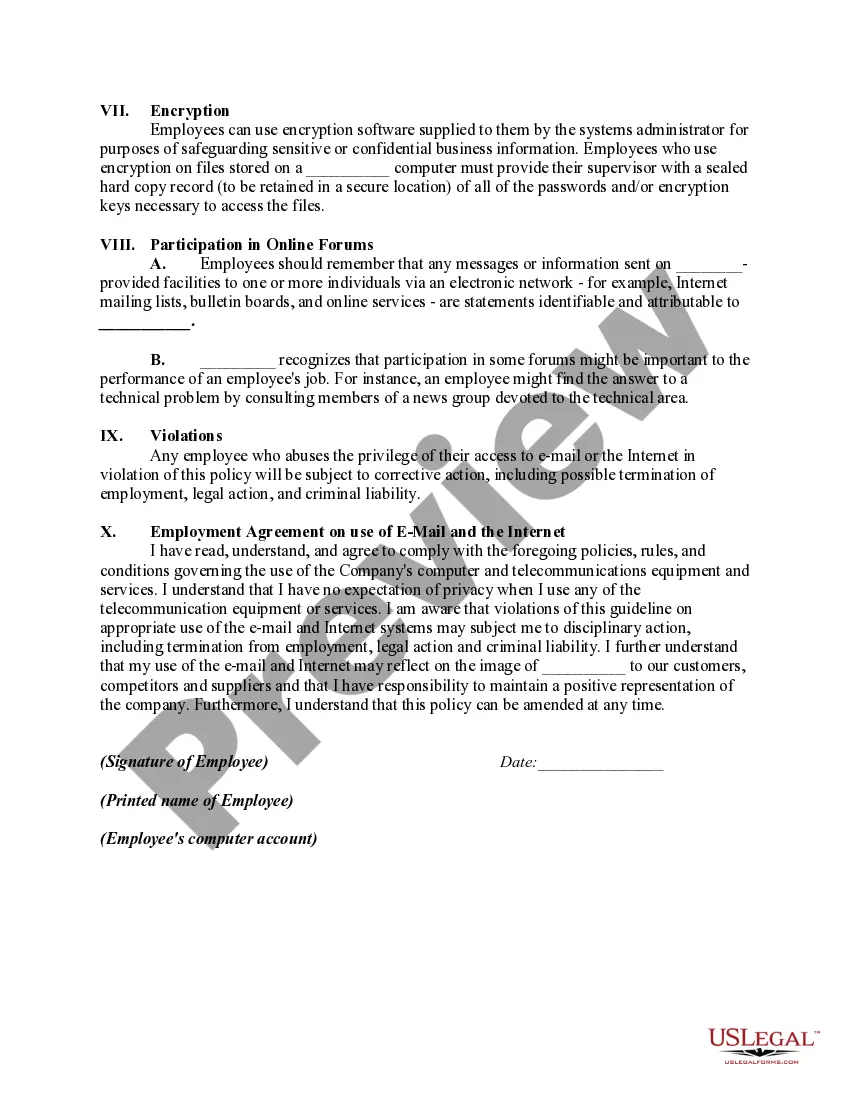
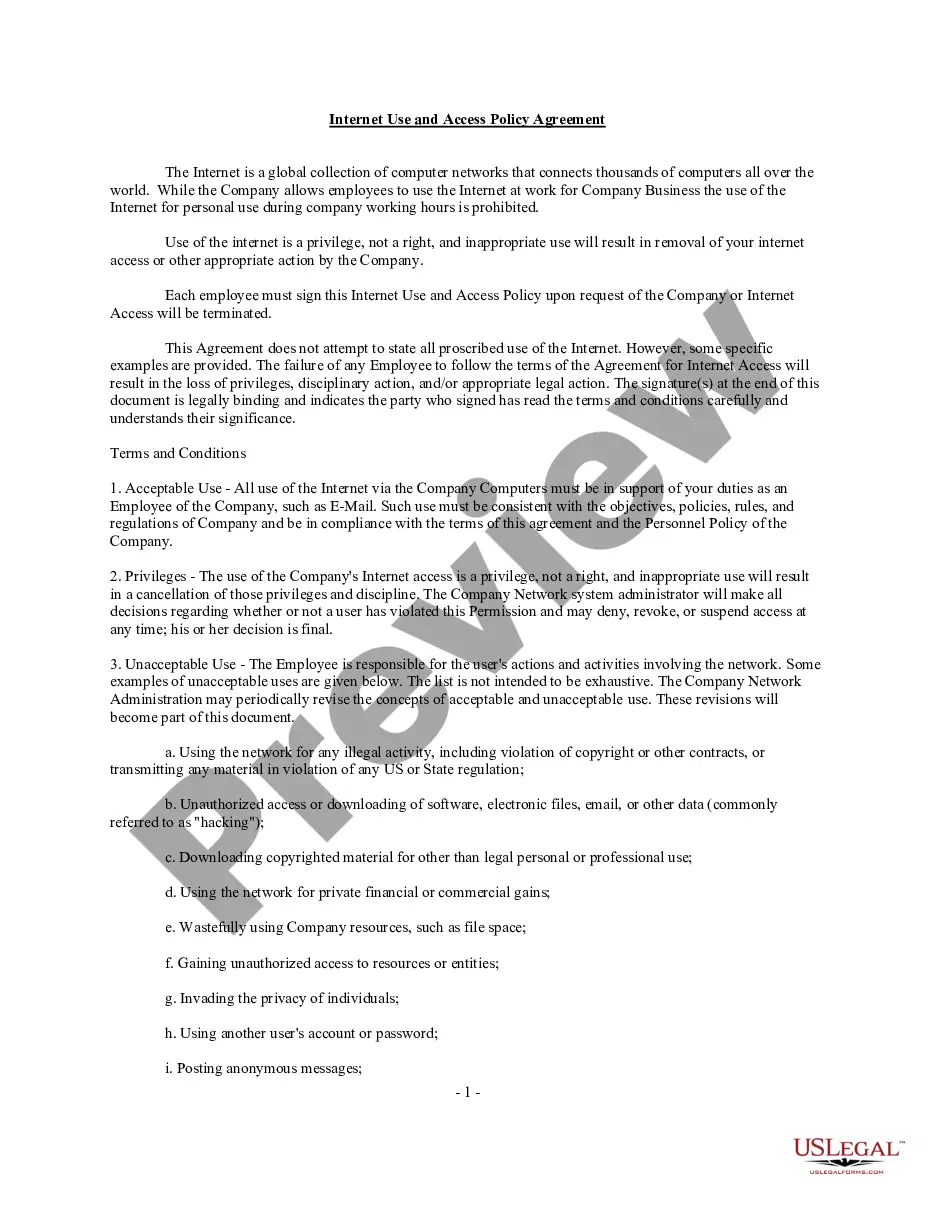

How to fill out Detailed And Specific Policy With Regard To Use Of Company Computers?
The Company Policy Regarding Leave displayed on this page is a versatile legal template created by expert attorneys in accordance with federal and state regulations and laws.
For over 25 years, US Legal Forms has supplied individuals, organizations, and lawyers with more than 85,000 validated, state-specific documents for any business and personal need.
Subscribe to US Legal Forms to access verified legal templates for all of life's instances at your fingertips.
- Examine the document you require and verify it.
- Scan the sample you searched and preview it or assess the form description to ensure it meets your needs.
- If it doesn't, use the search feature to find the suitable one.
- Click on Buy Now once you have located the template you want.
- Select and sign in.
Form popularity
FAQ
Under the Family and Medical Leave Act (FMLA), you do not need to provide in-depth details about your reasons for taking leave; however, you must inform your manager that your leave falls under FMLA. You should familiarize yourself with your company's policy for leave to ensure proper communication. It's often helpful to maintain open lines of communication with your manager for any necessary arrangements during your absence.
Yes, an employer can require you to take a leave of absence in certain situations, such as health reasons or prolonged absenteeism. However, this should align with the company's policy for leave and applicable labor laws. It's essential to review the policy documents and engage with HR if you believe the requirement is unjust. Your employer should typically provide a clear justification for any mandatory leave.
To file a leave request, start by reviewing your company's policy for leave. This policy will typically outline the steps you need to take, such as submitting a formal request in writing. It's important to include the dates of your intended leave and any relevant details. Ensure that you submit your request to your supervisor or the HR department according to the guidelines provided.
Yes, an employer may compel an employee to take a leave of absence, especially in cases of serious health concerns or workplace safety issues. This action should align with the company's policy for leave and relevant labor laws. Proper documentation and clear communication are crucial to ensure both parties understand the reasons for this decision. Always function within the best practices to foster a supportive work culture.
Employers can require employees to take a leave of absence under certain circumstances, such as health issues that may affect work performance. However, it is essential to follow the guidelines set in your company policy for leave. Open communication with the employee is key, as it helps to explain the need for the leave. Always ensure that you comply with relevant laws to avoid potential legal issues.
To set up an effective sick leave policy, start by determining how much leave employees will receive and the conditions for using it. Clearly outline the procedures for requesting sick leave and any required documentation, such as a doctor's note. Consider including rules for accrued sick leave, which incentivizes good attendance while providing necessary time off. By establishing a clear company policy for leave, you promote a healthy work environment.
In most cases, a company cannot fire you for requesting a leave of absence if it is covered by relevant laws or company policy for leave. Employers are generally required to uphold employees' rights regarding leave due to medical issues or family obligations. However, if the request is unreasonable or violates company policy, it may lead to complications. Always review your company's policies and consult HR if unsure.
A leave policy defines the guidelines for taking time off from work. It outlines various types of leave, including vacation, sick leave, and family leave. Employers establish this company policy for leave to ensure fair treatment of employees while maintaining business operations. Understanding the leave policy helps employees plan their time off effectively.
To write a leave of absence policy, begin with a clear definition of what qualifies as a leave of absence and the types of leaves available. Clearly outline the process for employees to request leave, including tips for documentation, timelines, and communication with managers. A strong company policy for leave fosters a supportive work environment and ensures employee rights and responsibilities are well-articulated.
Creating a time off policy involves several key steps. First, consider the needs of your organization and employees, then lay out the guidelines for requesting leave, including any documentation needed. A well-structured company policy for leave not only benefits employees but also streamlines administration, reducing confusion and enhancing productivity.