Invasion Transmit Privacy With Cameras
Description
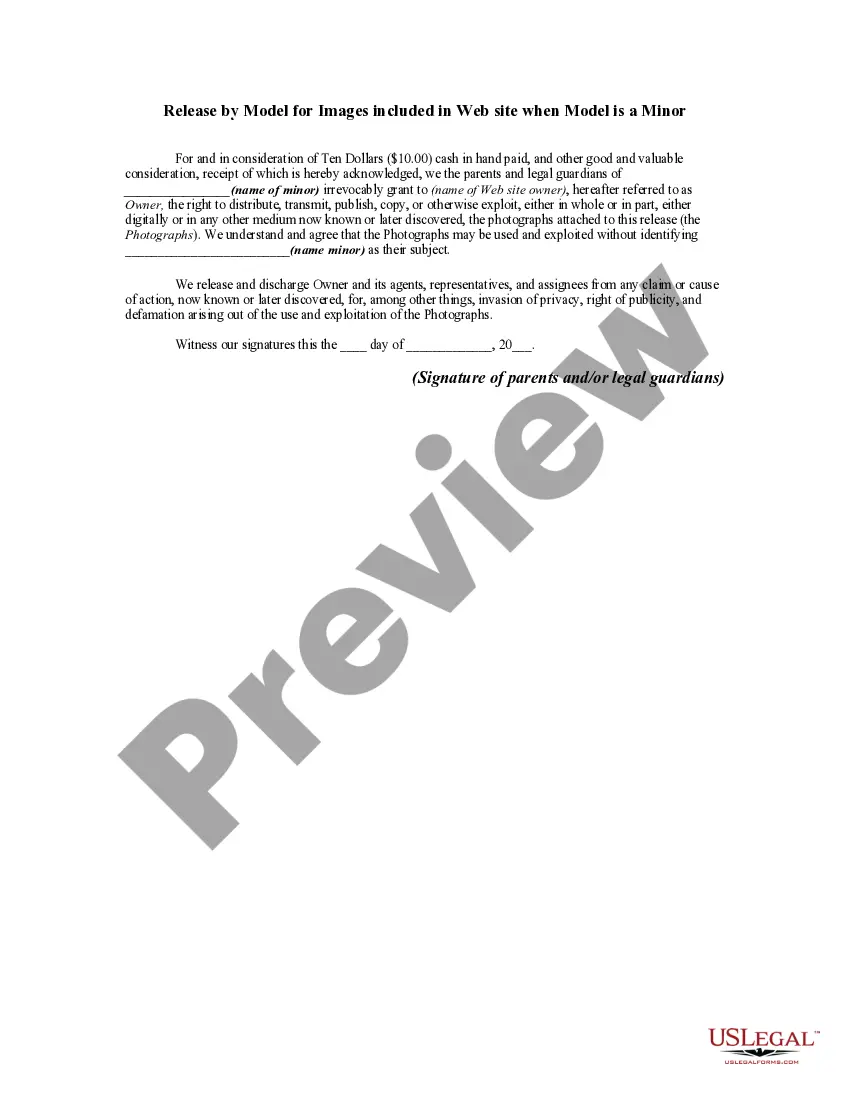


How to fill out Release By Model For Images Included In Web Site?
The Invasion Transmit Privacy With Cameras displayed on this page is a versatile legal template crafted by experienced attorneys in compliance with federal and local statutes and regulations.
For over 25 years, US Legal Forms has offered individuals, entities, and lawyers more than 85,000 validated, state-specific documents for any business and personal circumstances. It’s the quickest, simplest, and most dependable method to acquire the paperwork you require, as the service ensures the utmost level of data confidentiality and anti-malware safeguards.
Select the format you prefer for your Invasion Transmit Privacy With Cameras (PDF, Word, RTF) and save the document on your device. Complete and sign the document. Print the template to fill it out manually. Alternatively, utilize an online multifunctional PDF editor to quickly and accurately fill out and sign your form with an eSignature. Download your documents again as necessary. Reuse the same document anytime needed. Access the My documents tab in your profile to redownload any previously purchased forms. Enroll in US Legal Forms to have verified legal templates for all of life’s situations readily available.
- Search for the document you require and review it.
- Browse through the sample you searched and preview it or examine the form description to ensure it meets your needs. If it doesn’t, use the search function to find the correct one. Click Buy Now when you have found the template you require.
- Choose a subscription plan and Log In.
- Select the pricing option that works for you and create an account. Use PayPal or a credit card for a swift payment. If you already possess an account, Log In and verify your subscription to proceed.
- Acquire the editable template.
Form popularity
FAQ
Invasion of privacy generally qualifies when someone unlawfully intrudes into your personal space or affairs, leading to emotional distress. This can occur through physical intrusion, such as peering into windows, or through technological means, like unauthorized recordings. Recognizing these actions is vital for protecting your rights. Learning about how invasion transmits privacy with cameras can assist you in understanding your legal protections.
Home security cameras can be a gray area when it comes to privacy. While they serve to protect your property, they may also capture footage of neighbors or passersby without their consent. It is crucial to use cameras responsibly and understand local laws to avoid issues. Awareness about how invasion transmits privacy with cameras can help you navigate these complexities.
Proving invasion of privacy involves gathering evidence that supports your claim. This may include photographs, video footage, or witness statements that show unauthorized surveillance. Additionally, you should document how this intrusion affected your life. Utilizing resources like USLegalForms can guide you through the legal processes surrounding invasion transmit privacy with cameras.
To prove invasion of privacy, you typically need to demonstrate that someone intentionally intruded upon your private life without consent. This intrusion can occur through various means, including the use of cameras. In many cases, showing that the intrusion was highly offensive to a reasonable person is also necessary. Understanding how invasion transmits privacy with cameras is essential for anyone dealing with such issues.
Installing fence extensions and hanging curtains over the window are effective methods to physically blind the security cameras from your neighbor. Also, trees and barriers can work. You can plant trees or barriers high enough to block the view of the cameras.
Keeping your home security cameras safe from hackers is an essential step if you're going to bring these recording devices into your home. If you can access your camera over the internet, someone else theoretically can access or ?hack" it as well. How to Keep Your Home Security Cameras Safe - USNews.com usnews.com ? 360-reviews ? services ? how... usnews.com ? 360-reviews ? services ? how...
How to Evade Facial Recognition as Much as Possible Say 'No' to Facial Scans. ... Use Innovative Photo Concealing Apps. ... Turn Off Facial Recognition from Your Device. ... Don't Tag Photos on Social Media. ... Use a VPN.
No. Recorded images from your home security camera are your private property. If law enforcement asks to see your footage to help with an investigation, you have the right to say no. But if you've already posted security footage online or in an app like Ring Neighbors, the shared footage is no longer private.
I mainly think that our privacy maybe invaded due to the cameras being placed in a mass of public areas privacy can easily be invaded I don't like it because if your on the phone and the people that watch the tapes can read lips can see what you are saying/texting and with texting they can zoom in on the messages.