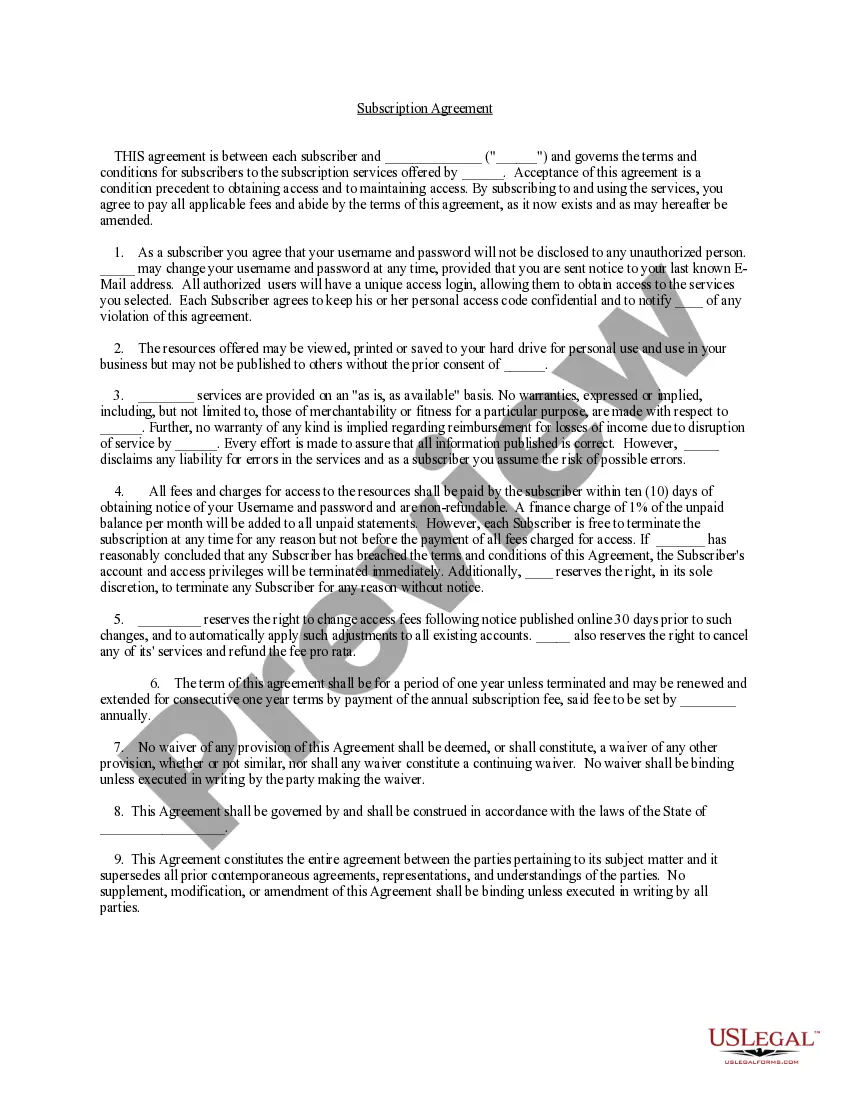
Subscription Agreement Contract With Private Equity
Description

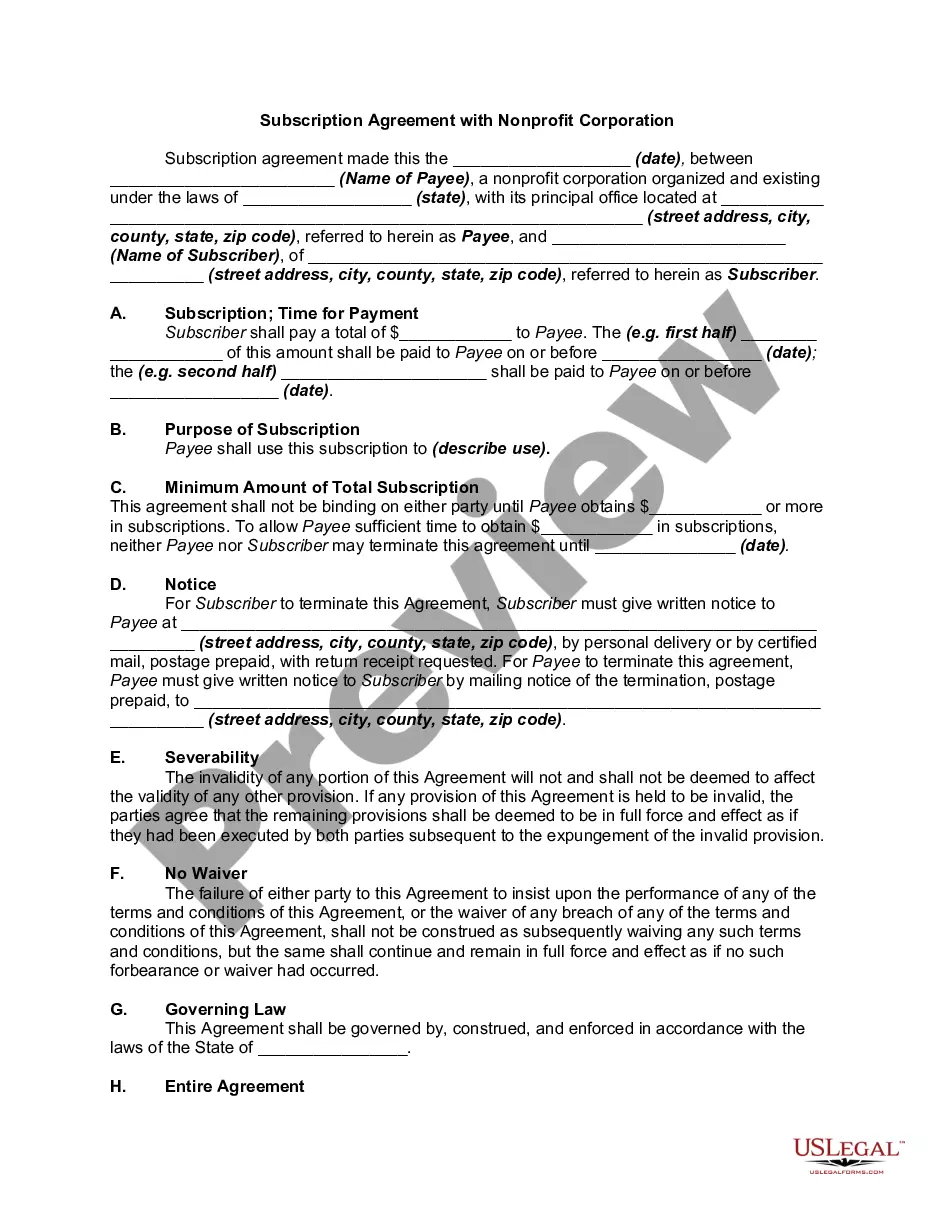
How to fill out Subscription Agreement?
The Subscription Agreement Contract With Private Equity presented on this page is a versatile legal template crafted by experienced attorneys in accordance with federal and local laws.
For over 25 years, US Legal Forms has supplied individuals, businesses, and lawyers with more than 85,000 authenticated, state-specific documents for any business and personal event. It’s the fastest, simplest, and most trustworthy method to acquire the forms you require, as the service guarantees bank-grade data security and anti-malware safeguards.
Register with US Legal Forms to have authenticated legal templates for all of life’s occurrences at your fingertips.
- Search for the document you require and verify it.
- Browse through the file you searched and preview it or review the form description to ensure it fits your needs. If it doesn’t, use the search bar to find the right one. Click Buy Now once you have found the template you need.
- Subscribe and Log In.
- Choose the payment plan that works for you and create an account. Use PayPal or a credit card to make an immediate payment. If you already have an account, Log In and check your subscription to continue.
- Acquire the editable template.
- Select the format you desire for your Subscription Agreement Contract With Private Equity (PDF, DOCX, RTF) and save the sample on your device.
- Fill out and sign the document.
- Print the template to fill it out by hand. Alternatively, use an online multifunctional PDF editor to quickly and accurately complete and sign your form with a valid signature.
- Redownload your documents as needed.
- Utilize the same document again whenever required. Open the My documents tab in your profile to redownload any previously purchased documents.
Form popularity
FAQ
A subscription agreement in private equity is a legally binding document that outlines the terms under which an investor commits capital to a private equity fund. This contract is essential for detailing the rights and obligations of both the investor and the fund manager. For those looking to invest, understanding this agreement is crucial in navigating the private equity landscape effectively.
A partnership agreement defines the roles, responsibilities, and profit-sharing arrangements among partners in a business venture. Conversely, a subscription agreement contract with private equity is specifically for new investors looking to buy into a company or fund. While both agreements set important terms, they serve different purposes in the context of private equity financing.
The rule of 72 is a simple formula used to estimate how long it will take for an investment to double, given a fixed annual rate of return. By dividing 72 by the expected rate of return, you can quickly gauge the time it takes for your investment in a subscription agreement contract with private equity to grow. This rule helps investors to make better decisions regarding their investments and expectations.
What information is typically included in a subscription agreement? Company information. Expectations of both parties. Agreement to subscribe (this includes the number of shares and price) Rights attached to the subscription. ... Terms for termination before completion. Nomination onto board. Confidentiality provisions.
A subscription can agreement include (but is not limited to): Capital commitment. Investor information needed for suitability determination, as well as regulatory and tax reporting reasons. Conditions precedent, representations, and warranties.
The first party will read the document and sign it if they agree to the terms of the agreement. The second party then countersigns the document, and in providing their signature, confirms their agreement with the terms of the contract. Countersignatures are required on many different types of documents.
A subscription line, also called a credit facility, is a loan taken out mostly by closed-end private market funds, in particular by private equity funds. The loan is secured against a fund's investors' commitments, generally without recourse to the actual underlying investments in the fund.
Investor signs the subscription agreement; Investor pays for the shares; Company counter-signs the subscription agreement; Company issues the shares.