Sole Proprietorship With Limited Liability
Description
Get your form ready online
Our built-in tools help you complete, sign, share, and store your documents in one place.
Make edits, fill in missing information, and update formatting in US Legal Forms—just like you would in MS Word.
Download a copy, print it, send it by email, or mail it via USPS—whatever works best for your next step.
Sign and collect signatures with our SignNow integration. Send to multiple recipients, set reminders, and more. Go Premium to unlock E-Sign.
If this form requires notarization, complete it online through a secure video call—no need to meet a notary in person or wait for an appointment.
We protect your documents and personal data by following strict security and privacy standards.

Make edits, fill in missing information, and update formatting in US Legal Forms—just like you would in MS Word.

Download a copy, print it, send it by email, or mail it via USPS—whatever works best for your next step.

Sign and collect signatures with our SignNow integration. Send to multiple recipients, set reminders, and more. Go Premium to unlock E-Sign.

If this form requires notarization, complete it online through a secure video call—no need to meet a notary in person or wait for an appointment.

We protect your documents and personal data by following strict security and privacy standards.
Looking for another form?
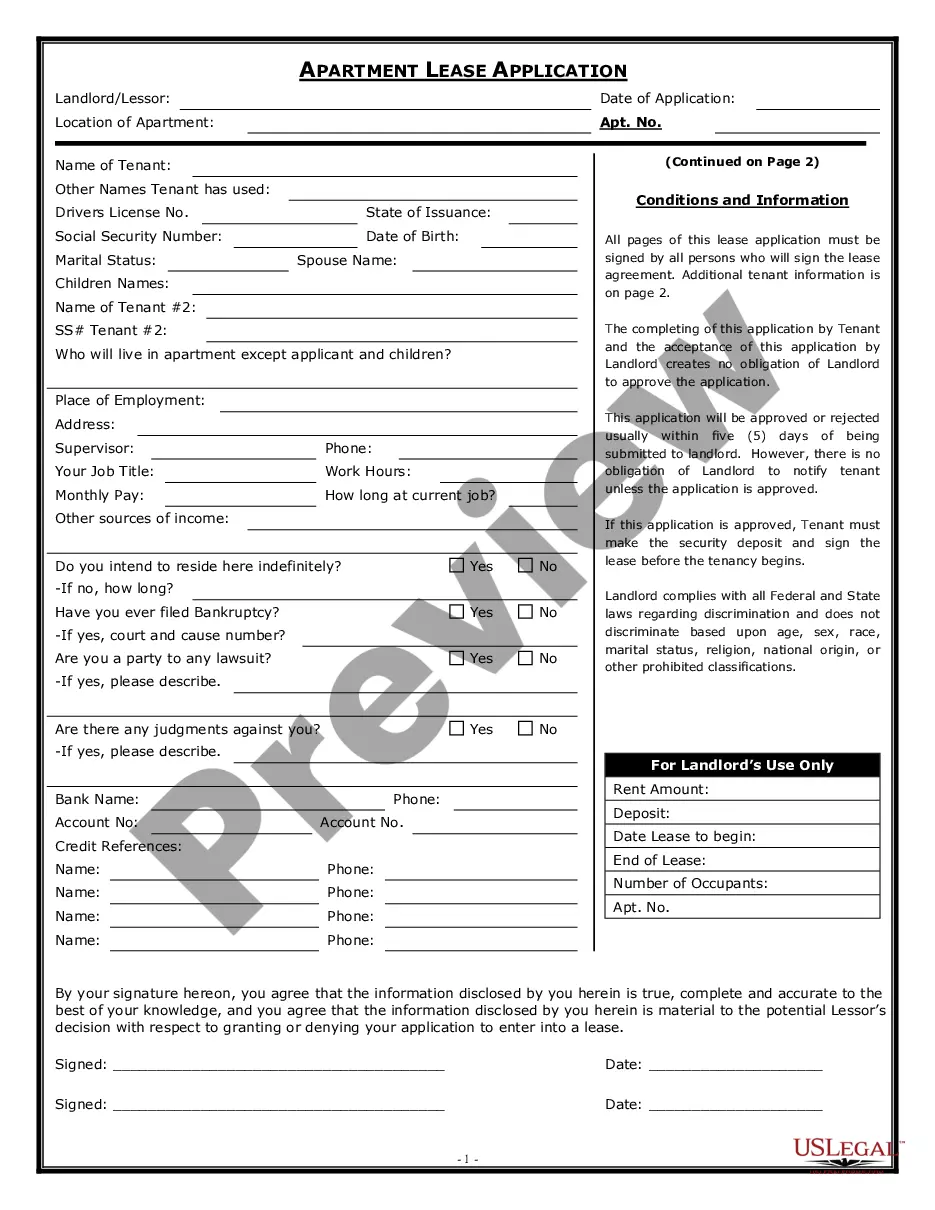

How to fill out Agreement For Sale Of Business By Sole Proprietorship With Leased Premises?
- Log in to your account if you are a returning user. Check the status of your subscription to ensure it's valid before downloading any forms.
- If you're a first-time user, start by exploring the Preview mode of the available templates. Ensure that the document you select aligns with your needs and complies with your local jurisdiction.
- Use the Search tab if you need a different template. Find the accurate form that fits your specifications before proceeding.
- Click on the Buy Now button to purchase the document. Choose the subscription plan that best meets your requirements.
- Complete your transaction by entering your credit card details or using your PayPal account for payment.
- Download the form directly to your device. You can revisit and access your saved templates any time through the My Forms section of your profile.
US Legal Forms offers a comprehensive library of over 85,000 legal forms and packages. With superior access to a vast collection and expert assistance, users can ensure the documents they create are accurate and legally sound.
Empower yourself with the right tools by utilizing US Legal Forms to streamline your business setup. Start protecting your personal assets today!
Form popularity
FAQ
Transitioning from an LLC to a sole proprietorship with limited liability involves a few important steps. You will need to dissolve your LLC, which requires filing appropriate documents with your state and settling any outstanding debts or obligations. Once you have completed the dissolution, you can operate as a sole proprietor, enjoying the benefits of limited liability. For guidance through this process, consider using US Legal Forms, which provides comprehensive resources to help you navigate the transition smoothly.
Limited liability is not a feature of a sole proprietorship. In this business structure, the owner's personal assets are exposed to business liabilities. If someone decides to pursue your business for obligations, they can access your personal assets. To gain limited liability protections, consider forming an LLC or another business entity.
Sole proprietors do not automatically have limited liability. In a sole proprietorship, the owner is personally responsible for all debts and obligations. This means that personal assets could be at risk in the event of business liabilities. However, if you seek the benefits of limited liability, you might want to explore structures like an LLC instead.
You cannot legally operate as both a sole proprietorship and an LLC simultaneously for the same business activities. However, you can establish an LLC while still maintaining a separate sole proprietorship for different ventures. It's essential to understand that each structure has its own tax implications, legal responsibilities, and liability protections. Consulting uslegalforms can help you determine the best structure for your business endeavors.
Generally, you cannot use the same Employer Identification Number (EIN) for both an LLC and a sole proprietorship. Each business structure requires its own EIN for tax purposes. Transitioning from a sole proprietorship to an LLC typically requires obtaining a new EIN to reflect your change in business status. If you are unsure about the process, platforms like uslegalforms can guide you through obtaining and managing your EIN efficiently.
The primary disadvantage of a sole proprietorship, even when considering limited liability, is that it often does not provide personal asset protection. In a sole proprietorship with limited liability, your personal finances can still be at risk if your business incurs debts or faces legal issues. This means that creditors can pursue your personal assets to settle business debts. Therefore, if you want to enjoy greater protection for your personal assets, exploring options such as forming an LLC might be a better choice.
Yes, you can operate both an LLC and a sole proprietorship simultaneously. This setup allows you to benefit from the unique advantages of each structure. Maintaining a sole proprietorship with limited liability can simplify some aspects of your business while providing the necessary protections through your LLC. Just be sure to keep your business activities and finances well-organized to comply with legal requirements.
Certain entities and individuals are exempt from receiving 1099 forms. For instance, corporations, including LLCs that are treated as corporations, do not receive 1099s for provided services. Additionally, governments and tax-exempt organizations typically fall into this category. If you’re uncertain about 1099 exemptions, utilizing resources like US Legal Forms can provide clarity on your obligations.
When you see 'individual sole proprietor' or 'single-member LLC' on a W9 form, it refers to a business structure you operate under. An individual sole proprietor has no legal distinction between personal and business assets, while a single-member LLC does provide a degree of liability protection. Clearly understanding these definitions can help you with your tax filings and reporting. Choosing the right structure is essential for effective tax management and liability protection.
A sole proprietorship does not inherently offer limited liability protection. In this setup, the owner personally bears all liabilities and debts of the business. However, combining a sole proprietorship with additional structures like an LLC can create a sole proprietorship with limited liability, shielding personal assets from potential business risks. It's wise to evaluate your options based on your financial and personal circumstances.