Sole Proprietor With A Dba
Description
Get your form ready online
Our built-in tools help you complete, sign, share, and store your documents in one place.
Make edits, fill in missing information, and update formatting in US Legal Forms—just like you would in MS Word.
Download a copy, print it, send it by email, or mail it via USPS—whatever works best for your next step.
Sign and collect signatures with our SignNow integration. Send to multiple recipients, set reminders, and more. Go Premium to unlock E-Sign.
If this form requires notarization, complete it online through a secure video call—no need to meet a notary in person or wait for an appointment.
We protect your documents and personal data by following strict security and privacy standards.

Make edits, fill in missing information, and update formatting in US Legal Forms—just like you would in MS Word.

Download a copy, print it, send it by email, or mail it via USPS—whatever works best for your next step.

Sign and collect signatures with our SignNow integration. Send to multiple recipients, set reminders, and more. Go Premium to unlock E-Sign.

If this form requires notarization, complete it online through a secure video call—no need to meet a notary in person or wait for an appointment.

We protect your documents and personal data by following strict security and privacy standards.
Looking for another form?



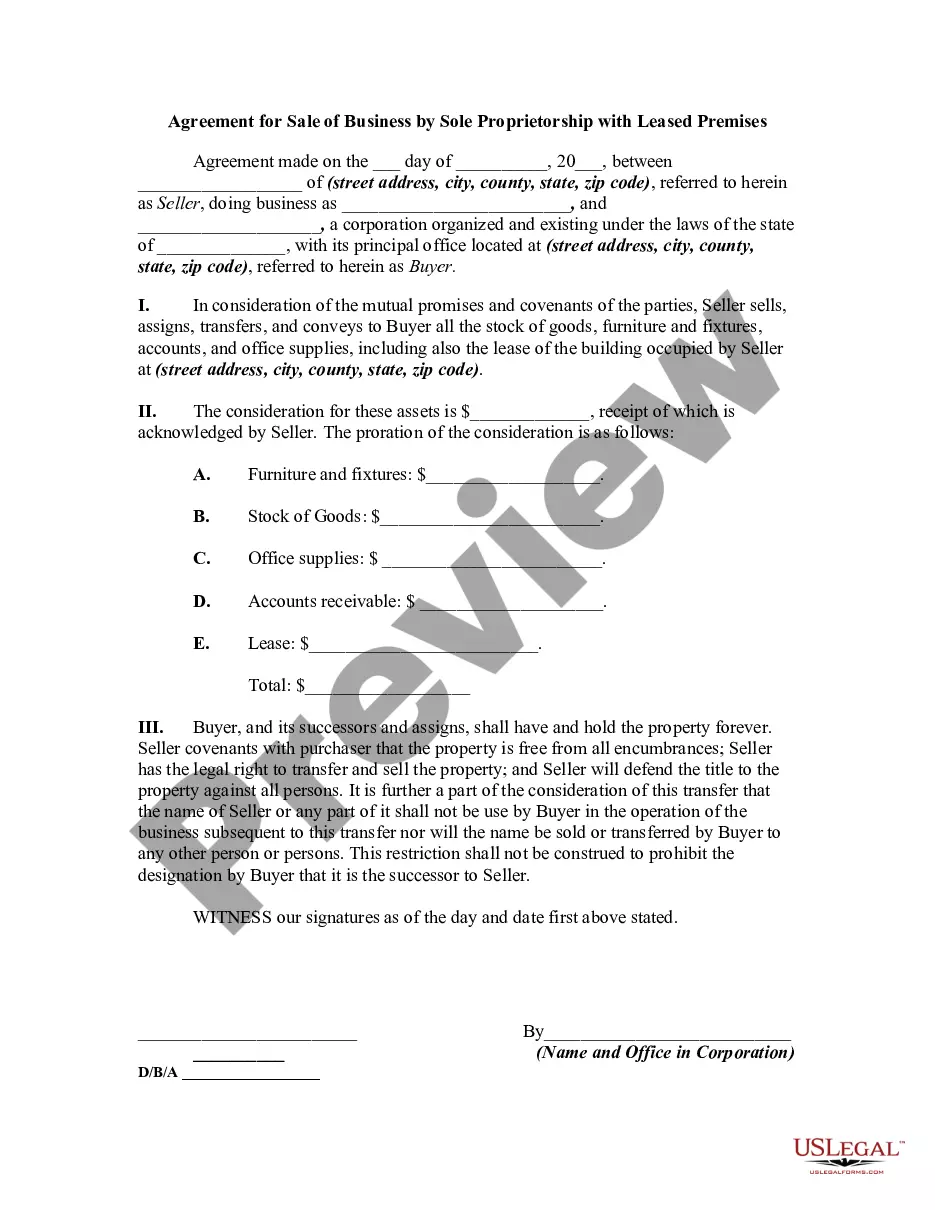
How to fill out Agreement For Sale Of Business By Sole Proprietorship With Leased Premises?
- Log in to your existing US Legal Forms account. Ensure your subscription is active; renew if necessary to avoid disruptions.
- Preview the available forms and carefully read the descriptions to select the one that aligns with your needs and local jurisdiction requirements.
- If you need to make adjustments, use the search feature to find alternative templates that may be more suitable.
- Proceed to purchase by clicking the 'Buy Now' button and choose the subscription plan that works best for you. Create an account if you haven't already.
- Complete the transaction by entering your payment details via credit card or PayPal.
- Once the purchase is confirmed, download and save the legal form to your device. You can access it anytime from the ‘My Forms’ section in your profile.
In conclusion, US Legal Forms provides a comprehensive and user-friendly platform for sole proprietors with a DBA to access essential legal documents quickly. With extensive resources and support, you can ensure that your forms are completed accurately and efficiently.
Don’t wait any longer; start simplifying your legal document needs with US Legal Forms today!
Form popularity
FAQ
As a sole proprietor with a DBA, it is wise to set aside about 25-30% of your income for taxes. This estimate accounts for federal, and possibly state taxes. To ensure you meet your tax obligations, consider using accounting tools or platforms like USLegalForms to help you manage your finances effectively.
When you are a sole proprietor with a DBA, the taxes you owe will depend on your total business income. Your DBA does not change your tax status; you report income as personal income. It's important to set aside funds for taxes throughout the year to avoid a large tax bill at filing time.
A sole proprietor with a DBA generally does not need to file a BOI (Beneficial Ownership Information) report unless mandated by state regulations. However, maintaining transparency in ownership is important for legal and financial practices. If you are uncertain, consult a legal expert or explore resources provided by platforms like USLegalForms to stay compliant.
Filing taxes as a sole proprietor with a DBA isn’t complicated. You will typically report your business income on Schedule C of your personal income tax return, Form 1040. Don’t forget to track all business-related expenses, as these will help lower your taxable income.
A sole proprietor with a DBA can certainly benefit from tax write-offs. You can deduct business expenses, such as office supplies and marketing costs, on your tax return. This can ultimately reduce your taxable income, allowing you to keep more of your earnings.
Yes, a sole proprietor with a DBA can use this business name to operate and promote their services. A DBA allows you to establish a brand identity that differs from your legal name. Remember, while it broadens your business’s visibility, it does not provide personal liability protection.
As a sole proprietor with a DBA, you don’t need to report your DBA name directly to the IRS. However, any income generated under your DBA must be reported on your tax return. It’s crucial to keep accurate records of your business income and expenses to ensure compliance with tax regulations.
The primary disadvantage of using a DBA for a sole proprietorship is the lack of legal protection. As a sole proprietor with a DBA, you personally bear all liabilities, which can impact your financial stability if legal issues arise. Additionally, a DBA does not provide the same benefits as other business structures, such as asset protection or tax advantages. It’s wise to explore your options to ensure you choose the best structure for your business needs.
Yes, you can be a sole proprietor with a DBA. In fact, many sole proprietors choose to register a DBA to operate under a business name that differs from their personal name. This approach can enhance your business’s brand image and make it easier for customers to identify your offerings. However, it's important to understand the limitations and responsibilities that come with this structure.
The greatest disadvantage of a sole proprietorship lies in personal liability. As a sole proprietor with a DBA, you remain personally responsible for all business debts and obligations. This risk extends to your personal assets, such as your home or savings, if your business encounters financial difficulties. Choosing the right business structure is crucial to minimizing this risk.