Well Agreement With The President
Description
Get your form ready online
Our built-in tools help you complete, sign, share, and store your documents in one place.
Make edits, fill in missing information, and update formatting in US Legal Forms—just like you would in MS Word.
Download a copy, print it, send it by email, or mail it via USPS—whatever works best for your next step.
Sign and collect signatures with our SignNow integration. Send to multiple recipients, set reminders, and more. Go Premium to unlock E-Sign.
If this form requires notarization, complete it online through a secure video call—no need to meet a notary in person or wait for an appointment.
We protect your documents and personal data by following strict security and privacy standards.

Make edits, fill in missing information, and update formatting in US Legal Forms—just like you would in MS Word.

Download a copy, print it, send it by email, or mail it via USPS—whatever works best for your next step.

Sign and collect signatures with our SignNow integration. Send to multiple recipients, set reminders, and more. Go Premium to unlock E-Sign.

If this form requires notarization, complete it online through a secure video call—no need to meet a notary in person or wait for an appointment.

We protect your documents and personal data by following strict security and privacy standards.
Looking for another form?






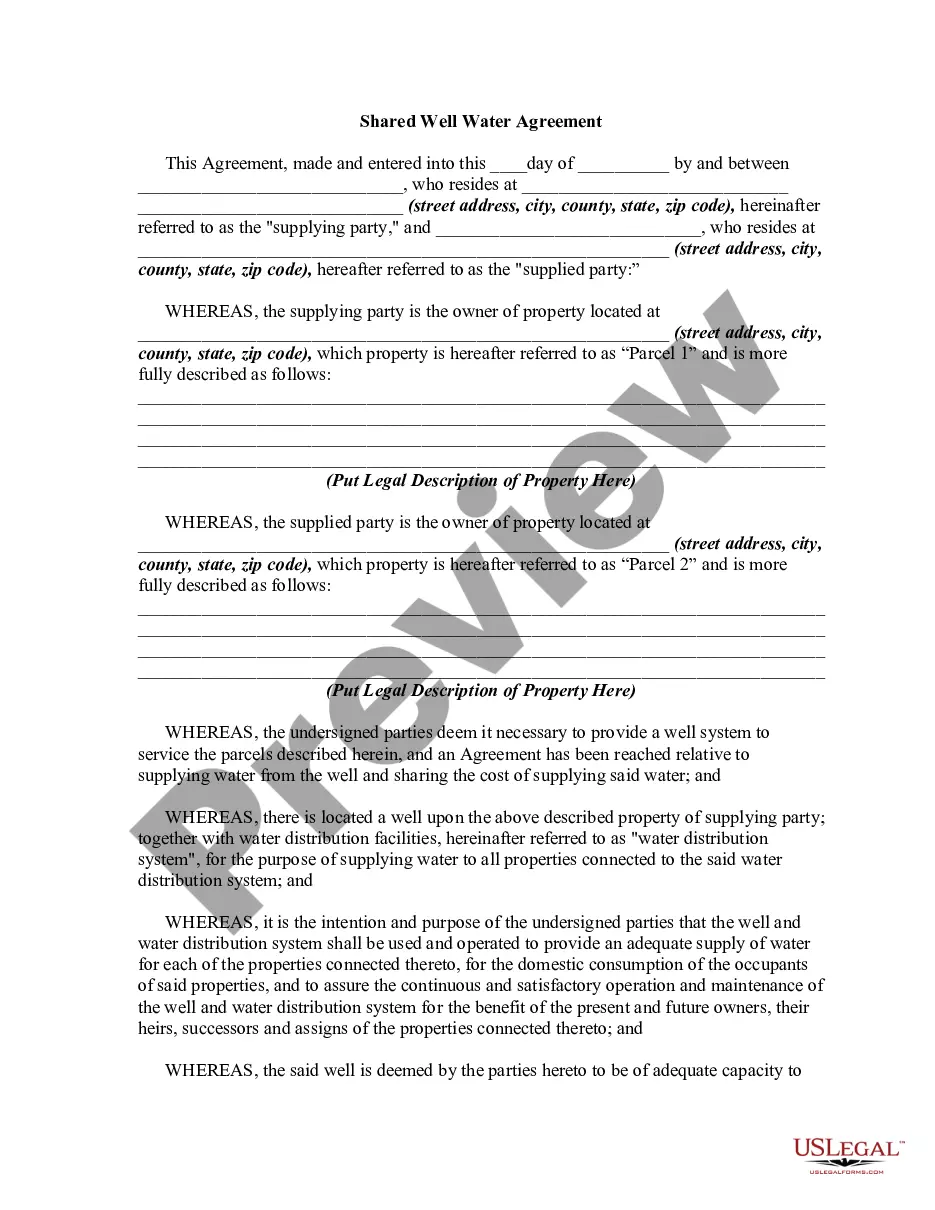
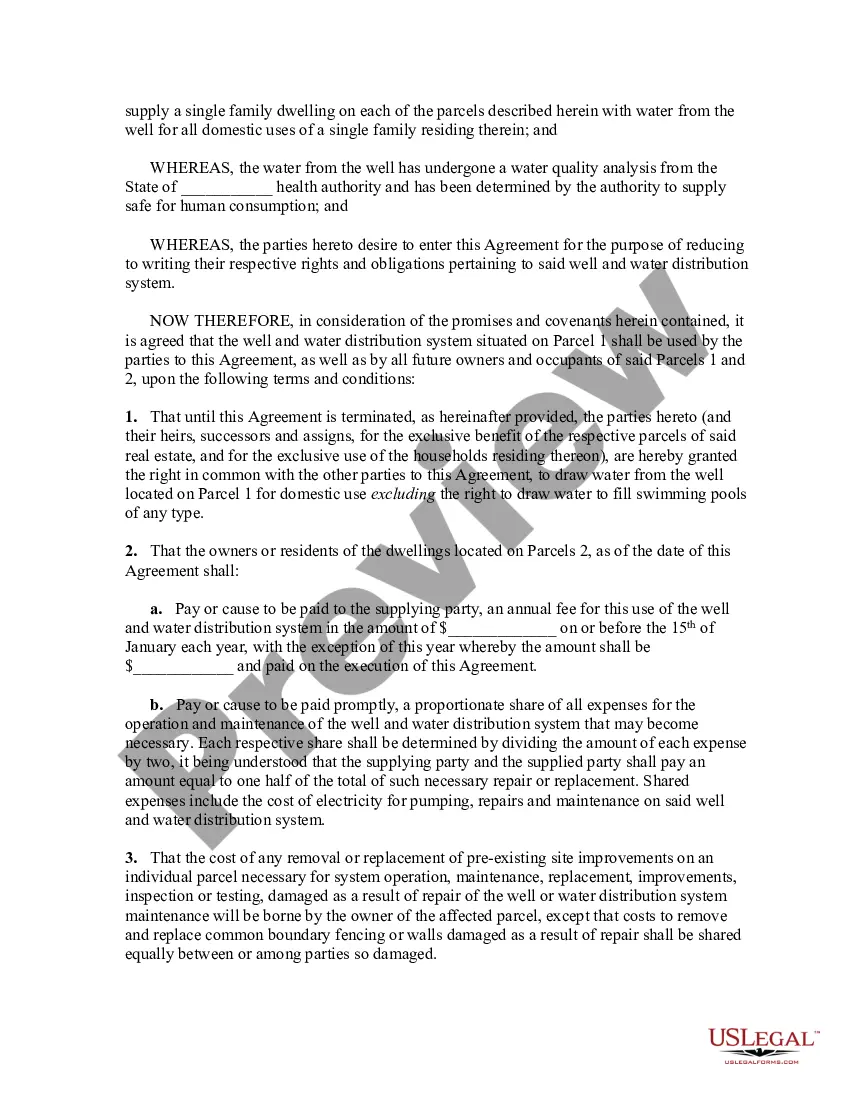
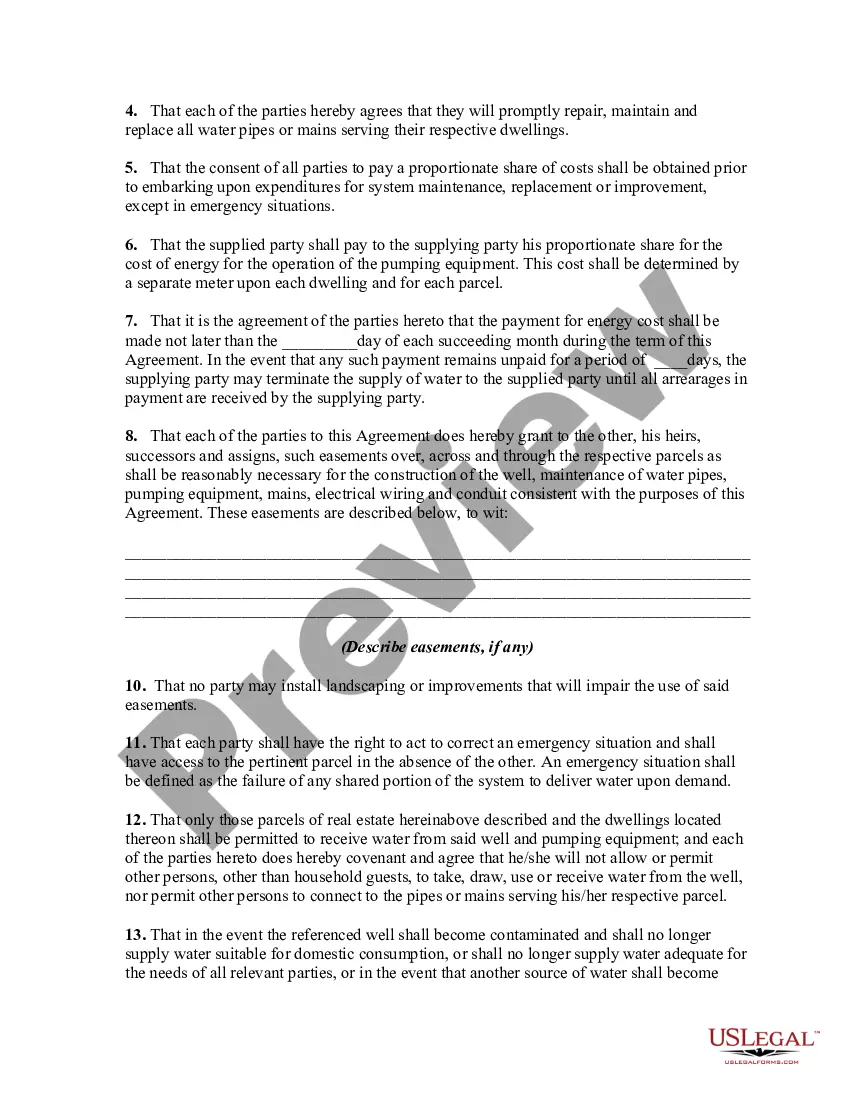
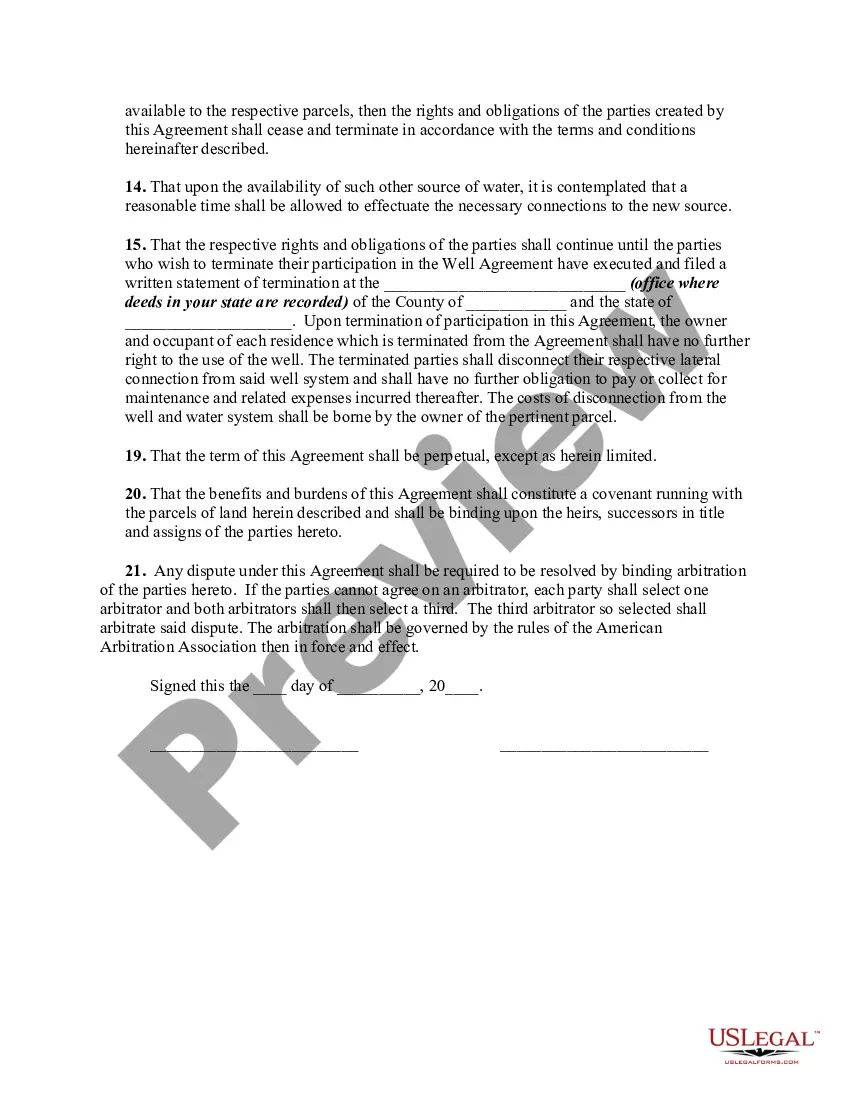
How to fill out Shared Well Water Agreement?
- Visit the US Legal Forms website and log into your account if you're an existing user.
- If you're new, start by browsing the extensive library. Use the Search function to find your specific well agreement template.
- Review the preview mode and the form description carefully to ensure it matches your local jurisdiction.
- Select the template that fits your needs best and proceed to purchase.
- Choose a subscription plan that suits you and register for an account if you haven't already.
- Complete the payment using your credit card or PayPal.
- Once purchased, download your well agreement template to your device and access it anytime through your 'My Forms' section.
In conclusion, US Legal Forms provides a robust solution for obtaining the legal documents you need, including agreements with the president. With their extensive library and expert assistance, ensuring your paperwork is precise has never been easier.
Don't hesitate! Start your journey toward hassle-free legal documentation today!
Form popularity
FAQ
A prominent example of a president making a treaty is the North Atlantic Treaty Organization (NATO) agreement. This treaty established a military alliance among member countries and required ratification by the Senate. Treaties differ from executive agreements by needing more formal approval, emphasizing the check-and-balance system in governance. Recognizing the significance of a well agreement with the president adds context to these impactful international partnerships.
Generally, Congress does not need to agree with the president on executive agreements. The president has the power to sign these agreements independently. However, congressional-executive agreements do require congressional approval, blending executive and legislative authority. Understanding the dynamics of a well agreement with the president can help citizens grasp how laws and diplomacy intersect.
The three types of executive agreements include sole executive agreements, congressional-executive agreements, and international agreements. Sole executive agreements are made solely by the president, while congressional-executive agreements require approval from Congress. International agreements pertain to commitments made with foreign nations. A well agreement with the president often highlights these types, ensuring clarity and legality in international relations.
One example of the Executive Office of the President is the National Security Council. This group advises the president on matters of national security and foreign affairs. It plays a crucial role in shaping the country's response to international events and crises. Knowing how a well agreement with the president operates within this framework can deepen your understanding of U.S. governance.
A presidential agreement, often referred to as an executive agreement, is a pact made by the president that has international implications but does not require a formal treaty process. These agreements can cover a broad range of topics, from military cooperation to economic partnerships. They illustrate the president's ability to conduct foreign relations efficiently. A well agreement with the president enhances the execution of the nation's foreign policy objectives.
An executive agreement refers to a deal made between the president and foreign leaders or governments without seeking Senate approval. A classic example includes agreements on trade tariffs or environmental commitments. These agreements fall under the presidential authority to manage foreign policy. Understanding a well agreement with the president can help citizens navigate these important interactions.
Yes, writing a letter to the president is quite straightforward. Use proper formatting, address your concerns clearly, and keep the message concise. If your letter relates to a specific issue like a well agreement with the president, clearly articulate your stance and requests to make a lasting impression.
To write a shared well agreement, begin by clearly stating the purpose and defining the parties involved. Include specific terms regarding usage, maintenance responsibilities, and dispute resolution processes. If you need guidance, platforms like uslegalforms can help you create a well agreement with the president that adheres to legal standards.
A shared well often faces issues such as potential disputes over usage and maintenance. Users may find themselves disagreeing on water rights or shared costs, which can lead to conflicts. If you are part of a shared well, it is wise to create a well agreement with the president to outline responsibilities and ensure everyone is on the same page.
An executive agreement with the president can be a pact made on foreign policy that doesn’t require Senate approval. For instance, arms reduction agreements are often done this way. If you are seeking to understand how a well agreement with the president could work, think of it as a formal understanding that outlines expectations and responsibilities.