Security Of Property With Liabilities
Description
Get your form ready online
Our built-in tools help you complete, sign, share, and store your documents in one place.
Make edits, fill in missing information, and update formatting in US Legal Forms—just like you would in MS Word.
Download a copy, print it, send it by email, or mail it via USPS—whatever works best for your next step.
Sign and collect signatures with our SignNow integration. Send to multiple recipients, set reminders, and more. Go Premium to unlock E-Sign.
If this form requires notarization, complete it online through a secure video call—no need to meet a notary in person or wait for an appointment.
We protect your documents and personal data by following strict security and privacy standards.

Make edits, fill in missing information, and update formatting in US Legal Forms—just like you would in MS Word.

Download a copy, print it, send it by email, or mail it via USPS—whatever works best for your next step.

Sign and collect signatures with our SignNow integration. Send to multiple recipients, set reminders, and more. Go Premium to unlock E-Sign.

If this form requires notarization, complete it online through a secure video call—no need to meet a notary in person or wait for an appointment.

We protect your documents and personal data by following strict security and privacy standards.
Looking for another form?
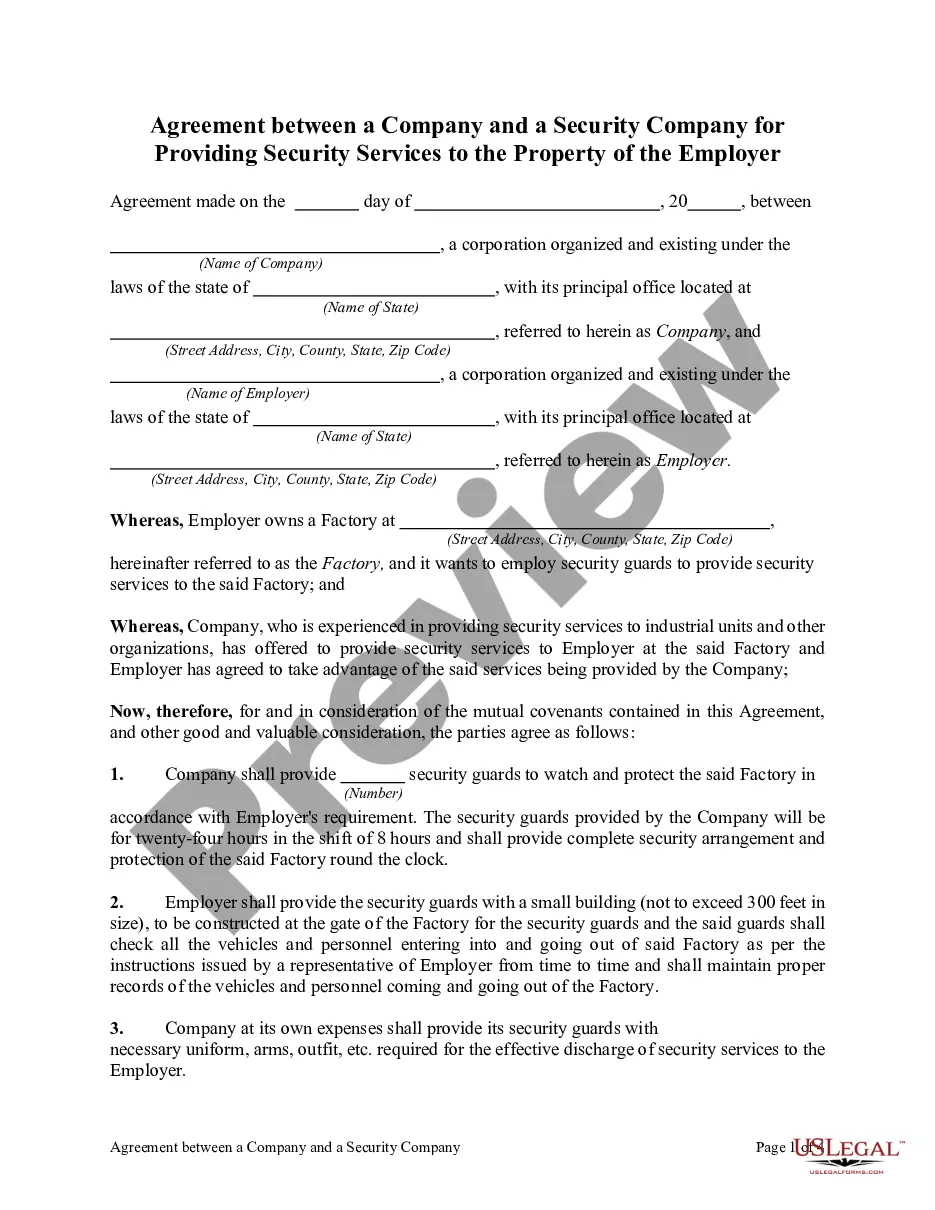
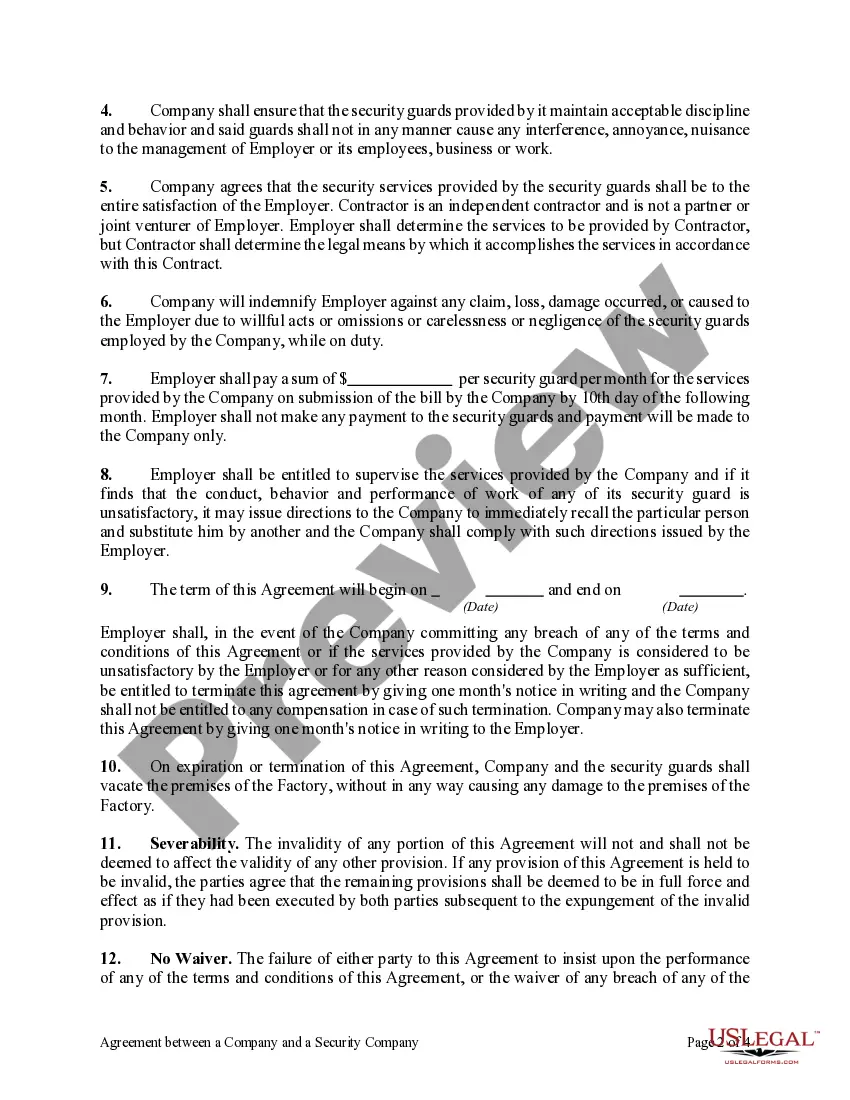
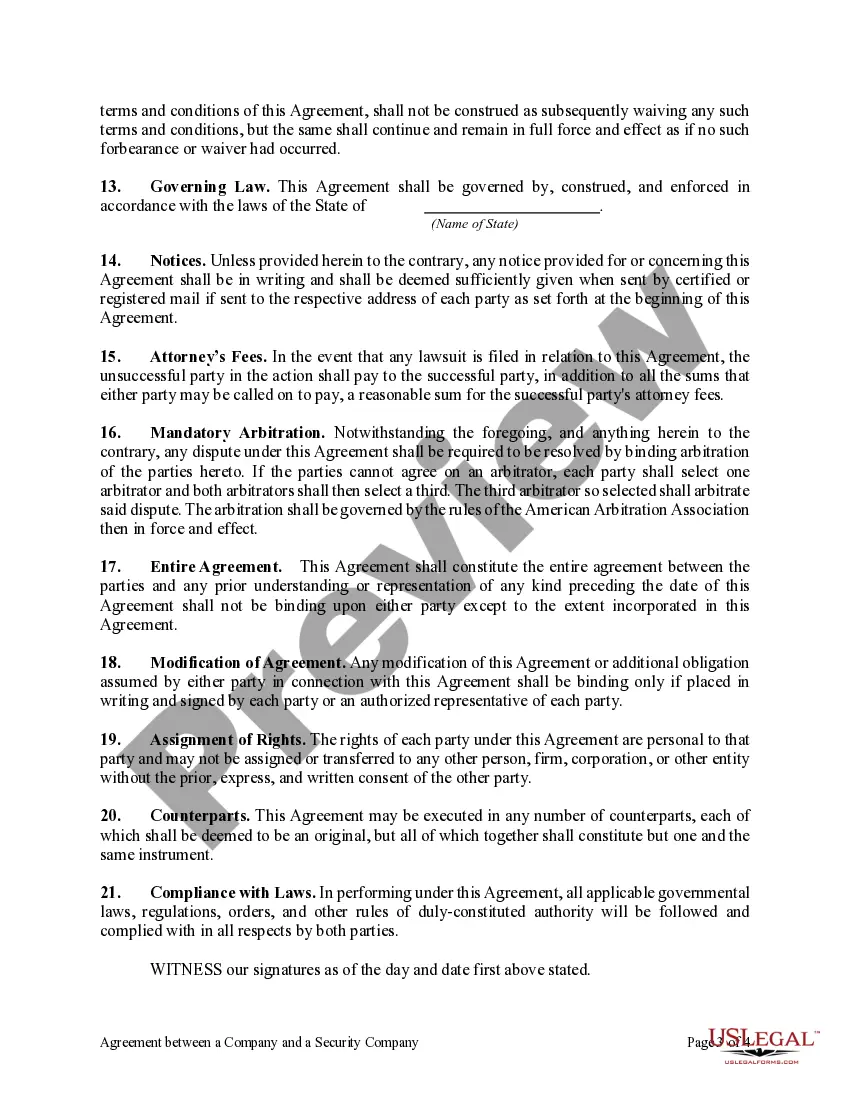
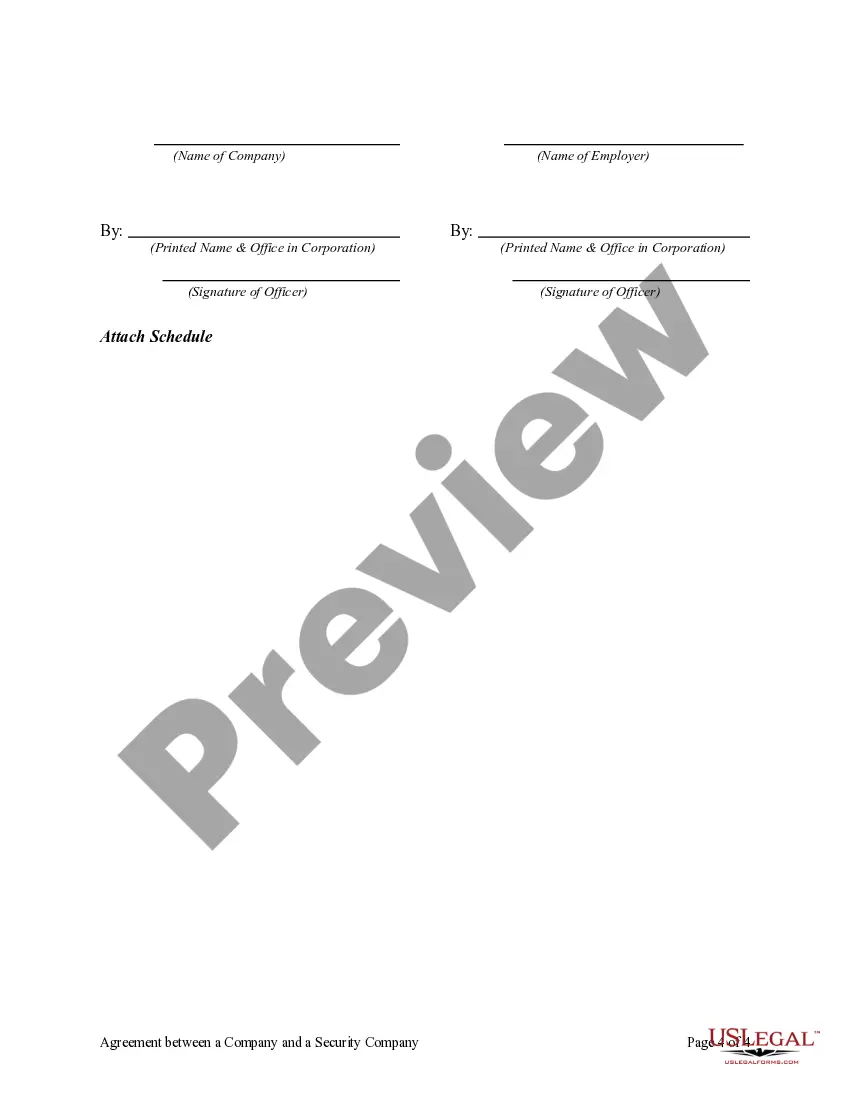
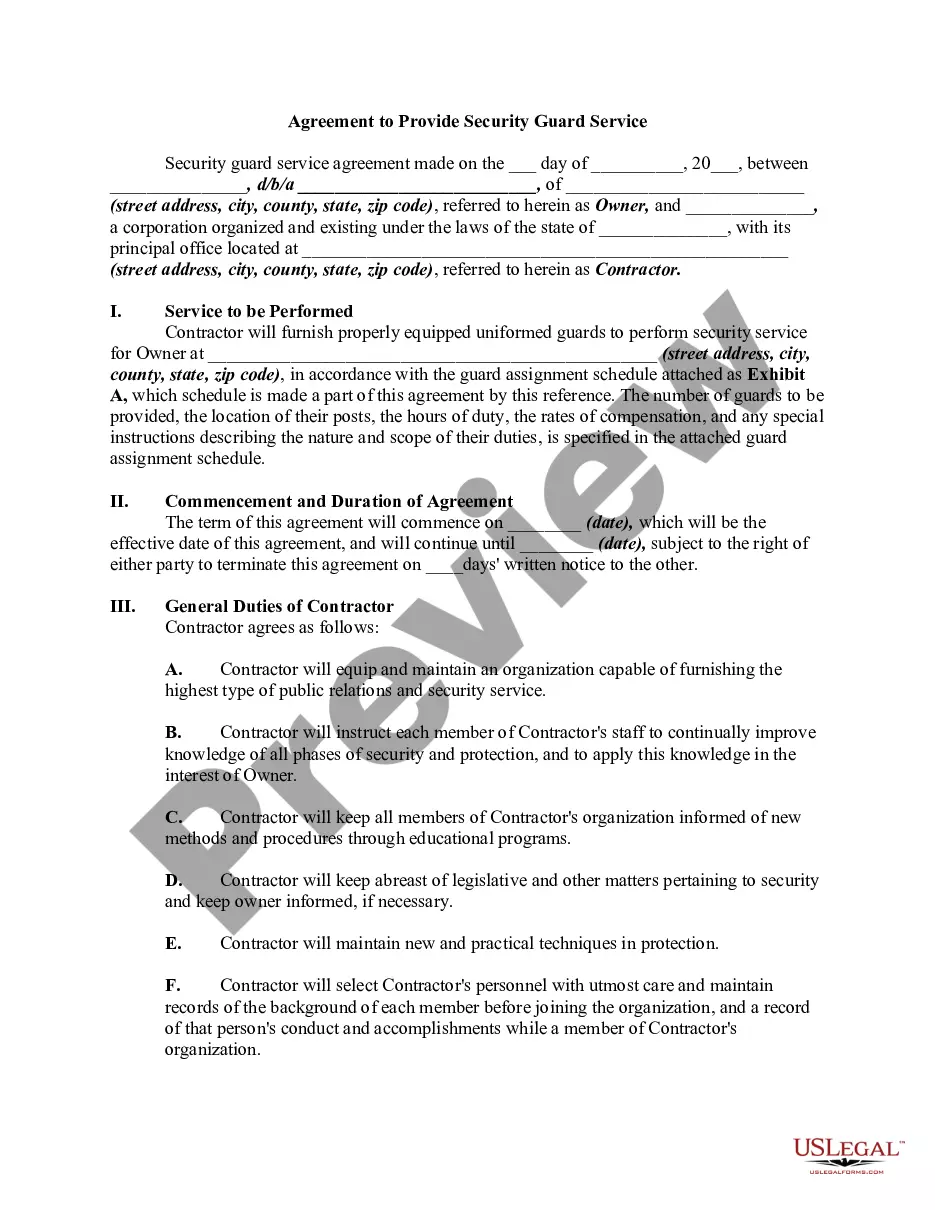
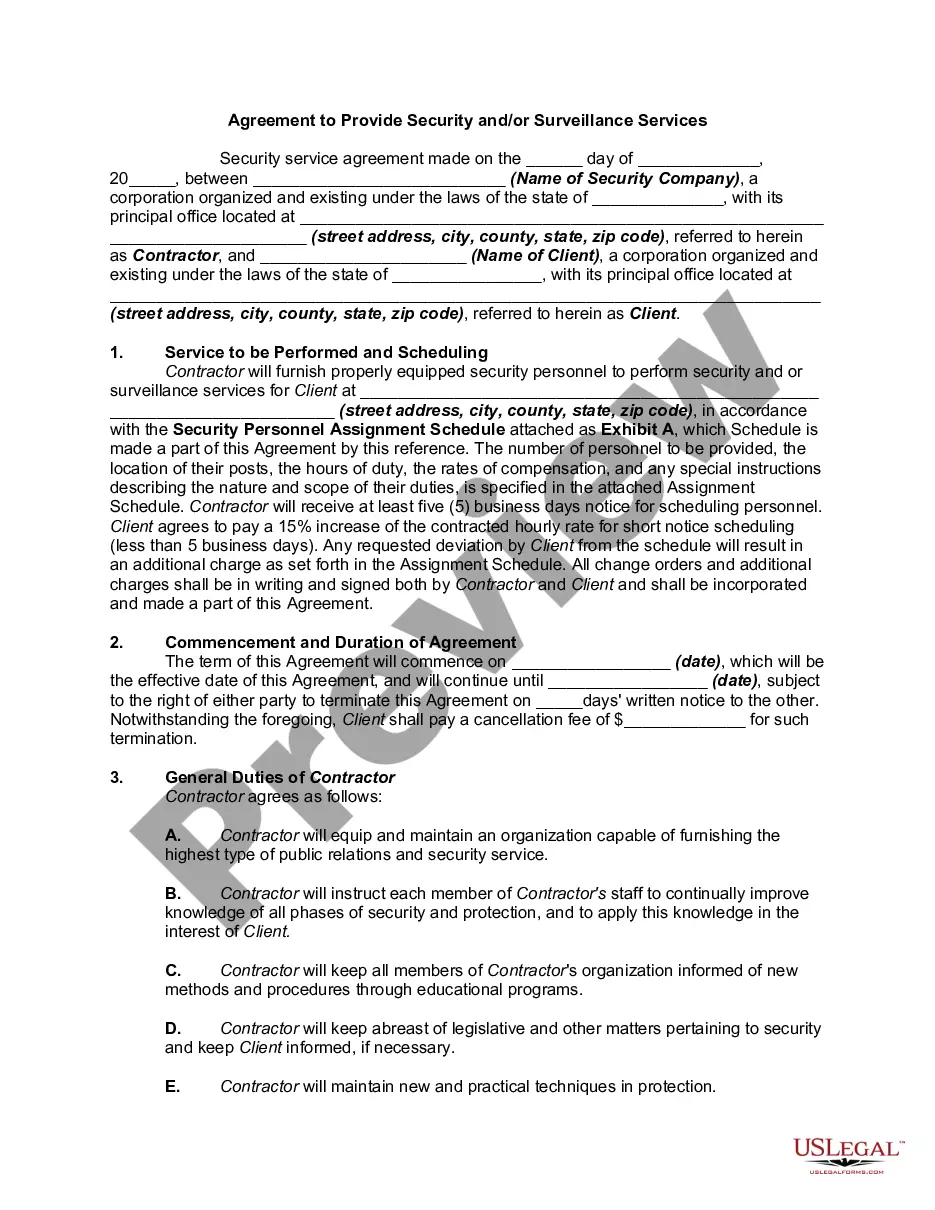
How to fill out Agreement Between A Company And A Security Company For Providing Security Services To The Property Of The Employer?
The Protection Of Assets With Obligations you observe on this page is a reusable formal layout crafted by expert attorneys in accordance with national and local regulations.
For over 25 years, US Legal Forms has offered individuals, companies, and lawyers more than 85,000 verified, state-specific documents for any business and personal situation. It’s the fastest, easiest, and most dependable means to acquire the paperwork you need, as the service assures bank-grade data protection and anti-malware defenses.
Fill out and sign the document. Print the template to fill it out by hand. Alternatively, employ an online multifunctional PDF editor to quickly and precisely complete and sign your form with a valid signature.
- Search for the document you require and examine it.
- Browse through the sample you searched and preview it or check the form details to ensure it meets your needs. If it doesn't, utilize the search bar to find the correct one. Click Buy Now when you have located the template you require.
- Register and Log In.
- Choose the pricing option that fits your needs and set up an account. Use PayPal or a credit card for a swift payment. If you already have an account, Log In and review your subscription to proceed.
- Obtain the editable template.
- Select the format you prefer for your Protection Of Assets With Obligations (PDF, Word, RTF) and save the sample on your device.
Form popularity
FAQ
A trust instrument is a writing declaration or agreement to allocate a settlor's property to their beneficiaries. It consists of the trust and regulates how the trust is executed. Trust instruments can be amended or revoked by the settlor at any time (but there are some exceptions, like irrevocable trusts).
No. It is a private document which, unlike a Will, is not entered into public record.
In Florida, the amendment must conform to the procedures laid out in the trust's declaration. If no procedures are specified, Florida law allows the grantor to amend the trust by executing a document that clearly states their intentions.
To receive a copy of the trust document, a beneficiary must communicate with the trustee requesting the copy. Typically, trusts are largely used among close relatives as estate planning tools. However, such informal relationships sometimes lead to ignorance of legal facts or a lack of accounting by the trustee.
?Amended? means that the document has ?changed?? that someone has revised the document. ?Restated? means ?presented in its entirety?, ? as a single, complete document. ingly, ?amended and restated? means a complete document into which one or more changes have been incorporated.
If there is no amendment clause in the Trust Deed, any amendment has to be done with the permission of a Civil Court. Once the Civil Court has allowed permission for amendment, it is not open on the part of the Income Tax Officer or any other person to challenge such amendment.
It's important to know what you want to change and where in your trust document this information lives (such as the article number you're amending). Fill out the amendment form. Complete the entire form. It's important to be clear and detailed in describing your changes.
By its very nature, a revocable trust can generally be revoked, amended, and modified by the grantor (aka settlor, trust or). This, so long as the grantor is alive and not incapacitated. And provided the trust instrument permits the grantor to make such changes.