Living Trust With Beneficiary

Description
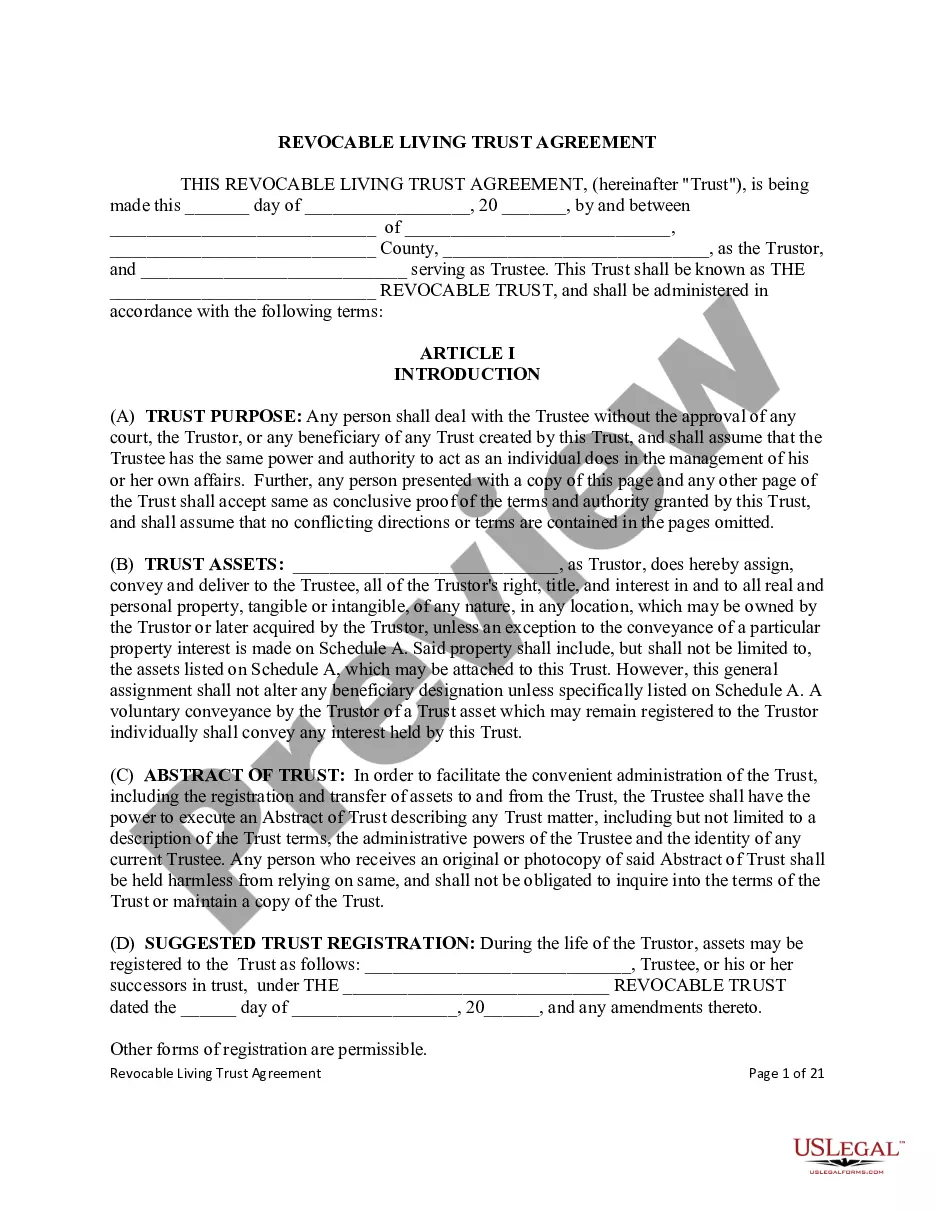
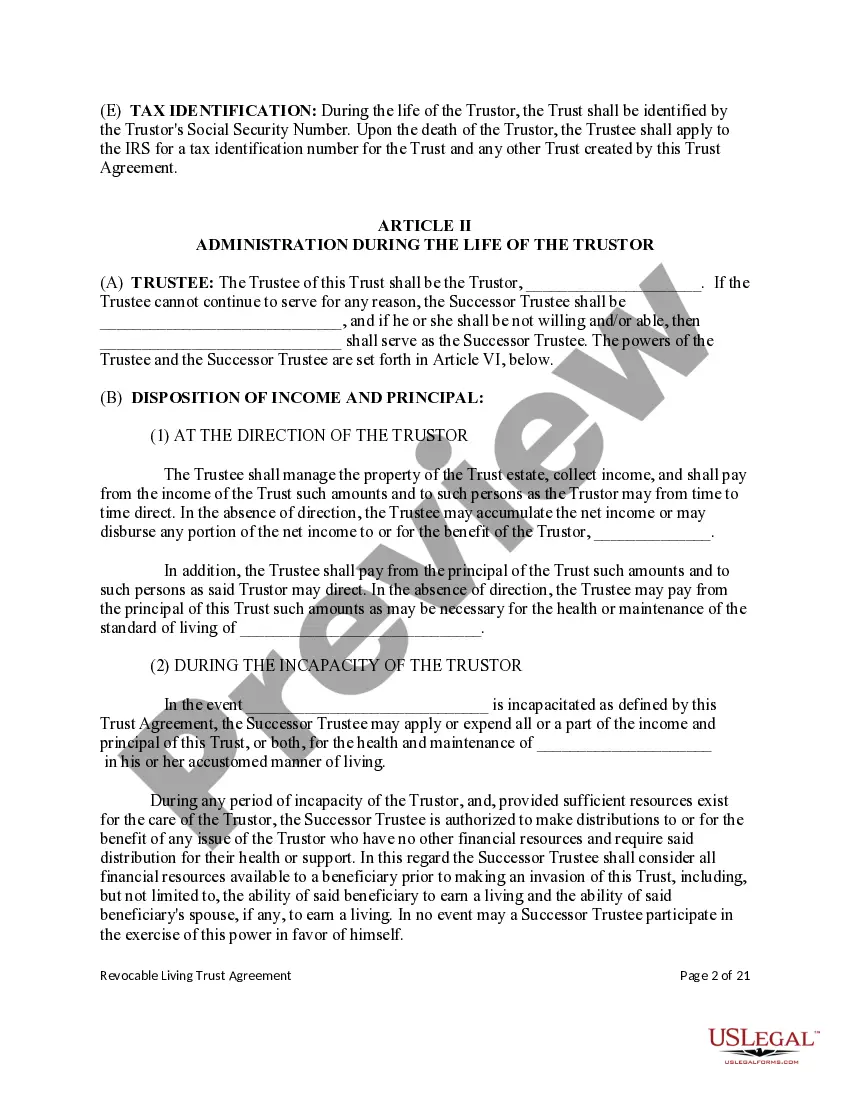
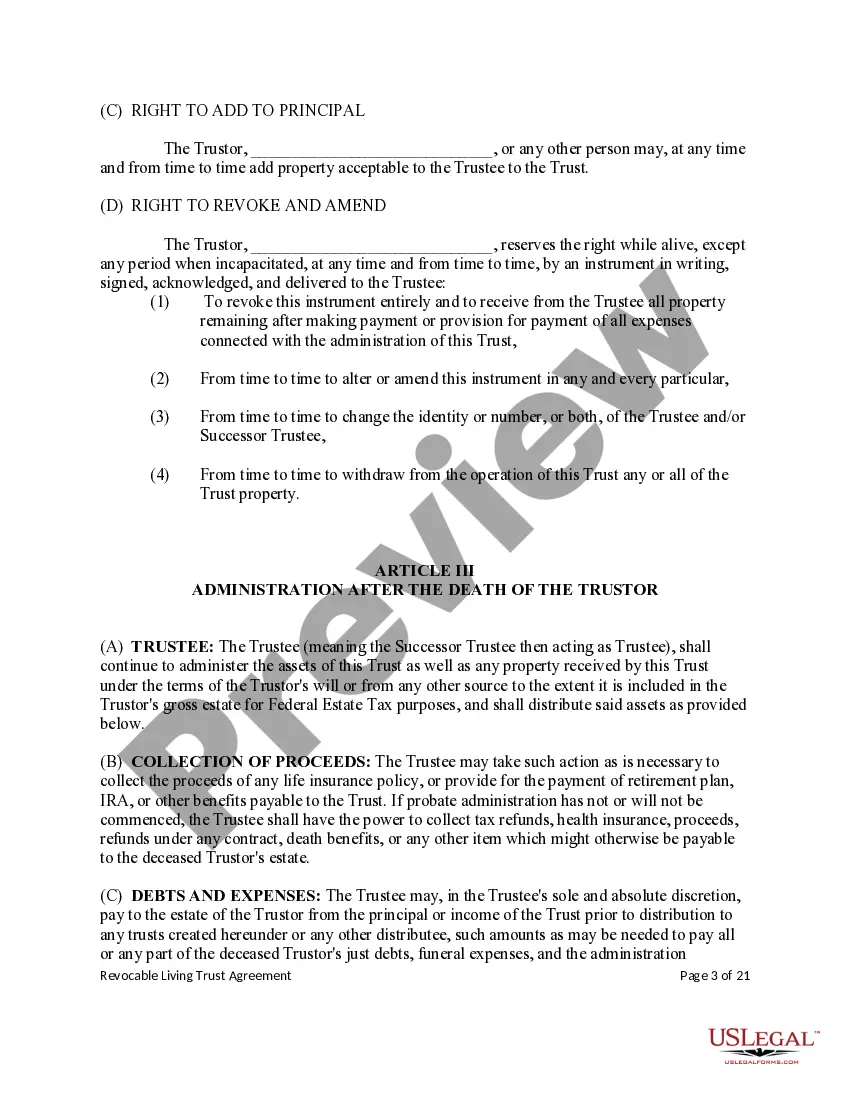
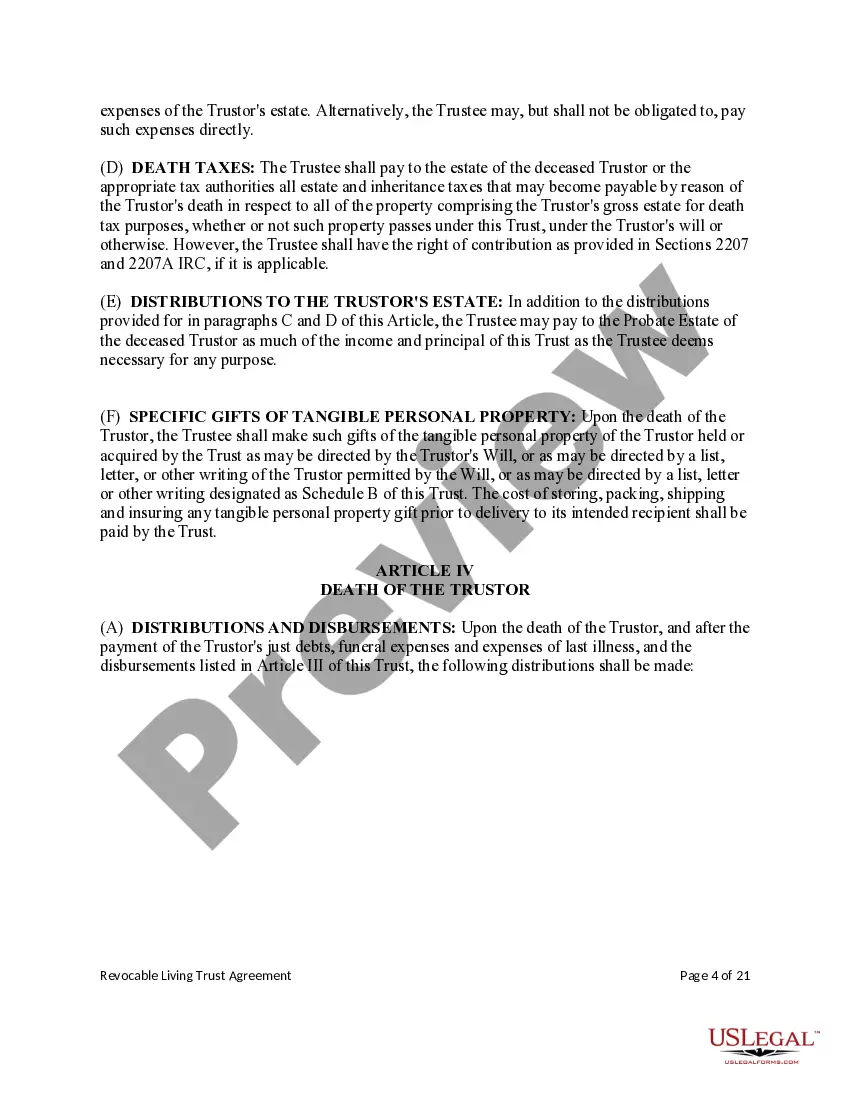

Get your form ready online
Our built-in tools help you complete, sign, share, and store your documents in one place.
Make edits, fill in missing information, and update formatting in US Legal Forms—just like you would in MS Word.
Download a copy, print it, send it by email, or mail it via USPS—whatever works best for your next step.
Sign and collect signatures with our SignNow integration. Send to multiple recipients, set reminders, and more. Go Premium to unlock E-Sign.
If this form requires notarization, complete it online through a secure video call—no need to meet a notary in person or wait for an appointment.
We protect your documents and personal data by following strict security and privacy standards.

Make edits, fill in missing information, and update formatting in US Legal Forms—just like you would in MS Word.

Download a copy, print it, send it by email, or mail it via USPS—whatever works best for your next step.

Sign and collect signatures with our SignNow integration. Send to multiple recipients, set reminders, and more. Go Premium to unlock E-Sign.

If this form requires notarization, complete it online through a secure video call—no need to meet a notary in person or wait for an appointment.

We protect your documents and personal data by following strict security and privacy standards.
Looking for another form?


How to fill out Living Trust - Revocable?
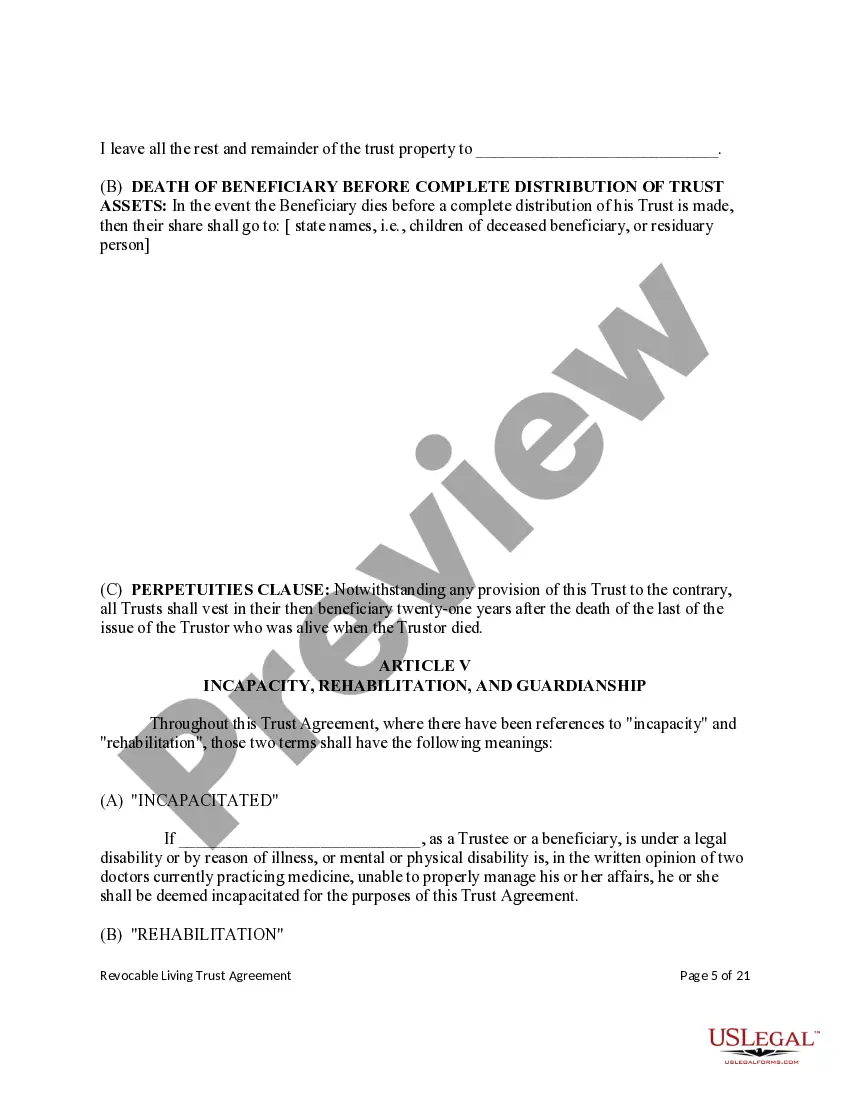
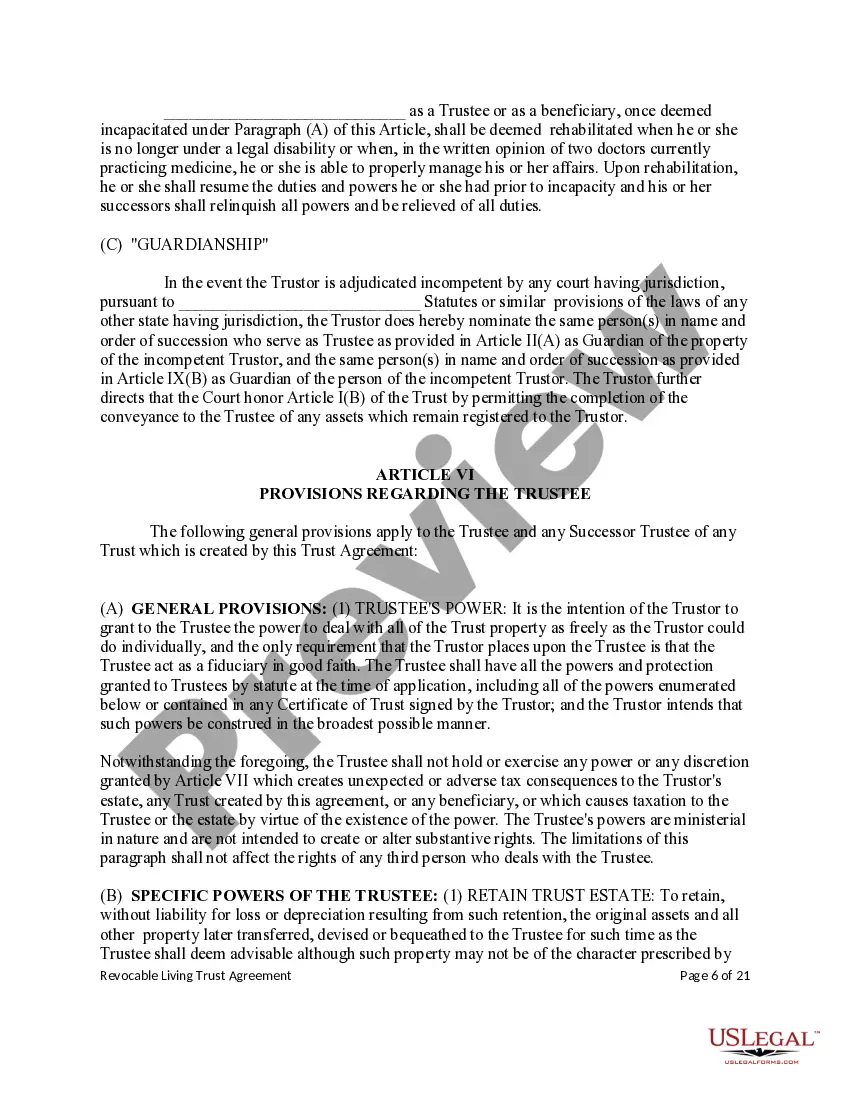
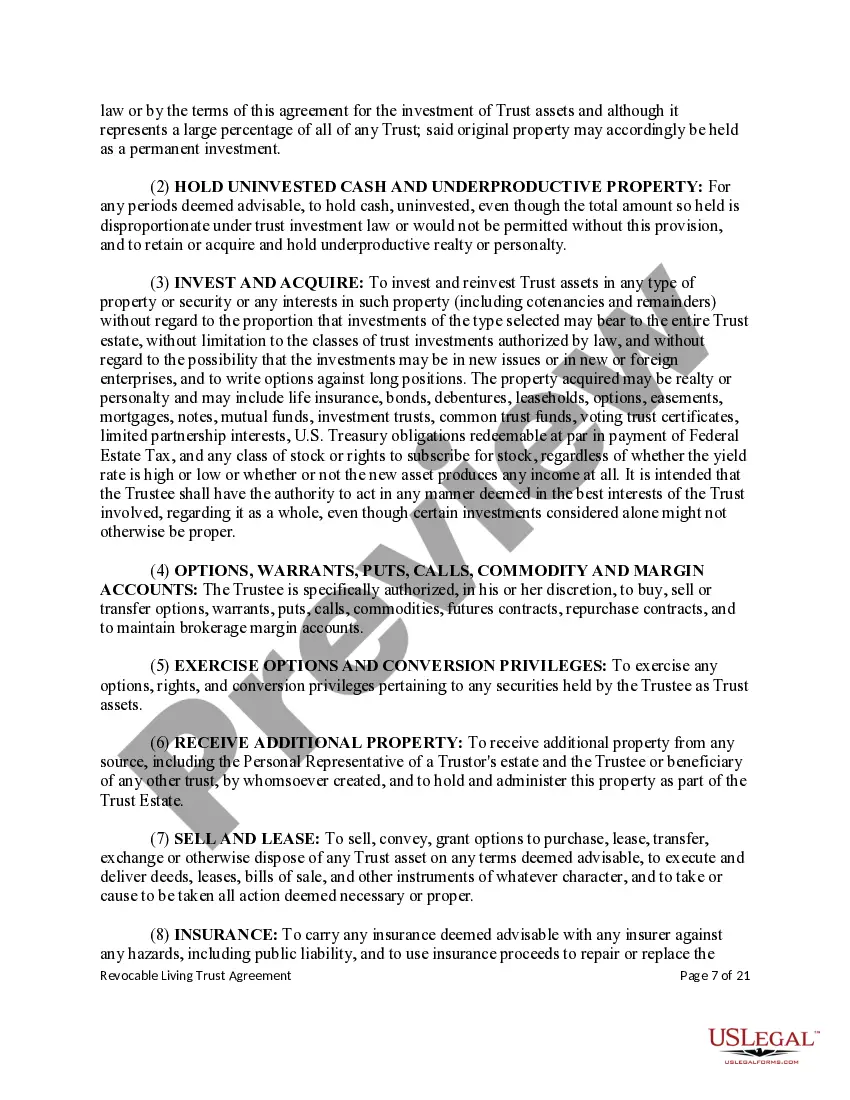
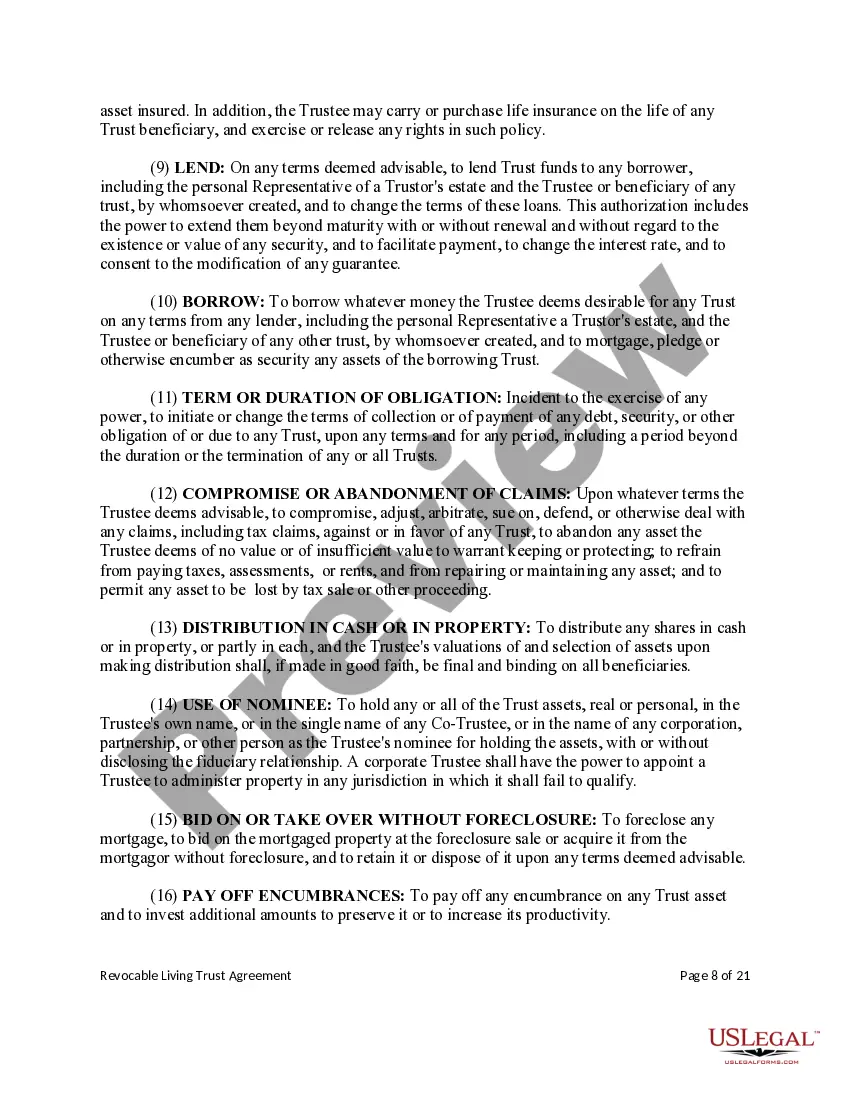
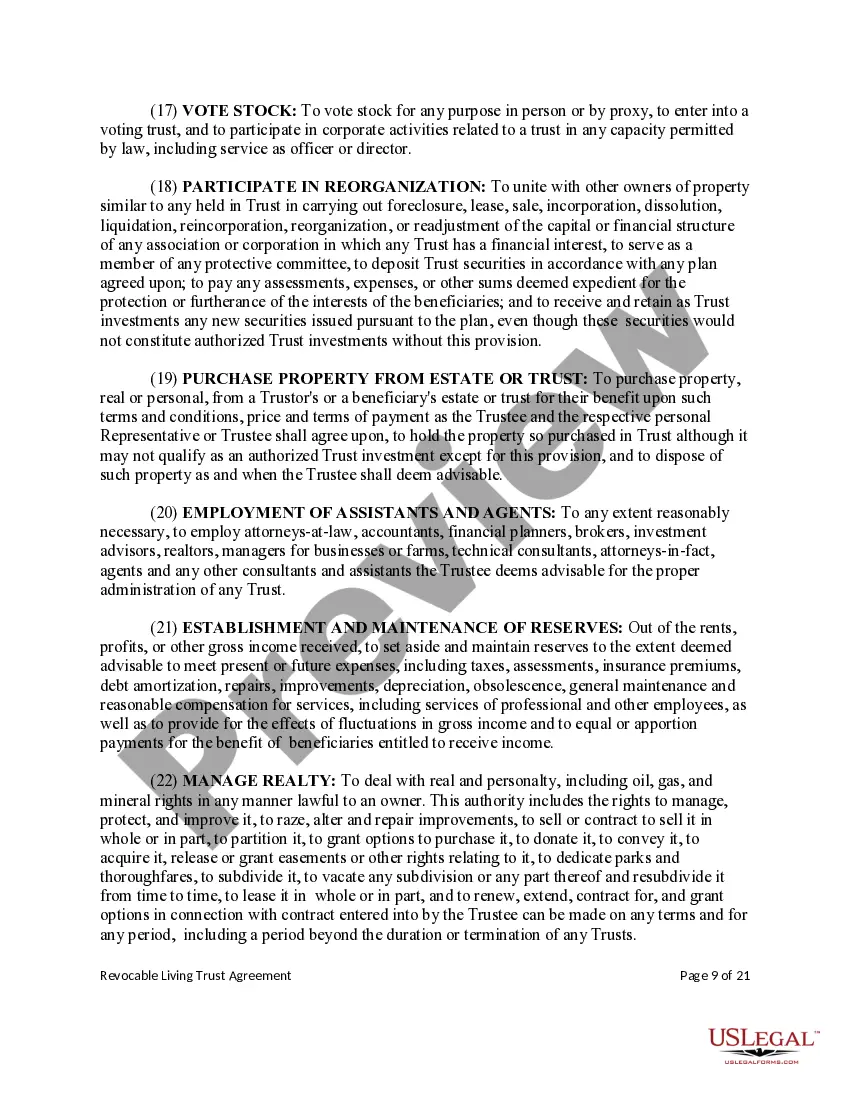
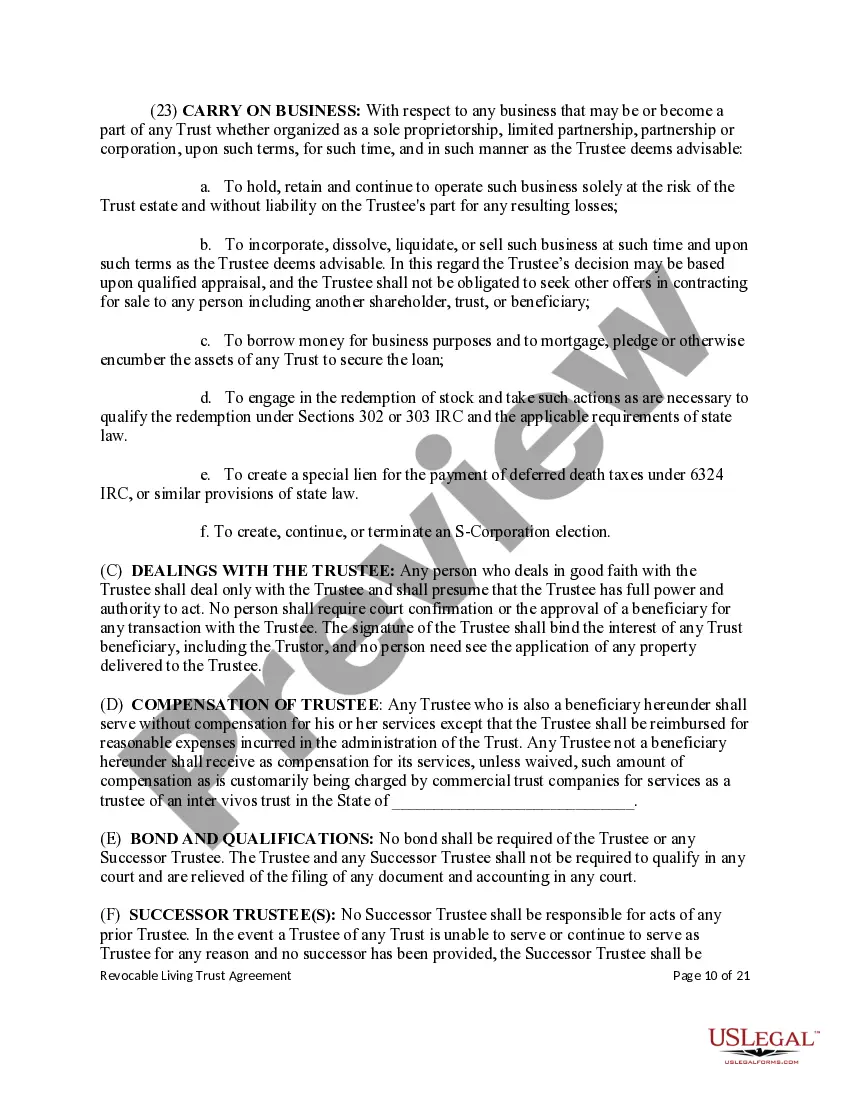
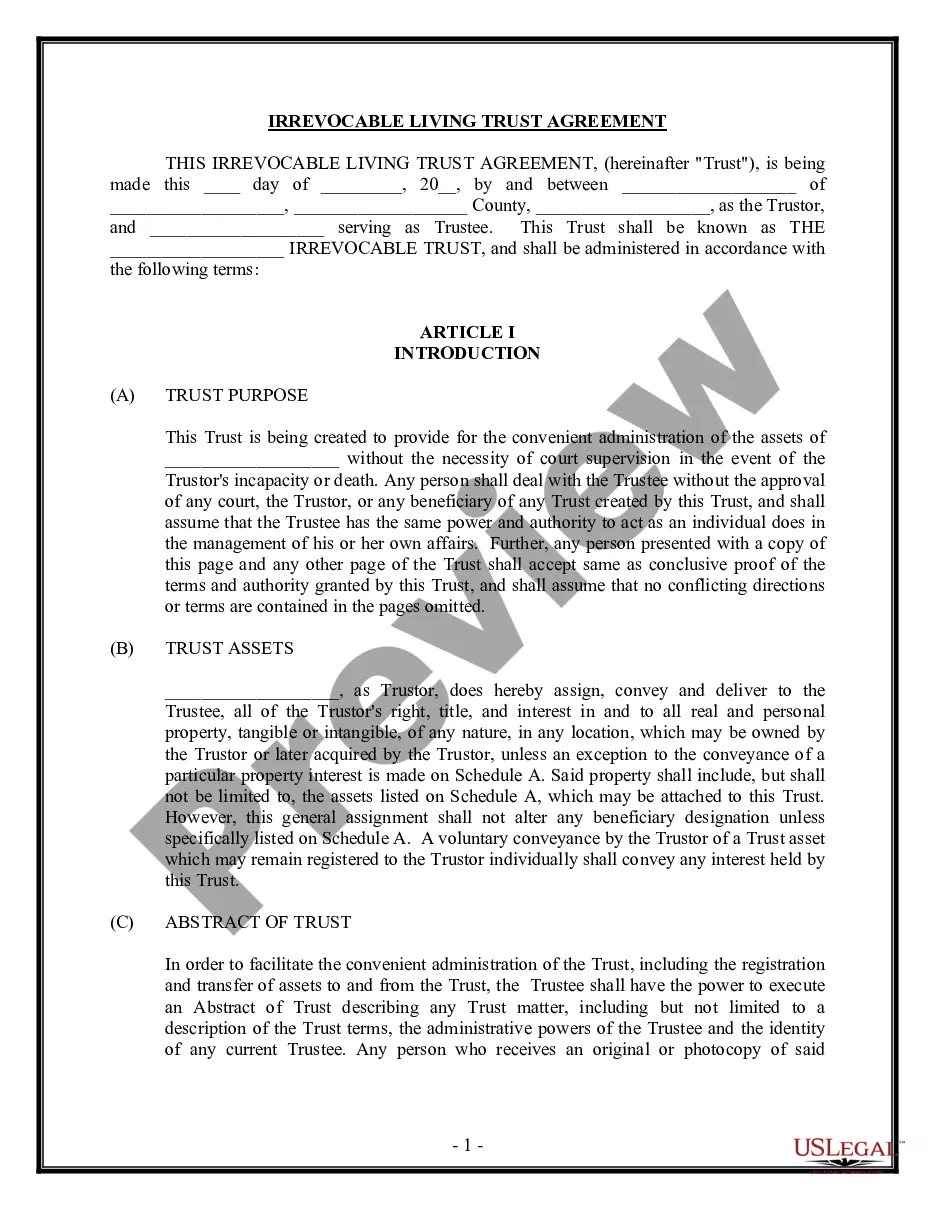
The Living Trust With Beneficiary displayed on this page is a reusable official template prepared by expert attorneys in compliance with federal and local statutes and regulations.
For over 25 years, US Legal Forms has supplied individuals, businesses, and legal practitioners with more than 85,000 validated, state-specific documents for any corporate and personal circumstance. It’s the fastest, simplest, and most dependable method to acquire the documentation you need, as the service guarantees bank-level data security and anti-malware safeguards.
Select the format you prefer for your Living Trust With Beneficiary (PDF, DOCX, RTF) and download the document onto your device.
- Search for the document you require and examine it.
- Browse through the example you looked for and preview it or review the form description to confirm it meets your criteria. If it doesn’t, use the search bar to find the suitable one. Click Buy Now once you have found the template you need.
- Choose and Log Into your account.
- Select the pricing option that works best for you and create an account. Use PayPal or a credit card to make an immediate payment. If you already possess an account, Log In and check your subscription to proceed.
- Obtain the editable template.
Form popularity
FAQ
One downside of a living trust with beneficiary provisions is that it may not provide the same level of asset protection as other estate planning tools. Beneficiaries could face challenges if they are in debt or encounter legal issues. Additionally, if the trust is not properly funded, it may not serve its intended purpose, leading to confusion and potential disputes among heirs.
Suze Orman advocates for living trusts, especially emphasizing the importance of having a living trust with beneficiary designations. She believes that it helps people control their assets while alive and ensures a smooth transition for heirs after death. Orman often highlights that a well-structured living trust can prevent family disputes and simplify estate management.
The 2 year rule for trusts generally refers to the timeline within which certain transfers to a living trust must occur to avoid tax complications. If you transfer assets into a living trust with beneficiary provisions, they may be subject to gift taxes if done within two years of passing. Understanding this rule ensures that you plan your estate effectively and minimize tax liabilities.
To begin the process of creating a living trust with beneficiary designations, first identify your assets and decide who you want to benefit from the trust. Next, you can use online platforms like uslegalforms to access templates and guidance tailored for your needs. Finally, ensure the trust document is signed and funded properly to make it effective.
Yes, placing your house in a living trust with beneficiary provisions can simplify the transfer of ownership after your passing. It allows your loved ones to avoid the lengthy probate process, ensuring that your wishes are followed efficiently. Additionally, it can provide privacy since a living trust does not become public record like a will does.
Beneficiary. The trust beneficiary is the person or people who receive the benefit of the revocable living trust's assets or property. This means that the trust's property will either be distributed to them outright, or held in trust for their benefit. During your lifetime, you will likely be the main trust beneficiary ...
If you don't have a trust in place, your assets might not end up in the hands of those named on your accounts. Plus, there are additional benefits to having a trust that you can't access by simply naming the beneficiaries of your accounts.
However, revocable living trusts can be expensive, don't have direct tax benefits, and don't protect against creditors. Carefully weigh these pros and cons against your situation before deciding to set up a revocable living trust.
The primary disadvantage of naming a trust as beneficiary is that the retirement plan's assets will be subjected to required minimum distribution payouts, which are calculated based on the life expectancy of the oldest beneficiary.