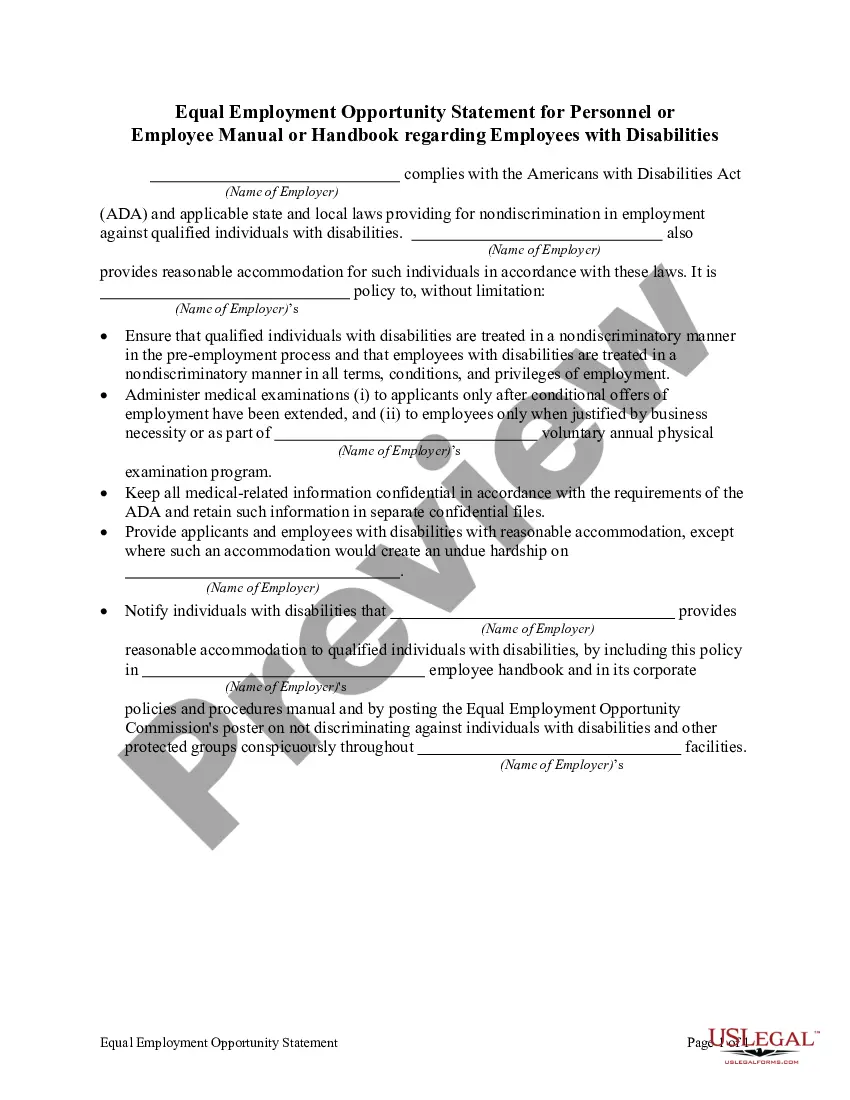
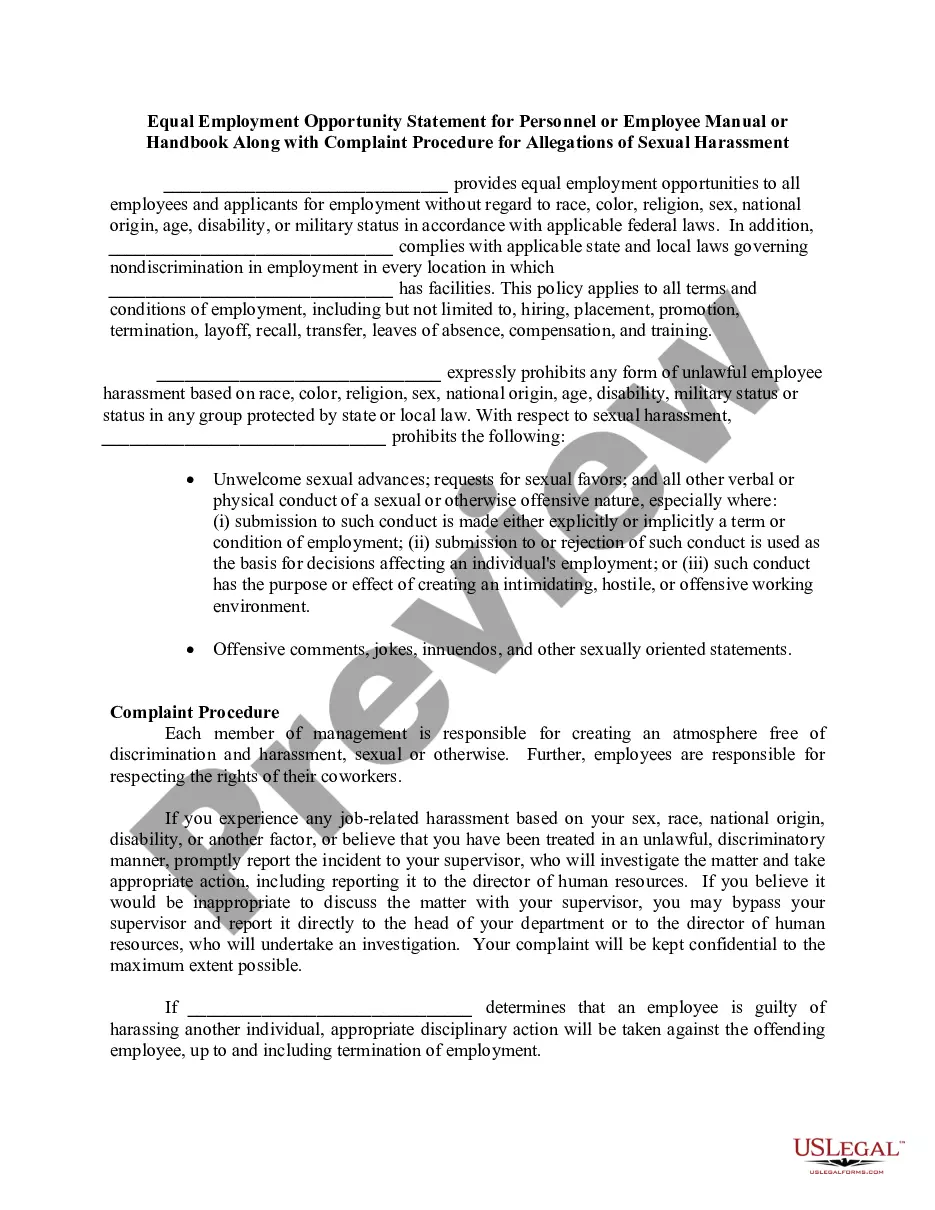
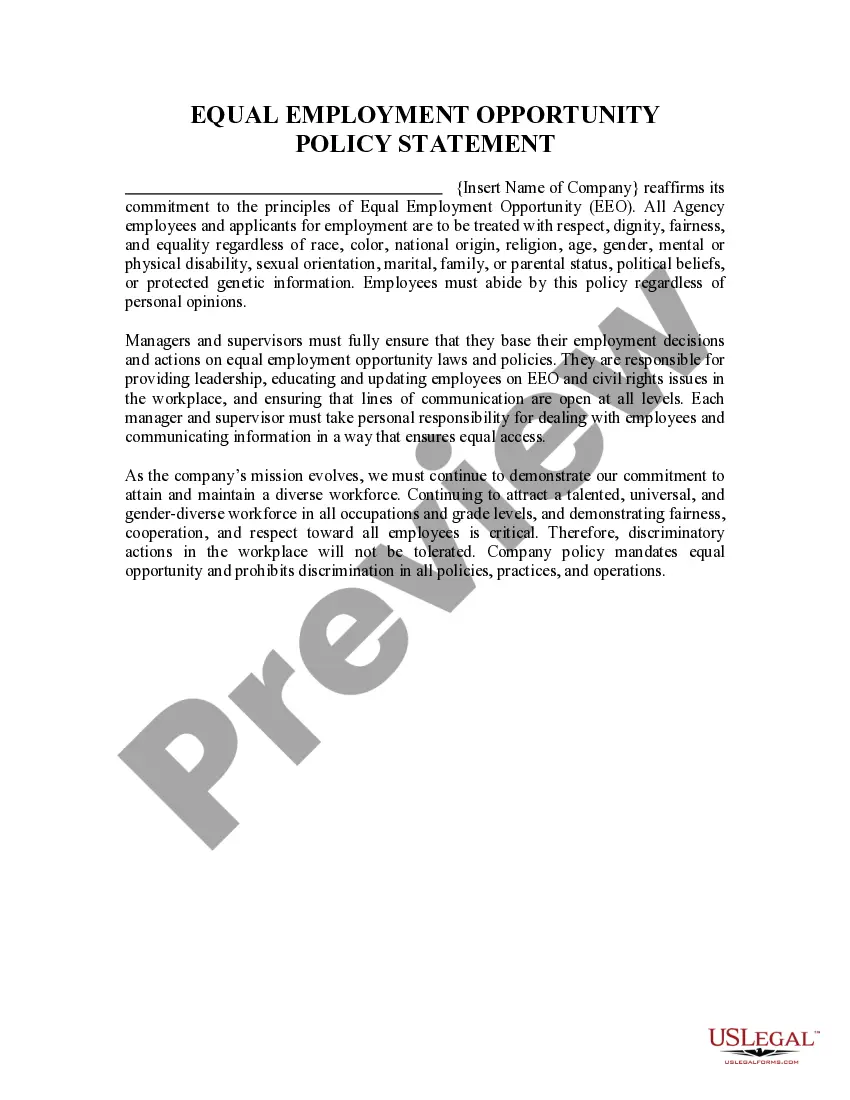
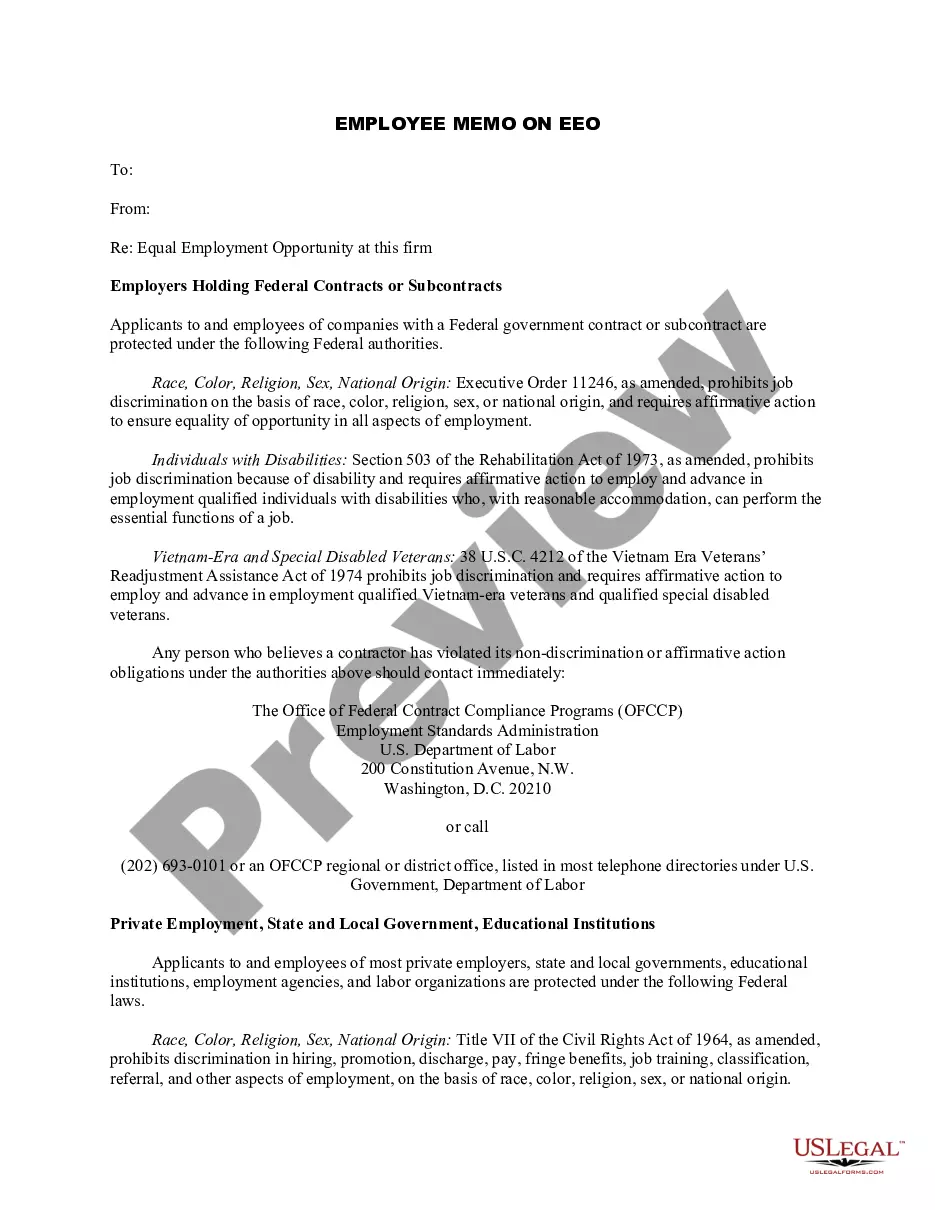
Equal Employment Opportunity Statement Template For Affirmative Action
Description
Get your form ready online
Our built-in tools help you complete, sign, share, and store your documents in one place.
Make edits, fill in missing information, and update formatting in US Legal Forms—just like you would in MS Word.
Download a copy, print it, send it by email, or mail it via USPS—whatever works best for your next step.
Sign and collect signatures with our SignNow integration. Send to multiple recipients, set reminders, and more. Go Premium to unlock E-Sign.
If this form requires notarization, complete it online through a secure video call—no need to meet a notary in person or wait for an appointment.
We protect your documents and personal data by following strict security and privacy standards.

Make edits, fill in missing information, and update formatting in US Legal Forms—just like you would in MS Word.

Download a copy, print it, send it by email, or mail it via USPS—whatever works best for your next step.

Sign and collect signatures with our SignNow integration. Send to multiple recipients, set reminders, and more. Go Premium to unlock E-Sign.

If this form requires notarization, complete it online through a secure video call—no need to meet a notary in person or wait for an appointment.

We protect your documents and personal data by following strict security and privacy standards.
Looking for another form?
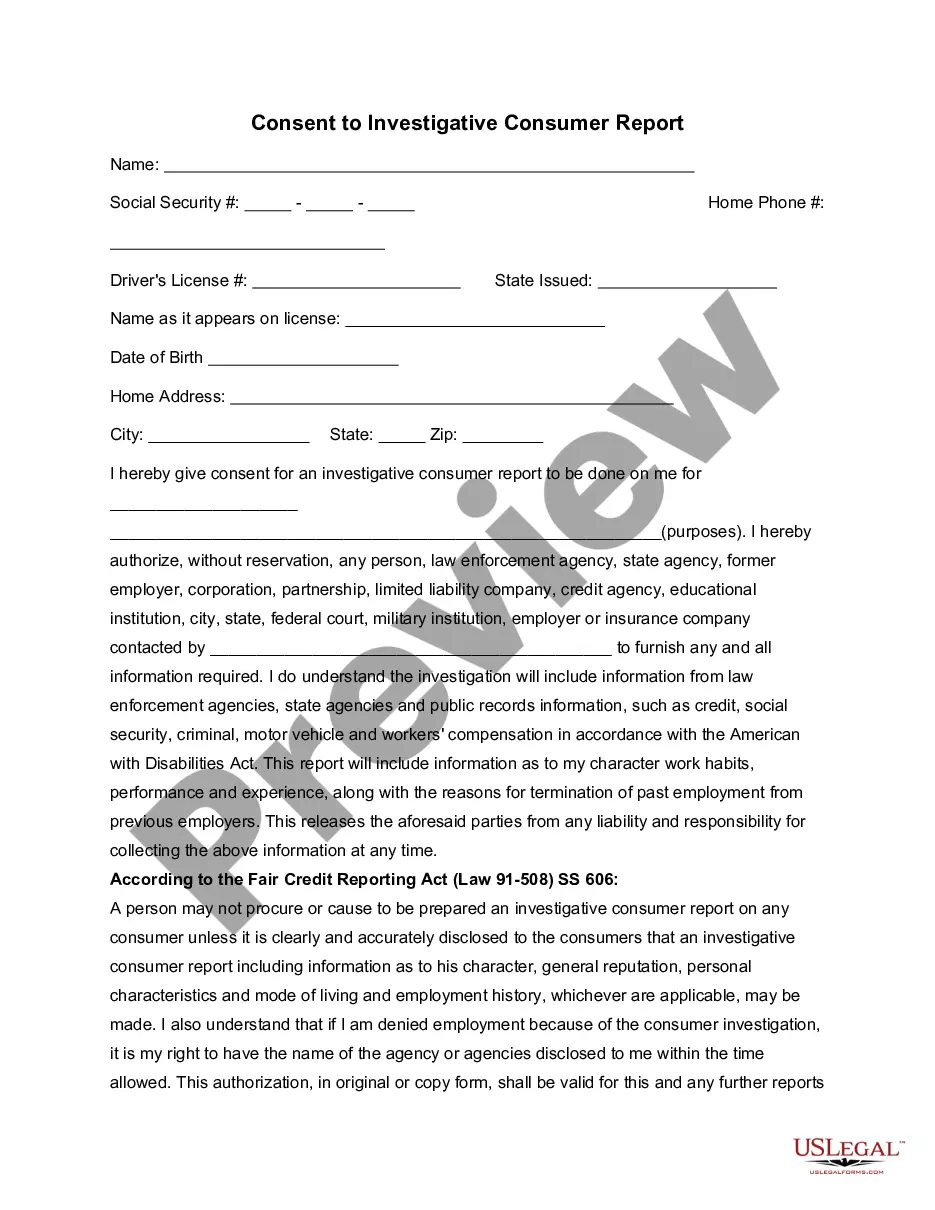


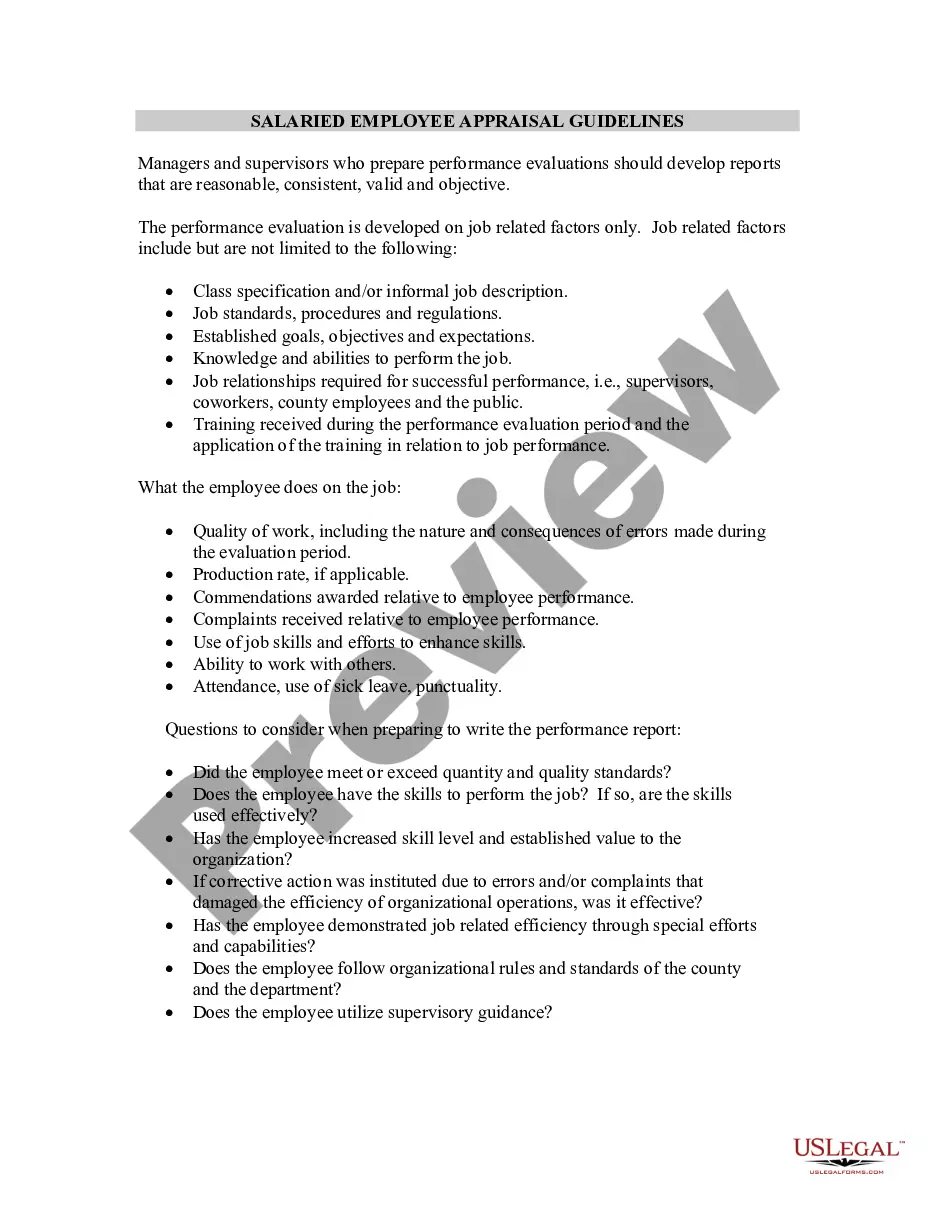

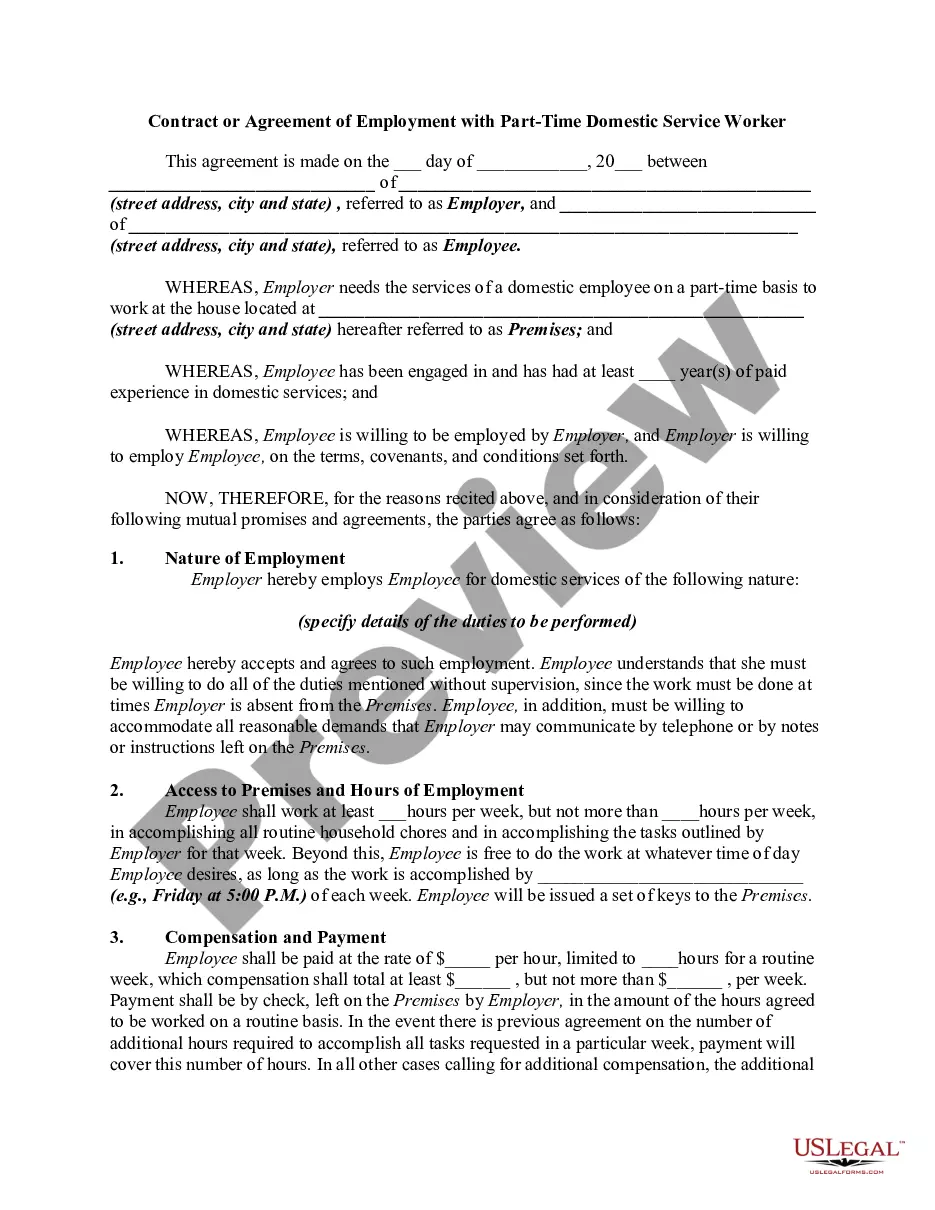
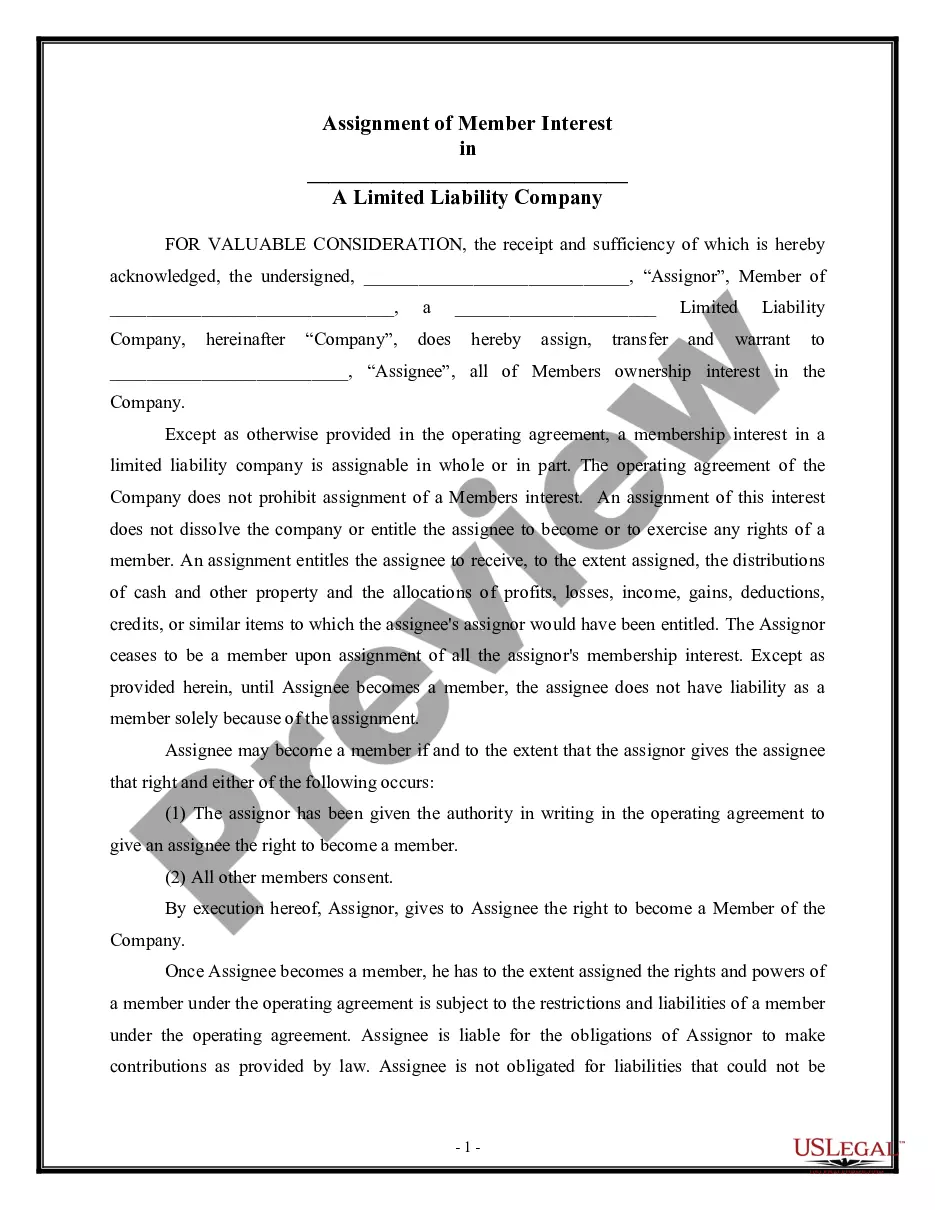


How to fill out Equal Employment Opportunity Statement For Personnel Or Employee Manual Or Handbook Regarding Employees With Disabilities - EEOC?
Whether for business purposes or for individual affairs, everybody has to deal with legal situations sooner or later in their life. Completing legal documents requires careful attention, starting with selecting the proper form sample. For example, if you pick a wrong edition of a Equal Employment Opportunity Statement Template For Affirmative Action, it will be declined when you send it. It is therefore important to get a trustworthy source of legal files like US Legal Forms.
If you have to obtain a Equal Employment Opportunity Statement Template For Affirmative Action sample, follow these simple steps:
- Find the sample you need by using the search field or catalog navigation.
- Examine the form’s information to make sure it fits your situation, state, and region.
- Click on the form’s preview to view it.
- If it is the wrong document, go back to the search function to find the Equal Employment Opportunity Statement Template For Affirmative Action sample you require.
- Download the template if it meets your needs.
- If you have a US Legal Forms profile, simply click Log in to gain access to previously saved documents in My Forms.
- If you do not have an account yet, you may download the form by clicking Buy now.
- Choose the proper pricing option.
- Finish the profile registration form.
- Select your transaction method: use a credit card or PayPal account.
- Choose the document format you want and download the Equal Employment Opportunity Statement Template For Affirmative Action.
- When it is saved, you are able to complete the form by using editing applications or print it and complete it manually.
With a large US Legal Forms catalog at hand, you don’t need to spend time seeking for the appropriate sample across the internet. Use the library’s straightforward navigation to get the proper form for any situation.
Form popularity
FAQ
How to write an effective EEO statement Be genuine. EEO statements aren't a marketing exercise to pack full of buzzwords and call it a day. ... Be specific. ... Align the statement with your DEI policy. ... Adapt the language. ... Link to your EEO or DEI policy. ... Include contact information.
Some employers opt for a short, formal acknowledgement: ?We're an equal opportunity employer. All applicants will be considered for employment without attention to race, color, religion, sex, sexual orientation, gender identity, national origin, veteran or disability status.?
It is the policy of (Name of Company) not to discriminate against any applicant for employment, or any employee because of age, color, sex, disability, national origin, race, religion, or veteran status.
To continue to provide equal employment opportunity to all qualified persons and to continue to recruit, hire, train, promote, and compensate qualified persons in all jobs without regard to race, color, religion, creed, ancestry, national origin, age, sex, pregnancy, gender, gender identity and/or expression, sexual ...
It is the policy of [Company Name] to provide equal employment opportunities without regard to race, color, religion, sex, national origin, age, disability, marital status, veteran status, sexual orientation, genetic information or any other protected characteristic under applicable law.