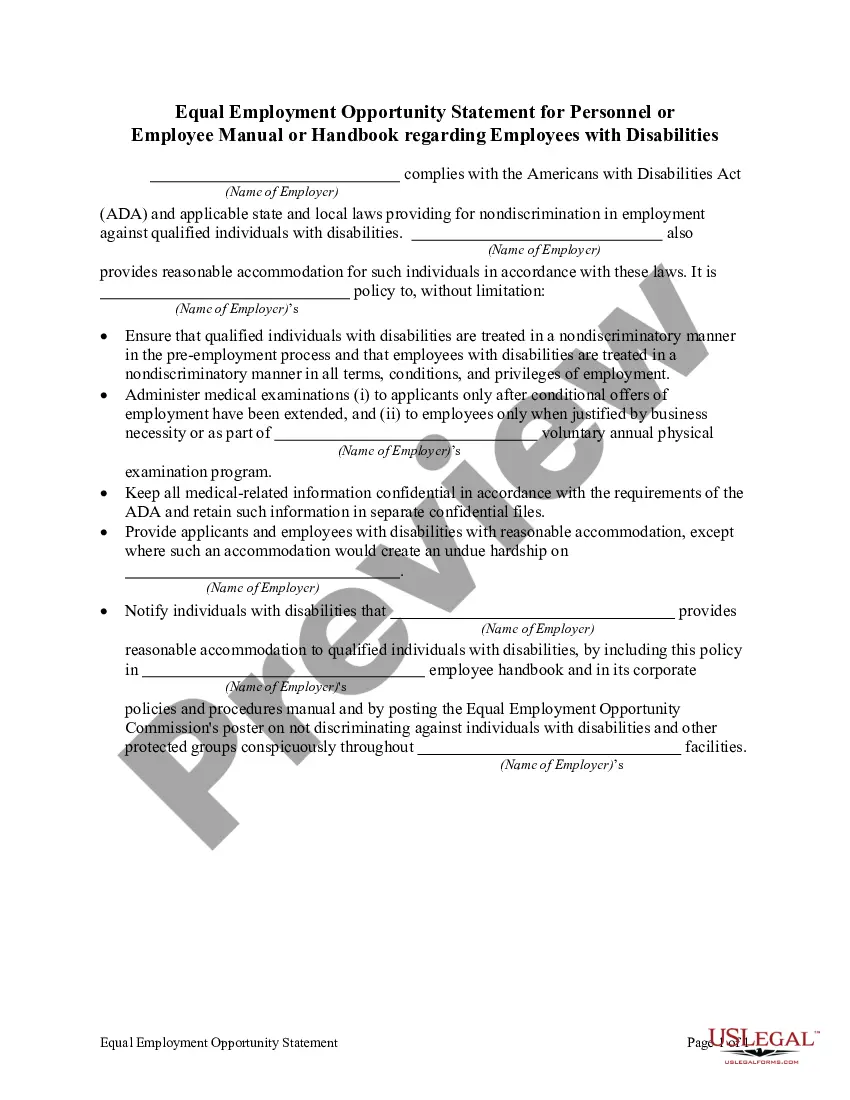
Equal Employment Opportunity Statement For Job Posting
Description
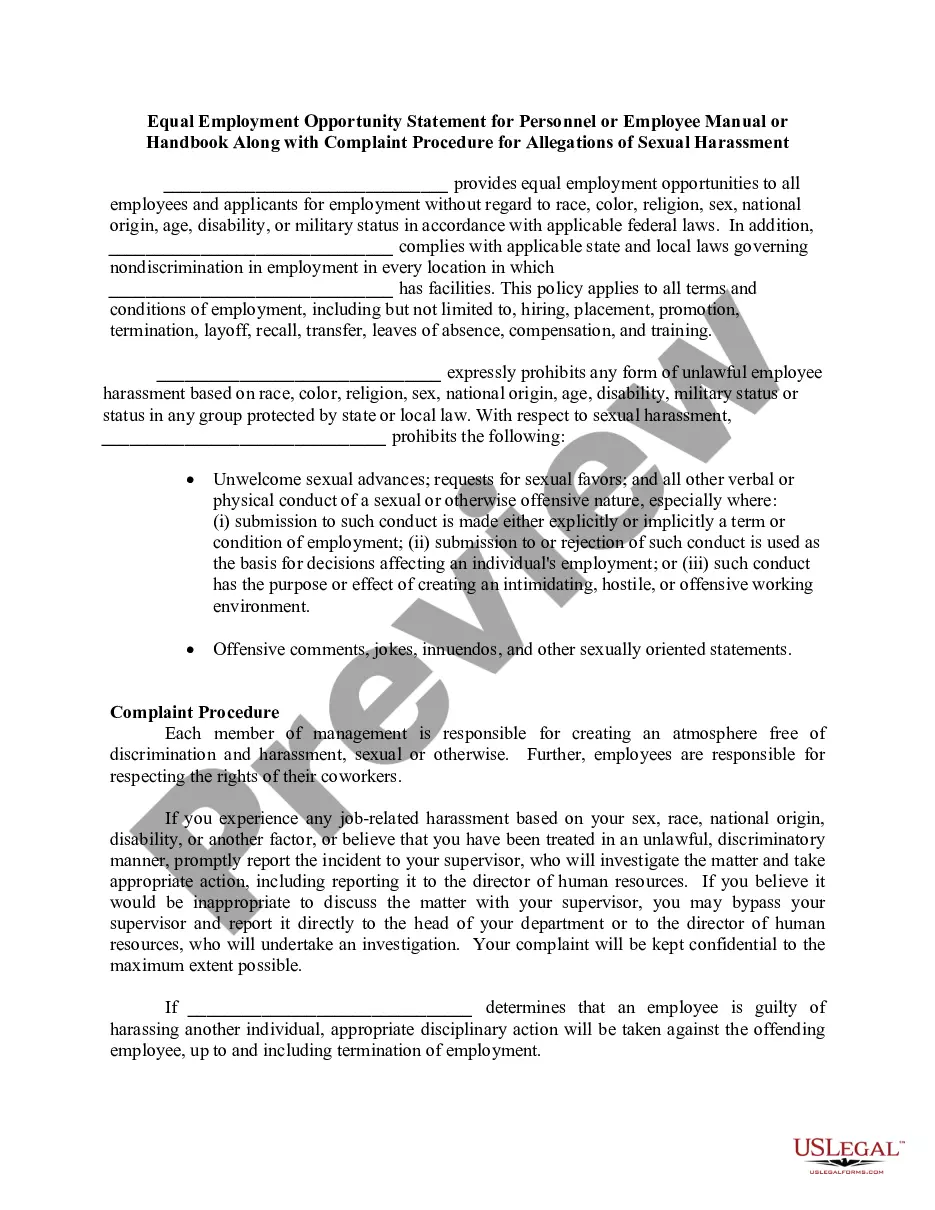
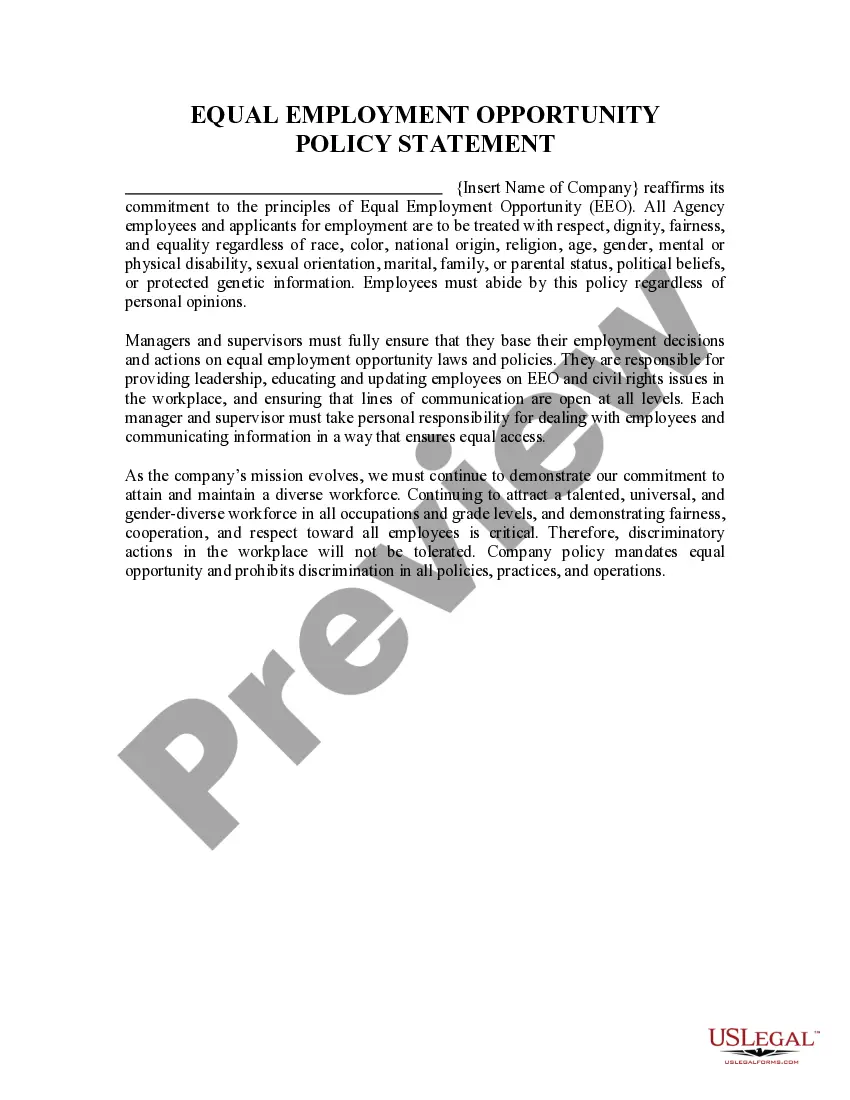
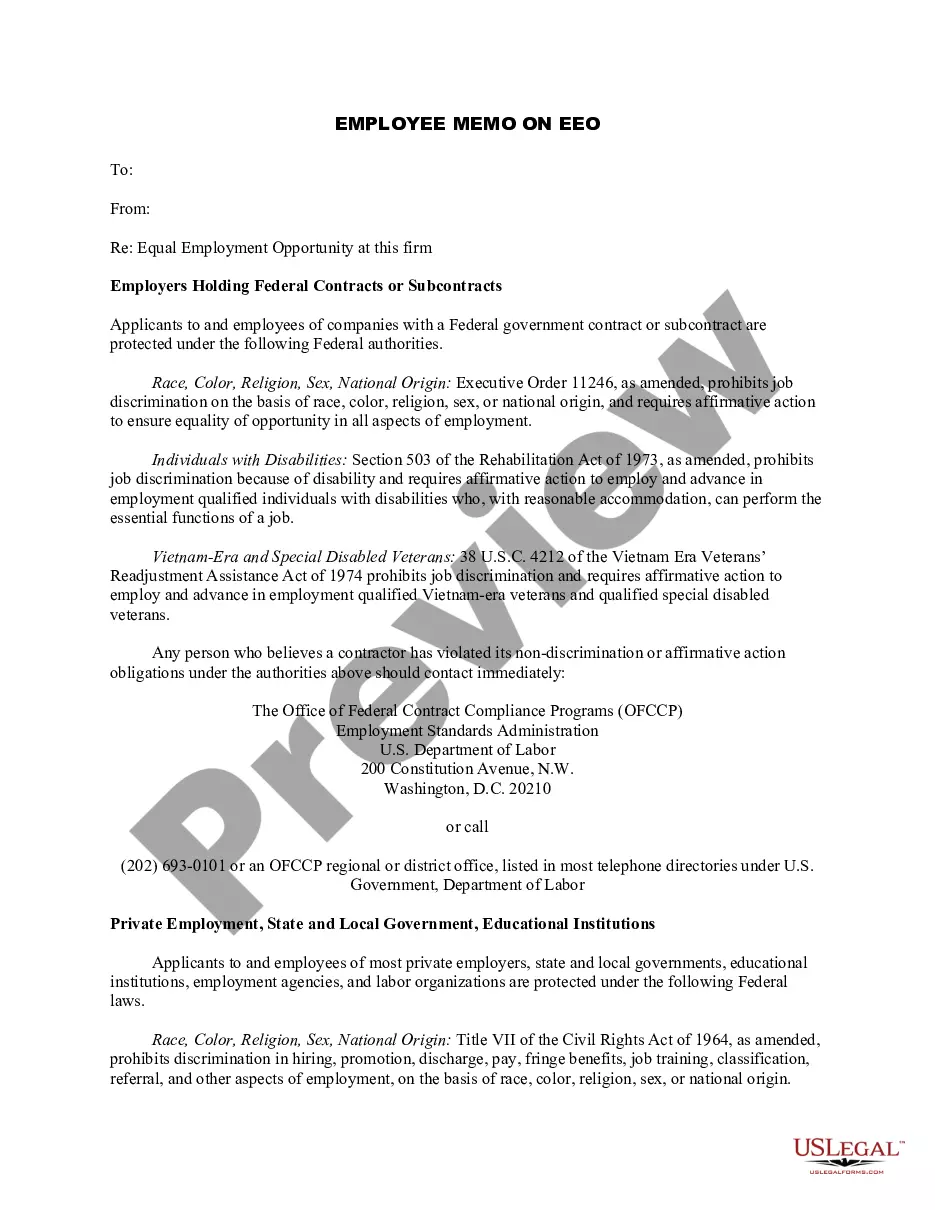
How to fill out Equal Employment Opportunity Statement For Personnel Or Employee Manual Or Handbook Regarding Employees With Disabilities - EEOC?
The Equal Employment Opportunity Statement for Job Posting displayed on this page is a reusable official template created by skilled attorneys in accordance with federal and state regulations.
For over 25 years, US Legal Forms has offered individuals, businesses, and legal practitioners access to more than 85,000 validated, state-specific documents for any professional and personal situation. It’s the fastest, simplest, and most reliable method to acquire the forms you require, as the platform ensures the highest level of data security and malware protection.
Register for US Legal Forms to have authentic legal templates for all of life’s situations readily available.
- Search for the document you require and examine it.
- Browse through the sample you searched and preview it or review the form description to verify it meets your needs. If it doesn’t, use the search function to locate the correct one. Click Buy Now once you find the template you need.
- Register and Log In.
- Select the pricing plan that fits you and create an account. Utilize PayPal or a credit card for quick payment. If you already possess an account, Log In and review your subscription to continue.
- Acquire the editable template.
- Choose the format you prefer for your Equal Employment Opportunity Statement for Job Posting (PDF, DOCX, RTF) and save the document on your device.
- Fill out and sign the documentation.
- Print the template to fill it in manually. Alternatively, use an online multi-functional PDF editor to swiftly and accurately complete and sign your form with a valid signature.
- Download your documents again.
- Use the same document whenever necessary. Access the My documents tab in your profile to redownload any previously saved forms.
Form popularity
FAQ
Do you need to notarize a Loan Agreement? First and foremost, understand that personal loan agreements fall into the classification of contracts. Technically, you don't have to notarize these documents. But if you want to make this document legally binding, then notarization is the best course of action.
Loan agreements typically include covenants, value of collateral involved, guarantees, interest rate terms and the duration over which it must be repaid. Default terms should be clearly detailed to avoid confusion or potential legal court action.
What should be in a personal loan contract? Names and addresses of the lender and the borrower. Information about the loan co-borrower or cosigner, if it's a joint personal loan. Loan amount and the method for disbursement (lump sum, installments, etc.) Date the loan was provided. Expected repayment date.
There are 10 basic provisions that should be in a loan agreement. Identity of the parties. The names of the lender and borrower need to be stated. ... Date of the agreement. ... Interest rate. ... Repayment terms. ... Default provisions. ... Signatures. ... Choice of law. ... Severability.
No. Promissory notes do not need to be notarized. The borrower only needs to sign the document to make it legally enforceable. A witness may be helpful if one party contests the note, but a notary is not necessary.
A Loan Agreement, also known as a Loan Contract or Personal Loan Agreement, is used to loan or borrow money with or without interest included. It typically covers the amount of the loan, the interest rate, the repayment terms, and other specific provisions and terms that will be explained in more detail below.
There are 10 basic provisions that should be in a loan agreement. Identity of the parties. The names of the lender and borrower need to be stated. ... Date of the agreement. ... Interest rate. ... Repayment terms. ... Default provisions. ... Signatures. ... Choice of law. ... Severability.
A personal loan agreement is a legally binding contract that defines the expectations for both a borrower and a lender. It can be drawn up with an official lender, like a bank or credit union, or used in a more informal situation, such as with a friend who's lending you an amount of money.