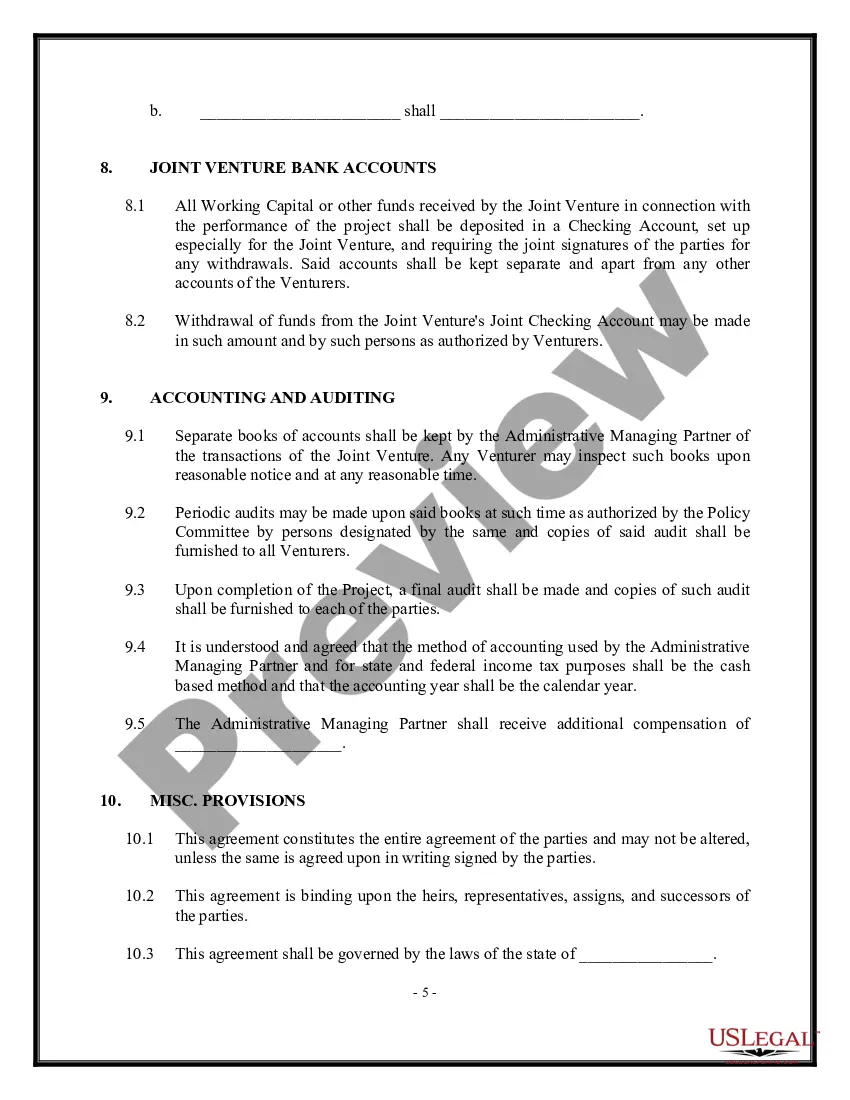
Joint Venture For Construction
Description
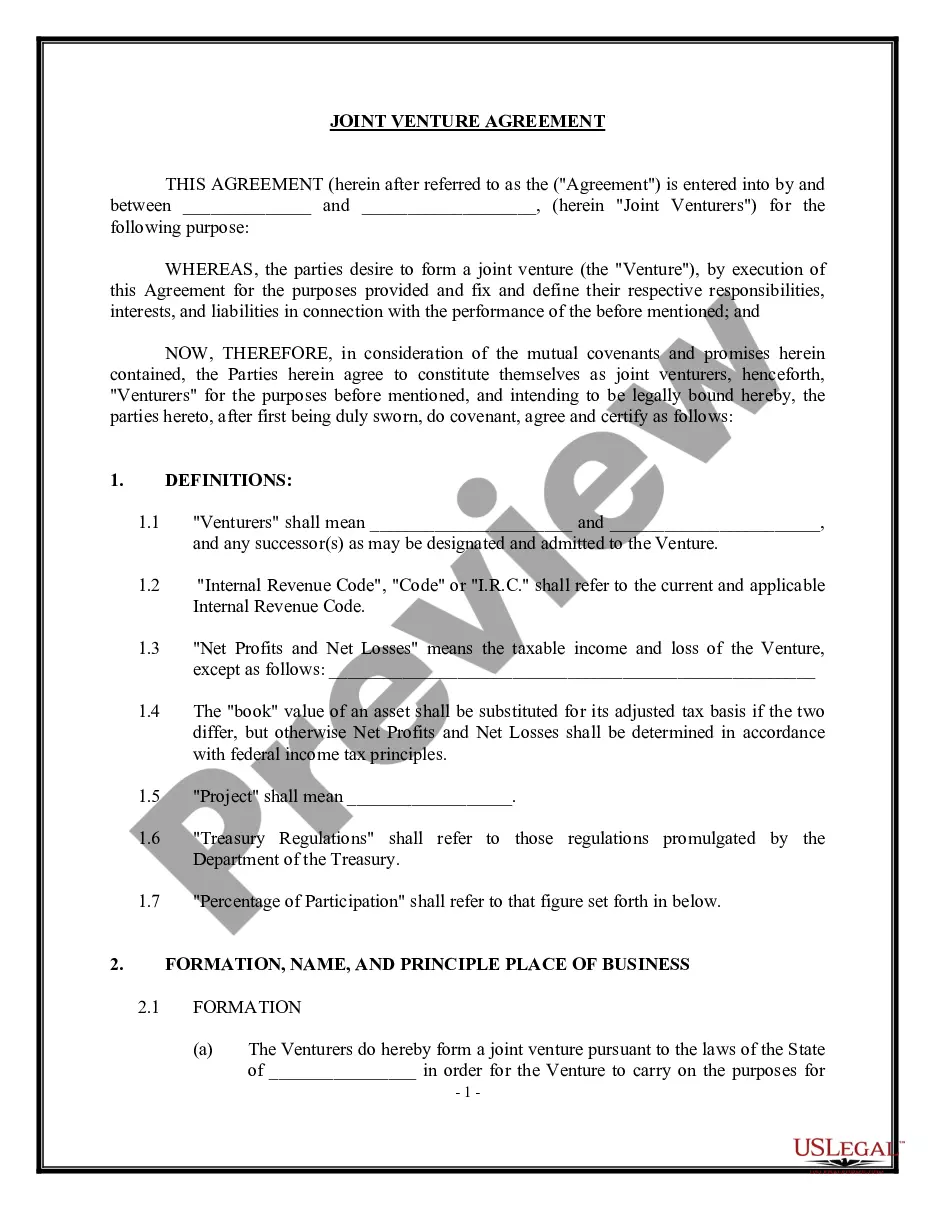
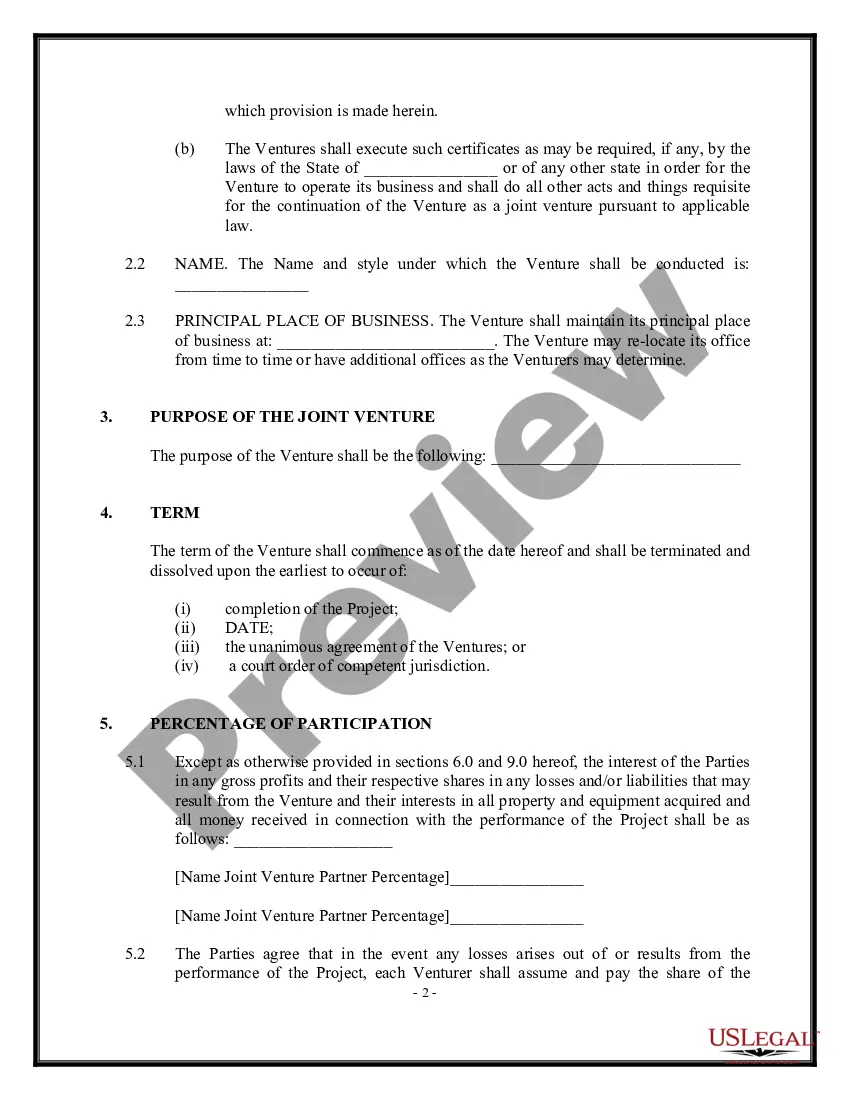
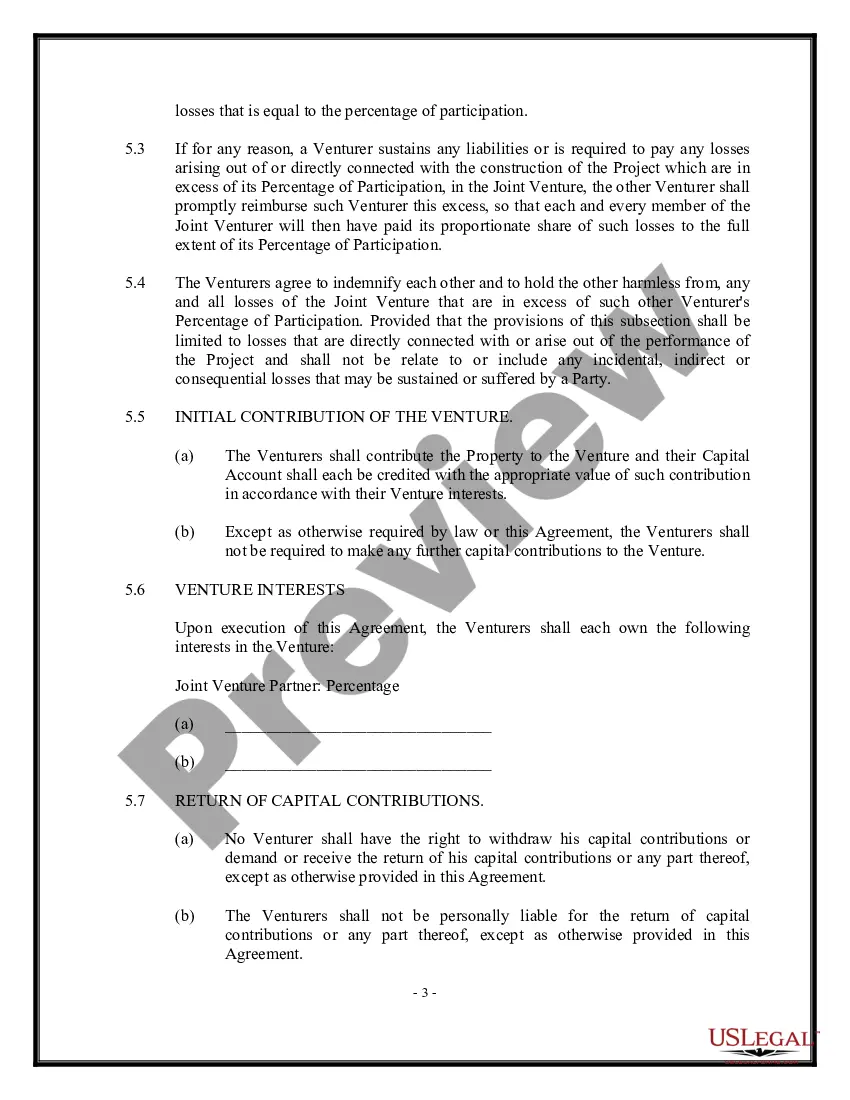
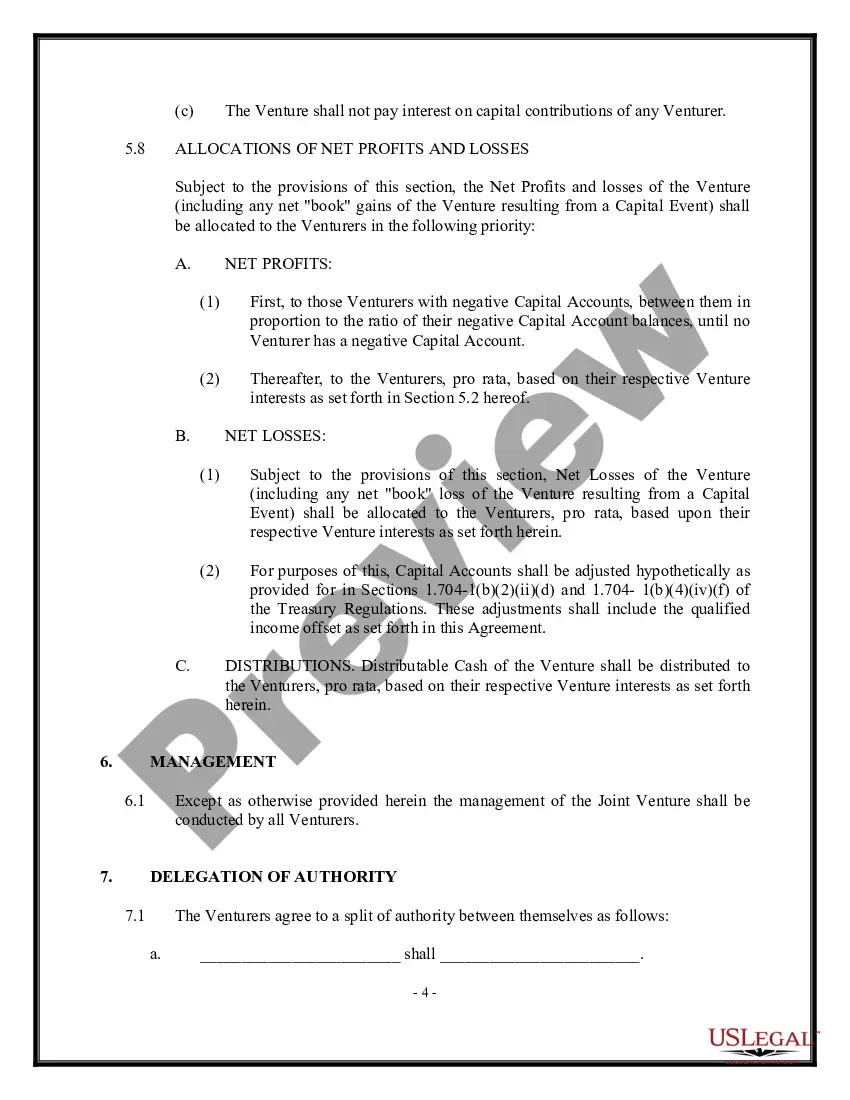
Get your form ready online
Our built-in tools help you complete, sign, share, and store your documents in one place.
Make edits, fill in missing information, and update formatting in US Legal Forms—just like you would in MS Word.
Download a copy, print it, send it by email, or mail it via USPS—whatever works best for your next step.
Sign and collect signatures with our SignNow integration. Send to multiple recipients, set reminders, and more. Go Premium to unlock E-Sign.
If this form requires notarization, complete it online through a secure video call—no need to meet a notary in person or wait for an appointment.
We protect your documents and personal data by following strict security and privacy standards.

Make edits, fill in missing information, and update formatting in US Legal Forms—just like you would in MS Word.

Download a copy, print it, send it by email, or mail it via USPS—whatever works best for your next step.

Sign and collect signatures with our SignNow integration. Send to multiple recipients, set reminders, and more. Go Premium to unlock E-Sign.

If this form requires notarization, complete it online through a secure video call—no need to meet a notary in person or wait for an appointment.

We protect your documents and personal data by following strict security and privacy standards.
Looking for another form?




How to fill out Joint Venture Agreement?
Whether for commercial reasons or personal concerns, everyone inevitably encounters legal matters in their lives at some point.
Filling out legal documents necessitates meticulous care, starting with choosing the appropriate form template.
With an extensive catalog from US Legal Forms available, you won't need to waste time searching for the suitable template online. Utilize the library's easy navigation to find the correct template for any situation.
- Locate the template you require using the search box or catalog browsing.
- Review the form's details to ensure it aligns with your situation, state, and county.
- Select the form's preview to inspect it.
- If it is incorrect, return to the search option to find the Joint Venture For Construction template you need.
- Acquire the template if it meets your specifications.
- If you possess a US Legal Forms account, click Log in to retrieve previously saved documents from My documents.
- In case you do not have an account yet, obtain the form by clicking Buy now.
- Select the appropriate pricing option.
- Complete the account registration form.
- Choose your payment method: you can use a credit card or PayPal account.
- Select the file format you prefer and download the Joint Venture For Construction.
- After downloading, you can fill in the form with the assistance of editing software or print it and complete it manually.
Form popularity
FAQ
To write a joint venture for construction, start by outlining the purpose and vision of the partnership. Specify each party's contributions, obligations, and the timeframe for the project. It’s beneficial to use resources from US Legal Forms, which offer customizable agreements to ensure clarity and compliance in your document.
Structuring a joint venture for construction requires careful planning, focusing on the business goals and the roles of each partner. You should determine the equity structure, management hierarchy, and distribution of profits. Clear communication and mutual agreement on operational aspects enhance the chances of success.
An example of a joint venture for construction is when two companies collaborate on a large development project, pooling resources and expertise to achieve a common objective. For instance, a construction firm may partner with an engineering company to construct a building, sharing both risks and rewards. This approach allows both entities to leverage their strengths.
Writing a joint venture agreement for construction involves clearly articulating the roles of each party and specifying the terms of collaboration. Include sections on governance, decision-making, and financial contributions. You can utilize platforms like US Legal Forms to access templates that simplify this process and ensure you cover all necessary legal bases.
To form a joint venture for construction, begin by identifying suitable partners and defining a mutual goal. Next, create a detailed business plan that outlines contributions, responsibilities, and profit-sharing. It's essential to consult legal experts to ensure that all agreements comply with local regulations.
Successful joint ventures for construction hinge on four major factors: clear objectives, strong communication, aligned interests, and thorough planning. Establishing mutual goals ensures that all partners work towards the same outcomes. Open communication fosters trust and addresses potential issues early. Lastly, comprehensive planning lays the groundwork for smooth operations, helping partners navigate challenges effectively.
The most common type of joint venture for construction is the equity joint venture, where two or more parties create a new legal entity to share profits, losses, and control. This structure allows partners to pool resources while limiting liability for each party. Many construction projects benefit from this arrangement, as it combines strengths and mitigates risks. Engaging with resources like uslegalforms can help ensure proper legal agreements are in place.
To qualify for a joint venture for construction, participants typically need to demonstrate relevant expertise and resources in the industry. Each partner should bring something valuable to the table, such as skills, capital, or experience. Additionally, clear communication and mutual goals between partners facilitate a successful partnership. Consider platforms like uslegalforms for guidance on establishing agreements to streamline this process.
There are four primary types of joint venture: contractual joint ventures, equity joint ventures, limited liability companies, and cooperative joint ventures. Each type varies in structure and legal obligations. For example, a contractual joint venture focuses on project collaboration without creating a separate legal entity, while equity joint ventures involve forming a new legal entity. Understanding these options helps you choose the right joint venture for construction that suits your project needs.
In construction, JV stands for joint venture, which signifies a strategic partnership between two or more entities working together on a project. This collaboration allows companies to combine their resources and skills for better project performance. By engaging in a joint venture for construction, they can tackle larger and more complex projects while sharing risks and rewards.