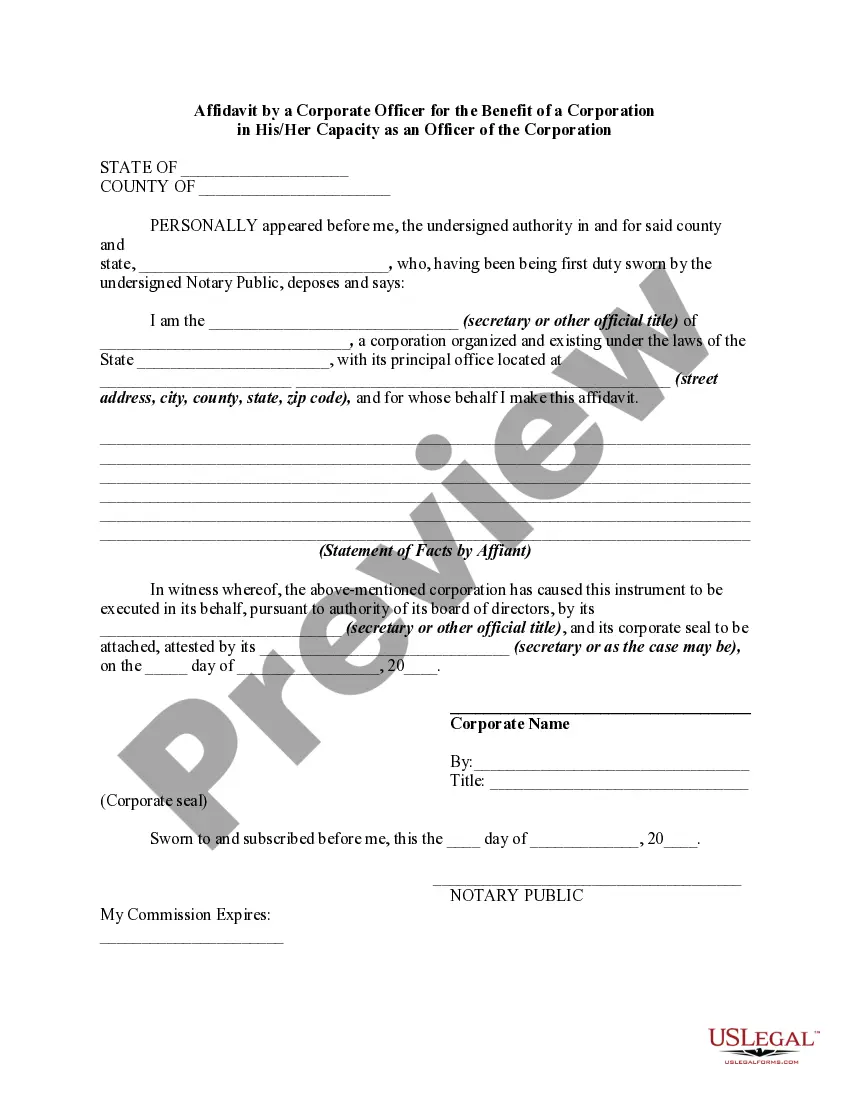
Corporate Officers Forum
Description

Get your form ready online
Our built-in tools help you complete, sign, share, and store your documents in one place.
Make edits, fill in missing information, and update formatting in US Legal Forms—just like you would in MS Word.
Download a copy, print it, send it by email, or mail it via USPS—whatever works best for your next step.
Sign and collect signatures with our SignNow integration. Send to multiple recipients, set reminders, and more. Go Premium to unlock E-Sign.
If this form requires notarization, complete it online through a secure video call—no need to meet a notary in person or wait for an appointment.
We protect your documents and personal data by following strict security and privacy standards.

Make edits, fill in missing information, and update formatting in US Legal Forms—just like you would in MS Word.

Download a copy, print it, send it by email, or mail it via USPS—whatever works best for your next step.

Sign and collect signatures with our SignNow integration. Send to multiple recipients, set reminders, and more. Go Premium to unlock E-Sign.

If this form requires notarization, complete it online through a secure video call—no need to meet a notary in person or wait for an appointment.

We protect your documents and personal data by following strict security and privacy standards.
Looking for another form?






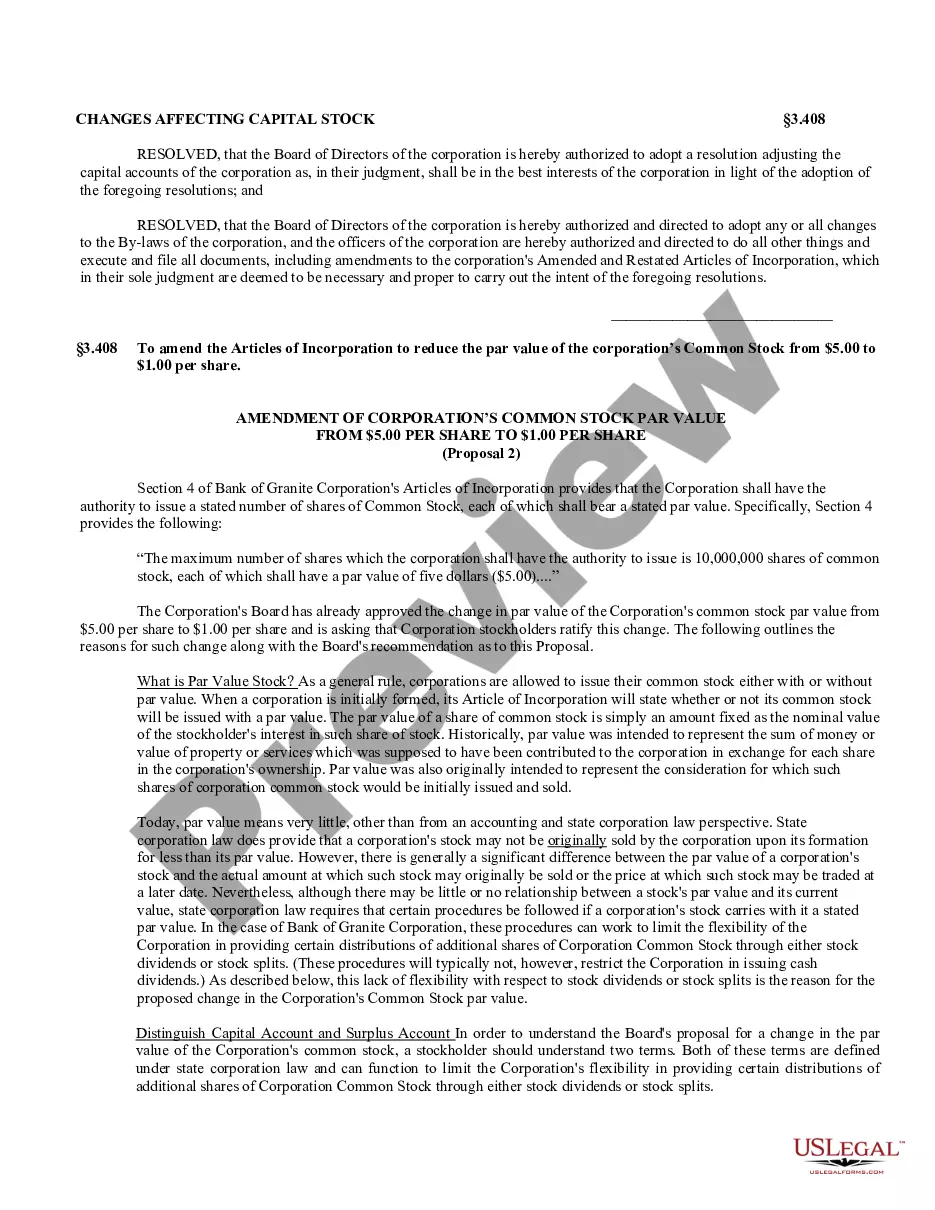


How to fill out Affidavit By A Corporate Officer For The Benefit Of A Corporation In His Or Her Capacity As An Officer?
Regardless of whether for commercial objectives or personal matters, everyone must confront legal issues at some stage in their existence.
Finalizing legal paperwork demands meticulous focus, starting from choosing the appropriate form template.
With an extensive US Legal Forms catalog accessible, you do not need to waste time looking for the suitable template online. Utilize the library’s straightforward navigation to discover the correct form for any circumstance.
- Obtain the template you require through the search bar or catalog navigation.
- Review the form’s details to confirm it aligns with your scenario, state, and county.
- Select the form’s preview to examine it.
- If it is the wrong document, return to the search feature to locate the Corporate Officers Forum sample you need.
- Acquire the file if it suits your requirements.
- If you have an account with US Legal Forms, simply click Log in to access previously saved documents in My documents.
- If you do not have an account yet, you can obtain the form by clicking Buy now.
- Select the appropriate pricing option.
- Complete the account registration form.
- Choose your payment method: you can opt for a credit card or PayPal account.
- Select the document format you wish and download the Corporate Officers Forum.
- After downloading, you can complete the form using editing software or print it out and finish it manually.
Form popularity
FAQ
Yes, being a Chief Operating Officer (COO) comes with specific liabilities tied to operational decisions and company performance. A COO must ensure compliance with laws and act in the best interest of the organization. For guidance on these responsibilities, the Corporate Officers Forum offers valuable resources and discussions that can aid COOs in understanding their potential liabilities.
In certain circumstances, corporate officers may be personally liable for their actions that violate laws or regulations. This personal liability can extend to debts or damages incurred due to their decisions. By participating in discussions on our Corporate Officers Forum, corporate officers can learn about strategies to minimize personal risk while fulfilling their roles.
Corporate officers can indeed be sued for a variety of reasons, including breach of fiduciary duty or negligence. Such legal actions may arise from decisions that harm the company or its stakeholders. Engaging with the insights shared in our Corporate Officers Forum can help officers understand the legal landscape and how to protect themselves against potential lawsuits.
Yes, corporate officers can be held criminally liable for their actions while managing a company. This means they may face penalties, including fines or prison time, for illegal activities. Therefore, understanding the implications discussed in our Corporate Officers Forum is essential for corporate officers to navigate their responsibilities effectively.
To change officers in a corporation, you typically need to follow the procedures laid out in your company’s bylaws, which may involve a board meeting and a formal vote. After the board agrees on the changes, you must update official records and notify any relevant state authorities. For assistance with this process, the uslegalforms platform provides templates and resources tailored to corporate governance.
Corporate officers are chosen through a process initiated by the board of directors, which may involve interviews and reviews of candidates' qualifications. The board assesses skills, experience, and alignment with the company's goals during this selection process. Utilizing resources from the corporate officers forum can help streamline these decisions and ensure compliance with best practices.
You become a corporate officer when you are officially appointed by the board and given specific roles and responsibilities within the organization. This appointment usually requires a formal process, including a vote from the board of directors. Engaging with the corporate officers forum can provide valuable insights into the expectations and legal implications of serving in this role.
Any individual appointed by the board of directors can become a corporate officer, as long as they meet the criteria set by state laws and company bylaws. Generally, this can include insiders, such as current employees, or outsiders brought in for their expertise. The corporate officers forum emphasizes the importance of selecting individuals with the right skills and experience to lead effectively.
A corporate officer typically includes high-ranking individuals in a company such as the CEO, CFO, and COO. These individuals have the authority to make significant business decisions and represent the corporation in legal matters. The corporate officers forum often outlines the responsibilities and roles of these key positions, ensuring clarity within the organization.