Liability Students Schools With Disabilities
Description
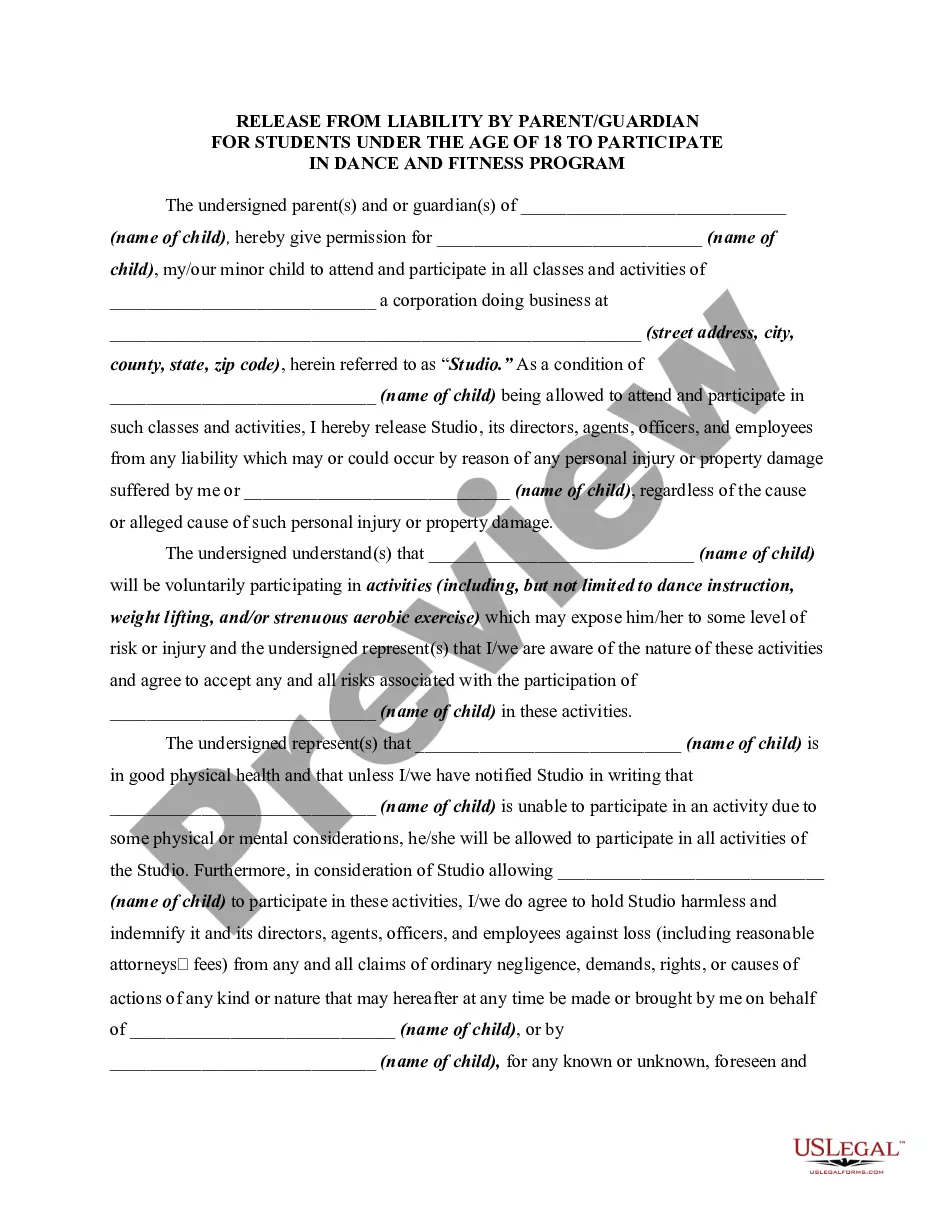
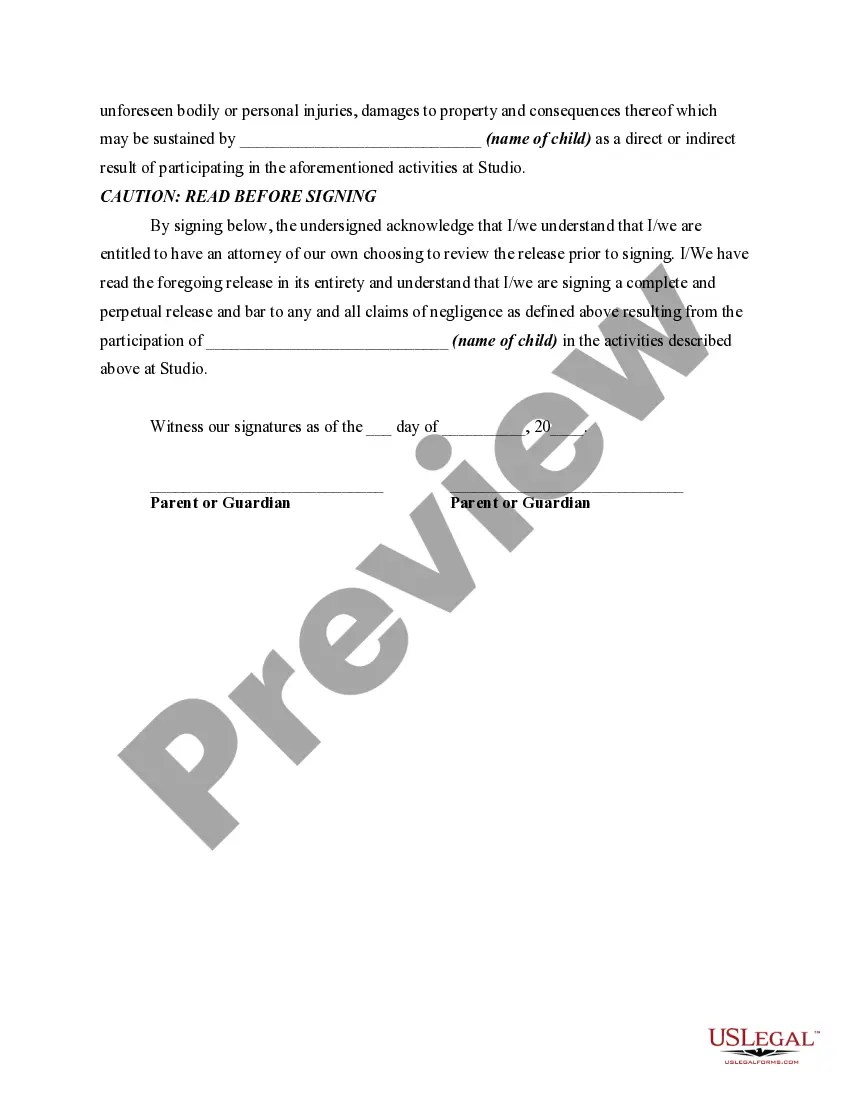
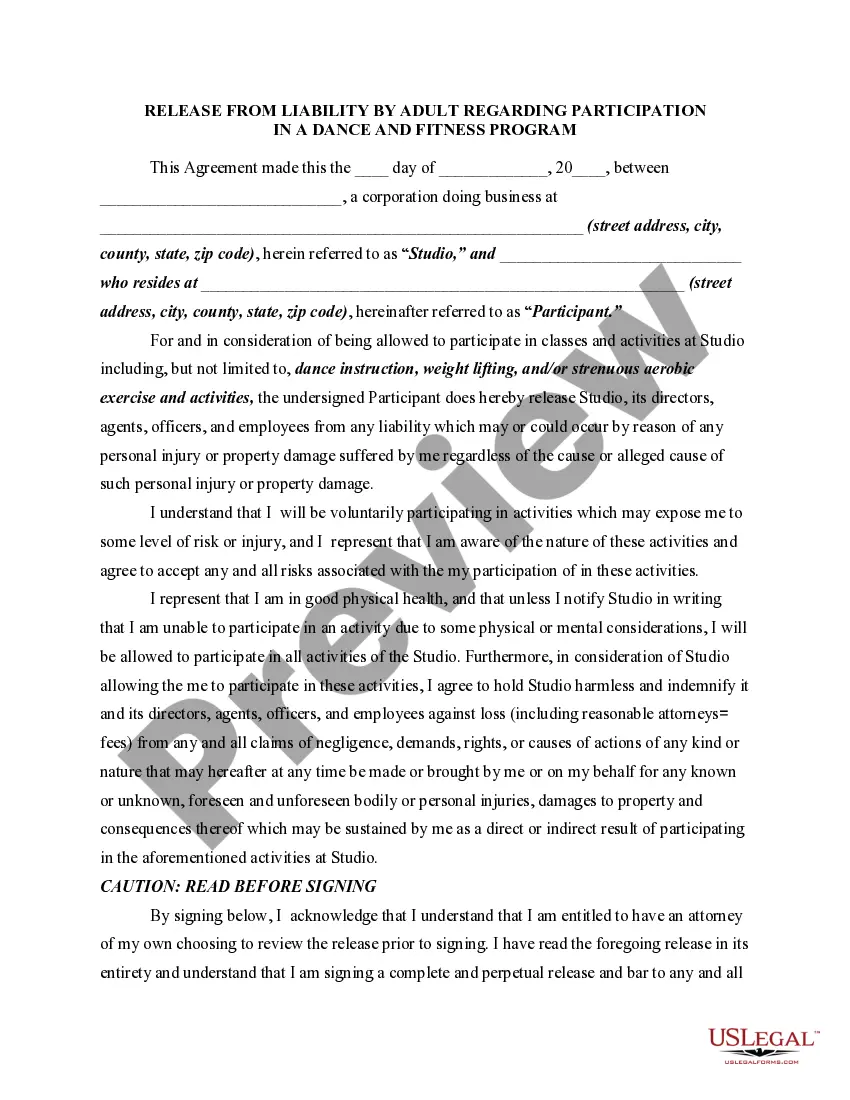
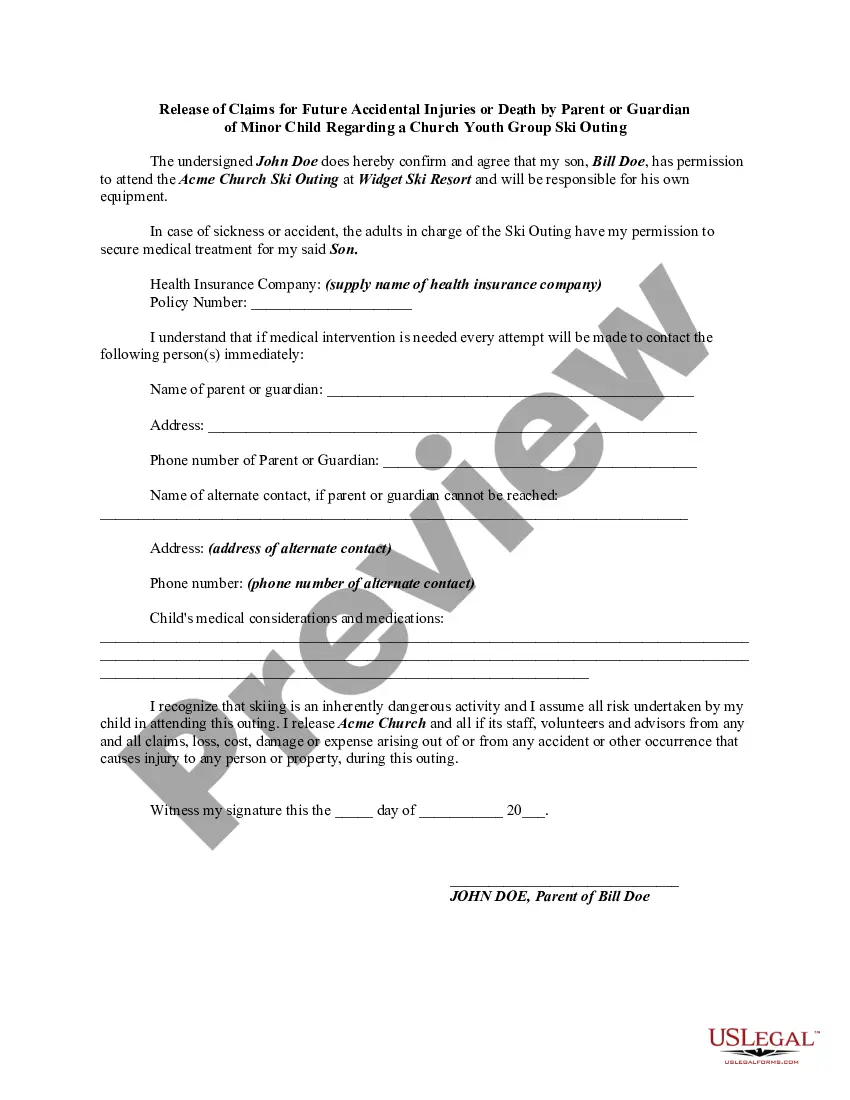
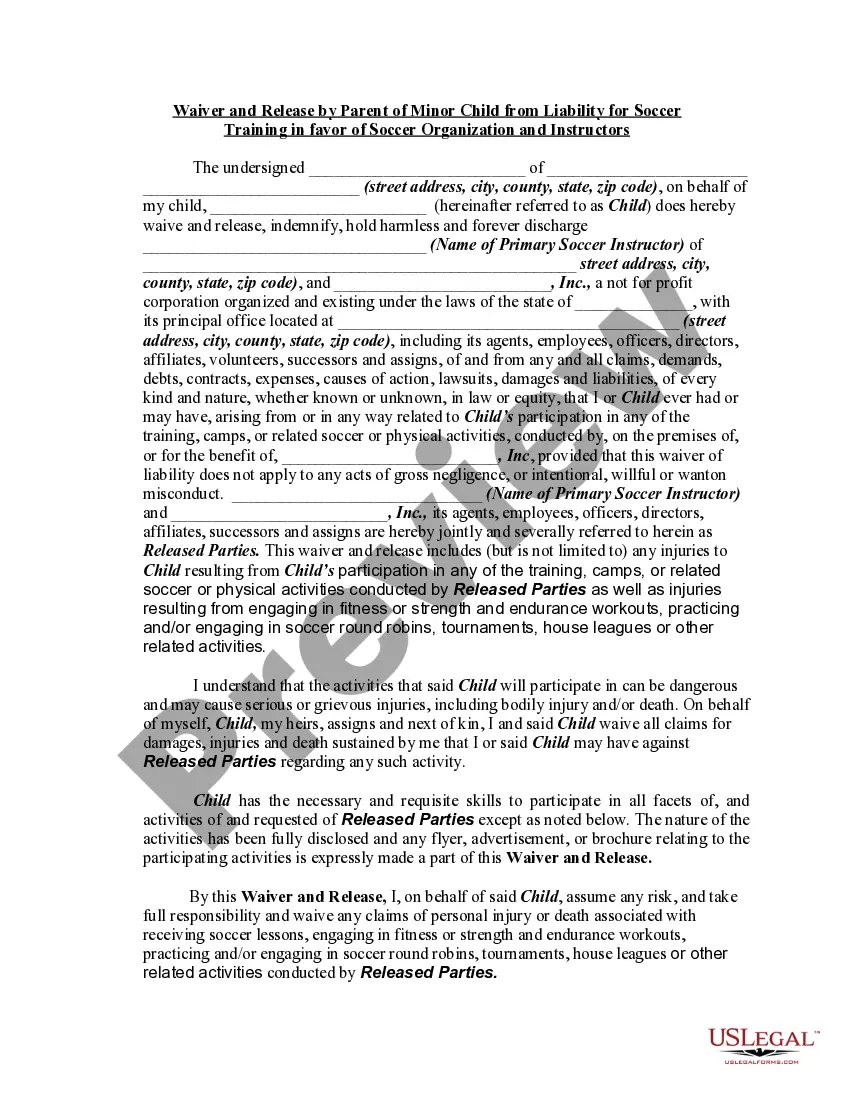
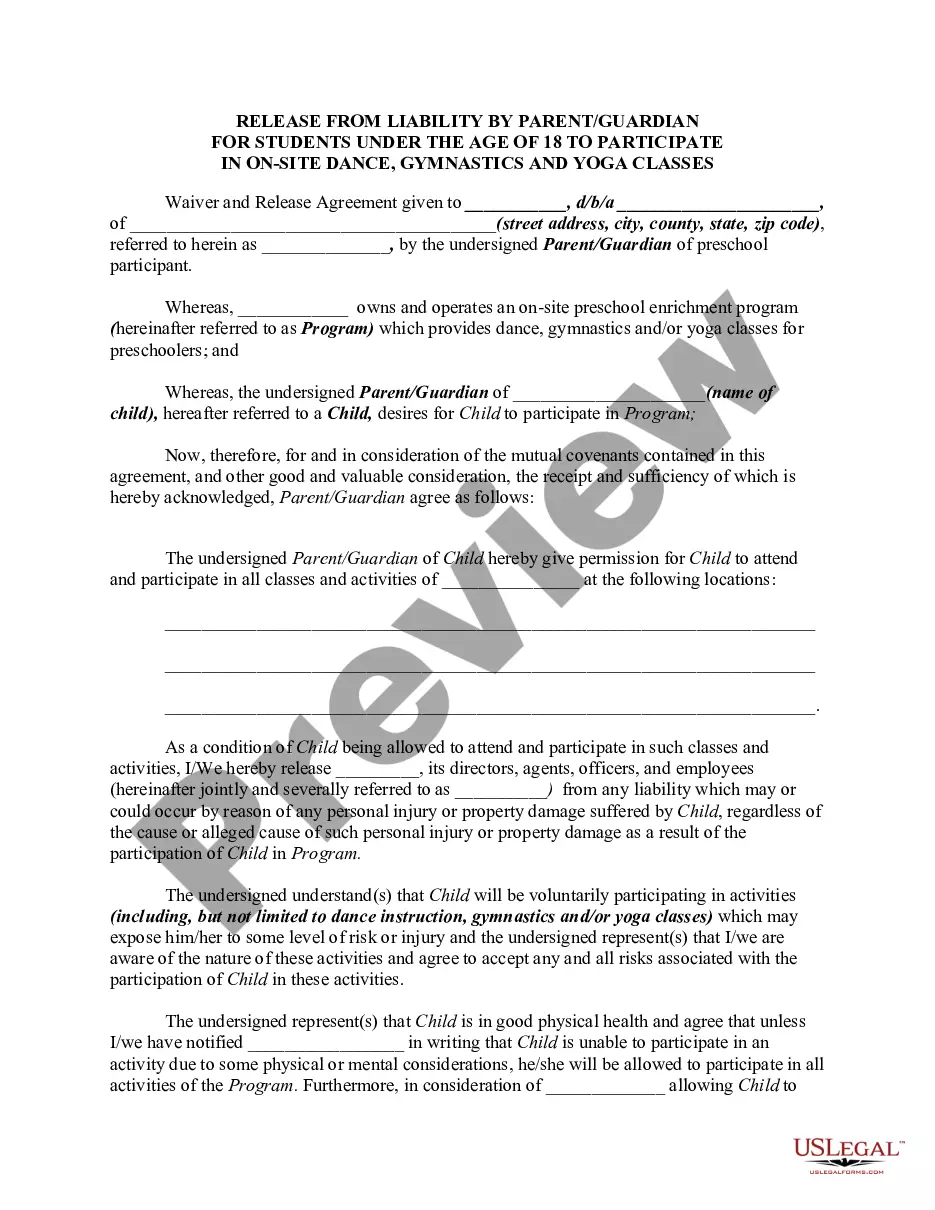
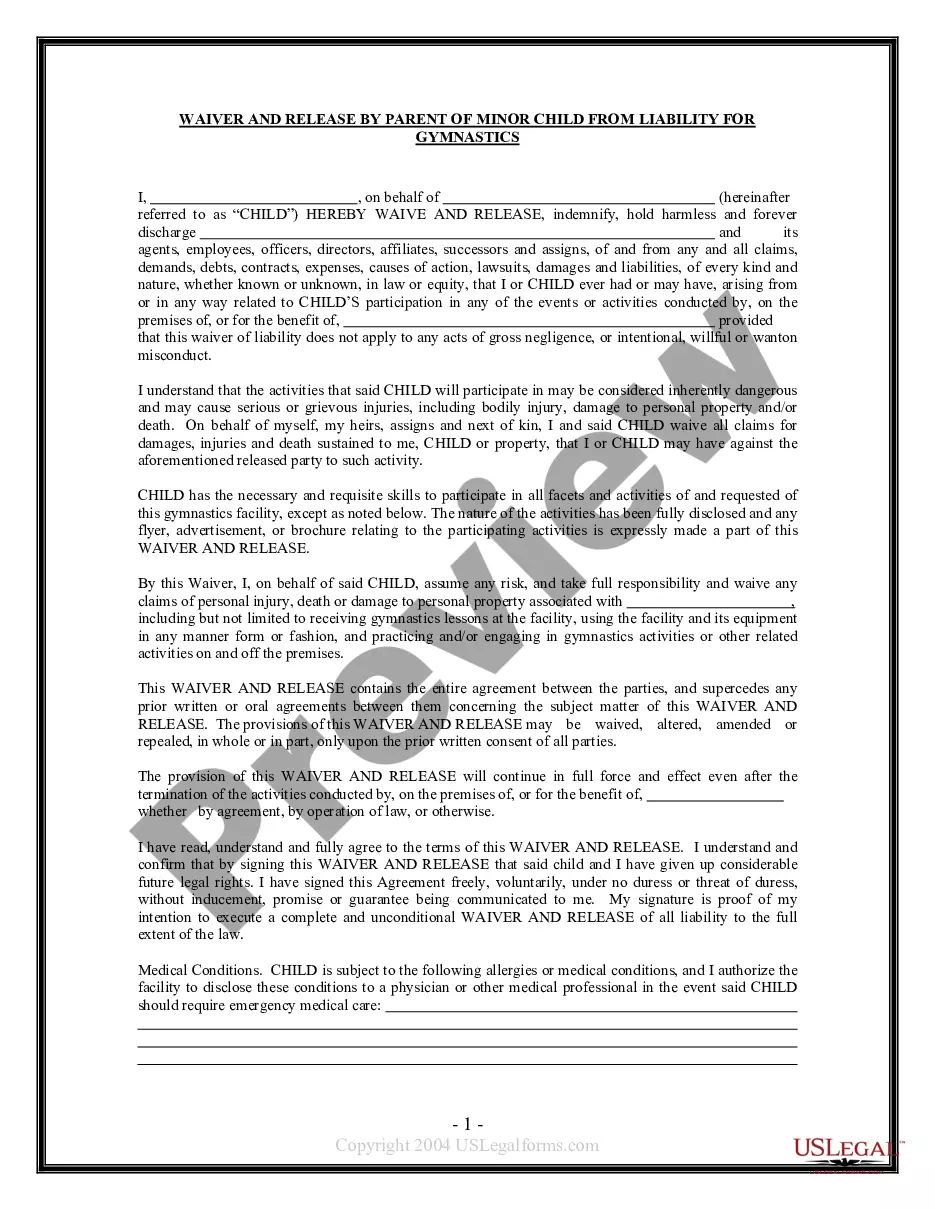
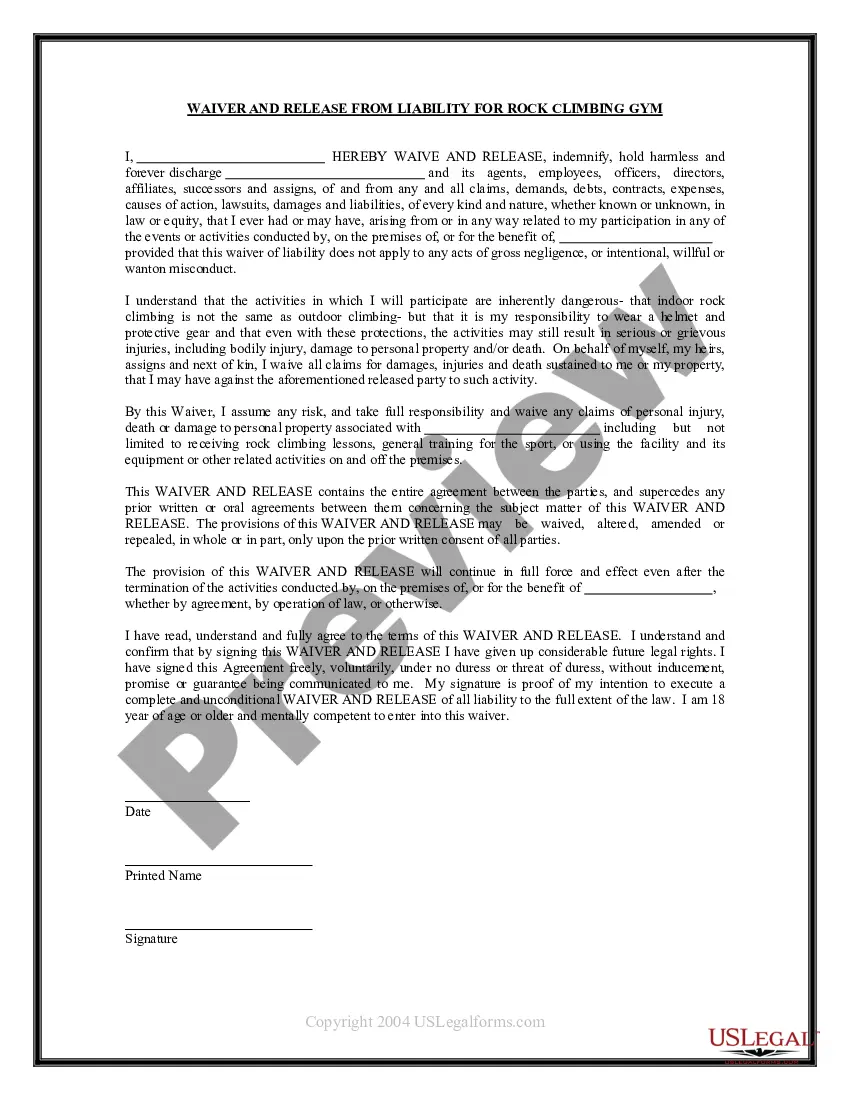
How to fill out Release From Personal Injury Liability By Parent / Guardian For Students Under The Age Of 18 To Participate In Dance And Fitness Program Or School?
It’s clear that you cannot transform into a legal authority overnight, nor can you quickly learn how to efficiently prepare Liability Students Schools With Disabilities without a specific skill set.
Assembling legal documents is a labor-intensive endeavor that necessitates particular training and expertise. Therefore, why not entrust the preparation of the Liability Students Schools With Disabilities to the professionals.
With US Legal Forms, one of the most extensive legal template repositories, you can find everything from court documents to templates for in-office correspondence.
You can regain access to your documents from the My documents section at any time. If you’re a current client, you can simply Log In, and locate and download the template from the same section.
No matter the reason for your documentation—whether it’s financial and legal, or personal—our website has you covered. Give US Legal Forms a try now!
- Locate the form you require by utilizing the search bar at the top of the page.
- View it (if this option is available) and examine the accompanying description to determine if Liability Students Schools With Disabilities is what you seek.
- Initiate your search again if you require a different document.
- Create a free account and choose a subscription plan to acquire the template.
- Select Buy now. After the transaction is completed, you can download the Liability Students Schools With Disabilities, fill it out, print it, and send or mail it to the appropriate parties.
Form popularity
FAQ
How much is enough information to document that a student has a disability? At the elementary and secondary education level, the amount of information required is determined by the multi-disciplinary committee gathered to evaluate the student.
OCR handles cases of disability discrimination involving a range of issues, such as inaccessible facilities; unequal access to advanced academic programs, extracurricular athletics, and accessible technology; the failure to provide elementary and secondary students a free appropriate public education (FAPE), ...
Denying a student with a disability access to lunch, field trips, assemblies, and extracurricular activities as punishment for taking time off from school for required services related to a student's disability. belittling and criticizing a student for using accommodations in class.
Parents or teachers typically are the first ones to identify if a student might benefit from special education services. In most cases, children are then referred to school district specialists, who evaluate whether the student has a disability that interferes with his or her ability to learn.
The rights of students with disabilities in K-12 and postsecondary schools are protected by Section 504 and the ADA. The Education for All Handicapped Children Act of 1975 guarantees a free and appropriate public education (FAPE) for every child with a disability in the United States.