Claim Damage
Description

Get your form ready online
Our built-in tools help you complete, sign, share, and store your documents in one place.
Make edits, fill in missing information, and update formatting in US Legal Forms—just like you would in MS Word.
Download a copy, print it, send it by email, or mail it via USPS—whatever works best for your next step.
Sign and collect signatures with our SignNow integration. Send to multiple recipients, set reminders, and more. Go Premium to unlock E-Sign.
If this form requires notarization, complete it online through a secure video call—no need to meet a notary in person or wait for an appointment.
We protect your documents and personal data by following strict security and privacy standards.

Make edits, fill in missing information, and update formatting in US Legal Forms—just like you would in MS Word.

Download a copy, print it, send it by email, or mail it via USPS—whatever works best for your next step.

Sign and collect signatures with our SignNow integration. Send to multiple recipients, set reminders, and more. Go Premium to unlock E-Sign.

If this form requires notarization, complete it online through a secure video call—no need to meet a notary in person or wait for an appointment.

We protect your documents and personal data by following strict security and privacy standards.
Looking for another form?



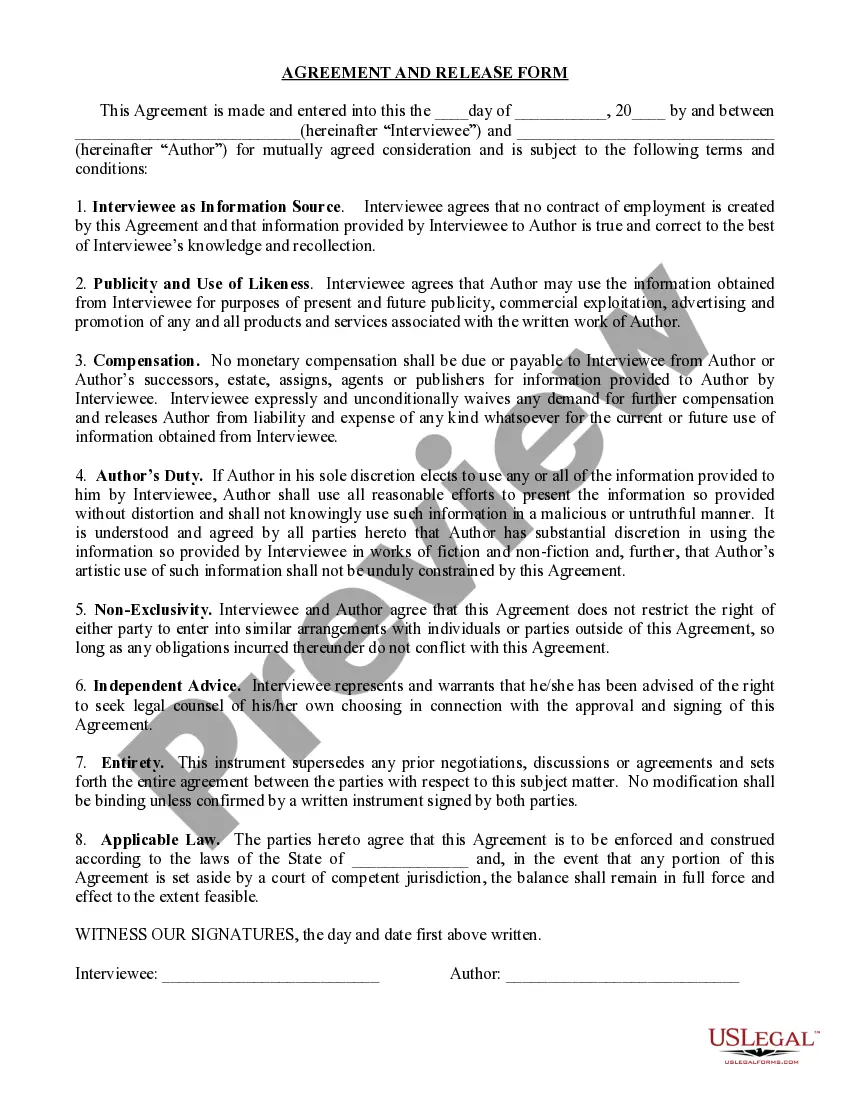
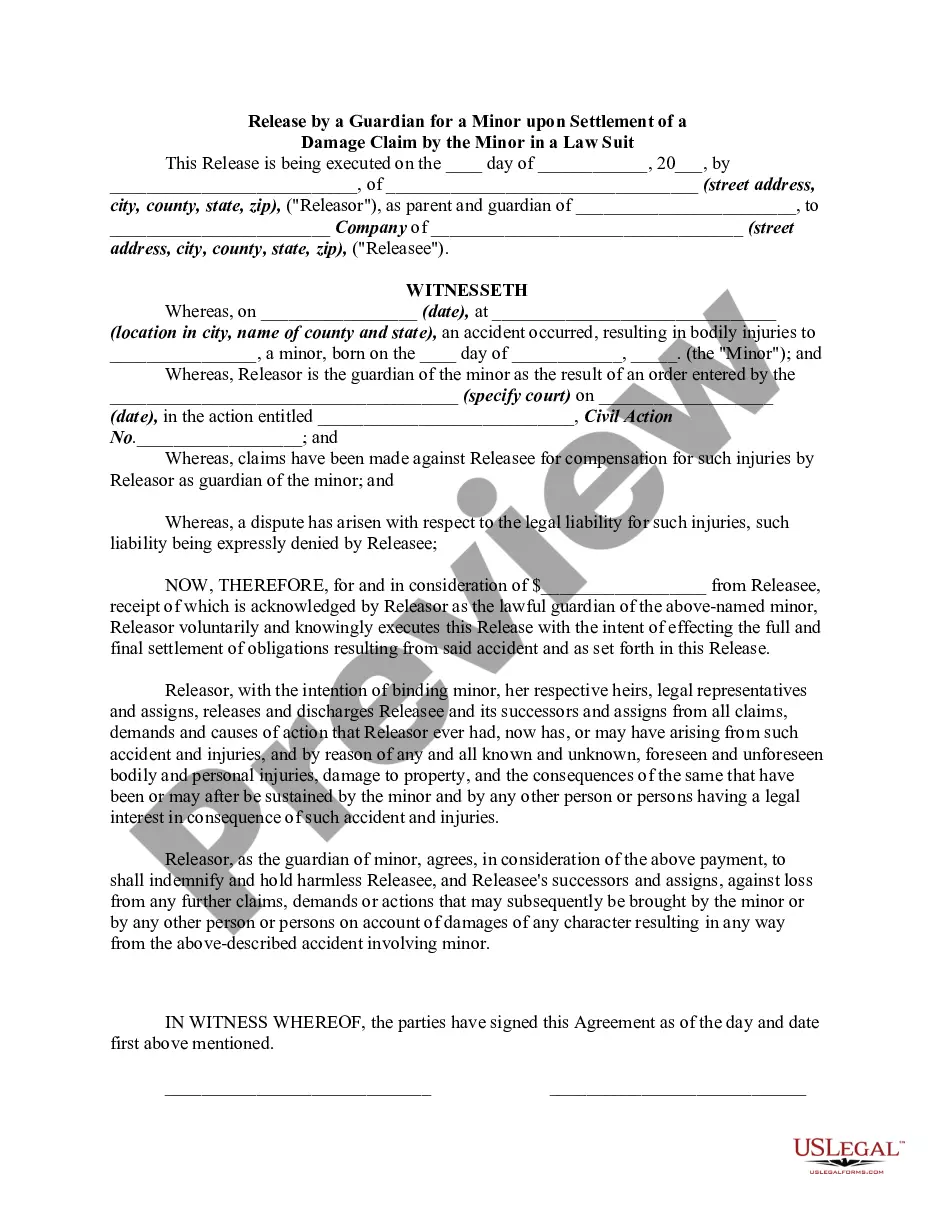
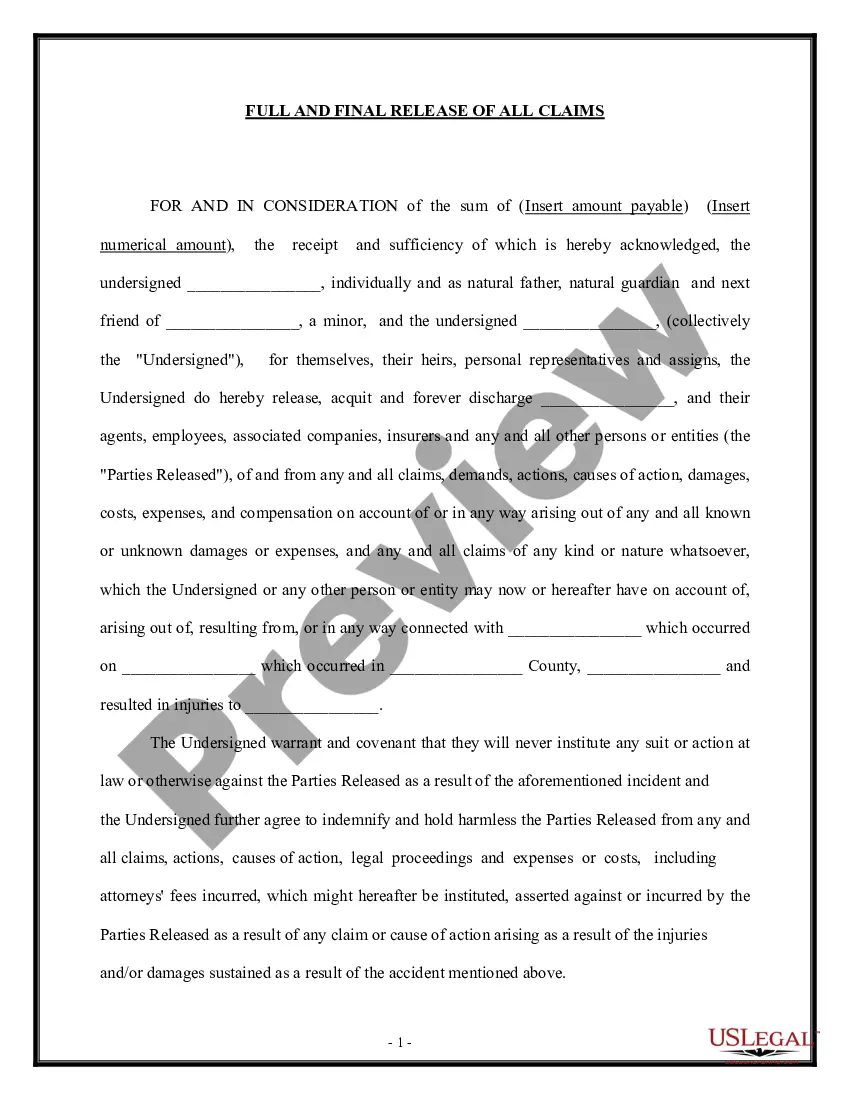
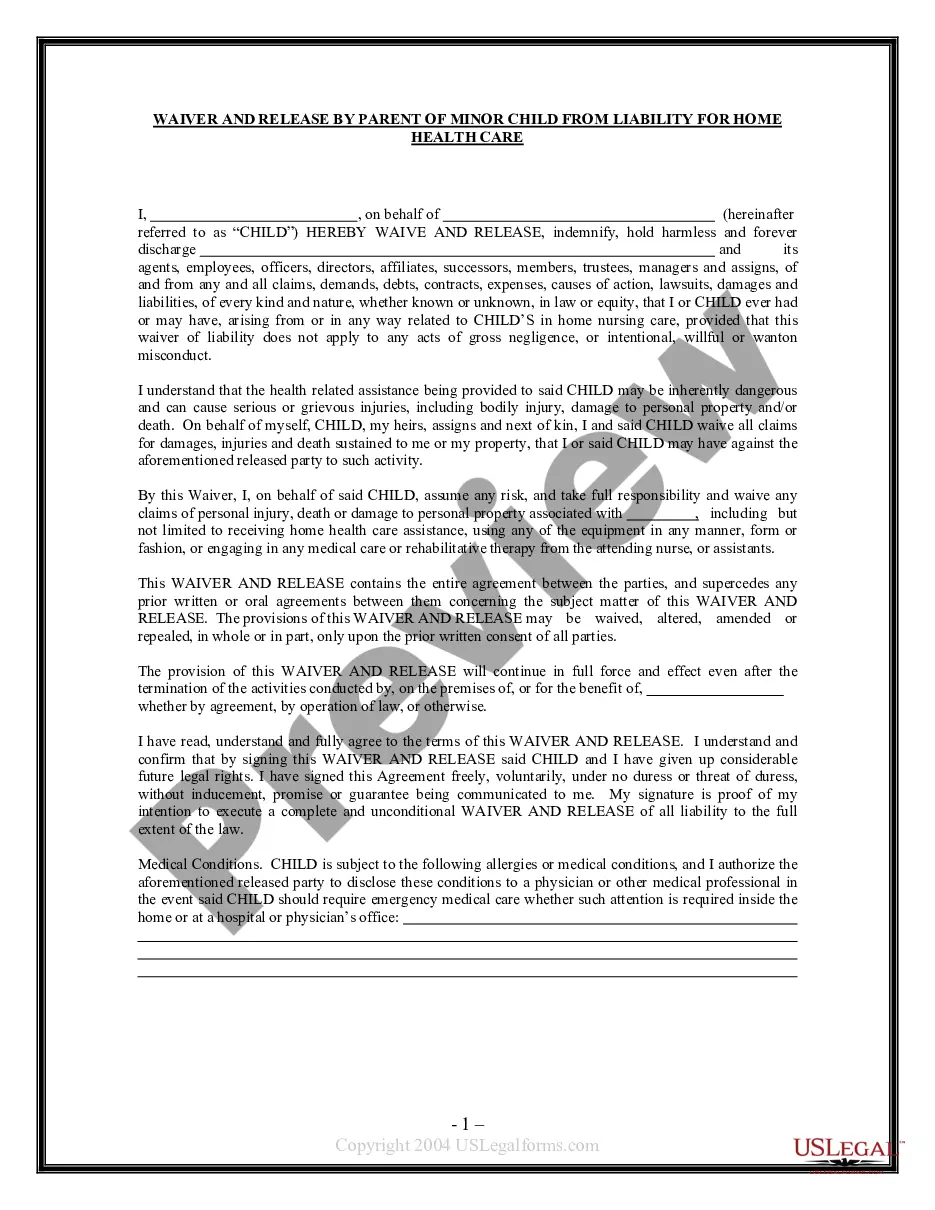
How to fill out Release By A Guardian For A Minor Upon Settlement Of A Damage Claim By The Minor In A Law Suit - Patient Consent?
- If you are a returning user, log in to your account and click 'Download' for your required document. Ensure your subscription is current before proceeding.
- For first-time users, start by browsing our extensive collection. Check the Preview mode and detailed descriptions to confirm the document meets your specifications and adheres to your local jurisdiction's requirements.
- If the selected form doesn't match your needs, use the Search bar to locate alternative templates that are better suited.
- Once you find the correct document, click the 'Buy Now' button and select your preferred subscription plan. You will need to create an account to access our full library.
- Complete your purchase by entering your credit card details or opting for PayPal for a seamless transaction.
- Finally, download the document to your device. You can also find it anytime in the My Forms section of your profile.
Using US Legal Forms not only saves you time but also grants you peace of mind knowing that your documents are crafted with legal precision. Our extensive collection ensures that you get more forms for your investment compared to other services.
Start your journey to a successful claim today by accessing our legal library and take charge of your damages with confidence!
Form popularity
FAQ
In tort law, the three main types of damages include compensatory, punitive, and nominal damages. Compensatory damages aim to offset losses, punitive damages are intended to deter wrongful conduct, and nominal damages recognize violations without significant injury. Understanding these distinctions is essential when you want to claim damage effectively. Each category serves to ensure justice is served.
There are various types of damage you might encounter, including special damages, general damages, and consequential damages. Special damages cover quantifiable financial losses, while general damages relate to subjective harm, such as emotional distress. By recognizing these different types, you can better prepare your claim. This awareness will guide you through the legal process.
The three main types of damage include compensatory damage, punitive damage, and nominal damage. Compensatory damage aims to restore your losses, punitive damage serves to penalize the wrongdoer, and nominal damage signifies a legal wrong when no substantial loss occurs. Understanding these types can empower you to claim damage effectively. Each plays a unique role in personal injury cases.
You can claim several types of damages depending on the circumstances of your case. Common options include economic damages, such as medical bills and lost income, and non-economic damages, such as pain and suffering. By identifying what you can claim, you enhance the chances of securing fair compensation. Utilize platforms like USLegalForms to navigate the complexities of your claim.
To claim damages means to seek compensation for losses incurred due to another party's actions. This could involve medical expenses, lost wages, or emotional distress. Understanding how to claim damage effectively ensures you invite the right support. It is crucial to document your losses clearly to strengthen your case.
The three most common types of injury include physical injuries, emotional distress, and property damage. When you seek to claim damages, understanding these injuries helps you determine your rights and the compensation you deserve. Each type has different implications for your claim. Therefore, it’s important to evaluate the details of your situation.
You generally have a limited timeframe to file a claim for damages, which varies by state and the type of damage incurred. In most situations, you should file within a few years, but it’s crucial to check your specific state laws. Utilizing US Legal Forms can help you understand these timelines and ensure you file your claim damage within the necessary period. Don’t delay, as filing promptly strengthens your case.
To file a claim for damages, start by gathering all necessary documentation related to the incident. You can typically submit your claim to your insurance company or the appropriate legal authority depending on the nature of the damage. Platforms like US Legal Forms simplify this process by providing the necessary forms and guidance. Remember, acting quickly can help you navigate the claim damage process effectively.
Damage claims are formal requests for compensation submitted to an insurance company or legal entity. These claims arise from various incidents, such as property damage, car accidents, or personal injury. Understanding how to file a claim damage correctly can significantly affect the outcome of your case.
To write a damage claim, begin by clearly stating the details of the incident, including date and location. Next, itemize the damages and include supporting documentation like photos and repair estimates. By doing so, you make your case for how to claim damage more convincing to the insurance company.