Liability Injury Property For Florida
Description
Get your form ready online
Our built-in tools help you complete, sign, share, and store your documents in one place.
Make edits, fill in missing information, and update formatting in US Legal Forms—just like you would in MS Word.
Download a copy, print it, send it by email, or mail it via USPS—whatever works best for your next step.
Sign and collect signatures with our SignNow integration. Send to multiple recipients, set reminders, and more. Go Premium to unlock E-Sign.
If this form requires notarization, complete it online through a secure video call—no need to meet a notary in person or wait for an appointment.
We protect your documents and personal data by following strict security and privacy standards.

Make edits, fill in missing information, and update formatting in US Legal Forms—just like you would in MS Word.

Download a copy, print it, send it by email, or mail it via USPS—whatever works best for your next step.

Sign and collect signatures with our SignNow integration. Send to multiple recipients, set reminders, and more. Go Premium to unlock E-Sign.

If this form requires notarization, complete it online through a secure video call—no need to meet a notary in person or wait for an appointment.

We protect your documents and personal data by following strict security and privacy standards.
Looking for another form?








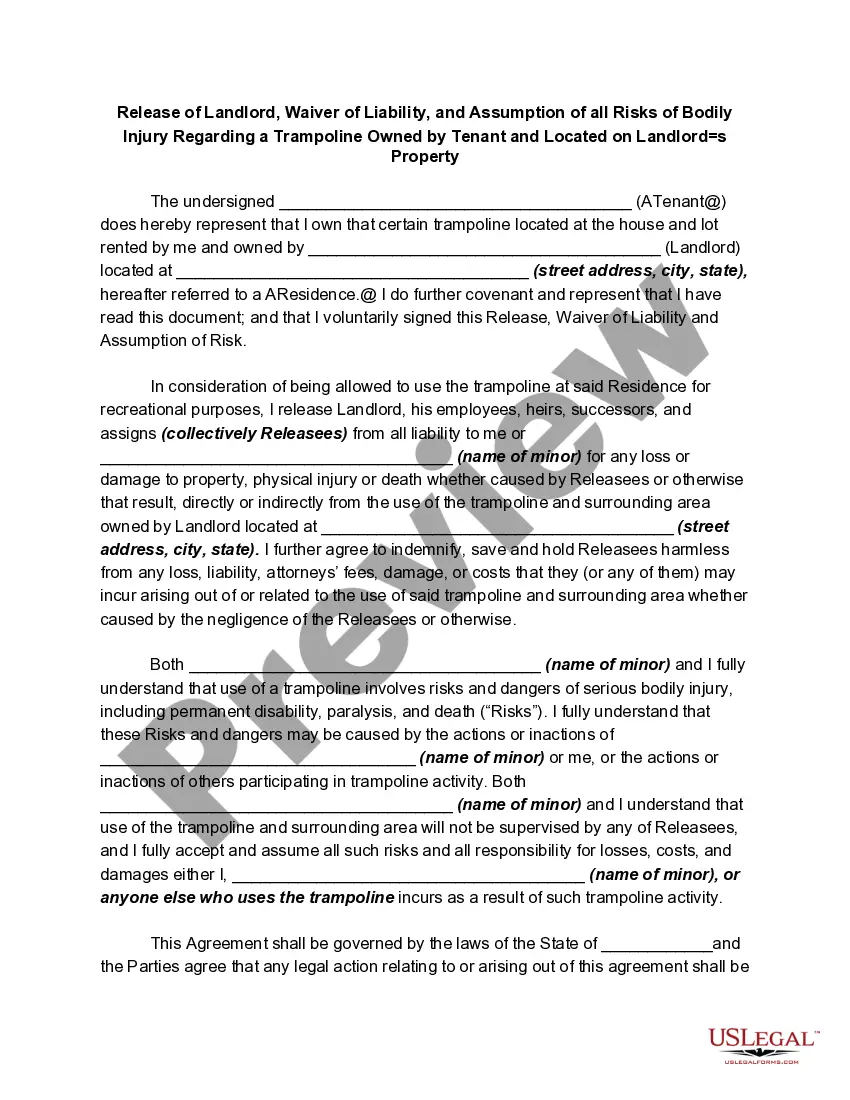
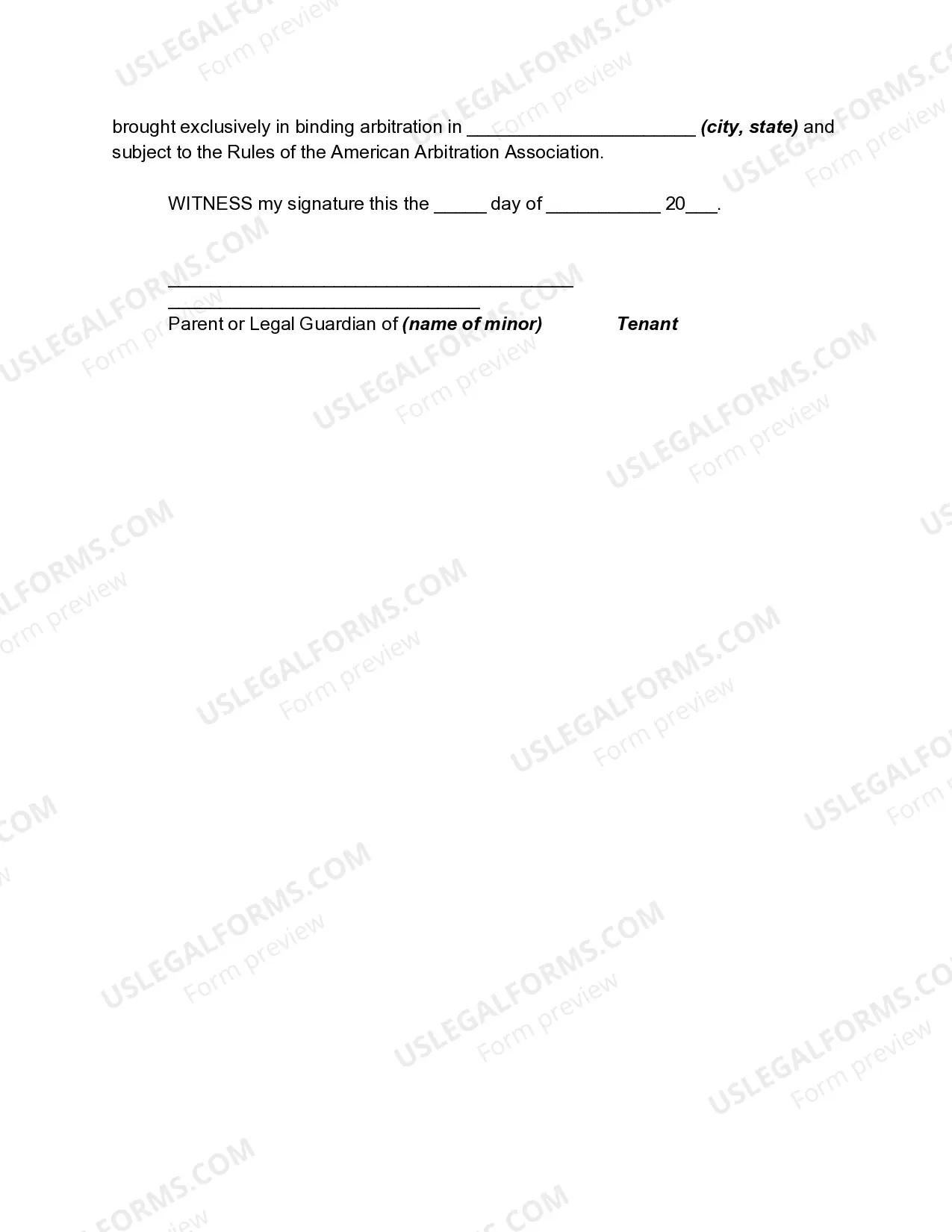
How to fill out Release Of Landlord, Waiver Of Liability, And Assumption Of All Risks Of Personal Bodily Injury Regarding A Trampoline Owned By Tenant And Located On Landlord's Property?
Creating legal documents from the ground up can occasionally feel daunting.
Certain situations may require extensive research and significant financial investment.
If you seek a more straightforward and cost-effective method of preparing Liability Injury Property For Florida or other documents without unnecessary complications, US Legal Forms is always available to assist you.
Our online repository of over 85,000 current legal documents covers nearly every facet of your financial, legal, and personal concerns. With just a few clicks, you can promptly access state- and county-specific forms carefully crafted for you by our legal professionals.
Review the form preview and descriptions to ensure you are looking at the correct form. Ensure the template you select complies with the laws and regulations of your state and county. Choose the appropriate subscription plan to acquire the Liability Injury Property For Florida. Finally, download the form, complete it, sign, and print it out. US Legal Forms has a strong reputation and over 25 years of expertise. Join us today and simplify your document execution process!
- Utilize our website whenever you require dependable and trustworthy services to conveniently locate and download the Liability Injury Property For Florida.
- If you’re a returning user and have already set up an account with us, simply Log In to your account, select the form, and download it immediately or retrieve it later from the My documents section.
- Don’t possess an account? No worries. It takes minimal time to create an account and navigate the library.
- Before proceeding to download Liability Injury Property For Florida, consider these tips.
Form popularity
FAQ
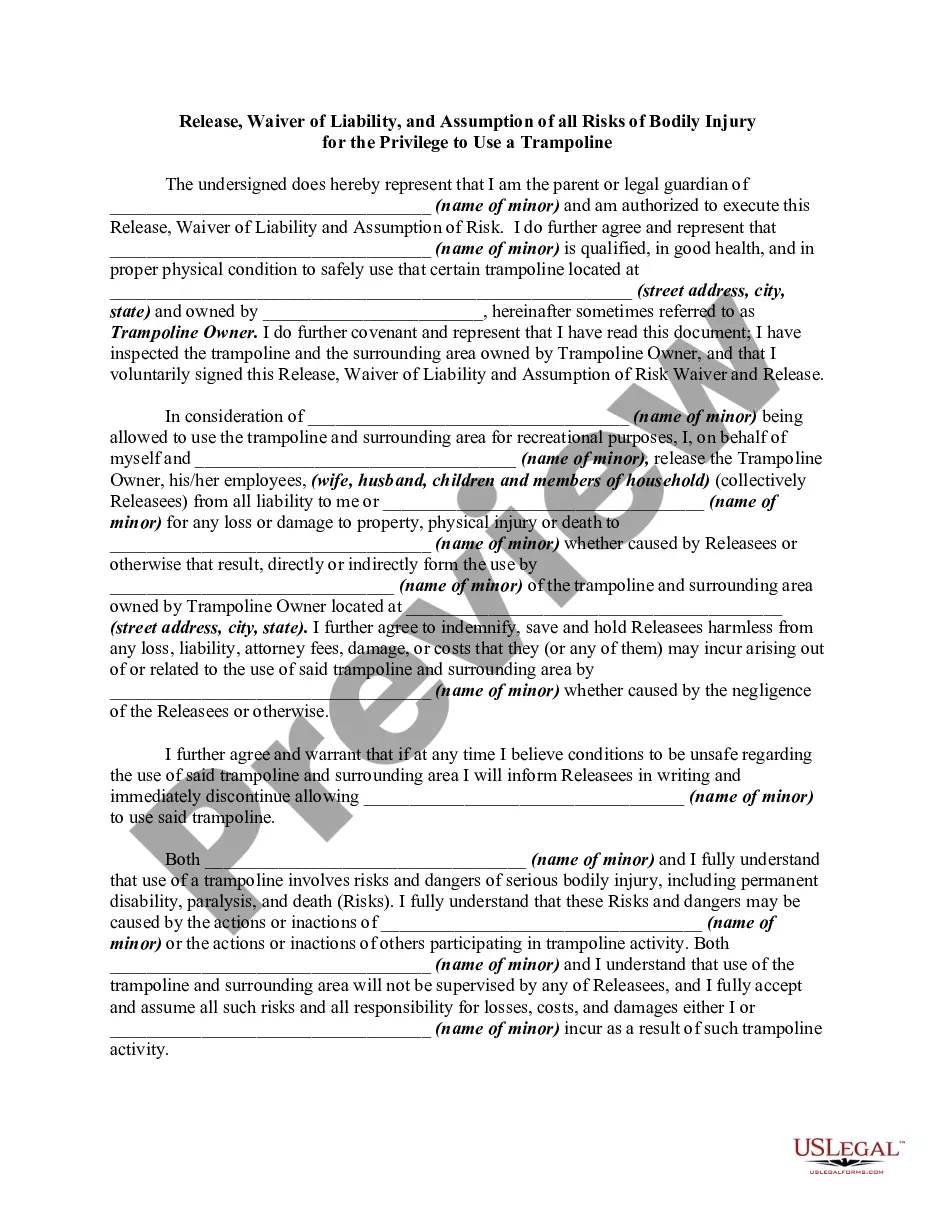
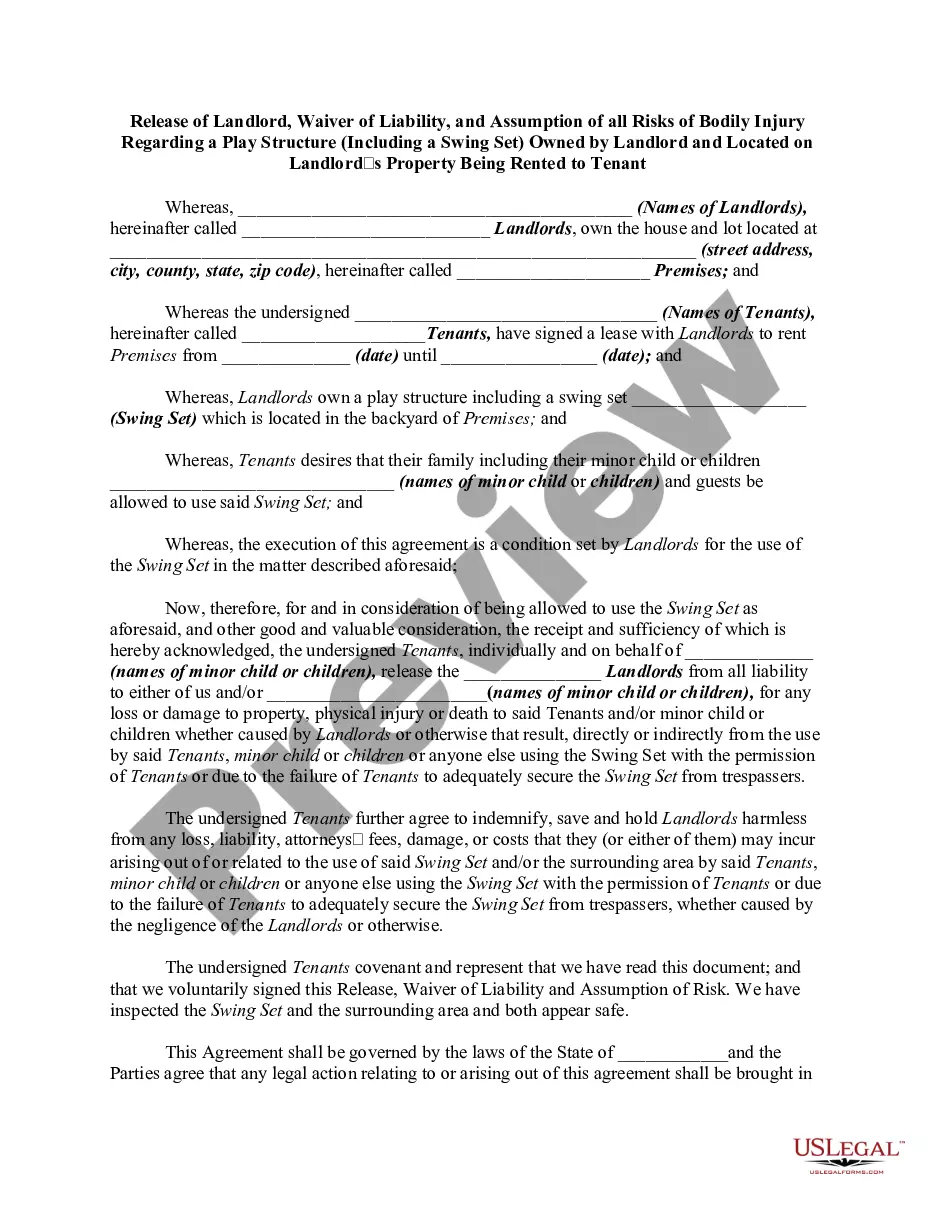
Liability waivers can be effective when drafted appropriately and signed voluntarily, affirming the participant's understanding of the risks involved. However, certain limitations exist, especially if the waiver attempts to release parties from gross negligence or intentional acts. For tackling issues related to liability injury property for Florida, utilizing comprehensive templates or legal services can enhance their effectiveness.
Yes, liability waivers can be enforceable in Florida, but they must be clear, specific, and not overly broad. Courts will evaluate whether the waiver fairly informs participants of the risks and protects against negligence claims. To ensure your waiver effectively addresses liability injury property for Florida, consider using a platform like USLegalForms to access professionally drafted documents.
The 51 percent rule in Florida refers to the comparative negligence standard, meaning that if a plaintiff is found to be less than 51 percent responsible for an injury, they can still recover damages. This rule significantly impacts liability claims and compensation amounts. Understanding this rule is essential for navigating liability injury property for Florida, as it affects how cases are resolved.
In Florida, a liability waiver must be written in clear and unambiguous language, detailing the risks associated with the activity. It should also be signed voluntarily, without any coercion, by the participant. If you are looking to protect yourself from liability injury property for Florida, ensure your waiver is properly drafted to withstand legal scrutiny.
To create a liability waiver, you should include clear language that outlines the risks involved, the activities covered, and the participant's agreement to release liability. It should also be signed by the individual participating, acknowledging their understanding of the terms. For those concerned with liability injury property for Florida, consulting a legal expert can ensure the waiver meets all necessary criteria.
You have four years to file an injury claim in Florida. This applies to most personal injury cases, including those involving liability injury property for Florida. Timely action is essential to protect your rights and secure any compensation you may be entitled to. If you are uncertain about the process, platforms like USLegalForms can provide valuable guidance.
The statute of limitations for personal injury claims in Florida is four years. This means you must file your claim within four years of the date of injury. If this time passes, you may lose your chance to recover damages associated with liability injury property for Florida. Always seek legal guidance to ensure you meet the necessary deadlines.
Yes, someone can sue you if they get injured on your property in Florida. Property owners have a responsibility to maintain a safe environment for visitors. If negligence is proven, you may be liable for any resulting damages related to liability injury property for Florida. Understanding your responsibilities as a property owner can help you mitigate legal risks.
In Florida, you typically have four years to file a personal injury claim. This timeframe starts from the date the injury occurred. Missing this deadline can result in losing your right to seek compensation for damages related to liability injury property for Florida. Therefore, it's advised to consult a legal professional as soon as possible.
Yes, there is a time limit on personal injury claims in Florida. This limit is often referred to as the statute of limitations. In general, you have four years from the date of the injury to file your claim. It's crucial to act swiftly to protect your rights regarding liability injury property for Florida.