Construction Fee Plus Form For Contractor In Travis
Description

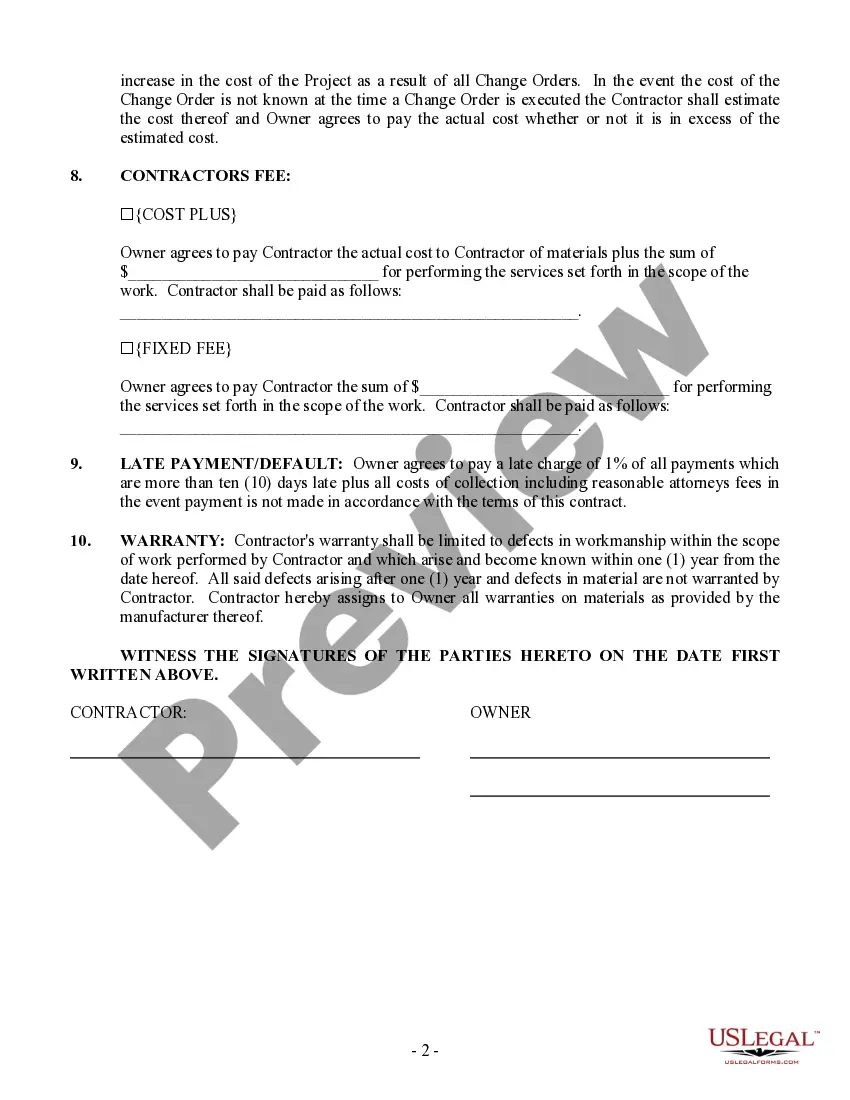
Get your form ready online
Our built-in tools help you complete, sign, share, and store your documents in one place.
Make edits, fill in missing information, and update formatting in US Legal Forms—just like you would in MS Word.
Download a copy, print it, send it by email, or mail it via USPS—whatever works best for your next step.
Sign and collect signatures with our SignNow integration. Send to multiple recipients, set reminders, and more. Go Premium to unlock E-Sign.
If this form requires notarization, complete it online through a secure video call—no need to meet a notary in person or wait for an appointment.
We protect your documents and personal data by following strict security and privacy standards.

Make edits, fill in missing information, and update formatting in US Legal Forms—just like you would in MS Word.

Download a copy, print it, send it by email, or mail it via USPS—whatever works best for your next step.

Sign and collect signatures with our SignNow integration. Send to multiple recipients, set reminders, and more. Go Premium to unlock E-Sign.

If this form requires notarization, complete it online through a secure video call—no need to meet a notary in person or wait for an appointment.

We protect your documents and personal data by following strict security and privacy standards.
Looking for another form?
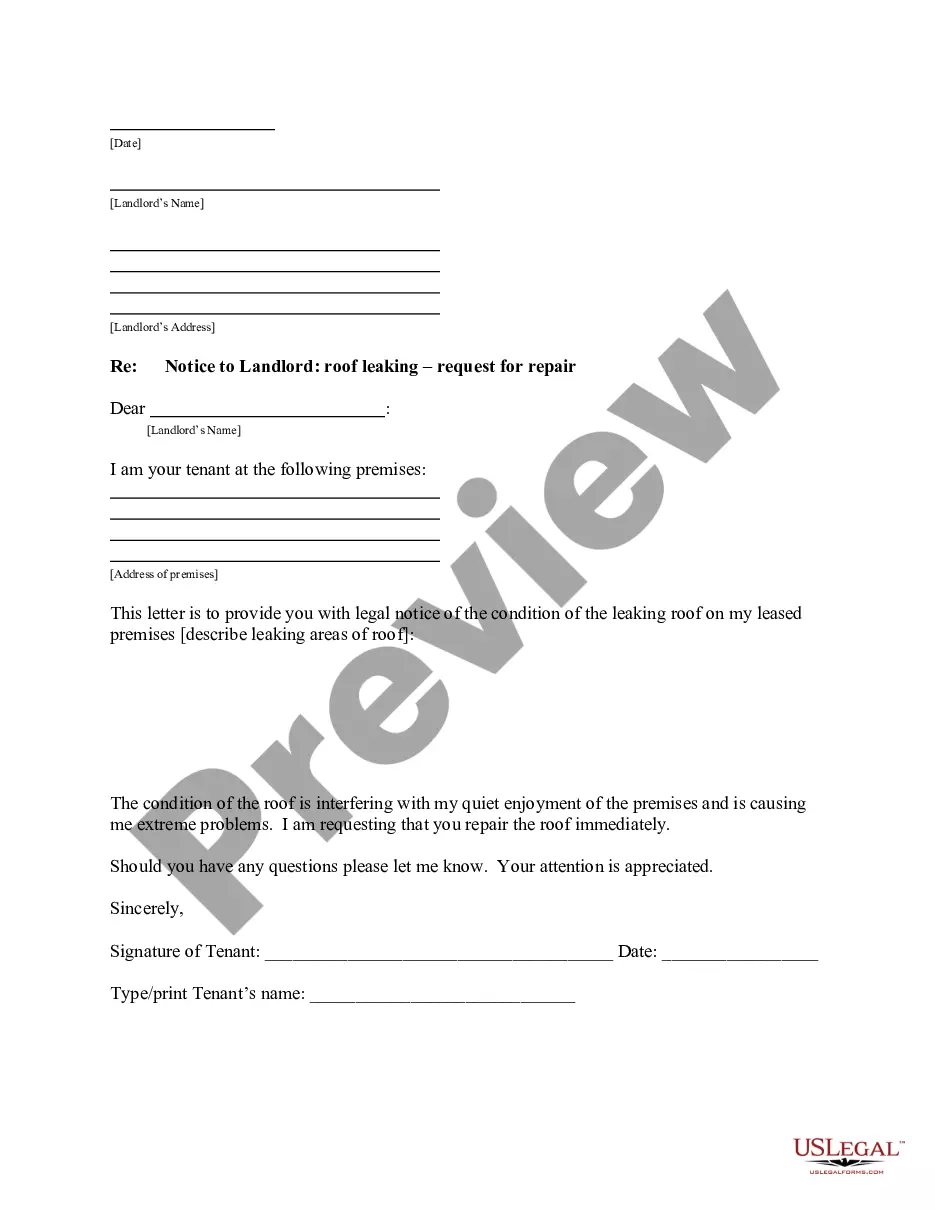
Form popularity
FAQ
If your project has a well-defined scope of work, a lump sum contract is a straightforward solution since contractors should be able to accurately estimate costs. If the project scope is unclear, contractors can bid with time and materials contracts to mitigate risk.
Construction contracts are legally binding agreements between both parties involved, and set out work timescales, rights, obligations and expectations from both the client and contractor. Construction contracts may also cover how to resolve disputes, termination of work notices and risk management.
Construction contract management core objectives Ensuring Timely Completion: Overseeing that all project milestones and final deliverables are met within agreed-upon timelines. Maintaining Budget Control: Monitoring and managing costs to ensure the project stays within the defined budget constraints.
Construction contracts are legally binding agreements between both parties involved, and set out work timescales, rights, obligations and expectations from both the client and contractor. Construction contracts may also cover how to resolve disputes, termination of work notices and risk management.
The main purpose of a contract is to formalize new relationships and outline the various legal obligations each party owes to the other. Today, most contracts are agreed between businesses, not people.
10 Different Types of Contracts Type of ContractEveryday Use Implied Contracts Common in everyday transactions like dining out. Express Contracts Standard in formal business agreements. Simple Contracts Used for straightforward services or transactions. Unconscionable Contracts Often challenged in court for fairness.10 more rows •
The general contractor is responsible for delivering a fully functional and operational facility or plant. This means that the investor can focus on their core business activities while the EPC contractor handles all aspects of the project, from design to commissioning.
