Contractor Work Project With Gst In Santa Clara
Description

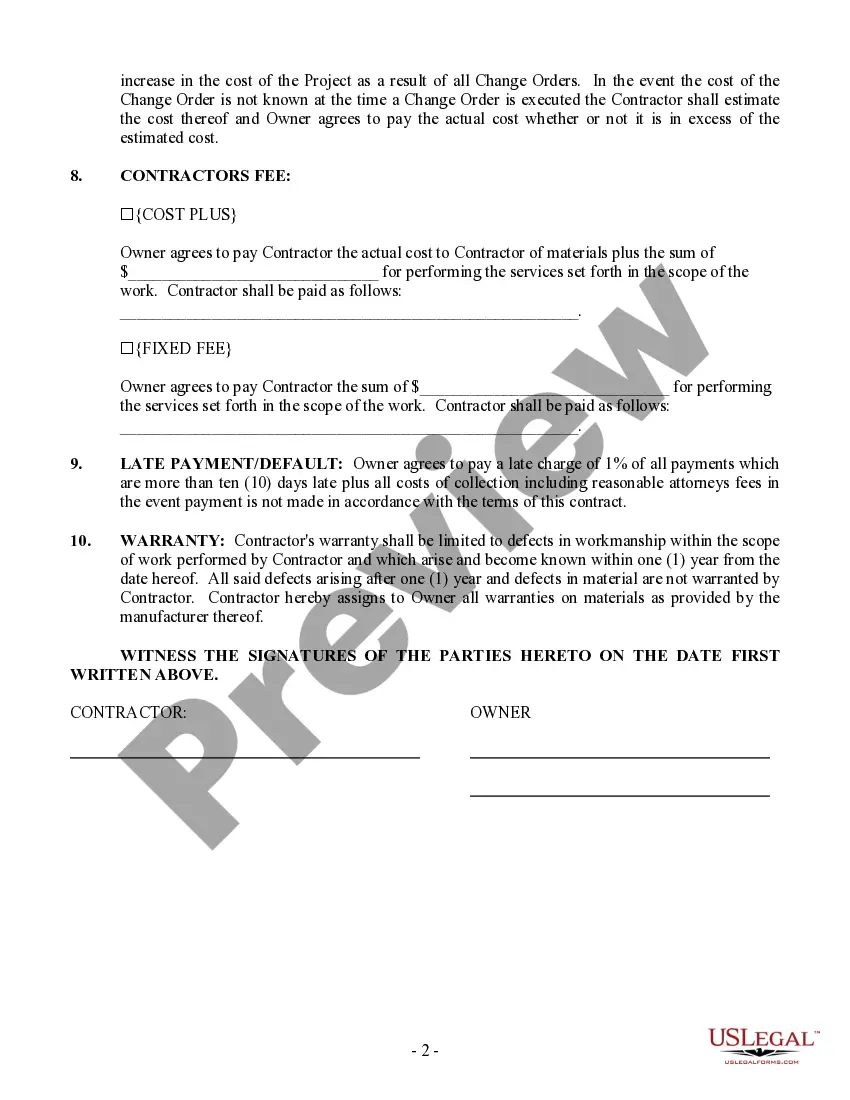
Get your form ready online
Our built-in tools help you complete, sign, share, and store your documents in one place.
Make edits, fill in missing information, and update formatting in US Legal Forms—just like you would in MS Word.
Download a copy, print it, send it by email, or mail it via USPS—whatever works best for your next step.
Sign and collect signatures with our SignNow integration. Send to multiple recipients, set reminders, and more. Go Premium to unlock E-Sign.
If this form requires notarization, complete it online through a secure video call—no need to meet a notary in person or wait for an appointment.
We protect your documents and personal data by following strict security and privacy standards.

Make edits, fill in missing information, and update formatting in US Legal Forms—just like you would in MS Word.

Download a copy, print it, send it by email, or mail it via USPS—whatever works best for your next step.

Sign and collect signatures with our SignNow integration. Send to multiple recipients, set reminders, and more. Go Premium to unlock E-Sign.

If this form requires notarization, complete it online through a secure video call—no need to meet a notary in person or wait for an appointment.

We protect your documents and personal data by following strict security and privacy standards.
Looking for another form?








Form popularity
FAQ
As a proprietor of that business, you should file your independent contractor taxes on a Schedule C (Form 1040) to properly report your income and claim related expenses. To calculate the self-employment taxes mentioned above, you'll use Schedule SE.
You can accomplish this by seeking to maximize tax write-offs through your business. Maximizing write-offs directly reduces the income subject to self-employment tax. As a self-employed individual, the tax law allows you write-off all ordinary and necessary expenses to conduct your trade or business.
The statewide tax rate is 7.25%. In most areas of California, local jurisdictions have added district taxes that increase the tax owed by a seller. Those district tax rates range from 0.10% to 2.00%. Some areas may have more than one district tax in effect.
In general, businesses which provide a service that does not result in a tangible good are exempt from sales tax, as it only applies to goods. For example a freelance writer or a tradesperson is not required to remit sales tax, although a carpenter making custom furniture is so required.
Construction contractors in California who sell or lease tangible personal property, which the law defines as an item that can be seen, weighed, measured, felt, or touched, are generally required to register with us for a seller's permit.
Many sellers believe there is a general exemption from sales tax for labor charges. However, in California many types of labor charges are subject to tax. Tax applies to charges for producing, fabricating, or processing tangible personal property for your customers.
Contractor rights and obligations are defined by the contract with the client. This document covers important details like deadlines, the scope of work, payment terms, and confidentiality agreements. Contractors maintain the right to decide how, when, and where they complete their work.
