Contract Contractor Building For Residential In San Bernardino
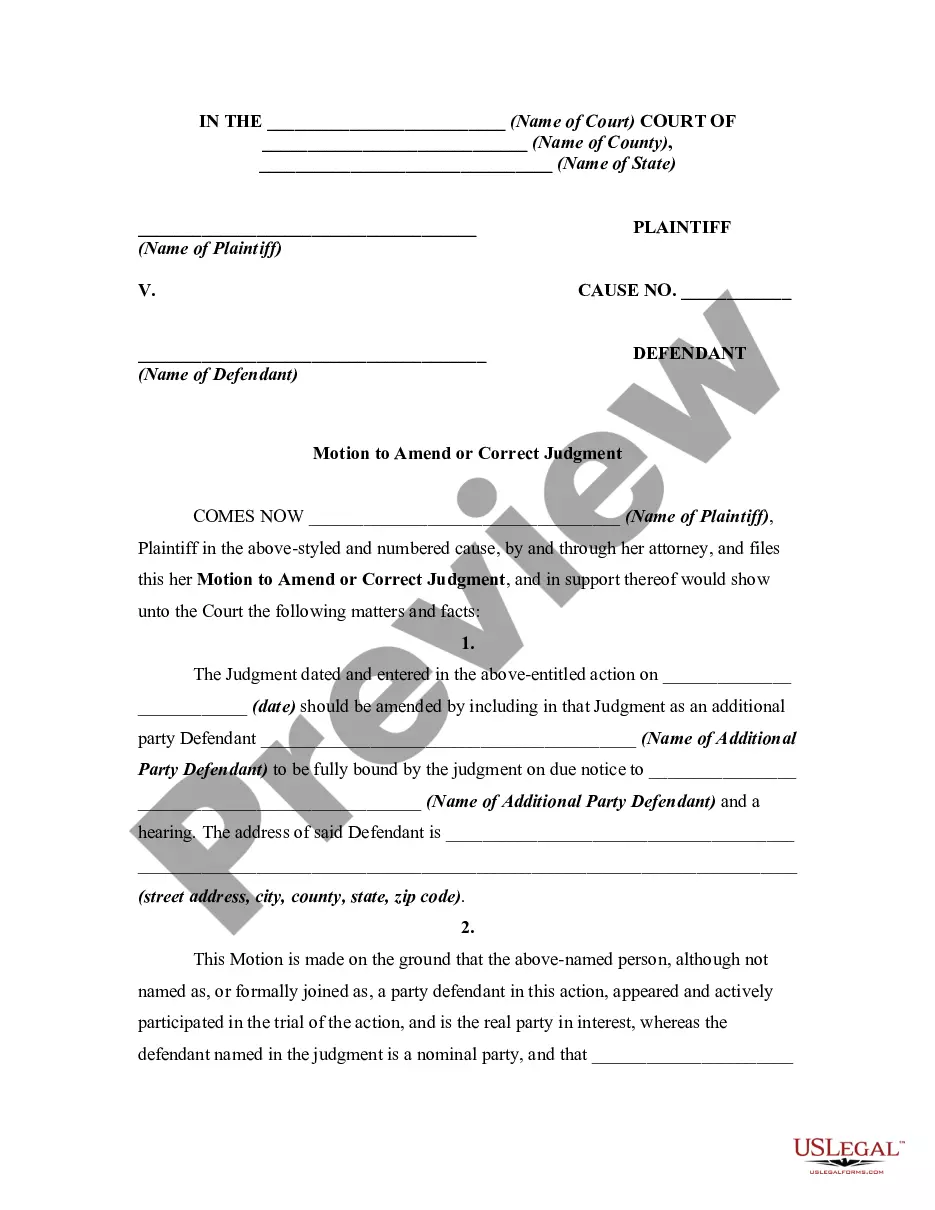
Description


Get your form ready online
Our built-in tools help you complete, sign, share, and store your documents in one place.
Make edits, fill in missing information, and update formatting in US Legal Forms—just like you would in MS Word.
Download a copy, print it, send it by email, or mail it via USPS—whatever works best for your next step.
Sign and collect signatures with our SignNow integration. Send to multiple recipients, set reminders, and more. Go Premium to unlock E-Sign.
If this form requires notarization, complete it online through a secure video call—no need to meet a notary in person or wait for an appointment.
We protect your documents and personal data by following strict security and privacy standards.

Make edits, fill in missing information, and update formatting in US Legal Forms—just like you would in MS Word.

Download a copy, print it, send it by email, or mail it via USPS—whatever works best for your next step.

Sign and collect signatures with our SignNow integration. Send to multiple recipients, set reminders, and more. Go Premium to unlock E-Sign.

If this form requires notarization, complete it online through a secure video call—no need to meet a notary in person or wait for an appointment.

We protect your documents and personal data by following strict security and privacy standards.
Looking for another form?




Form popularity
FAQ
A building permit is not required for the following: One-story detached accessory structures used as tool and storage sheds, playhouses, and similar uses, provided the floor area does not exceed 120 square feet (11 square meters).
In California, you can build your own house without being a licensed contractor, but there are important considerations and regulations to keep in mind: Owner-Builder Permit: California allows property owners to act as their own contractors under the ``owner-builder'' provision.
Yes, the San Bernardino County rules allow tiny houses to be used as accessory dwelling units as well.
A Residential Accessory permit is required prior to any construction of residential accessory structures greater than 120 square feet.
In California, most construction work is required to be performed by a licensed contractor. In certain instances, the owner of the property may secure a permit as an owner-builder, but there are strict limitations on when this may occur.
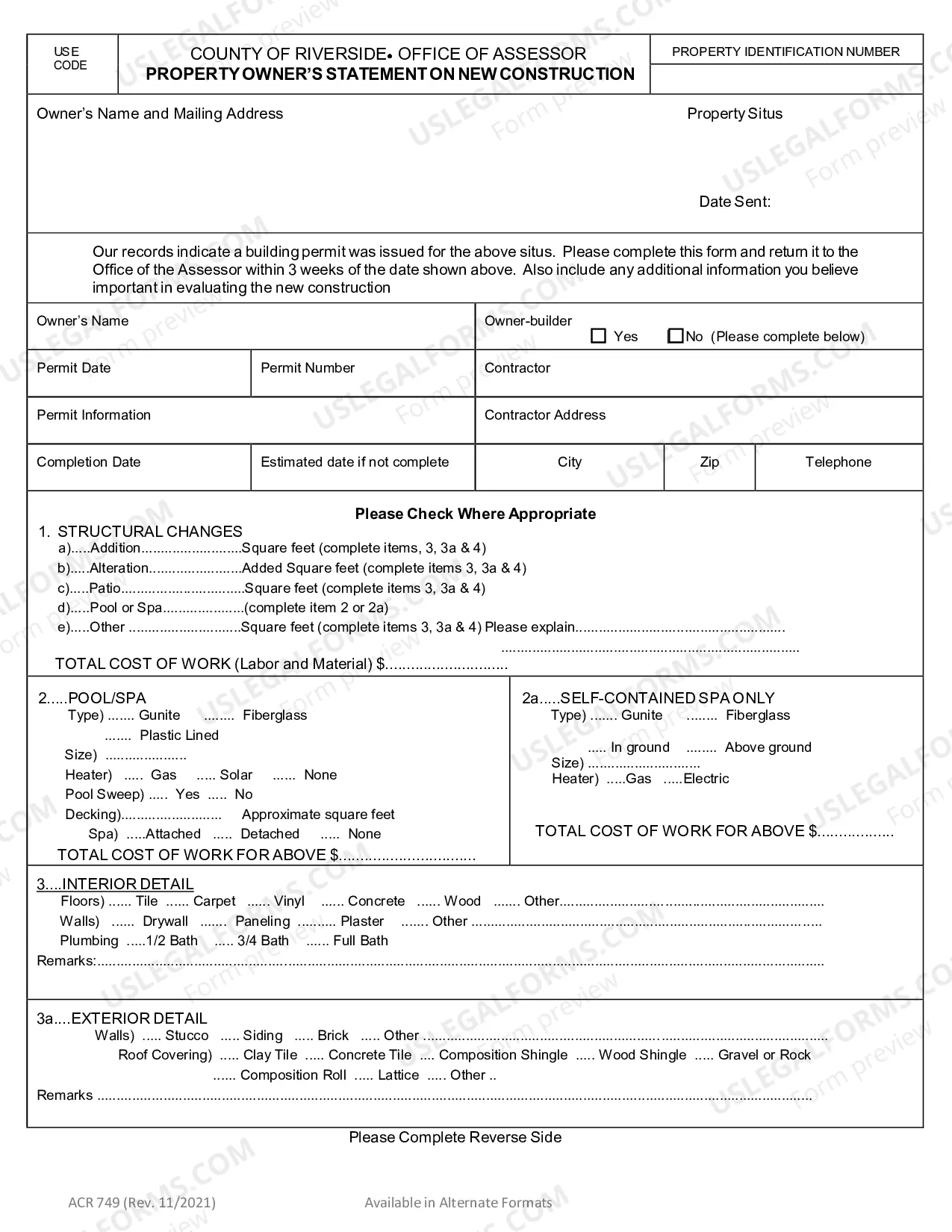
A Building Permit is required for an owner or contractor of a property to construct any residential building with a floor area greater than 120 square feet. Prior to starting construction you will be required to submit plans and any necessary supporting documentation for review and approval by the County.
Types of Projects That May Be Exempt From a Building Permit in California Painting. Floor upgrades. Kitchen remodels. Small drywall projects. Common electrical work. Small outbuildings. Bathroom fixes. Fences.
Storage sheds that are less than 120 square feet and eight feet in height do not require a building permit, but still require Planning Division approval through an over-the-counter application called a Zoning Clearance.
To view a list of permits which have been issued: go to EZ Online Permitting and select “Permits Issued Report” from the “Permits” drop down menu. You are able to search for permits by date range and zip code.
Any shed under 10 feet in height from natural ground to highest point may have a side and rear setback of 5 feet. Any shed higher than 10 feet in height needs to follow zone setbacks. Sheds are not allowed in front setback.
