Construction Contract Form Download For Mac In Riverside
Description

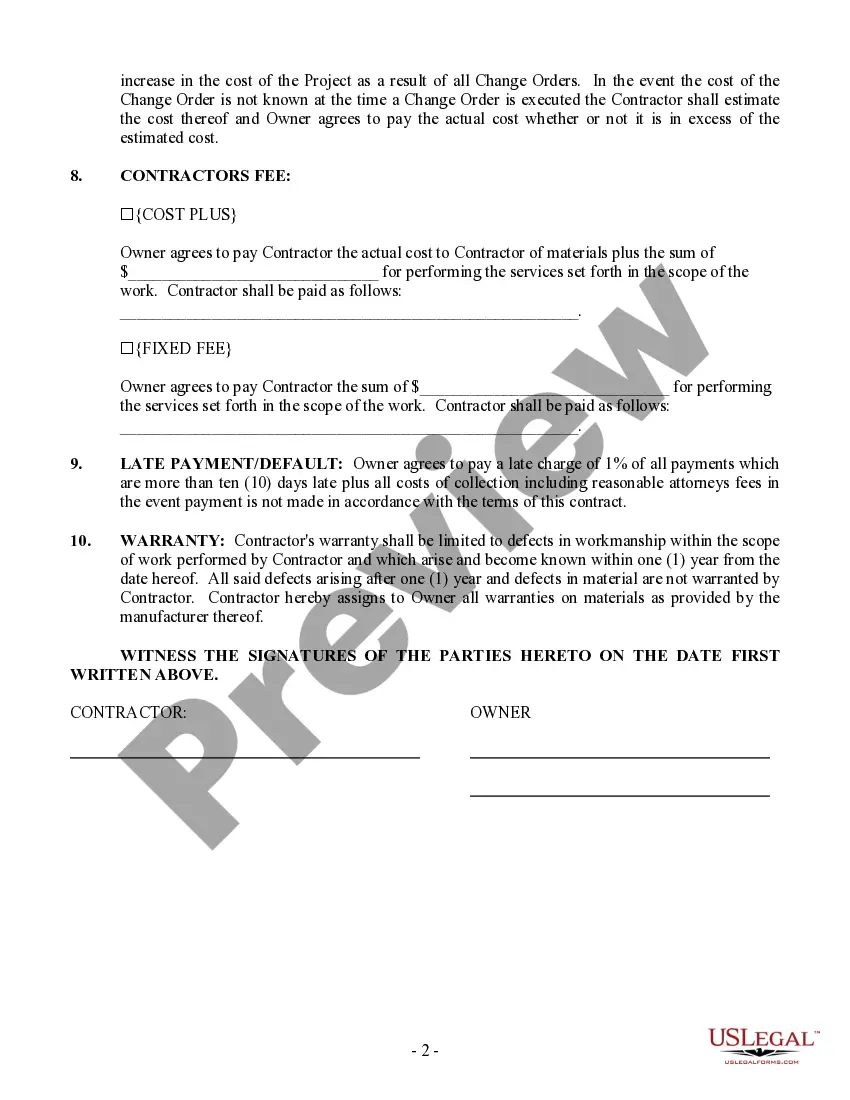
Get your form ready online
Our built-in tools help you complete, sign, share, and store your documents in one place.
Make edits, fill in missing information, and update formatting in US Legal Forms—just like you would in MS Word.
Download a copy, print it, send it by email, or mail it via USPS—whatever works best for your next step.
Sign and collect signatures with our SignNow integration. Send to multiple recipients, set reminders, and more. Go Premium to unlock E-Sign.
If this form requires notarization, complete it online through a secure video call—no need to meet a notary in person or wait for an appointment.
We protect your documents and personal data by following strict security and privacy standards.

Make edits, fill in missing information, and update formatting in US Legal Forms—just like you would in MS Word.

Download a copy, print it, send it by email, or mail it via USPS—whatever works best for your next step.

Sign and collect signatures with our SignNow integration. Send to multiple recipients, set reminders, and more. Go Premium to unlock E-Sign.

If this form requires notarization, complete it online through a secure video call—no need to meet a notary in person or wait for an appointment.

We protect your documents and personal data by following strict security and privacy standards.
Looking for another form?










Form popularity
FAQ
How to draft a contract? Introduction and parties involved. The first step in drafting a contract is to identify the parties involved. Definitions and interpretations. Rights and obligations of each party. Payment terms and conditions. Termination and renewal provisions. Dispute resolution mechanisms.
How to draft a contract in 13 simple steps Start with a contract template. Understand the purpose and requirements. Identify all parties involved. Outline key terms and conditions. Define deliverables and milestones. Establish payment terms. Add termination conditions. Incorporate dispute resolution.
How To Write A Construction Contract With 7 Steps Step 1: Define the Parties Involved. Step 2: Outline the Scope of Work. Step 3: Establish the Timeline. Step 4: Determine the Payment Terms. Step 5: Include Necessary Legal Clauses. Step 6: Address Change Orders and Modifications. Step 7: Sign and Execute the Contract.
A lot depends on your professional background, confidence as a test-taker, and even your available study schedule. As a general rule of thumb, though, it isn't incredibly difficult to get a passing score on your exam – as a school, we have a 99%+ first-time passing rate, so it's definitely something you can do.
To validate your experience to the CSLB, you must obtain a certifier who can sign the work experience certification statement on your application. A certifier is an eligible individual capable of verifying your work experience if required.
In California, you need a contractor license to do any work that costs more than $500. The easiest kind of contractor's license is a Class “B” Contractor's License. This license allows you to do general contracting work.
Here are a few ways to get a contractor license without experience in California. Gain Access to an RMO or RME License. Create a Construction Company with a Licensed Contractor. Obtain a Licensing Board Waiver. Grandfathered Contractor's License. Use Other Types of Experience. Start Earning Experience.
Projects that DO NOT need a building permit are simple surface (cosmetic) projects; minor repairs and replacements; and minor site improvements or small structures.
Submit your application and 3 sets of plans with calculations and specifications to HCD's plan check section. Once the submittal is received in the plan check section, the plan will require 4 to 6 weeks for review.
Types of Projects That May Be Exempt From a Building Permit in California Painting. Floor upgrades. Kitchen remodels. Small drywall projects. Common electrical work. Small outbuildings. Bathroom fixes. Fences.
