Construction Contracts Oregon Withholding In Massachusetts
Description

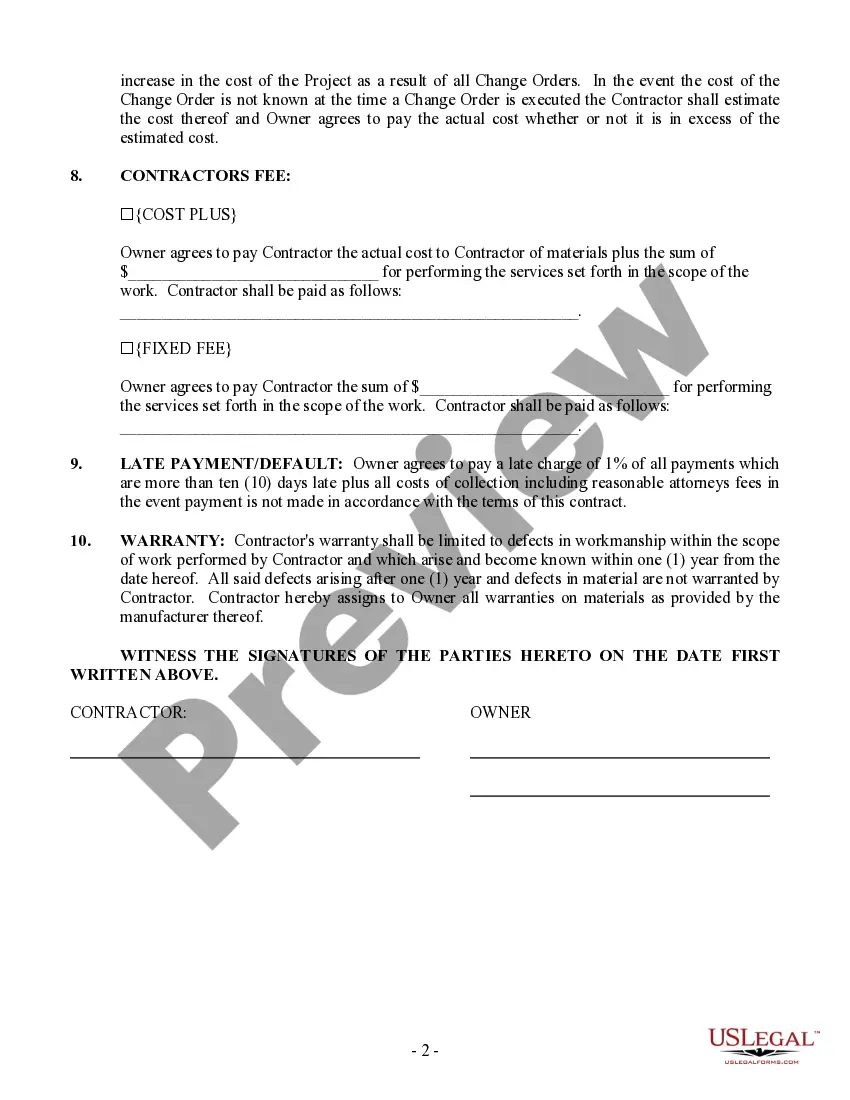
Get your form ready online
Our built-in tools help you complete, sign, share, and store your documents in one place.
Make edits, fill in missing information, and update formatting in US Legal Forms—just like you would in MS Word.
Download a copy, print it, send it by email, or mail it via USPS—whatever works best for your next step.
Sign and collect signatures with our SignNow integration. Send to multiple recipients, set reminders, and more. Go Premium to unlock E-Sign.
If this form requires notarization, complete it online through a secure video call—no need to meet a notary in person or wait for an appointment.
We protect your documents and personal data by following strict security and privacy standards.

Make edits, fill in missing information, and update formatting in US Legal Forms—just like you would in MS Word.

Download a copy, print it, send it by email, or mail it via USPS—whatever works best for your next step.

Sign and collect signatures with our SignNow integration. Send to multiple recipients, set reminders, and more. Go Premium to unlock E-Sign.

If this form requires notarization, complete it online through a secure video call—no need to meet a notary in person or wait for an appointment.

We protect your documents and personal data by following strict security and privacy standards.
Looking for another form?







Form popularity
FAQ
Retainage cannot exceed 5%. The public entity may hold 1% retainage after substantial completion pending final completion of entire work.
What is Retainage? Retainage is the withholding of a portion of the funds that are due to a contractor or subcontractor until the construction project is finished. It is meant to serve as a financial incentive and an assurance that the contractor will complete the project in a satisfactory manner.
In general, income is subject to Massachusetts income tax withholding if it is taxable under Massachusetts personal income tax law and it constitutes wages for federal withholding purposes. With certain statutory exceptions, withholding is required only if both conditions apply.
Owner to Prime Contractor (Public): 15 days after receipt of invoice. If the entity is a commonwealth entity, payments must be made within 30 days. Final payment is due 65 days after invoice.
Do you need a license to be a general contractor in MA? Massachusetts general contractors who work on buildings of less than 35,000 cubic feet must have a license issued by the state. In some cases, you may also need to register as a home improvement contractor through the Office of Public Safety and Inspections.
Most construction projects will require both a licensed and registered contractor. However, if your contractor does not hold a valid CSL but the work he/she contracts to perform requires it, he/she must obtain a CSL or hire an active Construction Supervisor Licensee to supervise the project.
Their study found that the ten states with the most burdensome licensing regulations were: Missouri. Louisiana. Arizona. Wisconsin. Florida. Nevada. Alabama. Tennesse.
