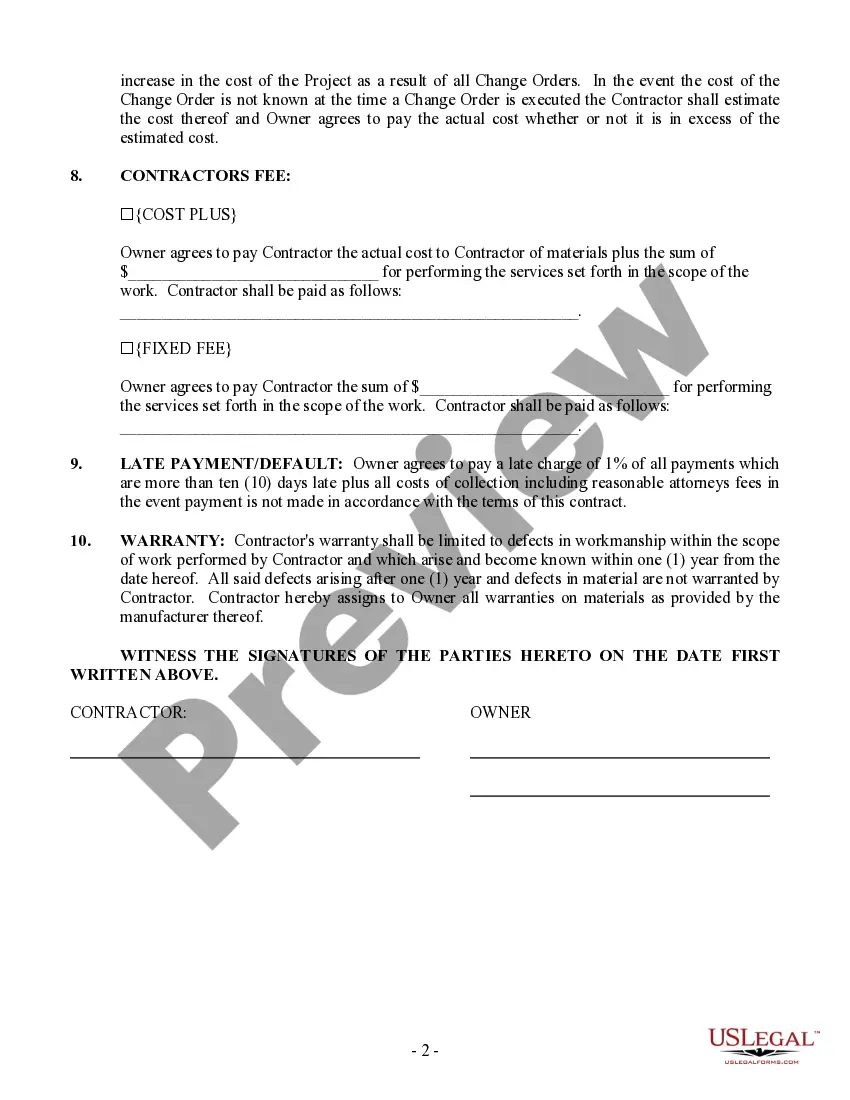
Construction Contract Cost Plus Withholding In Massachusetts
Description

Get your form ready online
Our built-in tools help you complete, sign, share, and store your documents in one place.
Make edits, fill in missing information, and update formatting in US Legal Forms—just like you would in MS Word.
Download a copy, print it, send it by email, or mail it via USPS—whatever works best for your next step.
Sign and collect signatures with our SignNow integration. Send to multiple recipients, set reminders, and more. Go Premium to unlock E-Sign.
If this form requires notarization, complete it online through a secure video call—no need to meet a notary in person or wait for an appointment.
We protect your documents and personal data by following strict security and privacy standards.

Make edits, fill in missing information, and update formatting in US Legal Forms—just like you would in MS Word.

Download a copy, print it, send it by email, or mail it via USPS—whatever works best for your next step.

Sign and collect signatures with our SignNow integration. Send to multiple recipients, set reminders, and more. Go Premium to unlock E-Sign.

If this form requires notarization, complete it online through a secure video call—no need to meet a notary in person or wait for an appointment.

We protect your documents and personal data by following strict security and privacy standards.
Looking for another form?







Form popularity
FAQ
Construction Law and the 'Right to Cure' Statute of Limitations Massachusetts 6 years for contracts 3 years for torts Michigan 6 years for contracts 3 years for torts 1 year for injury resulting from gross negligence Minnesota 2 years from discovery of injury for contracts or torts Mississippi 3 years for contracts and torts47 more rows
Retainage cannot exceed 5%. The public entity may hold 1% retainage after substantial completion pending final completion of entire work.
The main obligation arising from the contract is to complete the specific work, in ance with the agreed terms and specifications as well as the conditions required by the standards.
What is Retainage? Retainage is the withholding of a portion of the funds that are due to a contractor or subcontractor until the construction project is finished. It is meant to serve as a financial incentive and an assurance that the contractor will complete the project in a satisfactory manner.