Contractor Work Project With Gst In Kings
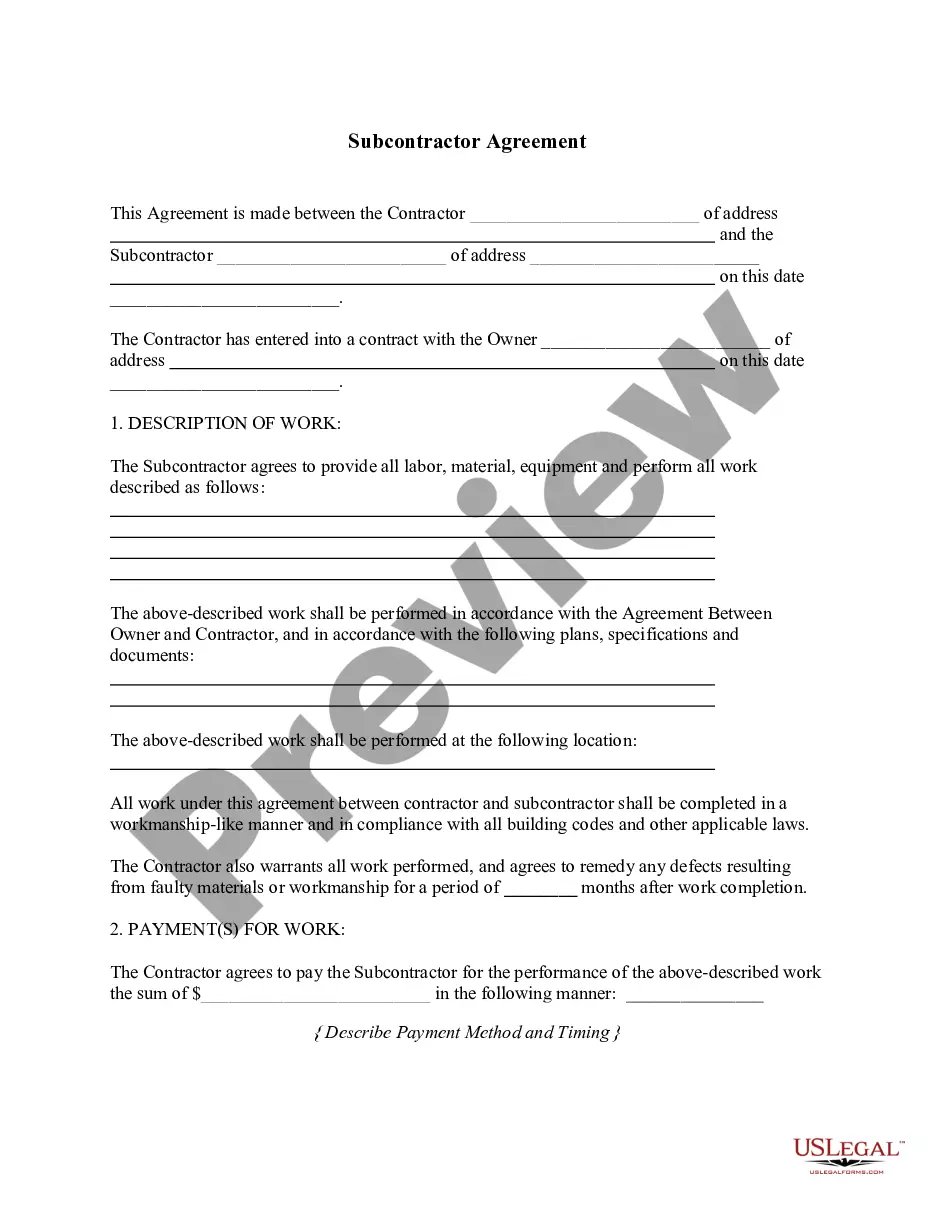
Description

Get your form ready online
Our built-in tools help you complete, sign, share, and store your documents in one place.
Make edits, fill in missing information, and update formatting in US Legal Forms—just like you would in MS Word.
Download a copy, print it, send it by email, or mail it via USPS—whatever works best for your next step.
Sign and collect signatures with our SignNow integration. Send to multiple recipients, set reminders, and more. Go Premium to unlock E-Sign.
If this form requires notarization, complete it online through a secure video call—no need to meet a notary in person or wait for an appointment.
We protect your documents and personal data by following strict security and privacy standards.

Make edits, fill in missing information, and update formatting in US Legal Forms—just like you would in MS Word.

Download a copy, print it, send it by email, or mail it via USPS—whatever works best for your next step.

Sign and collect signatures with our SignNow integration. Send to multiple recipients, set reminders, and more. Go Premium to unlock E-Sign.

If this form requires notarization, complete it online through a secure video call—no need to meet a notary in person or wait for an appointment.

We protect your documents and personal data by following strict security and privacy standards.
Looking for another form?





Form popularity
FAQ
GST works by charging a unified tax on the supply of goods and services, collected at every stage of the supply chain. For instance, a manufacturer sells goods to a wholesaler for Rs. 1,00,000 with 18% GST. The wholesaler claims an input tax credit and passes it on to the retailer, who ultimately charges the consumer.
Since the inception of goods and services tax (GST) in New Zealand a “tax invoice” has been required for a valid GST input tax credit claim.
The following are examples of exempt supplies: most health, medical, and dental services performed by licensed physicians or dentists for medical reasons. bridge, road, and ferry tolls (ferry tolls are zero-rated if the ferry service is to or from a place outside Canada) many educational services such as:
Take apparel manufacturing as an example and 10% as the GST applicable. The manufacturer buys raw material worth INR 500 that is inclusive of the GST of INR 50 (10% of 500). He then adds his own value of INR 50 to the materials during the manufacturing process. This brings the gross value of the product to INR 550.
The GST/HST break includes certain qualifying goods, such as: Food. Beverages. Children's clothing and footwear. Children's diapers. Children's car seats. Certain children's toys. Jigsaw puzzles. Video game consoles, controllers, and physical video games.
It's great that basic necessities such as groceries aren't taxed in Canada. Since people require these things daily, it's important to keep them affordable. Groceries that are exempt from tax include dairy products, eggs, cereals, vegetables, poultry, meat, fish, coffee, tea, and more.
In some cases, independent contractors do not have to register as businesses with federal or provincial authorities in Canada. This is as long as their revenues do not exceed CA $30,000 in the last four quarters. Otherwise, you must register for a sales tax account with the CRA.
The goods and services tax (GST) is a tax that applies to most supplies of goods and services made in Canada.
Step 1: Fill out Form T1, which is called the General Income Tax and Benefit Return. You'll list your independent contractor income on Line 104. As an independent contractor, the company that hires you for your services will fill out a T4A slip and send it to the CRA. They'll also send a copy of it to you.
