Construction Contract With Material In Florida
Description

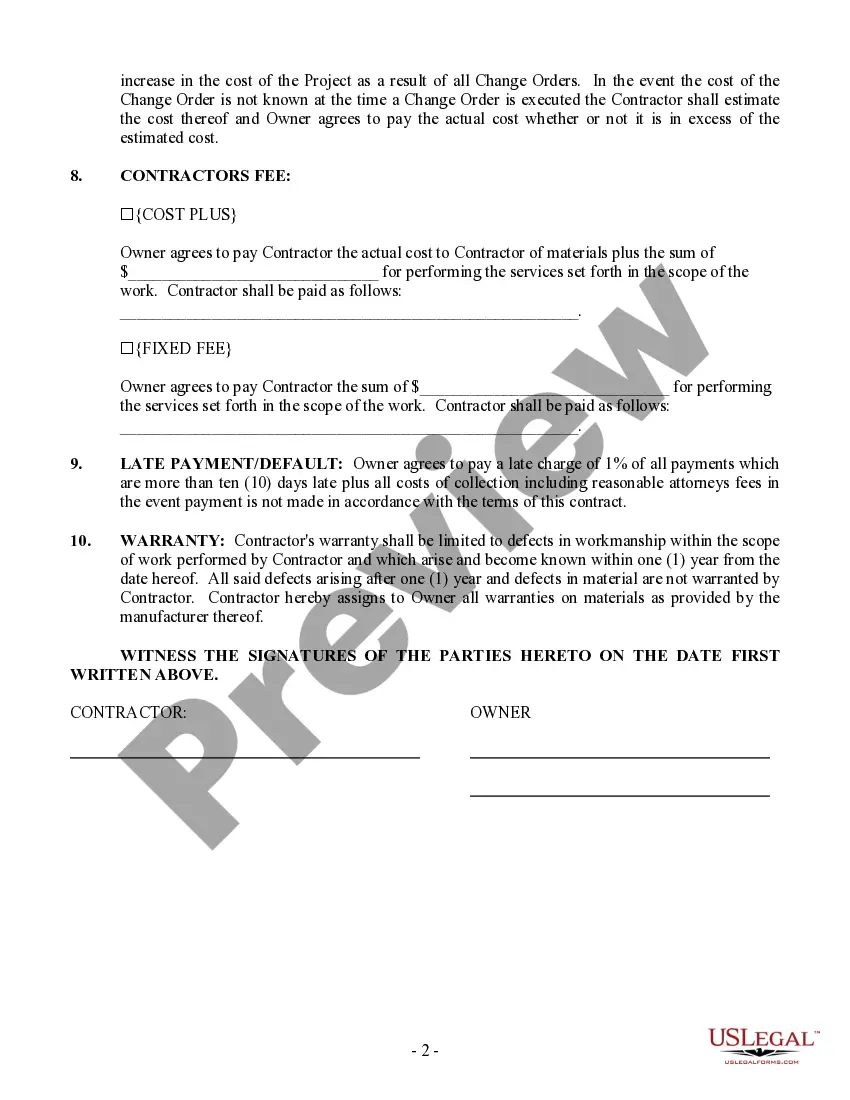
Get your form ready online
Our built-in tools help you complete, sign, share, and store your documents in one place.
Make edits, fill in missing information, and update formatting in US Legal Forms—just like you would in MS Word.
Download a copy, print it, send it by email, or mail it via USPS—whatever works best for your next step.
Sign and collect signatures with our SignNow integration. Send to multiple recipients, set reminders, and more. Go Premium to unlock E-Sign.
If this form requires notarization, complete it online through a secure video call—no need to meet a notary in person or wait for an appointment.
We protect your documents and personal data by following strict security and privacy standards.

Make edits, fill in missing information, and update formatting in US Legal Forms—just like you would in MS Word.

Download a copy, print it, send it by email, or mail it via USPS—whatever works best for your next step.

Sign and collect signatures with our SignNow integration. Send to multiple recipients, set reminders, and more. Go Premium to unlock E-Sign.

If this form requires notarization, complete it online through a secure video call—no need to meet a notary in person or wait for an appointment.

We protect your documents and personal data by following strict security and privacy standards.
Looking for another form?



Form popularity
FAQ
New construction means no one has lived in the home. After it has tenant or an owner it is no longer new construction.
In July 2021, Florida enacted a law generally abolishing local construction licensing by cities and counties, and extinguishing existing local licensing by July 2023.
Generally, all construction contracts in Florida must contain are required to disclose the contractor or subcontractor's registration number issued by the Florida DPBR; if required. Furthermore, all construction contracts should also include a construction defect notice and opportunity to cure provisions.
In May 2022, Florida's 25% Roof Replacement Rule was eliminated and replaced with Senate Bill 4-D. The law originally stated that if more than 25% of the roof was damaged, the entire roof would need to be replaced to meet code requirements.
In July 2021, Florida enacted a law generally abolishing local construction licensing by cities and counties, and extinguishing existing local licensing by July 2023.
A material breach happens when one party doesn't fulfill their contract obligations. This breach is so significant that it makes achieving the contract's purpose impossible. In such cases, the non-breaching party may terminate the agreement and seek damages.
Florida Governor Ron DeSantis recently signed H.B. 623 into law on April 15, 2024, creating a new section 553.837, Florida Statutes, which will require builders to provide a one-year warranty for all newly constructed homes.
How To Write A Construction Contract With 7 Steps Step 1: Define the Parties Involved. Step 2: Outline the Scope of Work. Step 3: Establish the Timeline. Step 4: Determine the Payment Terms. Step 5: Include Necessary Legal Clauses. Step 6: Address Change Orders and Modifications. Step 7: Sign and Execute the Contract.
How to draft a contract in 13 simple steps Start with a contract template. Understand the purpose and requirements. Identify all parties involved. Outline key terms and conditions. Define deliverables and milestones. Establish payment terms. Add termination conditions. Incorporate dispute resolution.
