Atv Form Without License In California
Description
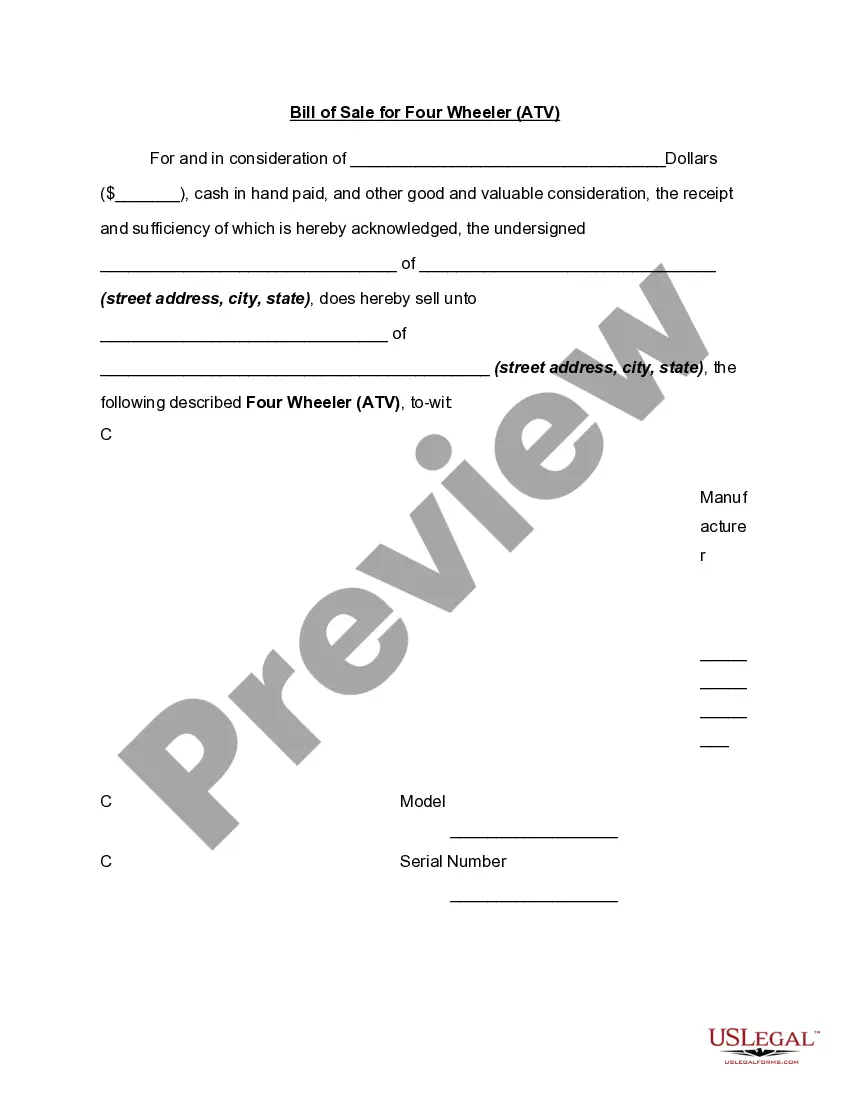
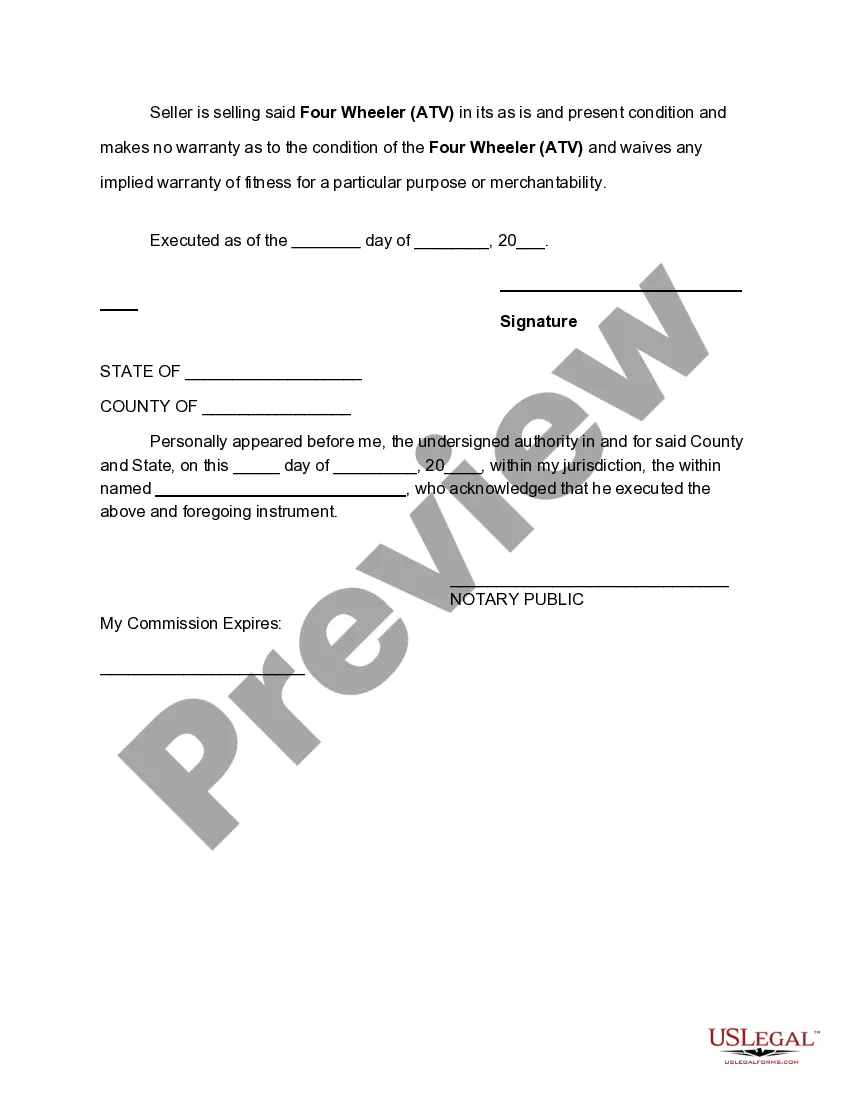
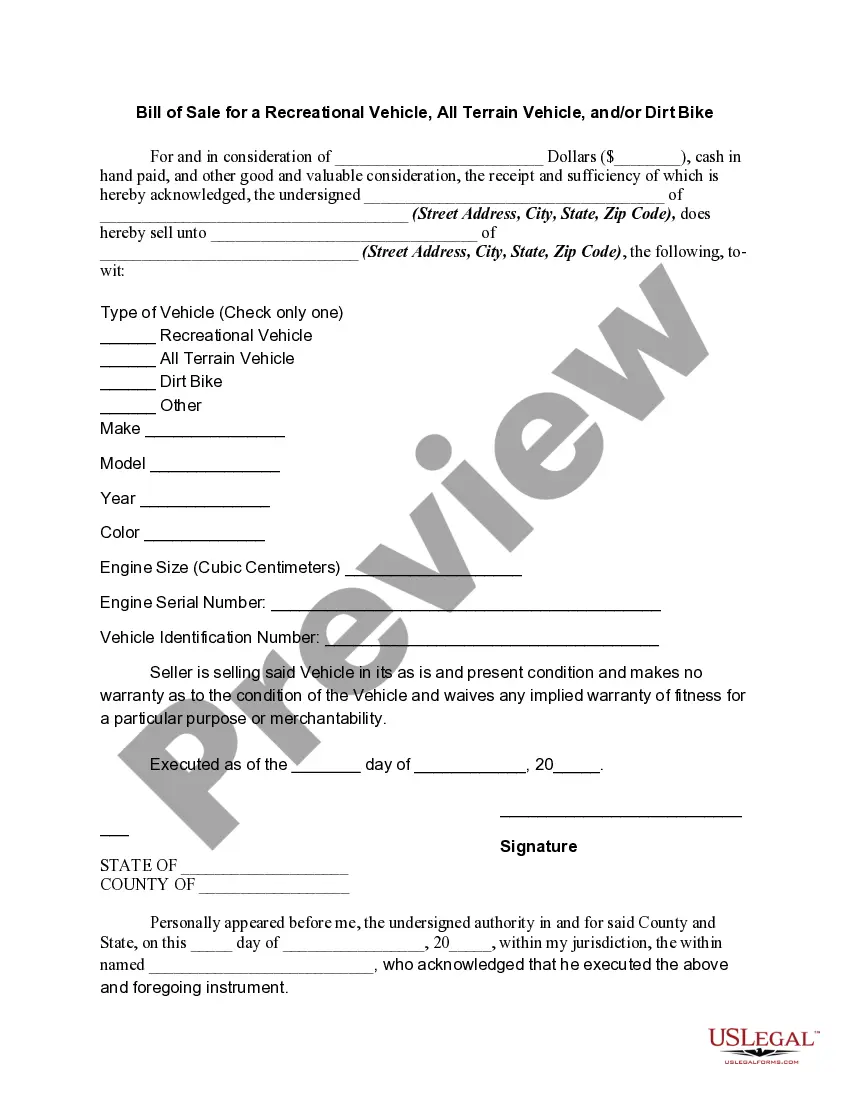
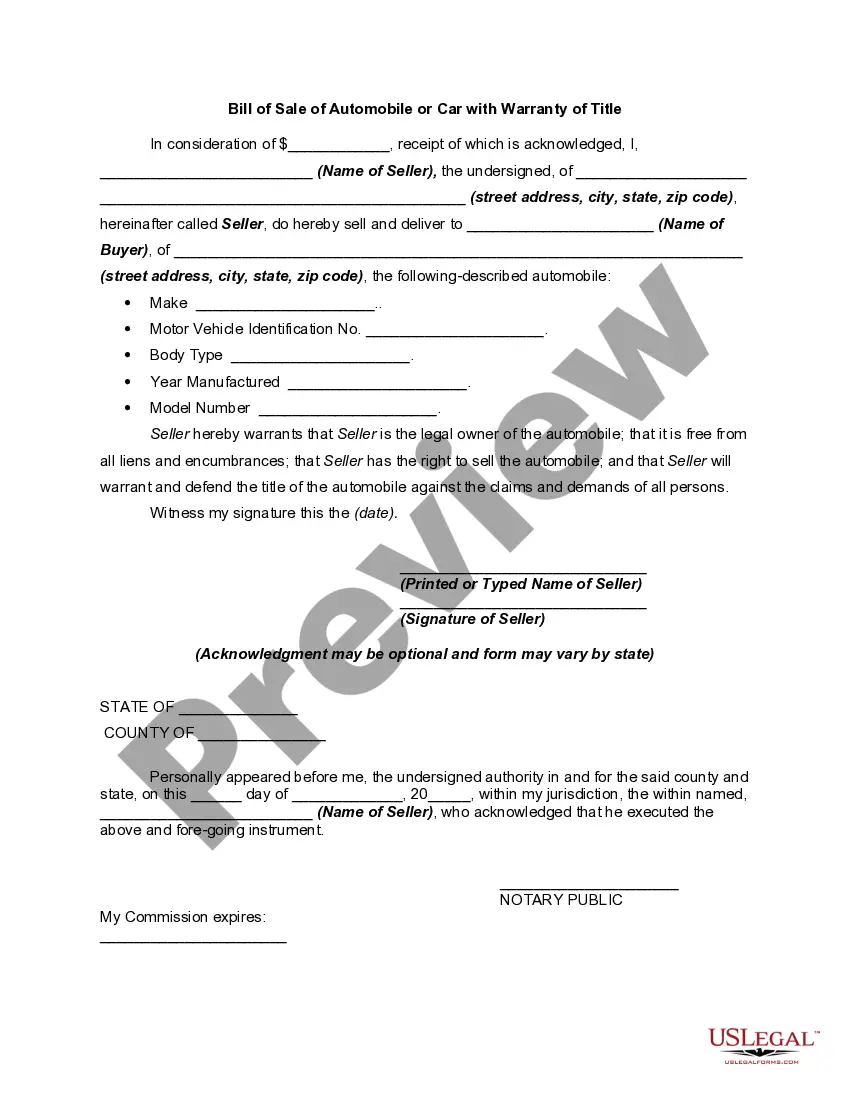
Get your form ready online
Our built-in tools help you complete, sign, share, and store your documents in one place.
Make edits, fill in missing information, and update formatting in US Legal Forms—just like you would in MS Word.
Download a copy, print it, send it by email, or mail it via USPS—whatever works best for your next step.
Sign and collect signatures with our SignNow integration. Send to multiple recipients, set reminders, and more. Go Premium to unlock E-Sign.
If this form requires notarization, complete it online through a secure video call—no need to meet a notary in person or wait for an appointment.
We protect your documents and personal data by following strict security and privacy standards.

Make edits, fill in missing information, and update formatting in US Legal Forms—just like you would in MS Word.

Download a copy, print it, send it by email, or mail it via USPS—whatever works best for your next step.

Sign and collect signatures with our SignNow integration. Send to multiple recipients, set reminders, and more. Go Premium to unlock E-Sign.

If this form requires notarization, complete it online through a secure video call—no need to meet a notary in person or wait for an appointment.

We protect your documents and personal data by following strict security and privacy standards.
Looking for another form?









Form popularity
FAQ
111. (a) "All-terrain vehicle” means a motor vehicle subject to subdivision (a) of Section 38010 that is all of the following: (1) Designed for operation off of the highway by an operator with no more than one passenger. (2) Fifty inches or less in width.
CVC §16070 provides for suspension of a driver or owner who fails to show financial responsibility was in effect for a reportable accident. CVC §16075 (c) requires that the department hold a hearing and make a determination before the effective date of the suspension.
Vehicle Code § 21703 VC is the California statute prohibiting drivers from following the vehicle in front too closely, or tailgating. A ticket for this traffic offense is an infraction that carries a fine of $238.00 plus court costs.
Since all-terrain and utility terrain vehicles typically aren't street-legal, there are no requirements for insurance. However, many state-owned lands and parks allow them only if riders have ATV liability insurance.
The vehicle reenters California after being registered or titled out of state for one year or more and is being registered in the same owner's name(s) and has 7,500 or more odometer miles at the time of reentry.
A driver's license is required to operate an ATV in California if the rider is over the age of 18. Minors are required to have a safety certificate and be supervised by an adult with a valid driver's license.
California's mandatory helmet law, as written in Vehicle Code Section 27803, states that it is “unlawful to operate a motorcycle, motor-driven cycle, or motorized bicycle if the driver or any passenger is not wearing a safety helmet.”
ATVs are not legal on the road. Riding through other people's yards, unless they have permission, is trespassing.
Since all-terrain and utility terrain vehicles typically aren't street-legal, there are no requirements for insurance. However, many state-owned lands and parks allow them only if riders have ATV liability insurance.
