S Corporation For Dummies
Description

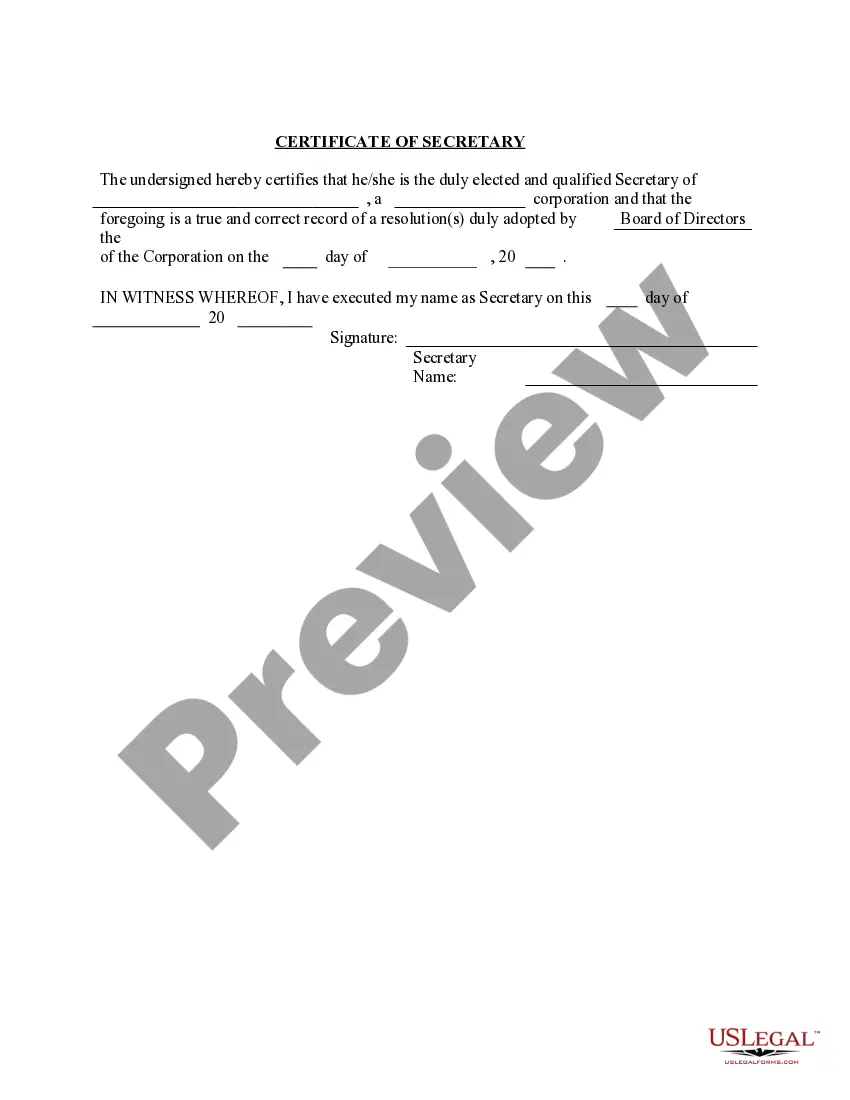

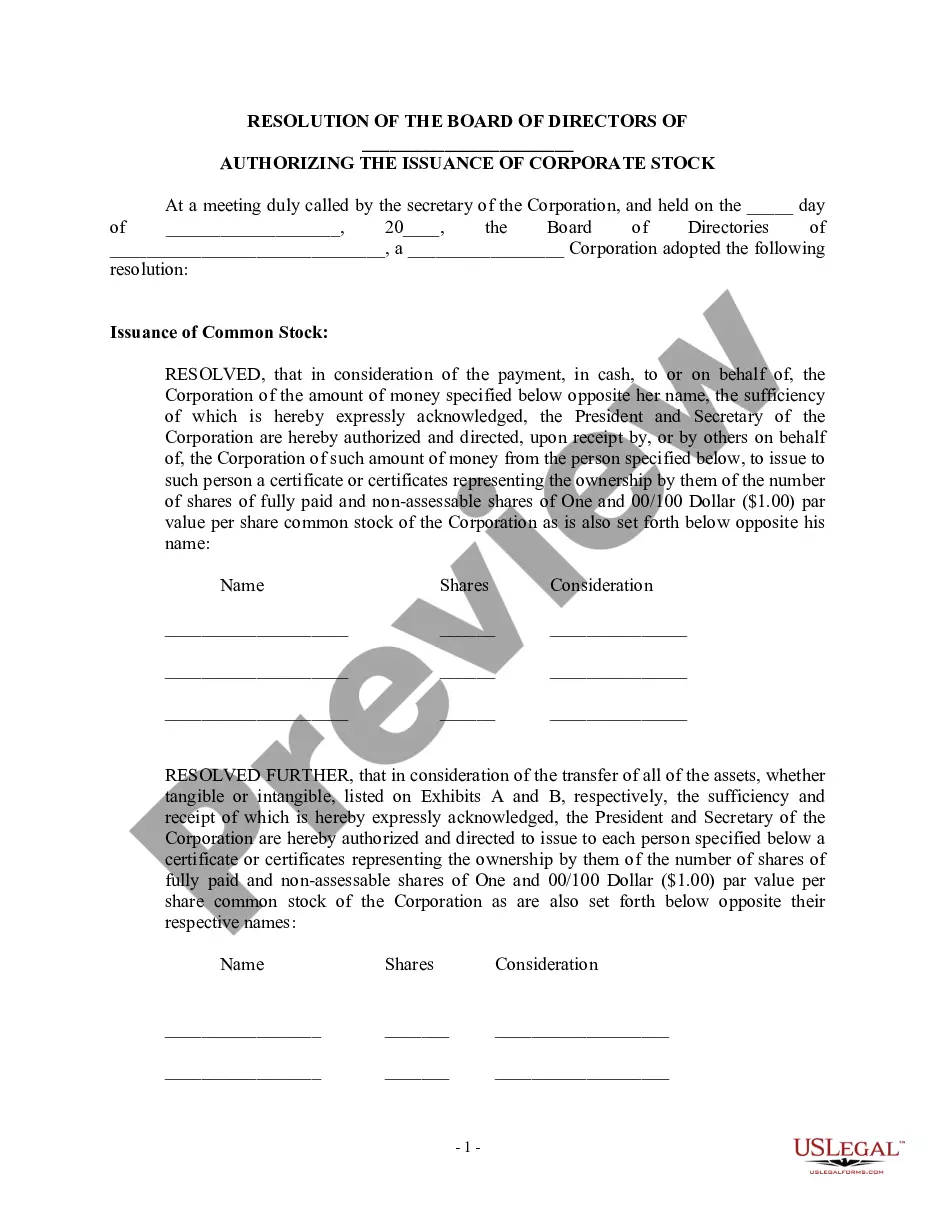
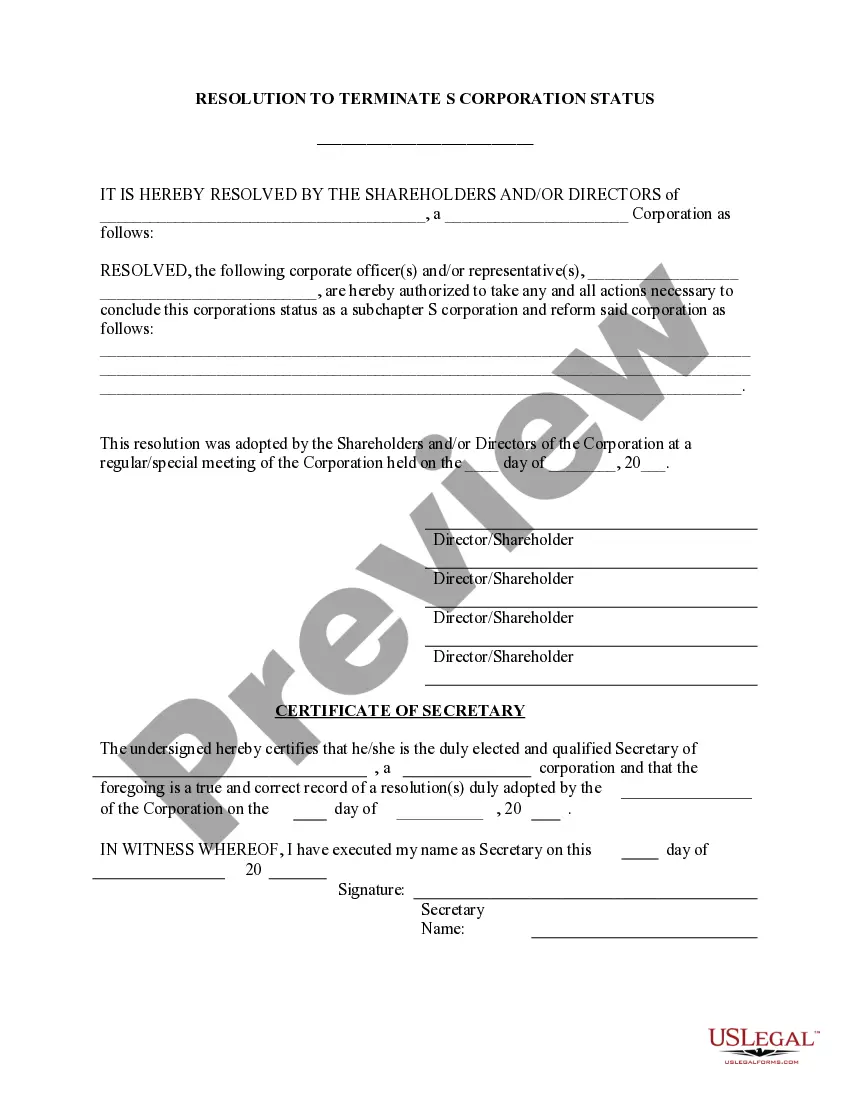

Get your form ready online
Our built-in tools help you complete, sign, share, and store your documents in one place.
Make edits, fill in missing information, and update formatting in US Legal Forms—just like you would in MS Word.
Download a copy, print it, send it by email, or mail it via USPS—whatever works best for your next step.
Sign and collect signatures with our SignNow integration. Send to multiple recipients, set reminders, and more. Go Premium to unlock E-Sign.
If this form requires notarization, complete it online through a secure video call—no need to meet a notary in person or wait for an appointment.
We protect your documents and personal data by following strict security and privacy standards.

Make edits, fill in missing information, and update formatting in US Legal Forms—just like you would in MS Word.

Download a copy, print it, send it by email, or mail it via USPS—whatever works best for your next step.

Sign and collect signatures with our SignNow integration. Send to multiple recipients, set reminders, and more. Go Premium to unlock E-Sign.

If this form requires notarization, complete it online through a secure video call—no need to meet a notary in person or wait for an appointment.

We protect your documents and personal data by following strict security and privacy standards.
Looking for another form?





How to fill out Obtain S Corporation Status - Corporate Resolutions Forms?
- If you're an existing user, log in to your account and download the desired form template by clicking the Download button. Ensure your subscription remains active.
- For first-time users, start by checking the Preview mode and read the form description to confirm it fits your requirements and local jurisdiction.
- If needed, search for other templates using the Search tab to find one that aligns with your needs.
- Select the document you need. Click on the Buy Now button and choose a subscription plan that suits you best. You'll need to create an account to access their extensive library.
- Complete your purchase by entering your credit card information or logging in with PayPal for payment.
- Download your chosen form. Save it to your device for easy access, and you can also find it under My Forms in your account.
With US Legal Forms, both individuals and attorneys gain rapid access to a vast collection of legal documents. The platform boasts over 85,000 customizable forms, making it unparalleled in the market.
In conclusion, leveraging US Legal Forms simplifies the process of setting up your S Corporation. Take the first step towards your business’s success today!
Form popularity
FAQ
Yes, a single individual can own an S Corporation. In fact, many entrepreneurs choose to become sole shareholders of their S Corps, which can offer distinct tax advantages. This structure allows you to maintain control over your business while potentially benefiting from pass-through taxation. If you're a single owner looking for straightforward guidance, US Legal Forms specializes in resources for S Corporations for dummies, simplifying your journey in business ownership.
Certainly, you can set up an S Corporation by yourself if you feel comfortable navigating the required steps. This typically involves filing Articles of Incorporation with your state, obtaining an Employer Identification Number (EIN), and filing Form 2553 with the IRS. While it can be a manageable task, utilizing tools from US Legal Forms can provide you with the essential templates and guides that simplify the S Corporation setup process, especially for beginners exploring S Corporations for dummies.
Yes, you can establish an S Corporation without forming an LLC first. An S Corporation is a distinct entity that can be created directly through proper filing with the state and the IRS, separate from the LLC structure. This means you can proceed with setting up your S Corp independently. If you want a helping hand in this process, US Legal Forms can offer you valuable resources tailored for S Corporations for dummies.
To qualify for an S Corporation, your business must meet specific criteria set by the IRS. These include having no more than 100 shareholders, all of whom must be U.S. citizens or residents. Additionally, your business must not be classified as a financial institution or a domestic international sales corporation. Understanding these qualifications can be easier with resources like US Legal Forms, providing guidance tailored for those looking into S Corporations for dummies.
You do not necessarily need an accountant to set up an S Corporation; however, having one can simplify the process. Understanding the requirements for an S Corporation can be complex, especially for beginners. An accountant can guide you through filing the necessary forms and ensuring compliance with IRS regulations. For those looking for straightforward assistance, US Legal Forms offers templates and information designed for individuals seeking clarity on S Corporations for dummies.
The 2% owner rule stipulates that shareholders who own more than 2% of an S corporation must follow certain tax regulations related to employee benefits. This rule affects how benefits like health insurance are treated for tax purposes. This can be a critical consideration for those exploring the concept of an S corporation for dummies.
Fringe benefits for shareholders owning more than 2% of an S corporation are subject to specific tax rules. These benefits, such as health insurance, might be taxable to the 2% shareholders but can still offer substantial advantages. Understanding these nuances is part of grasping the more complex layers of an S corporation for dummies.
The tax loophole often associated with S corporations lies in how they are taxed. Unlike traditional corporations, S corps avoid double taxation on profits, since these earnings pass through to shareholders. This aspect can significantly enhance tax savings, making the concept of an S corporation for dummies an attractive option for many small business owners.
The first disadvantage of an S corporation is that it can have limited ownership; only U.S. citizens and residents can be shareholders, which can restrict growth. Second, S corporations face stricter operational processes and regulations than a sole proprietorship or partnership. These factors, while they might seem complex, are essential considerations for your S corporation for dummies roadmap.
An S corporation, often referred to as an S corp, is a type of business structure that allows profits and losses to pass directly to the owners' personal tax returns. In simple terms, this means that the corporation itself is not taxed at the federal level, allowing for potential tax savings. For anyone looking to understand the basics, think of an S corporation for dummies as a company that provides liability protection while offering tax advantages.