Corporate Status Vs S Corporation Status In Florida
Description

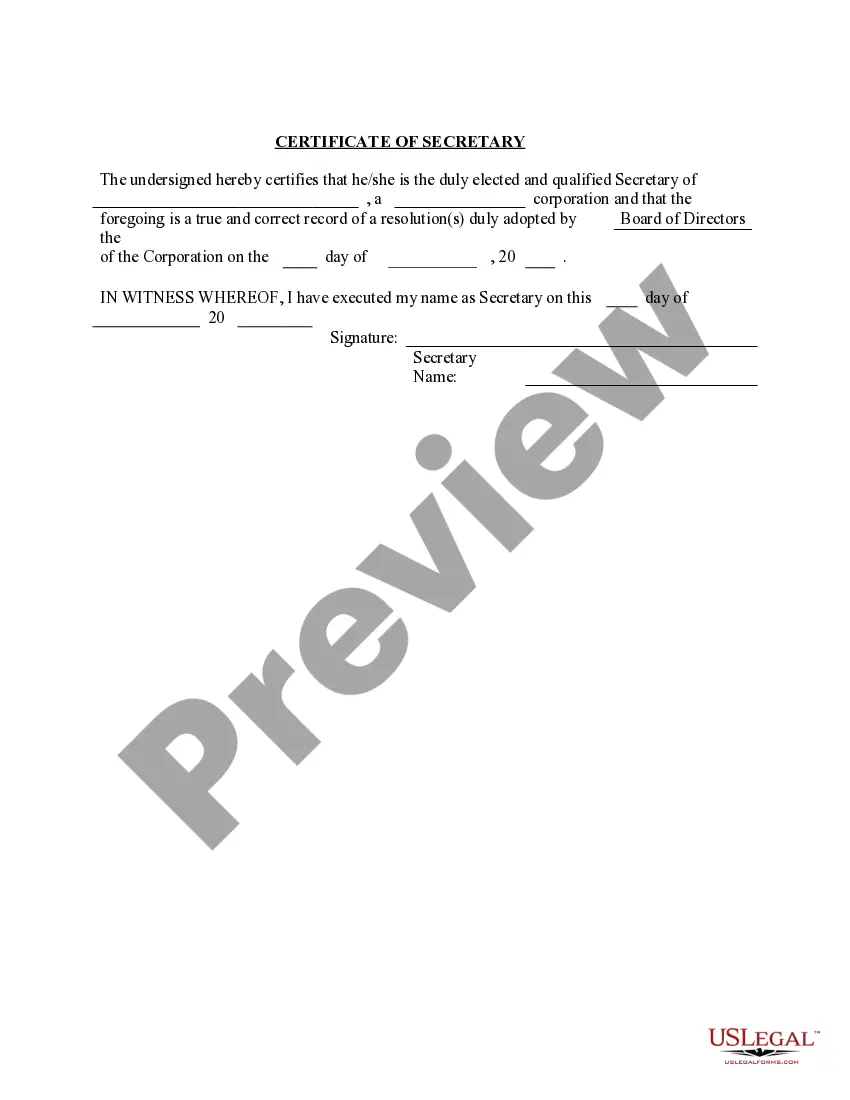

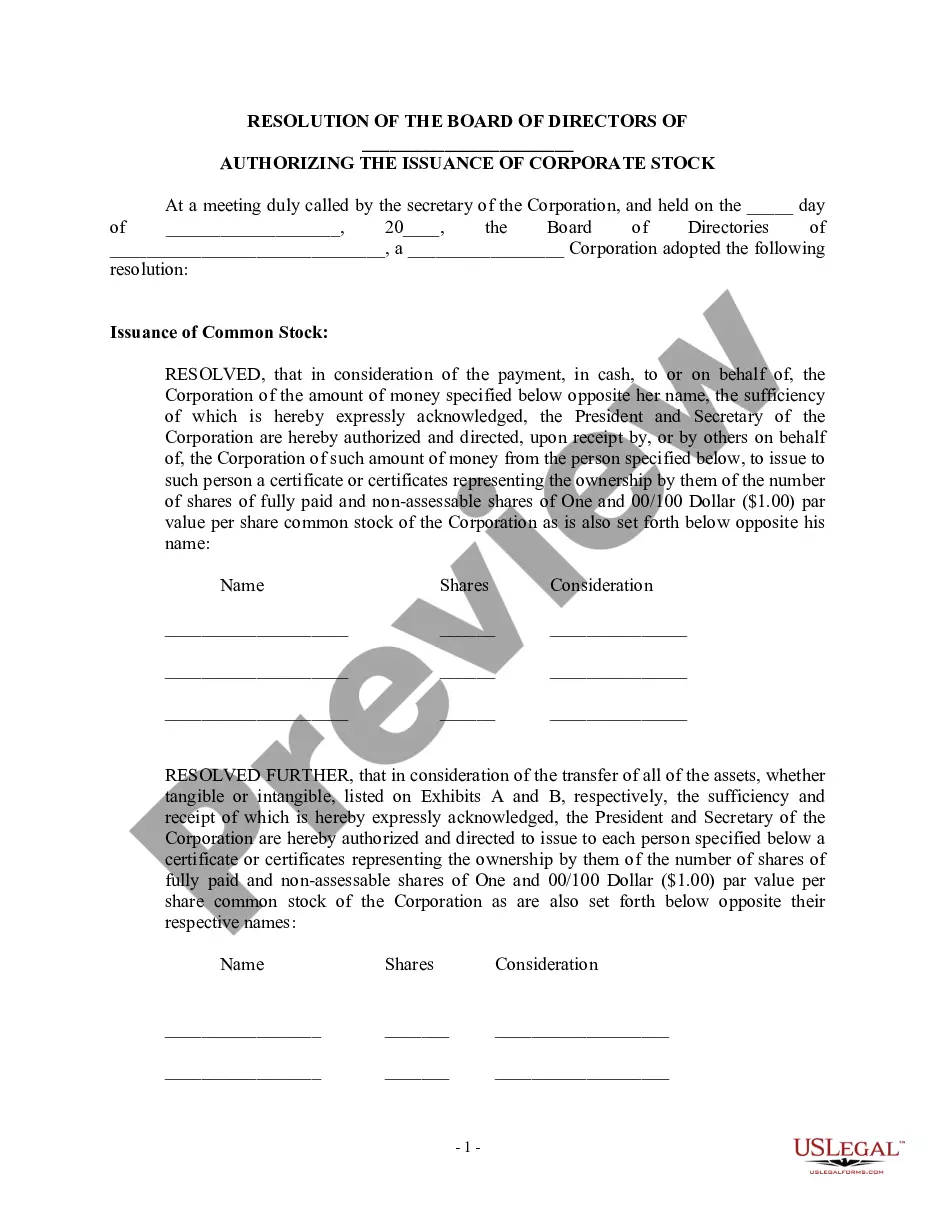
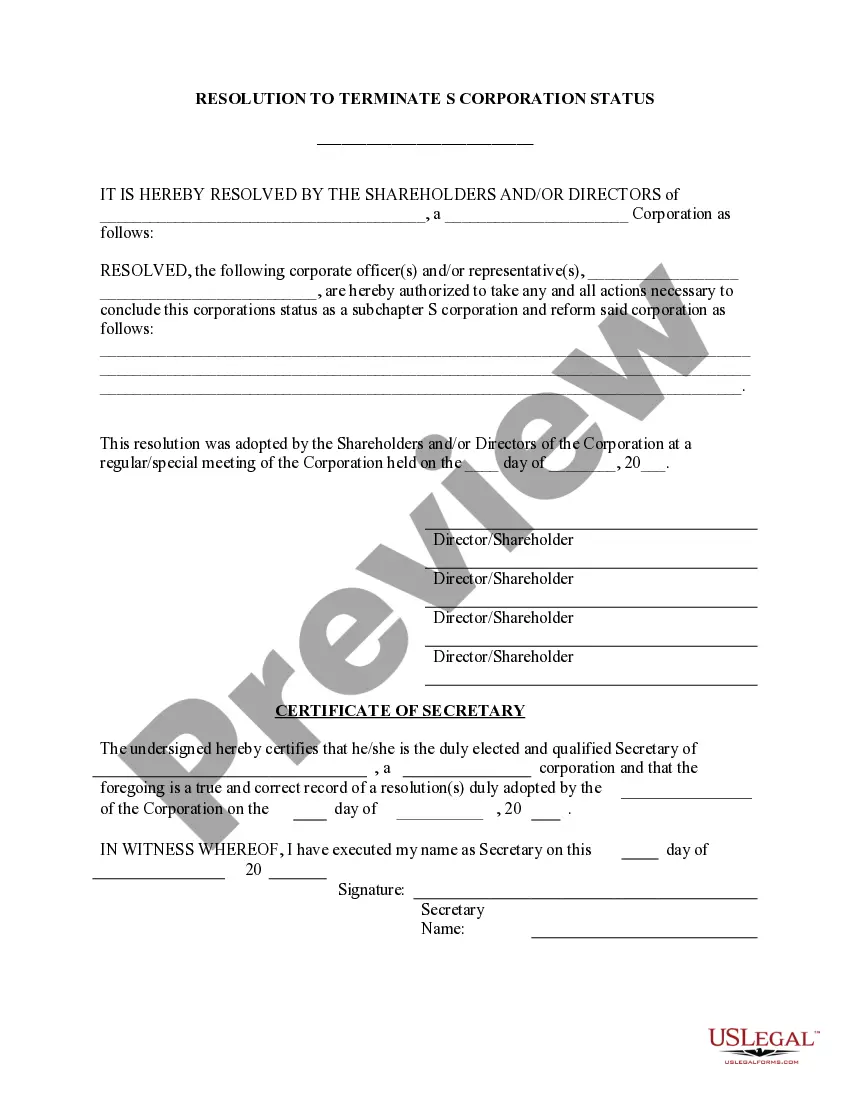

Get your form ready online
Our built-in tools help you complete, sign, share, and store your documents in one place.
Make edits, fill in missing information, and update formatting in US Legal Forms—just like you would in MS Word.
Download a copy, print it, send it by email, or mail it via USPS—whatever works best for your next step.
Sign and collect signatures with our SignNow integration. Send to multiple recipients, set reminders, and more. Go Premium to unlock E-Sign.
If this form requires notarization, complete it online through a secure video call—no need to meet a notary in person or wait for an appointment.
We protect your documents and personal data by following strict security and privacy standards.

Make edits, fill in missing information, and update formatting in US Legal Forms—just like you would in MS Word.

Download a copy, print it, send it by email, or mail it via USPS—whatever works best for your next step.

Sign and collect signatures with our SignNow integration. Send to multiple recipients, set reminders, and more. Go Premium to unlock E-Sign.

If this form requires notarization, complete it online through a secure video call—no need to meet a notary in person or wait for an appointment.

We protect your documents and personal data by following strict security and privacy standards.
Looking for another form?

Form popularity
FAQ
If previously registered, you must provide a copy of the IRS Notice of Acceptance as an S corporation or provide a copy of the first page of the federal form 1120-S. You can submit your status change request online.
By TurboTax• 87• Updated 1 month ago Alaska, Florida, Nevada, South Dakota, Tennessee, Texas, Washington, and Wyoming don't have income tax. If you're a resident of one of these states, you don't need to file a return in that state.
Do S Corps have to file a Florida tax return? Yes, but only the first year after electing to become an S Corp. You'll need to file the informational part of the F-1120 (the Florida Corporate Income/Franchise Tax Return).
If you file your taxes late in Florida, you will likely see penalties for failing to file each month that you didn't file, and interest will accrue on your debt. This is the case for both state and federal taxes.
Because Florida doesn't tax personal income at the state level, you do not have to complete a Florida state income tax return as an individual.
If previously registered, you must provide a copy of the IRS Notice of Acceptance as an S corporation or provide a copy of the first page of the federal form 1120-S. You can submit your status change request online.
While both the Florida LLC and Florida S-Corporation protect the owners' individual assets from business liabilities, only the LLC shields business ownership from creditors of the shareholders. An S-Corp offers similar liability protection but requires specific ownership and tax structure considerations.
Because of the one-class-of-stock restriction, an S corporation cannot allocate losses or income to specific shareholders. Allocation of income and loss is governed by stock ownership, unlike partnerships or LLCs taxed as partnerships where the allocation can be set in the partnership agreement or operating agreement.
The Sunshine State carries potential for small business owners seeking asset protection. A Florida LLC combines the liability protection of a corporation with the tax treatment and ease of administration of a partnership. Forming an LLC in Florida also offers: Pass-through taxation.
Qualifying for S Corporation Status Be a domestic corporation or an LLC. Have only allowable shareholders or members. Have no more than 100 shareholders. Have only one class of stock. Not be an ineligible corporation (i.e. certain financial institutions, insurance companies, and domestic international sales corporations)
