S Corp Status For Llc In Contra Costa
Description


Get your form ready online
Our built-in tools help you complete, sign, share, and store your documents in one place.
Make edits, fill in missing information, and update formatting in US Legal Forms—just like you would in MS Word.
Download a copy, print it, send it by email, or mail it via USPS—whatever works best for your next step.
Sign and collect signatures with our SignNow integration. Send to multiple recipients, set reminders, and more. Go Premium to unlock E-Sign.
If this form requires notarization, complete it online through a secure video call—no need to meet a notary in person or wait for an appointment.
We protect your documents and personal data by following strict security and privacy standards.

Make edits, fill in missing information, and update formatting in US Legal Forms—just like you would in MS Word.

Download a copy, print it, send it by email, or mail it via USPS—whatever works best for your next step.

Sign and collect signatures with our SignNow integration. Send to multiple recipients, set reminders, and more. Go Premium to unlock E-Sign.

If this form requires notarization, complete it online through a secure video call—no need to meet a notary in person or wait for an appointment.

We protect your documents and personal data by following strict security and privacy standards.
Looking for another form?






Form popularity
FAQ
In most cases, if your state allows you to convert an S Corp to an LLC, you'll be required to prepare a plan of conversion outlining the details of the entity change. You may also be required to gain the approval of the board of directors before you're able to present the conversion to your shareholders.
7 Simple Steps to Convert Your Sole Proprietorship into an LLC Choose a Business Name. Update Your Contracts. File Articles of Incorporation or Organization. Write an LLC Operating Agreement. Apply for an EIN. Open a Business Bank Account. Update Your Business Permits and Licenses.
An S corporation's annual tax is the greater of 1.5 percent of the corporation's net income or $800.
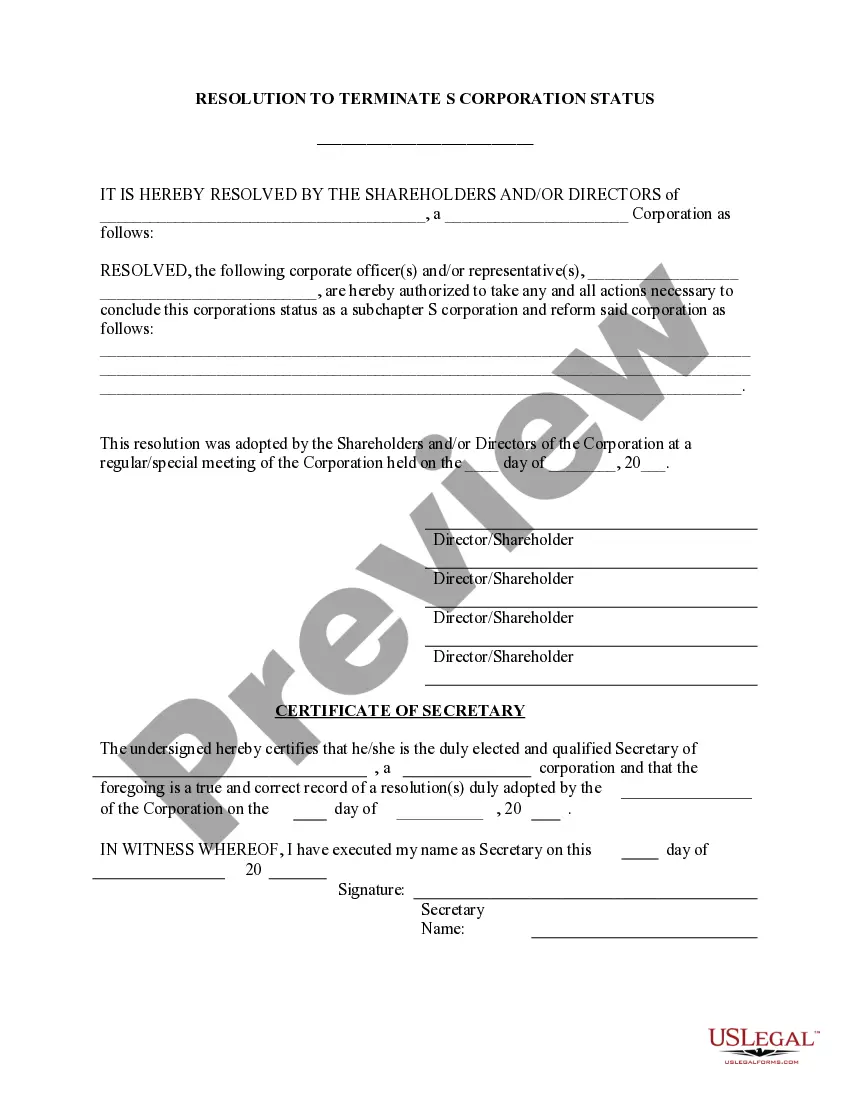
Limited Liability Companies Treated as S Corporations The LLC will also be treated as an S corporation for the state and must file Form 100S (California S Corporation Franchise or Income Tax Return). California and federal laws treat these companies as corporations subject to California corporation tax law.
