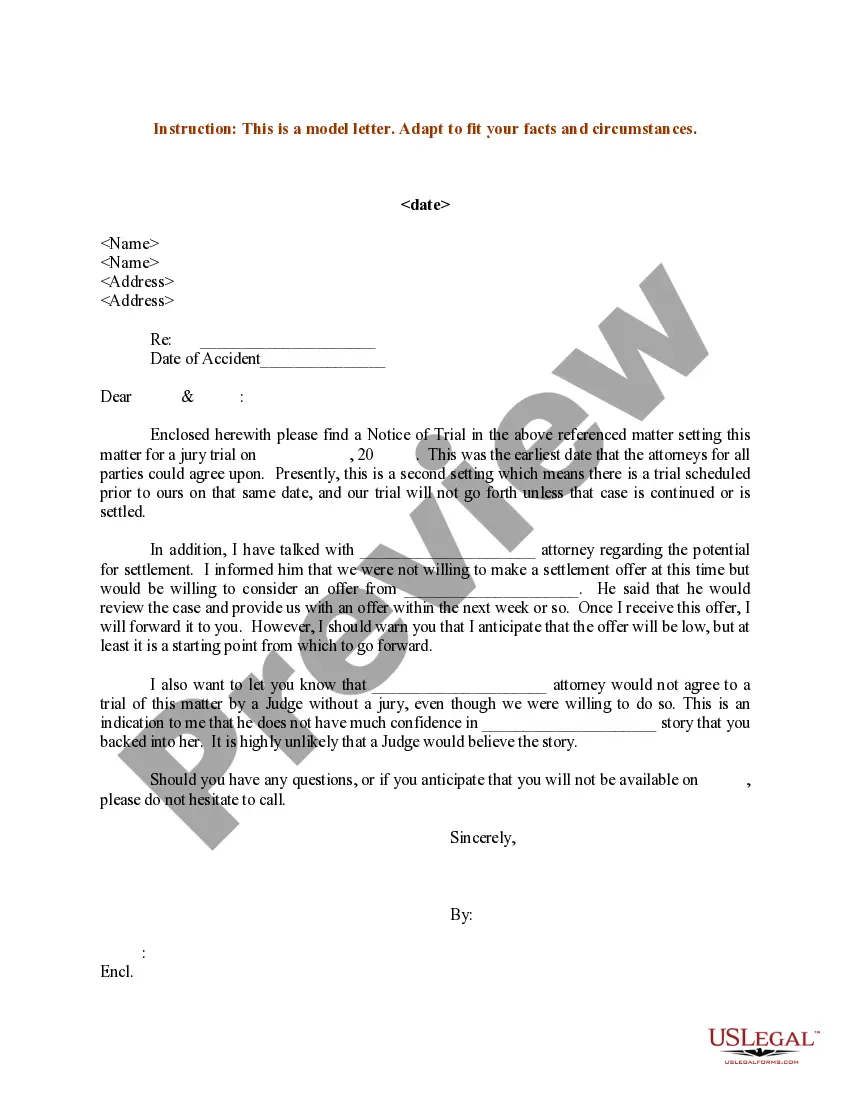
Trial Would Attorney Withdraw In Illinois
Description
Get your form ready online
Our built-in tools help you complete, sign, share, and store your documents in one place.
Make edits, fill in missing information, and update formatting in US Legal Forms—just like you would in MS Word.
Download a copy, print it, send it by email, or mail it via USPS—whatever works best for your next step.
Sign and collect signatures with our SignNow integration. Send to multiple recipients, set reminders, and more. Go Premium to unlock E-Sign.
If this form requires notarization, complete it online through a secure video call—no need to meet a notary in person or wait for an appointment.
We protect your documents and personal data by following strict security and privacy standards.

Make edits, fill in missing information, and update formatting in US Legal Forms—just like you would in MS Word.

Download a copy, print it, send it by email, or mail it via USPS—whatever works best for your next step.

Sign and collect signatures with our SignNow integration. Send to multiple recipients, set reminders, and more. Go Premium to unlock E-Sign.

If this form requires notarization, complete it online through a secure video call—no need to meet a notary in person or wait for an appointment.

We protect your documents and personal data by following strict security and privacy standards.
Looking for another form?








Form popularity
FAQ
(b) Except as stated in paragraph (c), a lawyer may withdraw from representing a client if: (1) withdrawal can be accomplished without material adverse effect on the interests of the client; (2) the client persists in a course of action involving the lawyer's services that the lawyer reasonably believes is criminal or ...
Illinois. Munn v. Illinois, 94 U.S. 113 (1876), was a United States Supreme Court case in which the Court upheld the power of state governments to regulate private industries that affect "the common good."
Illinois Supreme Court Rule 924 - Parenting Education Requirement, provides that each circuit or county shall create or approve a parenting education program consisting of at least four hours covering the subjects of visitation and custody and their impact on children.
Rule 11 - Manner of Serving Documents Other Than Process and Complaint on Parties Not in Default in the Trial and Reviewing Courts (a)On Whom Made. If a party is represented by an attorney of record, service shall be made upon the attorney. Otherwise service shall be made upon the party.
The court may on its own motion, or with the consent of the adverse party, continue a cause for trial to a later day. (f)Time for Motion. No motion for the continuance of a cause made after the cause has been reached for trial shall be heard, unless a sufficient excuse is shown for the delay.
1.3. A lawyer shall act with reasonable diligence and promptness in representing a client.
States that require attorney involvement or where attorney involvement is customary: Connecticut, Delaware, Georgia, Massachusetts, South Carolina, Vermont and West Virginia. In Illinois, North New Jersey, New York, North Carolina and Ohio, attorney involvement in a real estate closing may be customary.
Rule 1.15(a) of the Illinois Rules of Professional Conduct requires that all records of trust accounts or other property held in trust be kept for a period of seven years after the end of the representation.