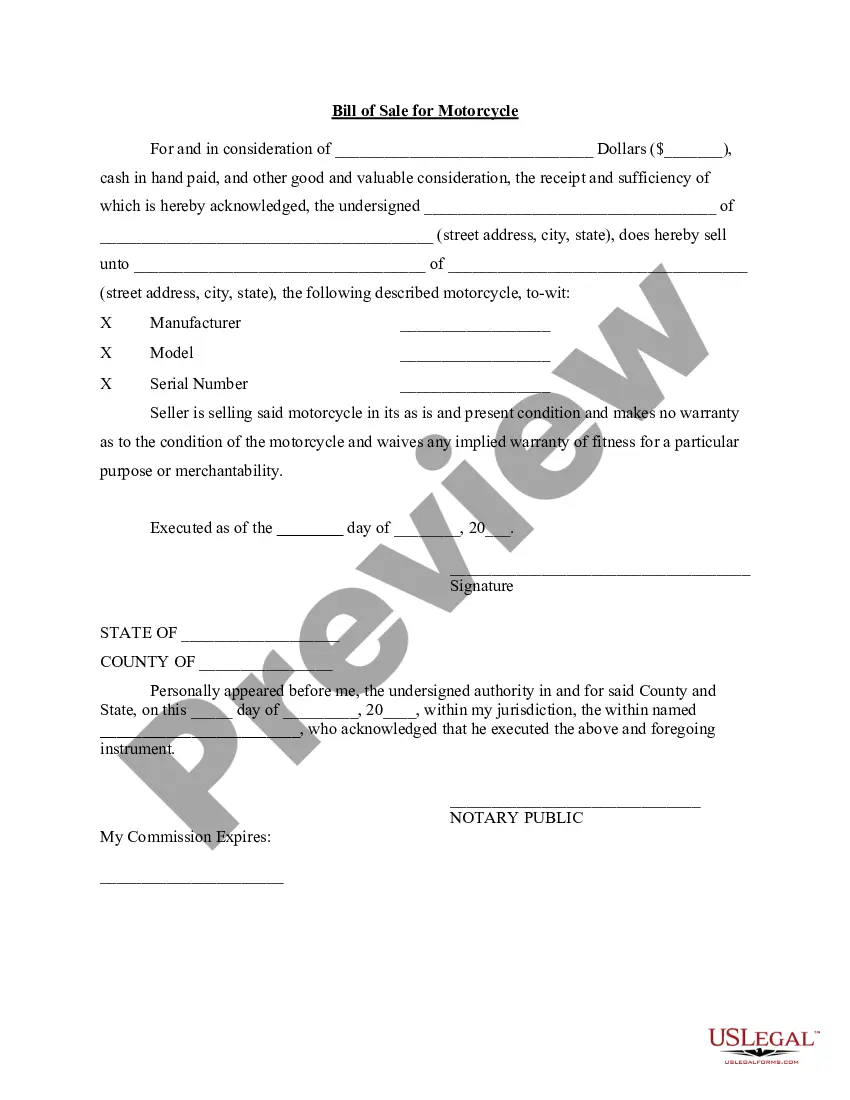
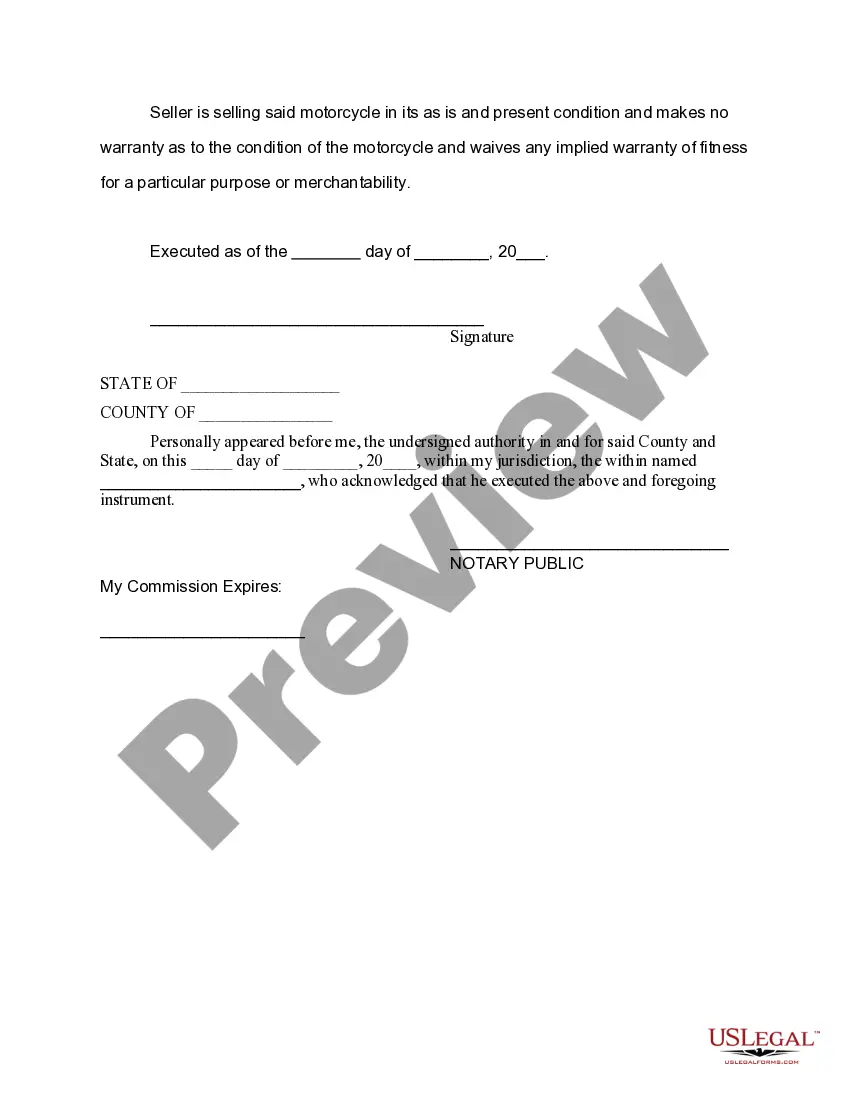
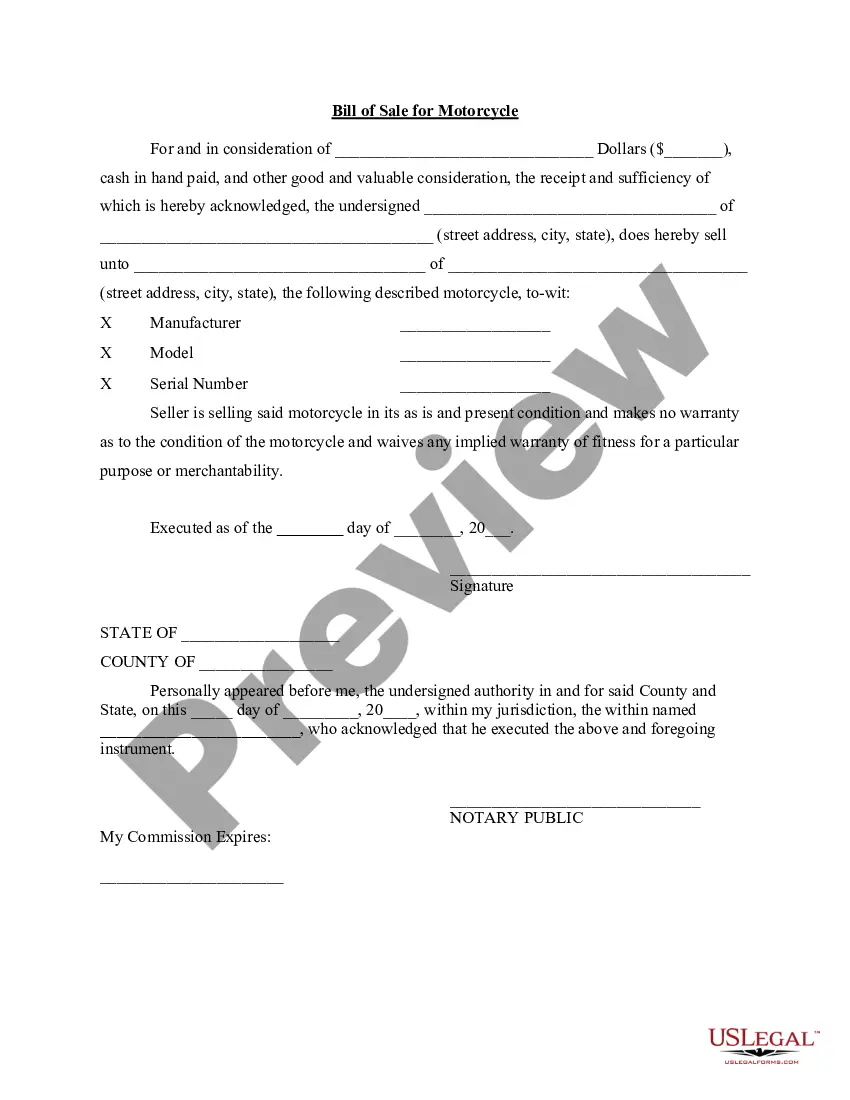
Bill Sale Motorcycle Get With Lien In Harris
Description
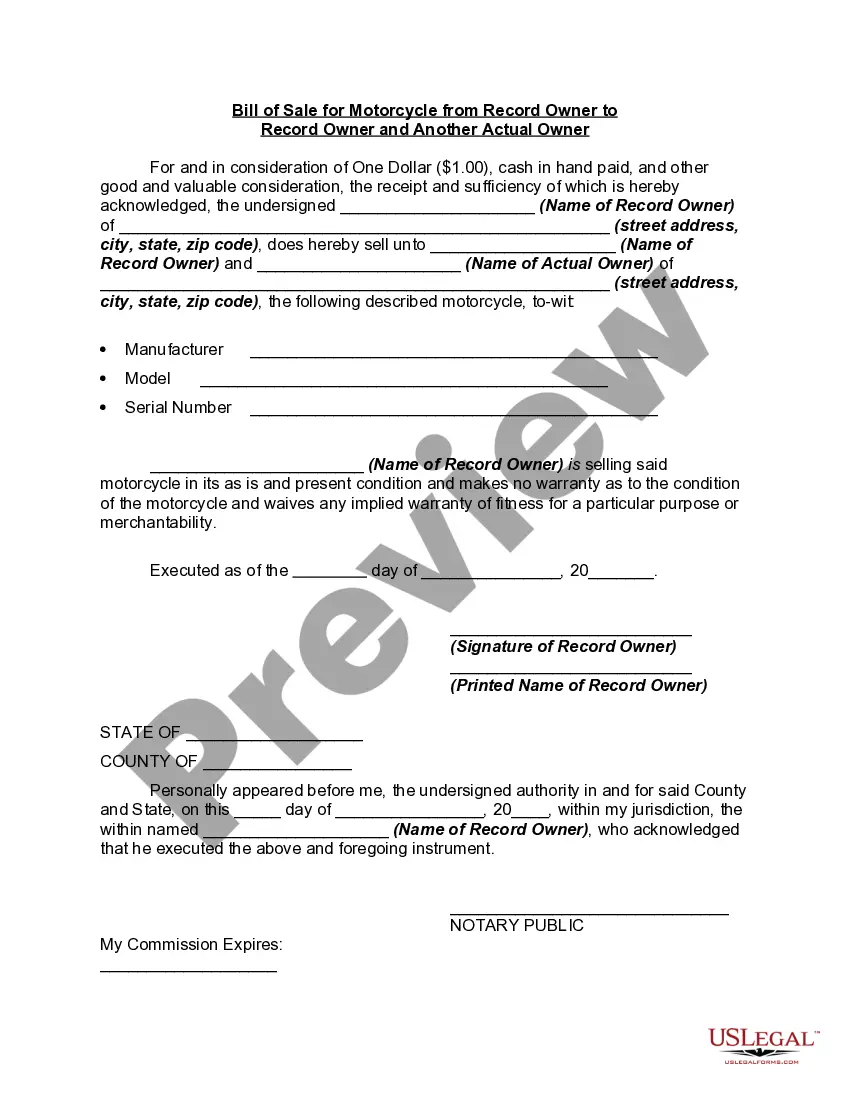
Get your form ready online
Our built-in tools help you complete, sign, share, and store your documents in one place.
Make edits, fill in missing information, and update formatting in US Legal Forms—just like you would in MS Word.
Download a copy, print it, send it by email, or mail it via USPS—whatever works best for your next step.
Sign and collect signatures with our SignNow integration. Send to multiple recipients, set reminders, and more. Go Premium to unlock E-Sign.
If this form requires notarization, complete it online through a secure video call—no need to meet a notary in person or wait for an appointment.
We protect your documents and personal data by following strict security and privacy standards.

Make edits, fill in missing information, and update formatting in US Legal Forms—just like you would in MS Word.

Download a copy, print it, send it by email, or mail it via USPS—whatever works best for your next step.

Sign and collect signatures with our SignNow integration. Send to multiple recipients, set reminders, and more. Go Premium to unlock E-Sign.

If this form requires notarization, complete it online through a secure video call—no need to meet a notary in person or wait for an appointment.

We protect your documents and personal data by following strict security and privacy standards.
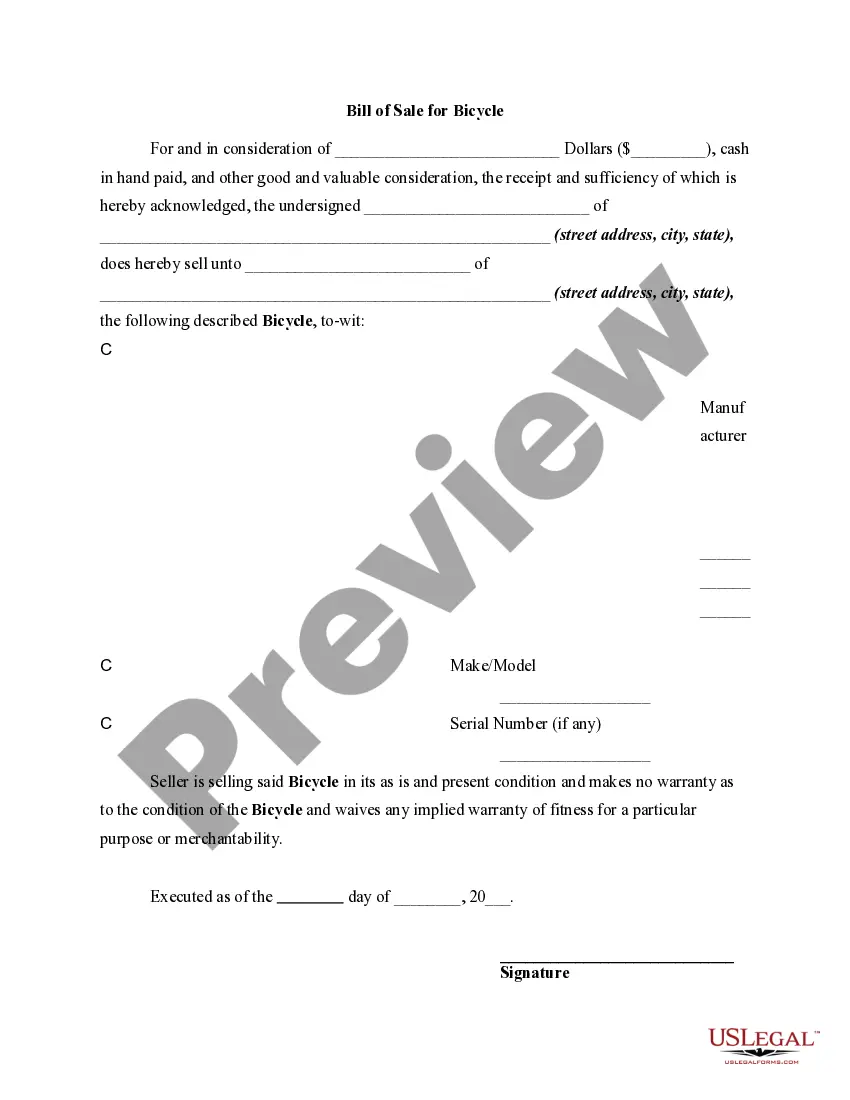
Looking for another form?

Form popularity
FAQ
The signed negotiable title and completed Application for Texas Title and/or Registration (Form 130-U), must be provided to the county tax office to title the vehicle. The title application must be accompanied by Affidavit of Motor Vehicle Gift Transfer (Texas Comptroller of Public Accounts Form 14-317).
Bill of Sale: While not always required, having one helps document the sale and provides extra proof of the transaction. Proof of insurance: The buyer must have valid Texas insurance for the vehicle being transferred. Identification: A government-issued photo ID, like a driver's license, is needed for both parties.
The title “transfer” process can be solely performed by the buyer at the TX DMV if the vehicle title was properly signed over to them by the seller. The seller does not need to accompany the buyer to the TX DMV if it is.
Yes, Texas recognizes handwritten bills of sale as valid, as long as they contain all the necessary information and are signed by both the buyer and the seller. However, using a typed or printed document is generally more legible and professional.
Technically all you need is a bill of sale to buy/sell a car. Scrawl out a bill of sale with a pen and literally ANY piece of paper. BUT the new owner cannot register the car until they have a title. If you don't have a title because it has been lost, then either you need to contact the state and get a replacement.
Get a new title After you present the bill of sale and other documents at the title office, they'll review everything and ensure it's in order. If it is, they'll issue you a new motorcycle title.
Here are the four steps as to how to get a title for a motorcycle with a bill of sale. Get a bill of sale. Before gettting a new title, the first thing you'll need is a bill of sale signed by the seller. Visit the title office. Present documentation. Get a new title.
To transfer a Texas titled vehicle, bring in or mail the following to our offices: Texas title, signed and dated by the seller(s) and buyer(s). VTR-130U (Application for Texas title), signed and dated by the seller(s) and buyer(s). Proof of insurance in the buyer's name. Acceptable form of ID. Proof of inspection. Fees.
Texas actually recommends that you remove plates from vehicles you sell in a private sale, even though it is not required. They give options for both parties.
Do Both Parties Have to be Present to Transfer a Car in Texas? If the seller or person gifting the car properly signed the title, they do not have to be present at the DMV to transfer the title. However, the person receiving the vehicle must present the Application for Texas Title in person at the DMV.
