Caregiver Form Printable For Veterans In Utah
Description

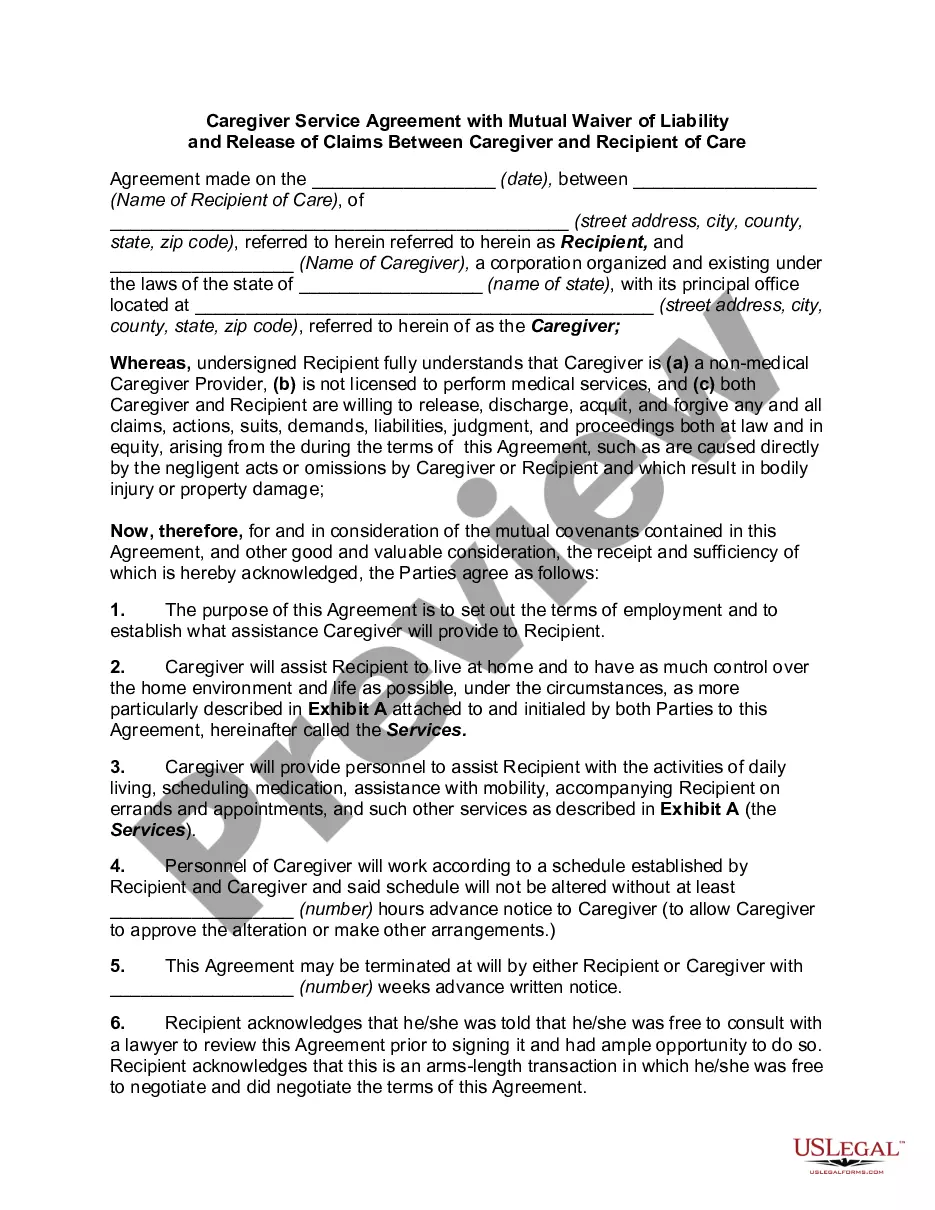
Get your form ready online
Our built-in tools help you complete, sign, share, and store your documents in one place.
Make edits, fill in missing information, and update formatting in US Legal Forms—just like you would in MS Word.
Download a copy, print it, send it by email, or mail it via USPS—whatever works best for your next step.
Sign and collect signatures with our SignNow integration. Send to multiple recipients, set reminders, and more. Go Premium to unlock E-Sign.
If this form requires notarization, complete it online through a secure video call—no need to meet a notary in person or wait for an appointment.
We protect your documents and personal data by following strict security and privacy standards.

Make edits, fill in missing information, and update formatting in US Legal Forms—just like you would in MS Word.

Download a copy, print it, send it by email, or mail it via USPS—whatever works best for your next step.

Sign and collect signatures with our SignNow integration. Send to multiple recipients, set reminders, and more. Go Premium to unlock E-Sign.

If this form requires notarization, complete it online through a secure video call—no need to meet a notary in person or wait for an appointment.

We protect your documents and personal data by following strict security and privacy standards.
Looking for another form?






Form popularity
FAQ
70 percent – at this level of disability, the veteran suffering from PTSD had difficulty maintaining employment and engaging in social interactions, with specific symptoms including an obsessive focus on rituals, suicidal thoughts, emotional outbursts often characterized by irrational anger, an inability to manage ...
Take time to sit down and complete the statement at your own pace. As best you can, describe the traumatic events in the order that they happened. Say where, when, and what unit you were in when the event happened. Provide as much detail as you're able to, and describe the feelings you had about what happened.
VA Form 21-0781 Instructions Section I: Veteran's Identification Information. Section II: Traumatic Event(s) Information. Section III: Additional Information Associated with the In-Service Event(s) ... Section IV: Treatment Information. Section V: Remarks. Section VI: Consent to Notify the Veterans Health Administration (VHA)
File a claim! Talk about your symptoms and struggles and how it impacts you. And if you had other stressors like witnessing death, hostile military activity, explosion, etc, and it still effects you such as nightmares etc, talk about it!
Medical evidence is going to be an important part of documentation for a PTSD disability claim. Medical records, whether a private physician, VA doctor, or in-service treatment will be a way to demonstrate the frequency, duration, and severity of symptoms.
Veterans can obtain their C-Files by requesting a copy from their local VA Regional Office. Usually, veterans must submit VA Form 3288, Request for and Consent to Release of Information from Individual Records. It can take many months to receive the C-File back from VA after the request is submitted.
Isolation – Caregivers can often feel cut off from the outside world. So much time and energy is spent caring for someone else, caregivers often don't have time to take care of themselves. If you start to feel isolated, reach out to close friends and family to see if they are able to help.
Requirements to Become a Caregiver in Utah High school diploma or GED: Most employers require caregivers to have at least a high school diploma or GED equivalent. Background check: Caregivers in Utah must undergo a background check, including a criminal history check, to ensure the safety of their clients.
Requirements to Become a Caregiver in Utah High school diploma or GED: Most employers require caregivers to have at least a high school diploma or GED equivalent. Background check: Caregivers in Utah must undergo a background check, including a criminal history check, to ensure the safety of their clients.
Caregiver Support Program (CSP) The program's mission is to promote the health and well-being of family caregivers who care for our Nation's Veterans, through education, resources, support, and services. Find Your Local Caregiver Support Team located at every VA facility .
