Non Disclosure Agreement Vs Confidentiality Agreement In Maryland
Description

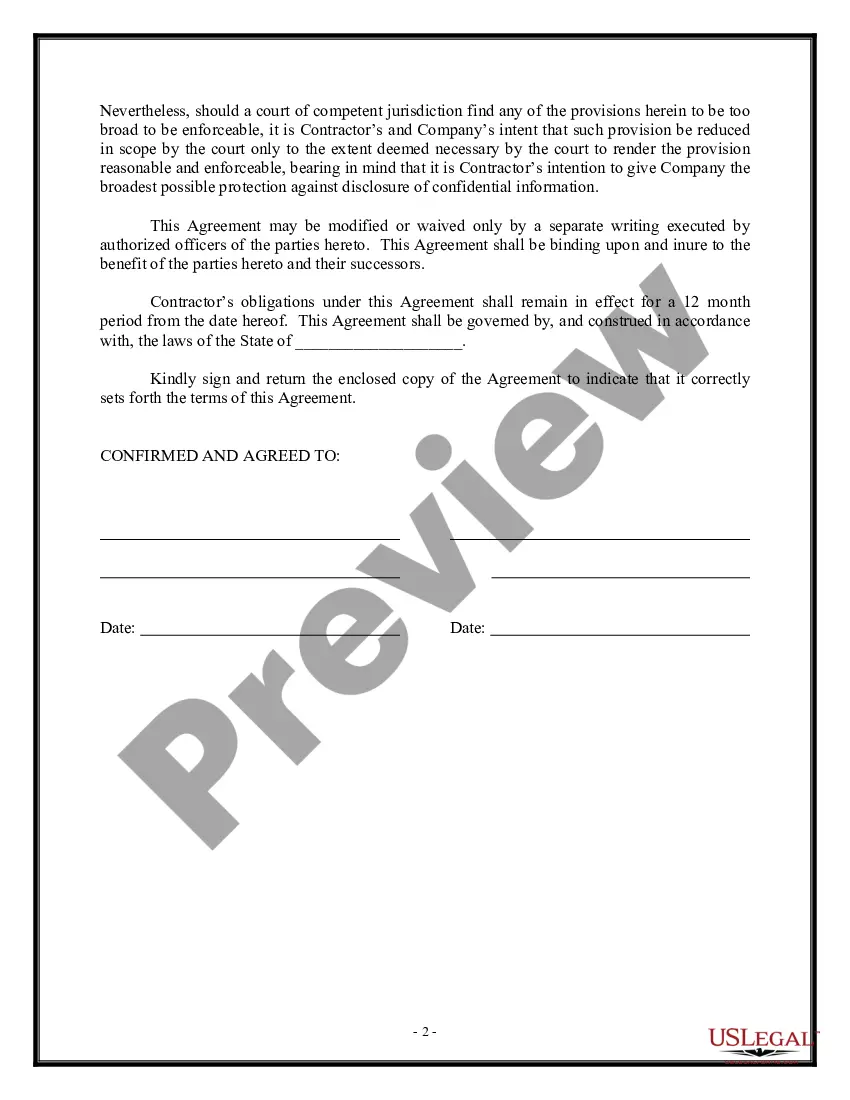
Get your form ready online
Our built-in tools help you complete, sign, share, and store your documents in one place.
Make edits, fill in missing information, and update formatting in US Legal Forms—just like you would in MS Word.
Download a copy, print it, send it by email, or mail it via USPS—whatever works best for your next step.
Sign and collect signatures with our SignNow integration. Send to multiple recipients, set reminders, and more. Go Premium to unlock E-Sign.
If this form requires notarization, complete it online through a secure video call—no need to meet a notary in person or wait for an appointment.
We protect your documents and personal data by following strict security and privacy standards.

Make edits, fill in missing information, and update formatting in US Legal Forms—just like you would in MS Word.

Download a copy, print it, send it by email, or mail it via USPS—whatever works best for your next step.

Sign and collect signatures with our SignNow integration. Send to multiple recipients, set reminders, and more. Go Premium to unlock E-Sign.

If this form requires notarization, complete it online through a secure video call—no need to meet a notary in person or wait for an appointment.

We protect your documents and personal data by following strict security and privacy standards.
Looking for another form?

Form popularity
FAQ
What is the difference between a DPA and a NDA? A DPA (Data Processing Agreement) outlines terms for data processing, focusing on ensuring data protection and privacy compliance. An NDA (Non-Disclosure Agreement) is a contract where parties agree not to disclose confidential information they've shared with each other.
Non-Disclosure Agreements: Maryland In Maryland, courts determine the validity of NDAs under the same general principles used for other restrictive covenants, such as non-compete agreements and non-solicitation agreements.
If the non-compete agreement poses an undue hardship on the employee, Maryland courts may find it unenforceable. In conducting an undue hardship analysis, the court balances the legitimate business interests of the employer against the potential hardship the employee will experience.
This means that all current noncompetes under Maryland law will now be unenforceable except for those for senior executives, and no new noncompetes whatsoever may be entered into after September 4, 2024.
Maryland's non-compete law currently bans all non-competes for employees earning less than 150% of the State minimum wage.
In a mutual NDA, by contrast, both parties agree not to reveal each other's confidential information. While the unilateral NDA is a one-way street, an MNDA creates a confidential relationship where information is protected by both parties.
2. NDAs are enforceable when they are signed — if they are properly drafted and executed.
Whereas confidentiality agreements are typically devised in employment or personal situations to protect sensitive information, NDAs are often used in business and legal settings to protect trade secrets, client lists, and financial data.
To create a Non-Disclosure Agreement, include the following information: The parties' names and contact information. The length of the non-disclosure period. The scope and definition of the confidential information. The obligations of the Non-Disclosure Agreement. The ownership and return information.
Explain the Context: Start by explaining why you need the NDA. Be clear about the sensitive information involved and why it's important to keep it confidential. Be Honest and Transparent: Share your reasons for needing an NDA. Emphasize that it's not about distrust but about protecting both parties' interests.
