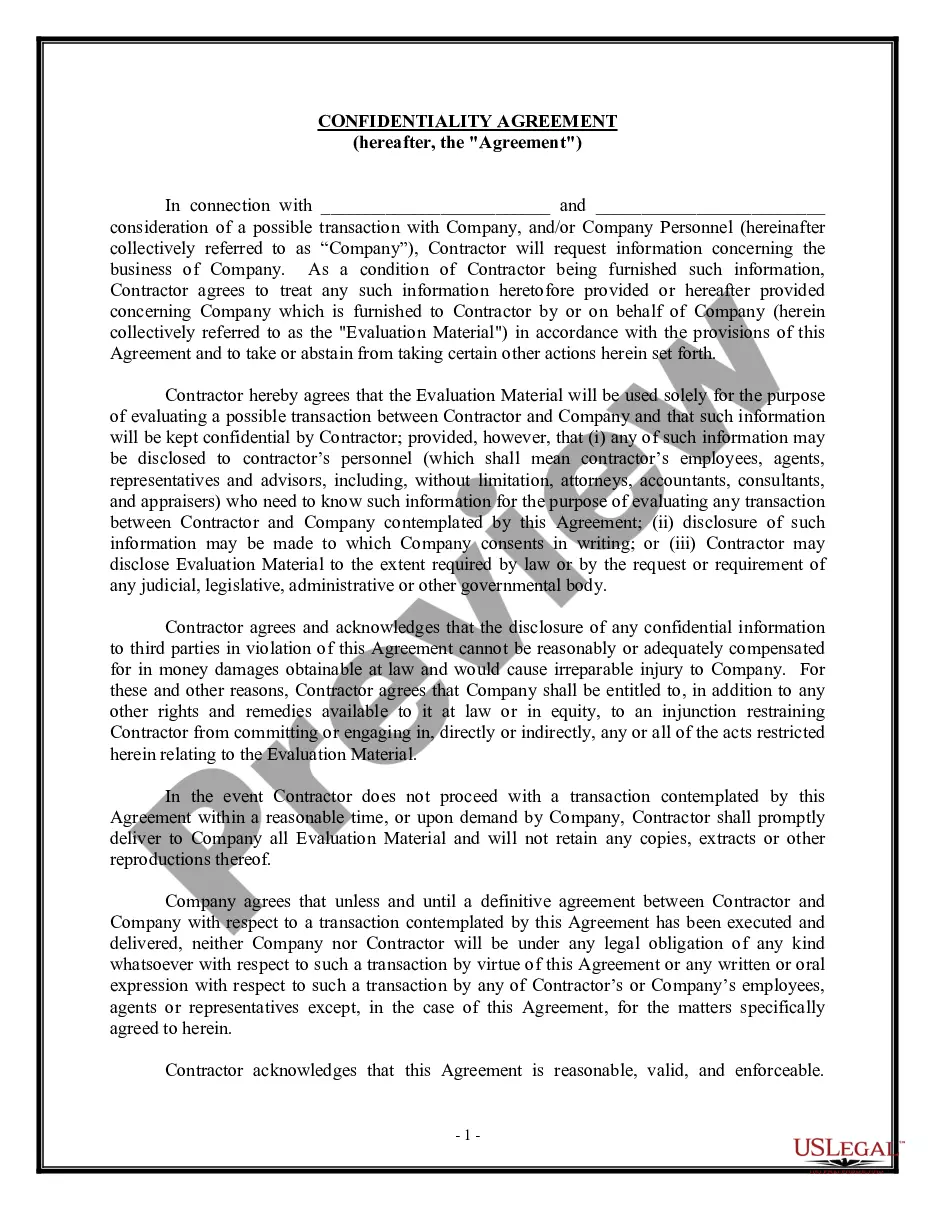
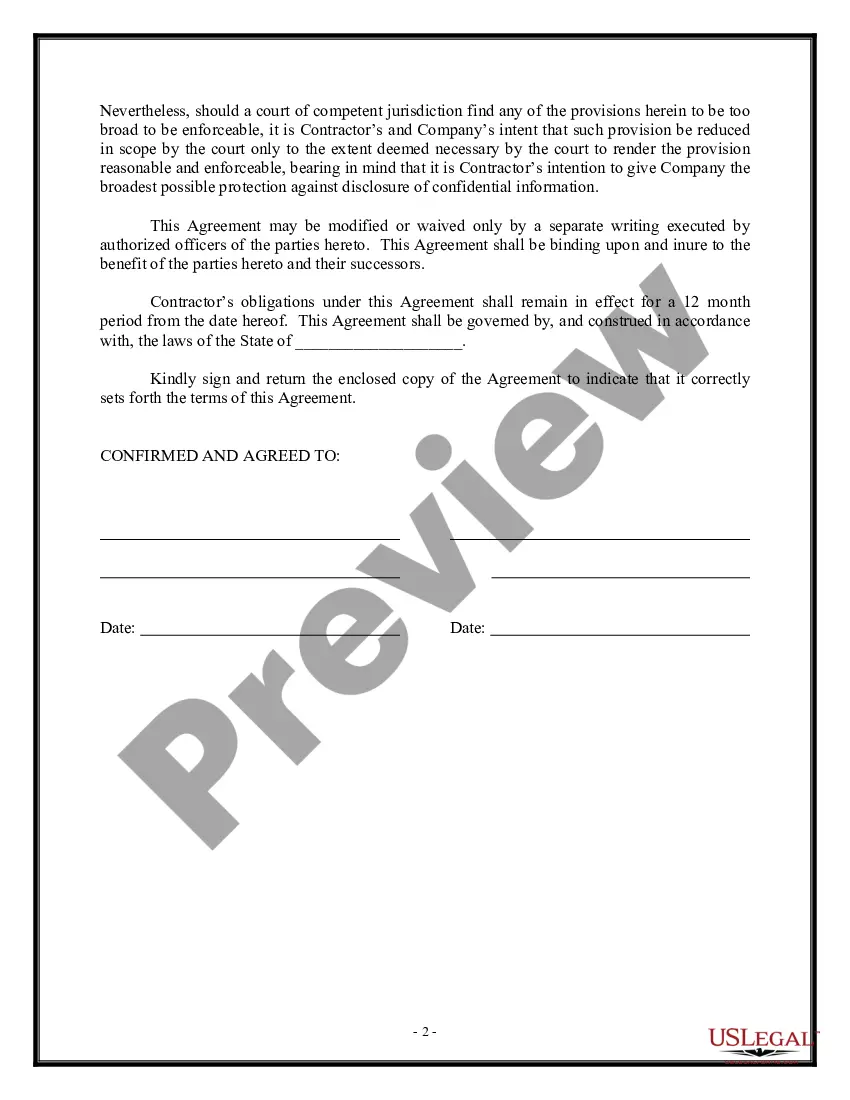
Confidentiality Disclosure Agreement In Clinical Research In Allegheny
Description
Get your form ready online
Our built-in tools help you complete, sign, share, and store your documents in one place.
Make edits, fill in missing information, and update formatting in US Legal Forms—just like you would in MS Word.
Download a copy, print it, send it by email, or mail it via USPS—whatever works best for your next step.
Sign and collect signatures with our SignNow integration. Send to multiple recipients, set reminders, and more. Go Premium to unlock E-Sign.
If this form requires notarization, complete it online through a secure video call—no need to meet a notary in person or wait for an appointment.
We protect your documents and personal data by following strict security and privacy standards.

Make edits, fill in missing information, and update formatting in US Legal Forms—just like you would in MS Word.

Download a copy, print it, send it by email, or mail it via USPS—whatever works best for your next step.

Sign and collect signatures with our SignNow integration. Send to multiple recipients, set reminders, and more. Go Premium to unlock E-Sign.

If this form requires notarization, complete it online through a secure video call—no need to meet a notary in person or wait for an appointment.

We protect your documents and personal data by following strict security and privacy standards.
Looking for another form?



Form popularity
FAQ
A confidentiality agreement should include the names and addresses of the parties to the contract. Consider also including: Reason for the agreement: Explain why you're sharing this information. The information disclosed: Be specific about the subject matter and what exactly is included in the agreement.
I agree that: a) I shall not share this information, material or documents (information) with persons within or outside of the ________ who are not authorized to have this information. b) I shall not publish such information. c) I shall not communicate such information without authority.
I agree that: a) I shall not share this information, material or documents (information) with persons within or outside of the ________ who are not authorized to have this information. b) I shall not publish such information. c) I shall not communicate such information without authority.
Methods for keeping data confidential range from using routine precautions, such as substituting codes for participant identifiers and storing data in locked cabinets, to more elaborate procedures involving statistical methods (e.g., error inoculation) or data encryption.
If you need an NDA, looking at templates online isn't a bad place to start, but ideally you should work with a lawyer who can write a simple NDA for you or tweak the one you have. You may be able to find someone in your community who can do it for a few hundred bucks.
I, (name of recipient) (the “Recipient”), agree as follows: To keep all the research information shared with me confidential by not discussing or sharing the research information in any form or format (e.g. disks, tapes, transcripts) with anyone other than the Principal Investigator(s);
I will keep completely confidential all information arising from surveys concerning individual respondents to which I gain access. I will not discuss, disclose, disseminate, or provide access to survey data and identifiers.
I, (name of recipient) (the “Recipient”), agree as follows: To keep all the research information shared with me confidential by not discussing or sharing the research information in any form or format (e.g. disks, tapes, transcripts) with anyone other than the Principal Investigator(s);
This legal agreement governs the disclosure of confidential or proprietary information as it relates to a clinical research study. Sponsors will often require an executed CDA in order to release the study protocol.
Confidentiality: Prevention of disclosure, to other than authorized individuals, of a sponsor's proprietary information or of a subject's identity. Direct Access: Permission to examine, analyze, verify, and reproduce any records and reports that are important to evaluation of a clinical trial.
