Non Disclosure Agreement For Business Idea Template In San Antonio
Description

Get your form ready online
Our built-in tools help you complete, sign, share, and store your documents in one place.
Make edits, fill in missing information, and update formatting in US Legal Forms—just like you would in MS Word.
Download a copy, print it, send it by email, or mail it via USPS—whatever works best for your next step.
Sign and collect signatures with our SignNow integration. Send to multiple recipients, set reminders, and more. Go Premium to unlock E-Sign.
If this form requires notarization, complete it online through a secure video call—no need to meet a notary in person or wait for an appointment.
We protect your documents and personal data by following strict security and privacy standards.

Make edits, fill in missing information, and update formatting in US Legal Forms—just like you would in MS Word.

Download a copy, print it, send it by email, or mail it via USPS—whatever works best for your next step.

Sign and collect signatures with our SignNow integration. Send to multiple recipients, set reminders, and more. Go Premium to unlock E-Sign.

If this form requires notarization, complete it online through a secure video call—no need to meet a notary in person or wait for an appointment.

We protect your documents and personal data by following strict security and privacy standards.
Looking for another form?




Form popularity
FAQ
Typically, a legal professional writing the NDA will complete these steps: Step 1 - Describe the scope. Which information is considered confidential? ... Step 2 - Detail party obligations. Step 3 - Note potential exclusions. Step 4 - Set the term. Step 5 - Spell out consequences.
An NDA offers an important way to protect yourself as you share your business plan and seek investors or partners. Taking this extra step can ensure your ideas and data are not stolen or shared without your permission.
Information commonly protected under NDAs includes, but is not limited to, innovative ideas, know-how, process descriptions, chemical formulas, manufacturing techniques, intellectual property details, and sensitive research and financial data.
Absolutely. Texas businesses can and should continue to protect their interests through legally compliant nonsolicitation and nondisclosure agreements. The key is ensuring that these agreements are drafted to meet legal standards for reasonableness and necessity.
There are three types of NDAs: unilateral, bilateral, and multilateral. Read on to learn when you should use each type. You'll also learn how to use a contract management tool like Ironclad to draft and manage them.
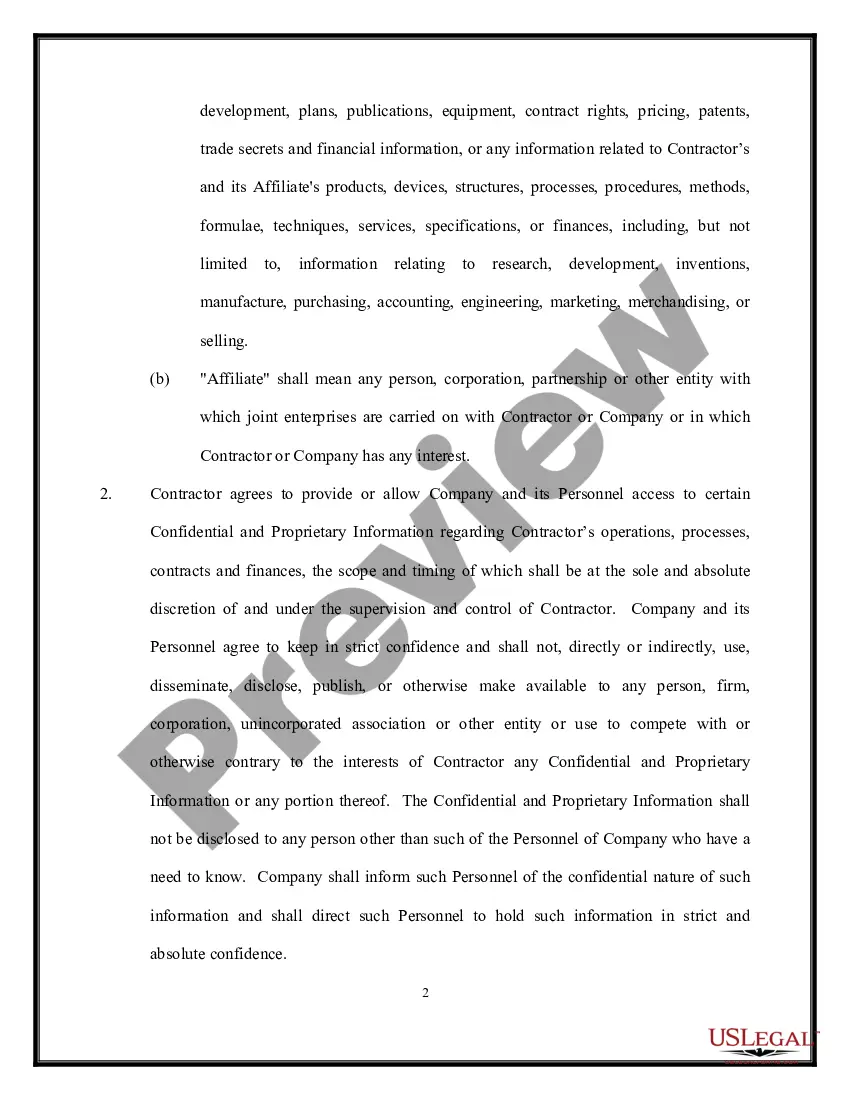
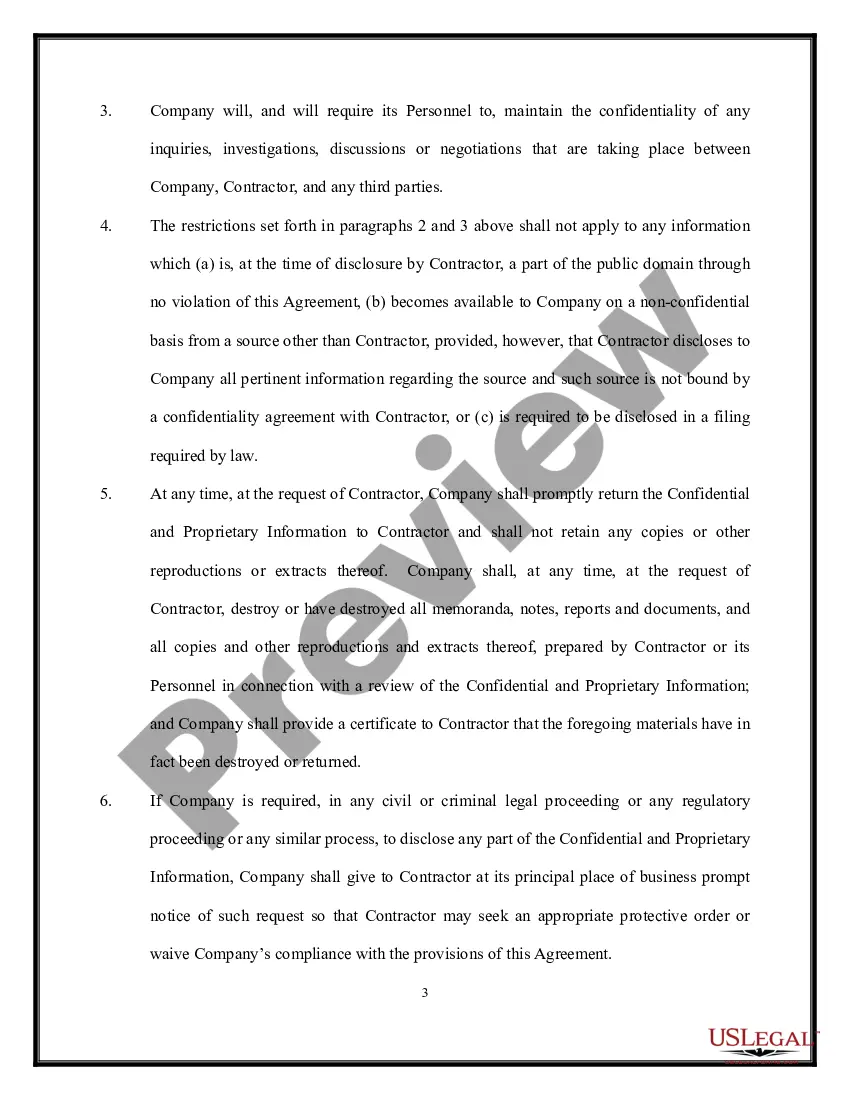
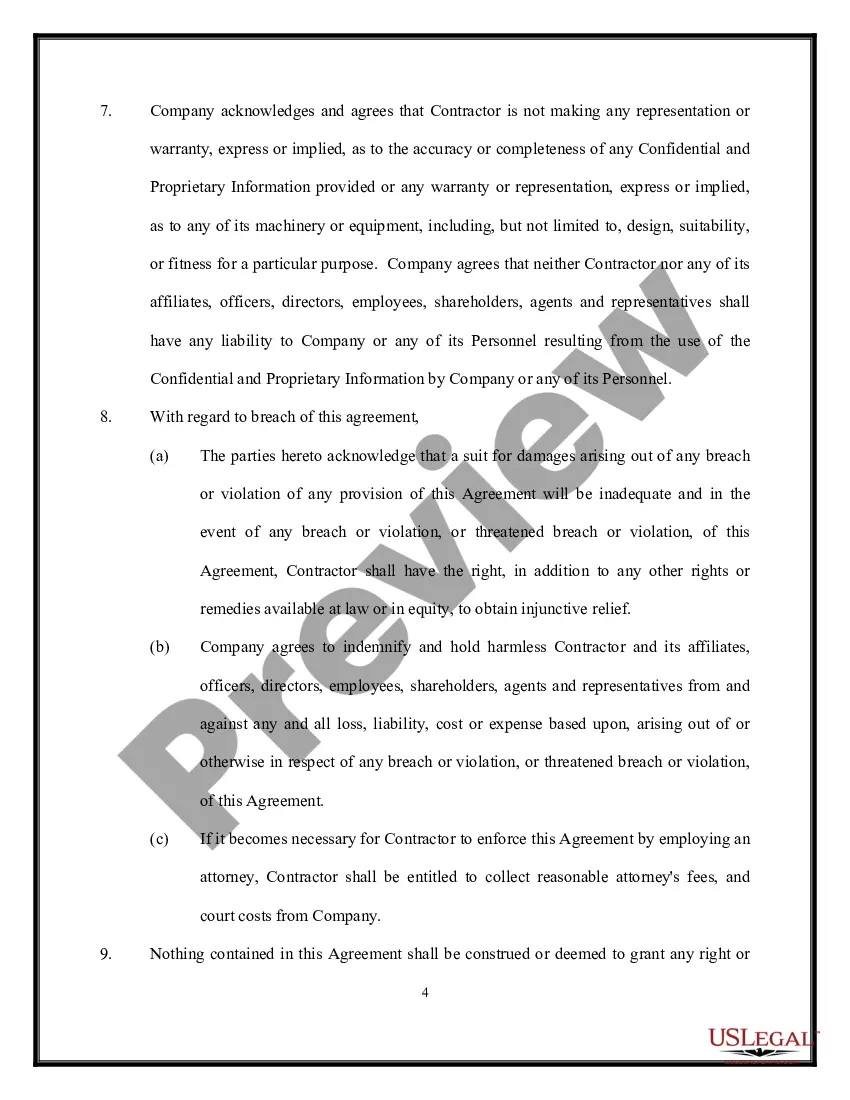
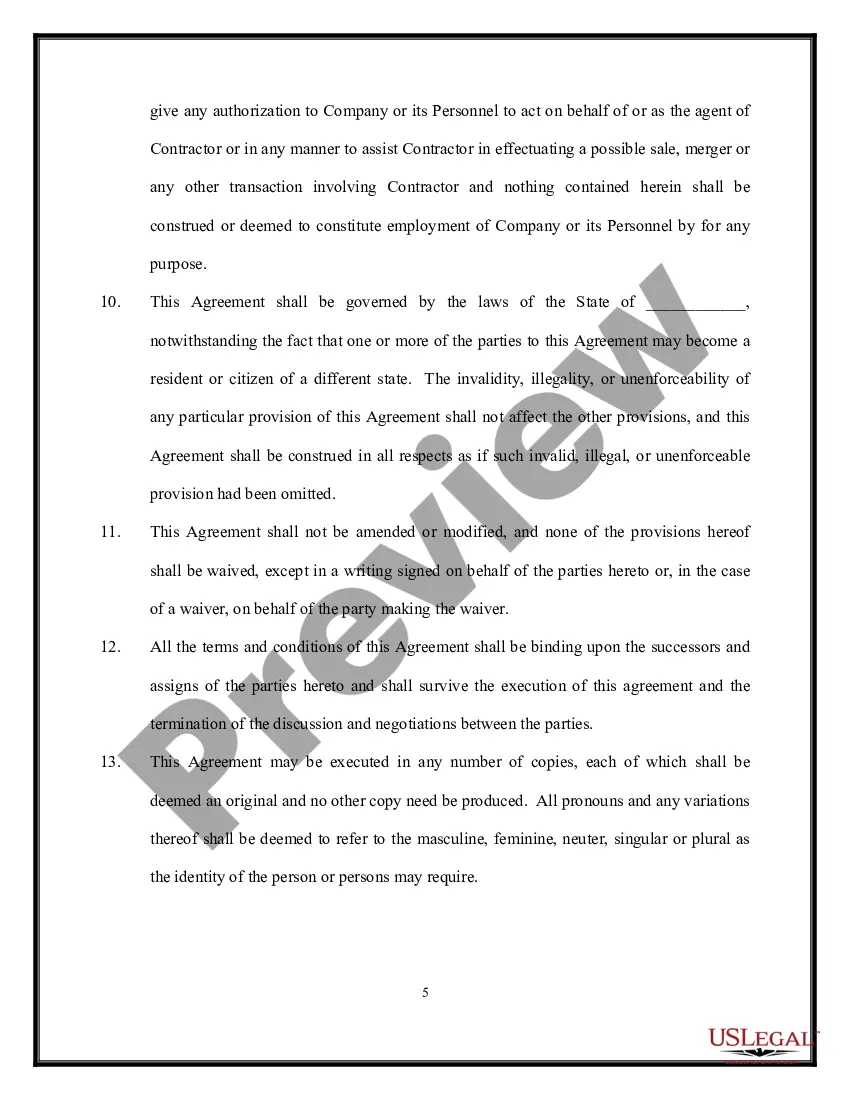
The Purpose of a Non-Disclosure Agreement An NDA creates the legal framework to protect ideas and information from being stolen or shared with competitors or third parties. Breaking an NDA agreement triggers a host of legal ramifications, including lawsuits, financial penalties, and even criminal charges.
An NDA creates the legal framework to protect ideas and information from being stolen or shared with competitors or third parties. Breaking an NDA agreement triggers a host of legal ramifications, including lawsuits, financial penalties, and even criminal charges.
An NDA can ensure that your partner does not pass details of your idea to one of your competitors. You can also use these agreements with your employees and journalists to whom you want to give a 'sneak preview' of financial, technical or new product information.
If both parties under the NDA were signing as sole proprietors, you have to ensure that both your full names are stated clearly. If you wanted to ensure that there would be no doubt about who the parties were, then you could add identification information such as addresses or social security numbers.
