Roommate Form Contract With Landlord In Texas
Description

Get your form ready online
Our built-in tools help you complete, sign, share, and store your documents in one place.
Make edits, fill in missing information, and update formatting in US Legal Forms—just like you would in MS Word.
Download a copy, print it, send it by email, or mail it via USPS—whatever works best for your next step.
Sign and collect signatures with our SignNow integration. Send to multiple recipients, set reminders, and more. Go Premium to unlock E-Sign.
If this form requires notarization, complete it online through a secure video call—no need to meet a notary in person or wait for an appointment.
We protect your documents and personal data by following strict security and privacy standards.

Make edits, fill in missing information, and update formatting in US Legal Forms—just like you would in MS Word.

Download a copy, print it, send it by email, or mail it via USPS—whatever works best for your next step.

Sign and collect signatures with our SignNow integration. Send to multiple recipients, set reminders, and more. Go Premium to unlock E-Sign.

If this form requires notarization, complete it online through a secure video call—no need to meet a notary in person or wait for an appointment.

We protect your documents and personal data by following strict security and privacy standards.
Looking for another form?




Form popularity
FAQ
Before your landlord can file an eviction lawsuit against you, they must give you a written notice to vacate. This notice must give you at least three days to move out, unless your lease allows for a shorter time.
Leases are required in Texas for tenancies lasting longer than a year, and they provide you with legal protection in court. If you don't have a lease agreement, though, you can still evict a tenant as long as you follow Texas eviction laws.
Starting the Process: Providing A Proper Eviction Notice If there's no written lease, you must provide a 30-day notice to vacate. This notice should clearly state that the family member must leave the property within the specified time period.
Because leases in Texas do not have to be written, a spoken agreement allowing someone to stay at a house may constitute a lease. This would give the person some protections as a tenant. Attorneys typically recommend that the safest way to remove a guest who doesn't have a lease is through the formal eviction process.
"Contracts for Deed" - Contracts for deed, sometimes referred to as "rent to own" financing arrangements, are legal in Texas.
Here's a list of standard fields that you should include in your lease agreement: Tenant information. Include each tenant's full name and contact information. Rental property description. Security deposit. Monthly rent amount. Utilities. Lease term. Policies. Late fees.
A Texas standard residential lease agreement is a document used by a landlord renting property to a tenant for monthly payment under typical conditions. Most agreements of this type are for a fixed term, usually one year.
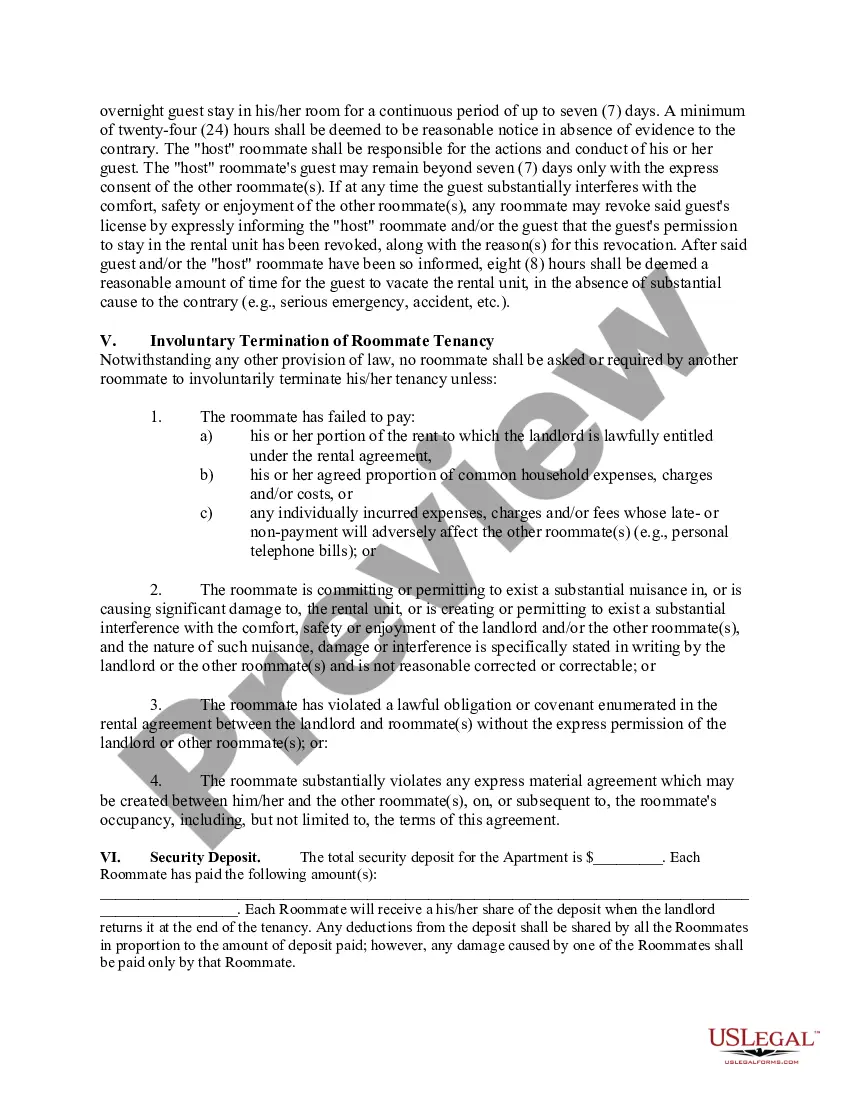
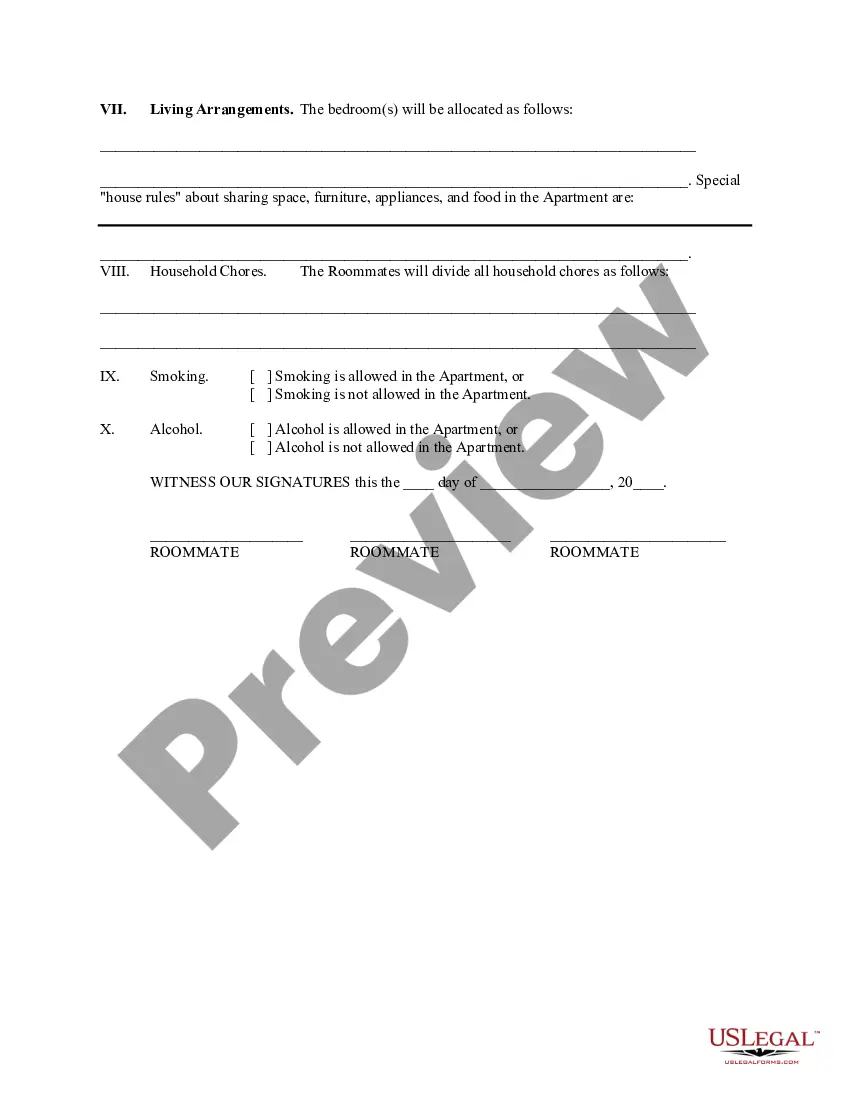
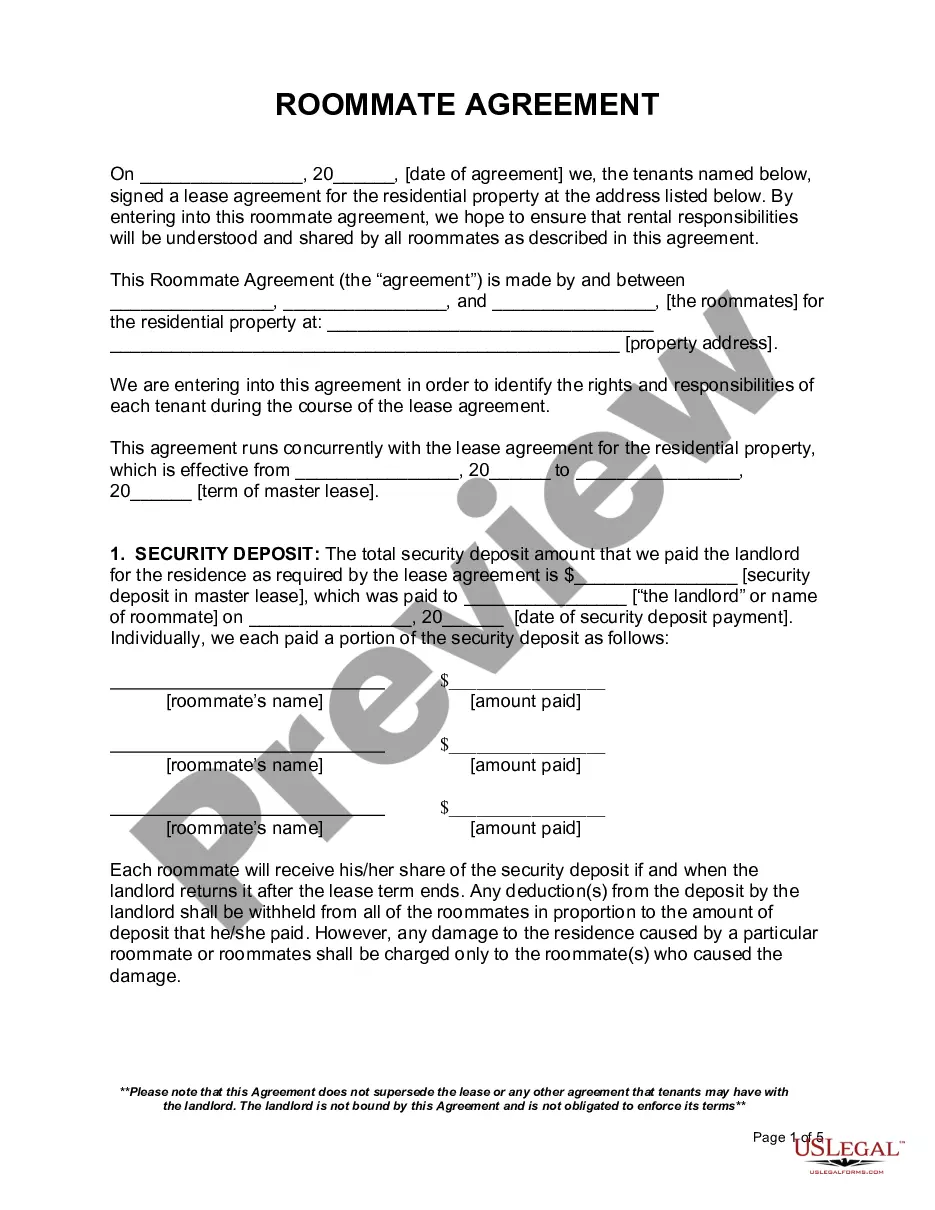
Handling the Departure of a Roommate If a co-tenant wants to leave before the end of the lease period, they should notify the landlord and get their permission. Otherwise, the other co-tenants can try to replace them with a new tenant who meets the landlord's standards.
How to write a Texas lease agreement Begin by including the names and contact information of both the landlord and tenant. Describe the rental property, including its address and any unique features. Specify the lease term, including the move-in and move-out dates.
A Roommate Agreement is a written contract between roommates that outlines their rights and obligations while living together. This agreement includes house rules, maintenance duties, restricted behaviors, and more. For a Roommate Agreement to be useful, everyone sharing the household must agree to it.
