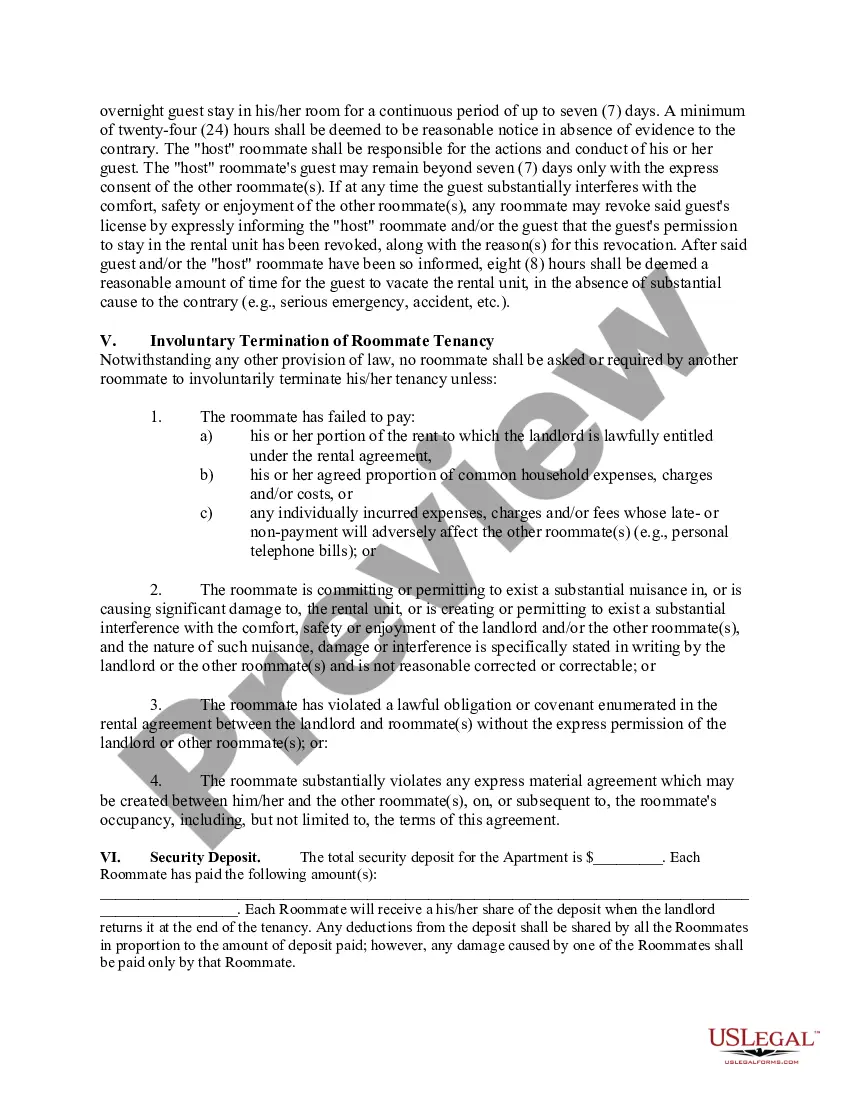
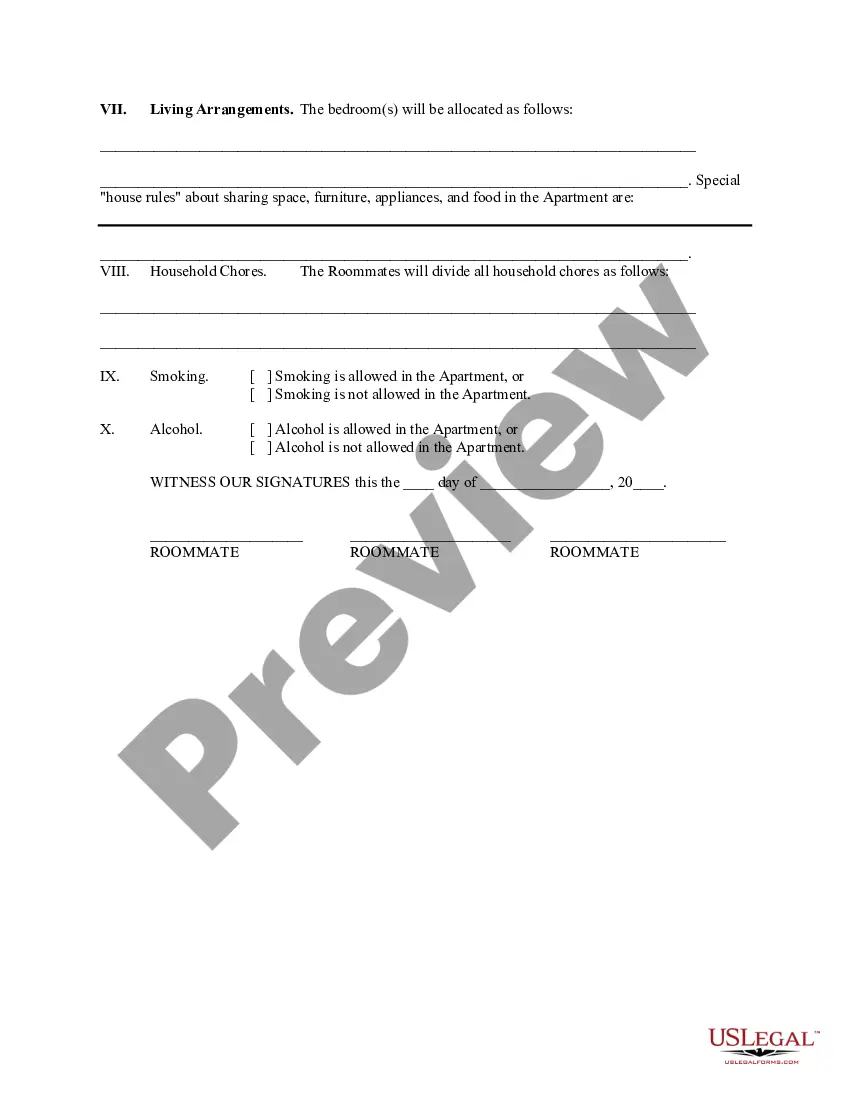
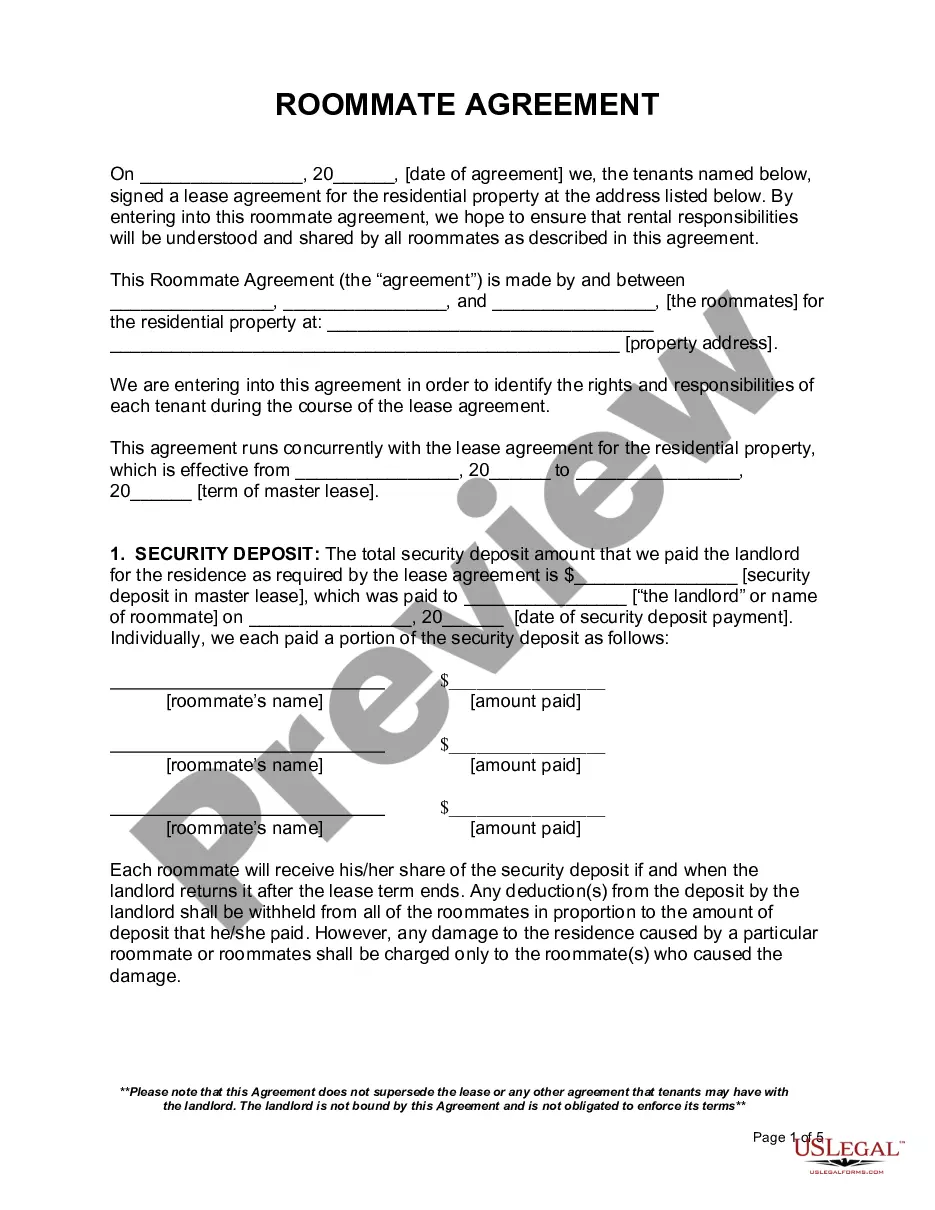
Roommate Agreement Rules In San Bernardino
Description

Get your form ready online
Our built-in tools help you complete, sign, share, and store your documents in one place.
Make edits, fill in missing information, and update formatting in US Legal Forms—just like you would in MS Word.
Download a copy, print it, send it by email, or mail it via USPS—whatever works best for your next step.
Sign and collect signatures with our SignNow integration. Send to multiple recipients, set reminders, and more. Go Premium to unlock E-Sign.
If this form requires notarization, complete it online through a secure video call—no need to meet a notary in person or wait for an appointment.
We protect your documents and personal data by following strict security and privacy standards.

Make edits, fill in missing information, and update formatting in US Legal Forms—just like you would in MS Word.

Download a copy, print it, send it by email, or mail it via USPS—whatever works best for your next step.

Sign and collect signatures with our SignNow integration. Send to multiple recipients, set reminders, and more. Go Premium to unlock E-Sign.

If this form requires notarization, complete it online through a secure video call—no need to meet a notary in person or wait for an appointment.

We protect your documents and personal data by following strict security and privacy standards.
Looking for another form?






Form popularity
FAQ
Agreements that are over a year should be in writing to be enforceable in court. Agreements that are a year or less can be verbal or written.
If there are unknown occupants, the Sheriff or Registered Process Server may serve the unknown occupants a Prejudgment Claim of Right to Possession (Form CP 10.5) as well as copies of the Summons and Complaint.
Understanding Roommate Laws in California Co-tenant: If your roommate signed the lease with you, they have equal rights to the property. Evicting them often requires coordination with the landlord.
Breaking a lease in California with a roommate happens. If you or a roommate moves out, you're both still responsible for paying rent as per your lease. If the person not making the payment (breaking the lease) has a co-signer, the co-signer will be contacted for the remaining rent.
The landlord can include you in an eviction (unlawful detainer) court case even if your name is not on the lease or rental agreement.
The amount of notice required for eviction in California depends on the reason for the eviction. For a tenancy without a lease, the landlord must typically provide a 30-day notice to vacate if the tenant has resided in the property for less than a year, or a 60-day notice if the tenancy has lasted a year or more.
