Roommate Agreement With Boyfriend In Massachusetts
Description

Get your form ready online
Our built-in tools help you complete, sign, share, and store your documents in one place.
Make edits, fill in missing information, and update formatting in US Legal Forms—just like you would in MS Word.
Download a copy, print it, send it by email, or mail it via USPS—whatever works best for your next step.
Sign and collect signatures with our SignNow integration. Send to multiple recipients, set reminders, and more. Go Premium to unlock E-Sign.
If this form requires notarization, complete it online through a secure video call—no need to meet a notary in person or wait for an appointment.
We protect your documents and personal data by following strict security and privacy standards.

Make edits, fill in missing information, and update formatting in US Legal Forms—just like you would in MS Word.

Download a copy, print it, send it by email, or mail it via USPS—whatever works best for your next step.

Sign and collect signatures with our SignNow integration. Send to multiple recipients, set reminders, and more. Go Premium to unlock E-Sign.

If this form requires notarization, complete it online through a secure video call—no need to meet a notary in person or wait for an appointment.

We protect your documents and personal data by following strict security and privacy standards.
Looking for another form?



Form popularity
FAQ
In Massachusetts, if you and your roommate are both on a lease, you don't have the legal power to evict them. If you are the only one on the lease, however, it's possible to evict your roommate—although they must be violating their rental agreement somehow.
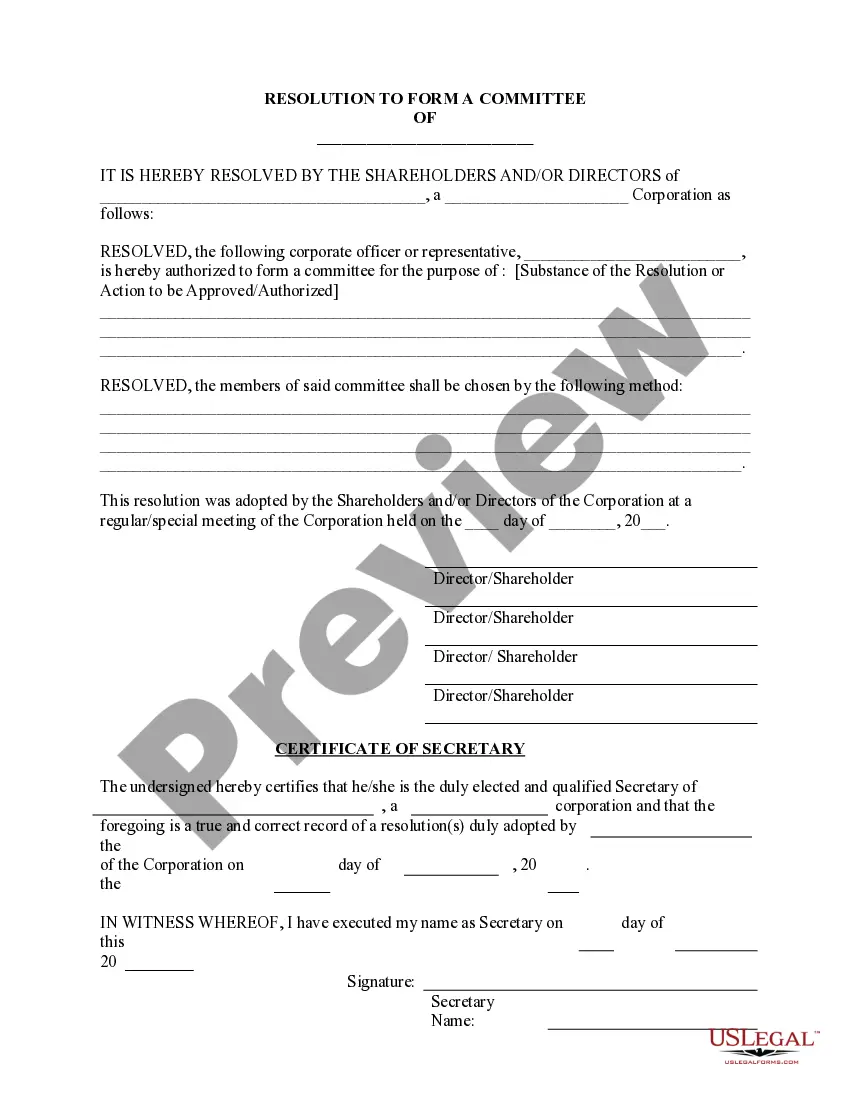
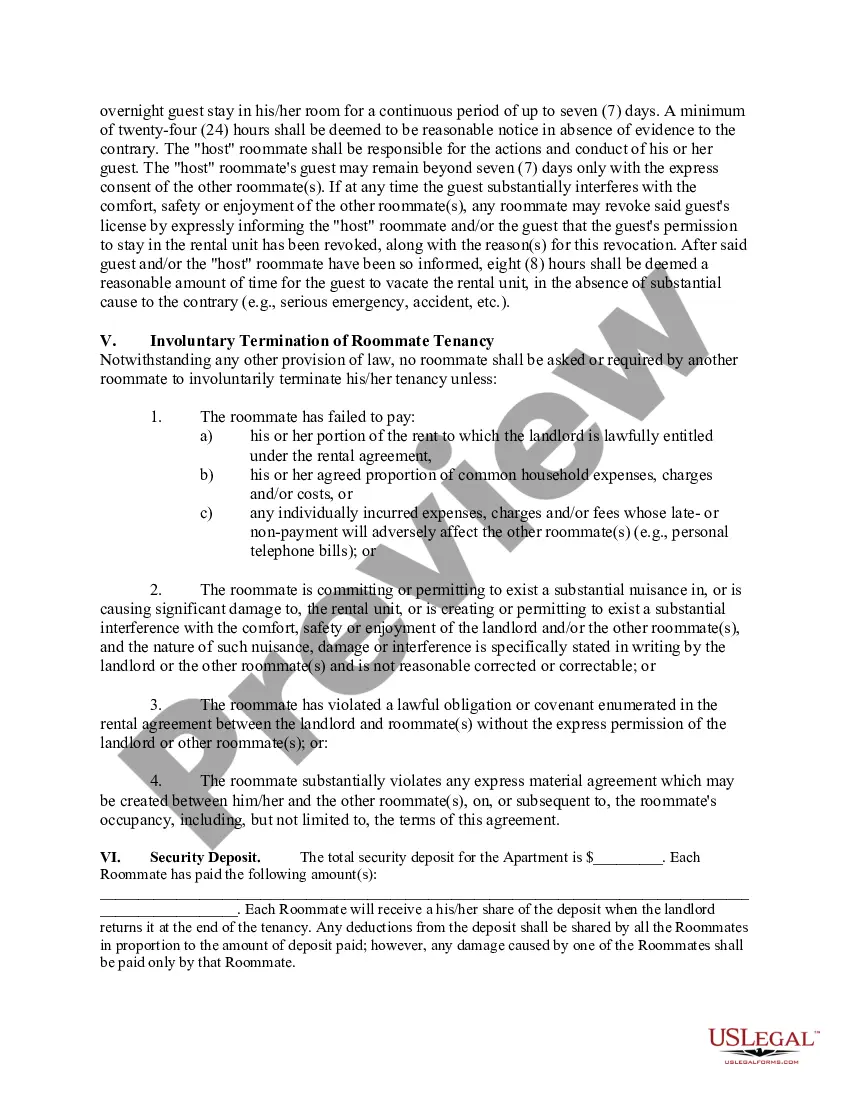
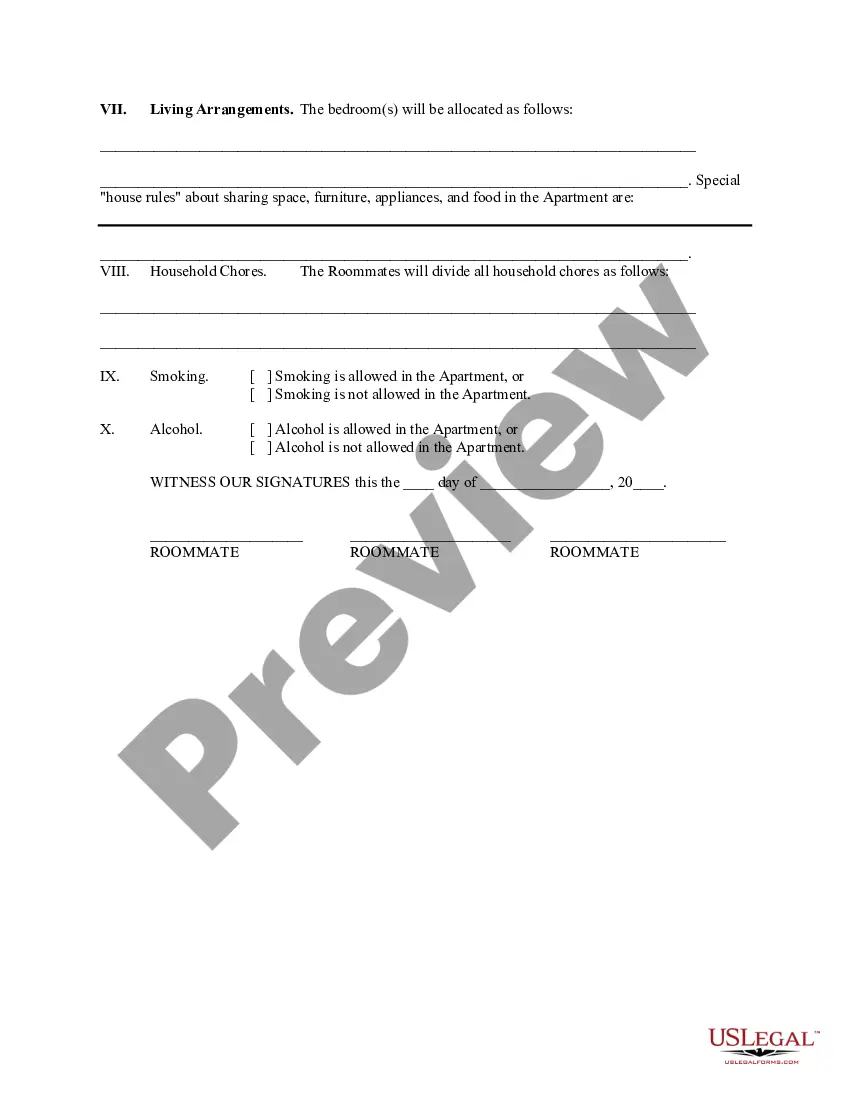
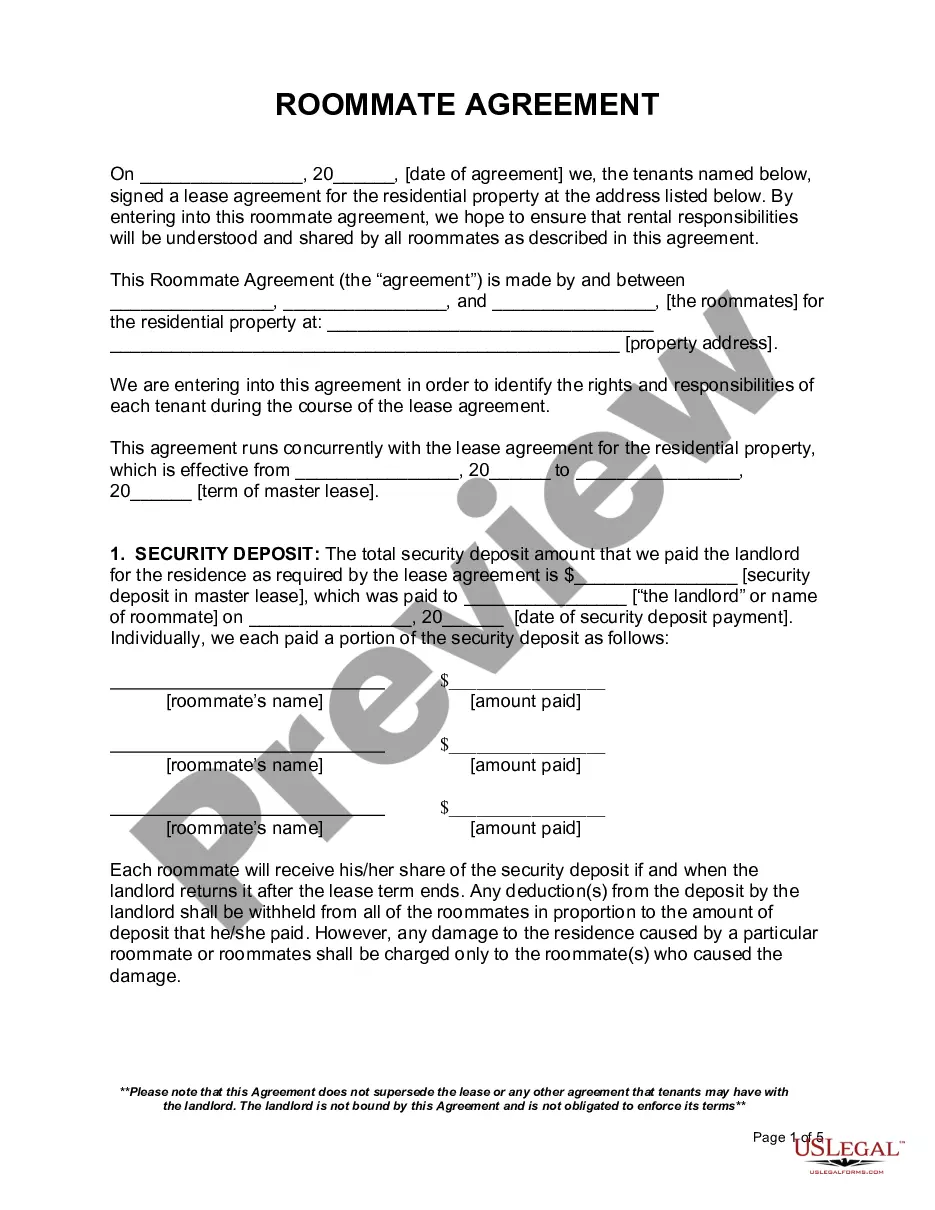
A Roommate Agreement is a written contract between roommates that outlines their rights and obligations while living together. This agreement includes house rules, maintenance duties, restricted behaviors, and more. For a Roommate Agreement to be useful, everyone sharing the household must agree to it.
In this type of agreement, you as a landlord give exclusive rights to one agent or company to rent your property during a specified period of time. What's unique in this arrangement, is that it entitles the agency to be the exclusive listing agent for that property.
You have the right to a decent place to live with heat, hot water, and electricity. Your room and the common areas must be safe and sanitary. The rooming house must meet certain safety requirements. You cannot be locked out of your room without a landlord going to court and getting permission from a judge.
If you have a roommate or a family member who is listed as a tenant on the lease, s/he will still be bound by the lease even if you are allowed to get out of it.
Massachusetts law typically mandates that tenants obtain written consent from their landlord before subletting. Without it, tenants risk eviction or legal disputes. Legal considerations also extend to ensuring that the sublease agreement does not violate state regulations.
Any guest residing at the property for more than 14 days in a six-month period or spending more than 7 nights consecutively will be considered a tenant. This person must be added to the lease agreement.
A tenancy agreement may end when someone goes against one of its material terms Residential Tenancy Act: Section 45.3. If a landlord or tenant breaches a material term and the other party wants to end the tenancy, they must send a written warning to the party who breached the term.
An “occupant/roommate” is a person who rents from a tenant with whom they live, rather than the landlord, and is therefore not covered under the Residential Tenancy Act. This type of living situation is common in shared houses where a “head-tenant” rents out bedrooms to roommates.