Lease Agreement Form For Roommate In Houston
Description

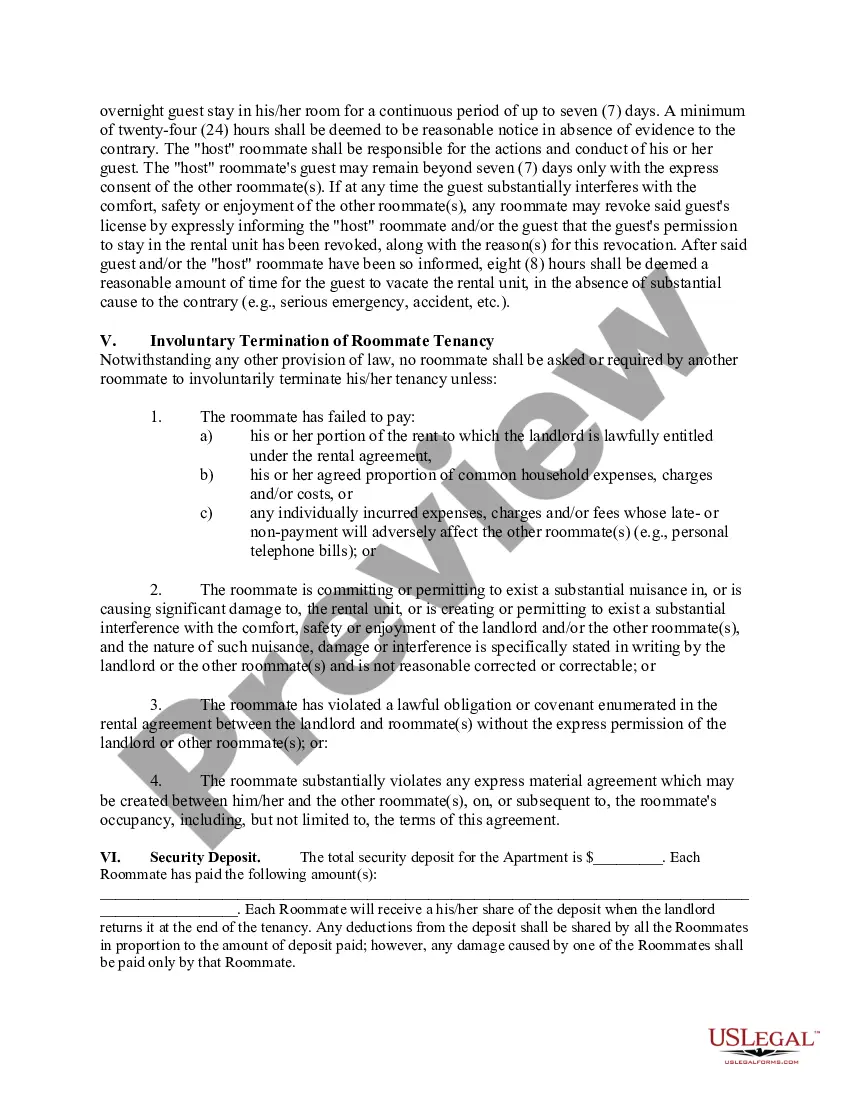
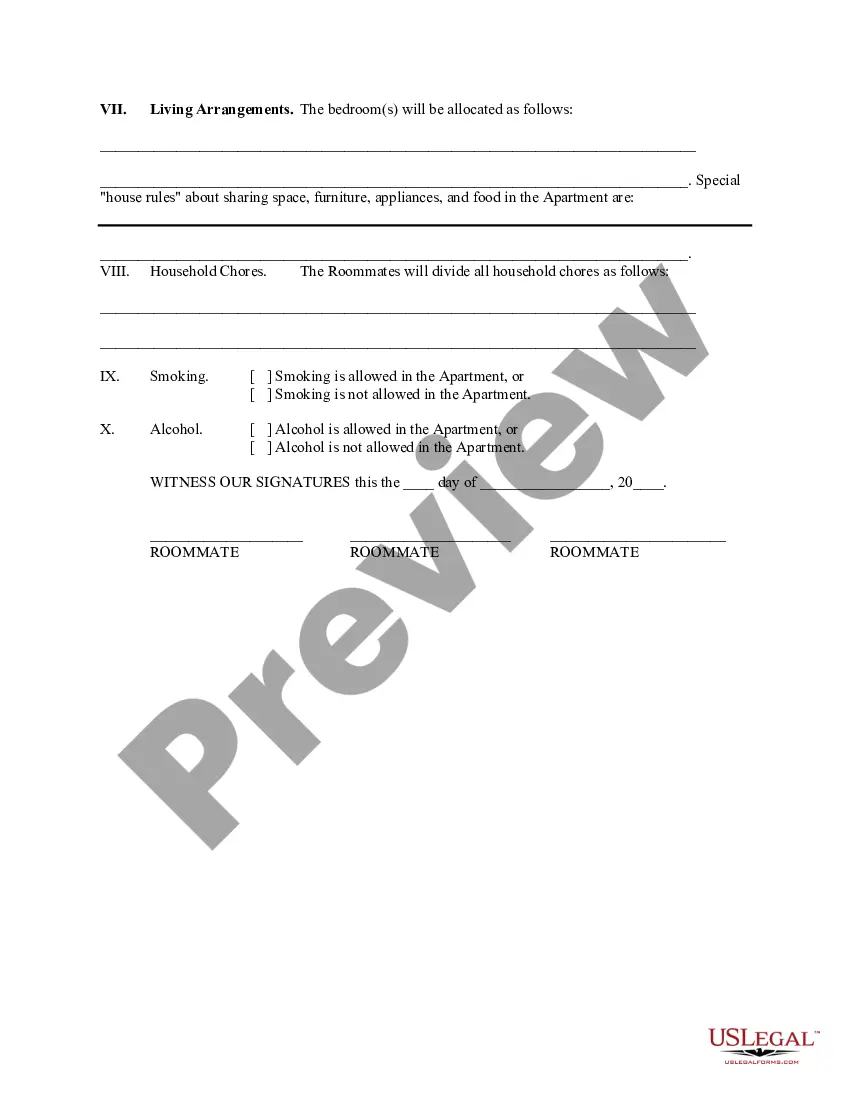
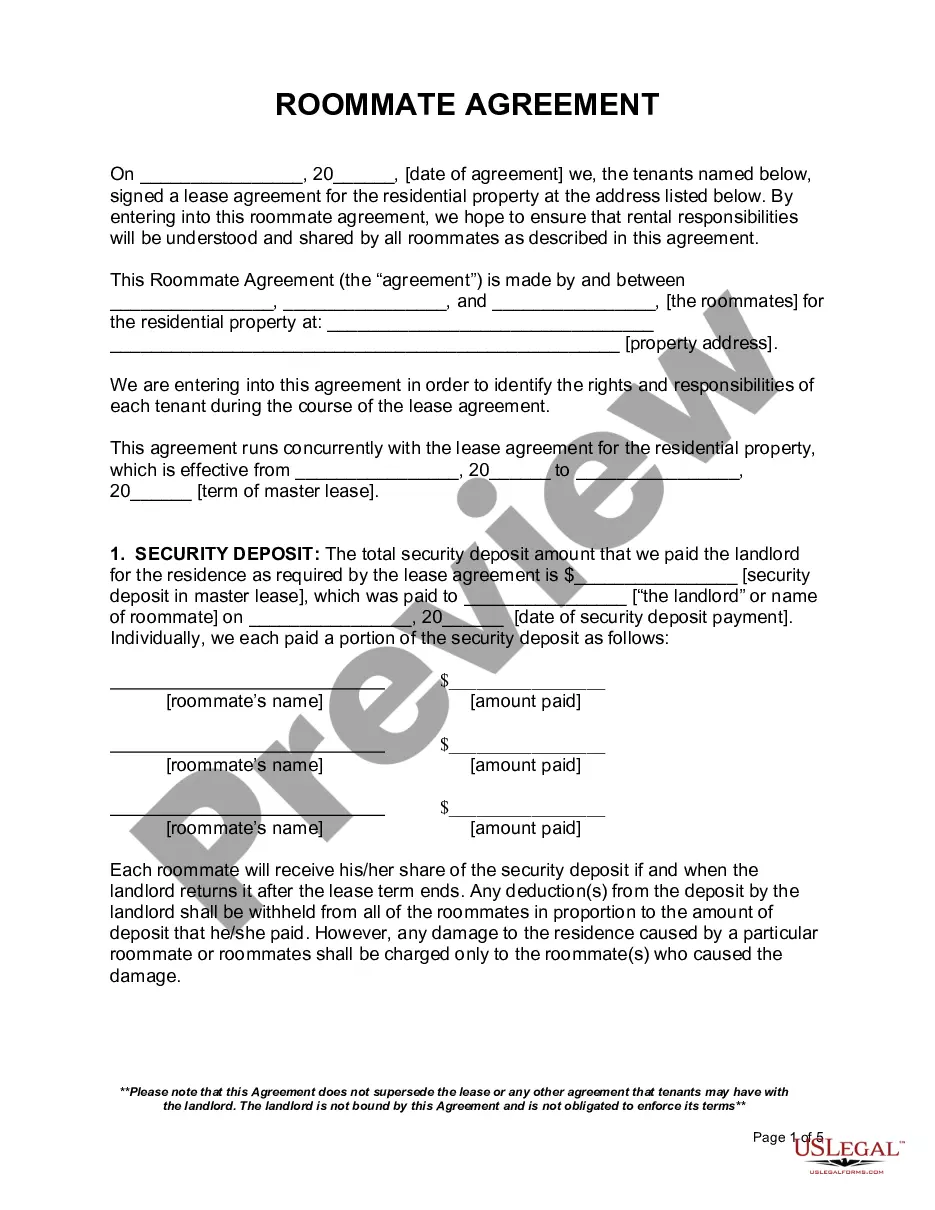
Get your form ready online
Our built-in tools help you complete, sign, share, and store your documents in one place.
Make edits, fill in missing information, and update formatting in US Legal Forms—just like you would in MS Word.
Download a copy, print it, send it by email, or mail it via USPS—whatever works best for your next step.
Sign and collect signatures with our SignNow integration. Send to multiple recipients, set reminders, and more. Go Premium to unlock E-Sign.
If this form requires notarization, complete it online through a secure video call—no need to meet a notary in person or wait for an appointment.
We protect your documents and personal data by following strict security and privacy standards.

Make edits, fill in missing information, and update formatting in US Legal Forms—just like you would in MS Word.

Download a copy, print it, send it by email, or mail it via USPS—whatever works best for your next step.

Sign and collect signatures with our SignNow integration. Send to multiple recipients, set reminders, and more. Go Premium to unlock E-Sign.

If this form requires notarization, complete it online through a secure video call—no need to meet a notary in person or wait for an appointment.

We protect your documents and personal data by following strict security and privacy standards.
Looking for another form?

Form popularity
FAQ
How to write a Texas lease agreement Begin by including the names and contact information of both the landlord and tenant. Describe the rental property, including its address and any unique features. Specify the lease term, including the move-in and move-out dates.
As a tenant, you are legally responsible for the lease agreement that you signed with the landlord and property owner. While you can choose to live with someone who is not on the lease, some potential complications and risks come with this choice. The landlord could choose to have the non-tenant evicted.
At the bare minimum, a rental agreement or lease should identify the leased property, state the names of all parties to the lease, the names of all occupants, the beginning date, when the contract expires, the amount of rent, when rent is due, when rent is late, and what happens if the tenant stays in the property ...
term lease is the most traditional lease. They're called fixed term because tenants and landlords are agreeing to abide by the lease for a fixed amount of time, normally six to 14 months.
Length of Tenancy It is common for a lease to be for a period of 12 months, but it can also be for many years.
A Texas standard residential lease agreement is a document used by a landlord renting property to a tenant for monthly payment under typical conditions. Most agreements of this type are for a fixed term, usually one year.
Leases are required in Texas for tenancies lasting longer than a year, and they provide you with legal protection in court. If you don't have a lease agreement, though, you can still evict a tenant as long as you follow Texas eviction laws.
If your roommate is on the lease, you both have equal rights to occupy the property under the lease agreement. In this situation, you do not have the authority to evict your roommate. Any disputes or issues would need to be handled through mutual agreement.
If your name nor signature is nowhere on the lease or you live with the owner of the property, yes they can ask you to leave. No 'eviction' is needed if you never had a contract. If you don't go they can have you warned off the property and can file a violation for trespassing if you come back.
There is no express time frame but typically if they are permanently on premises beyond a week or two they can claim rights. As far as them leaving, yes, if they refuse to leave on their own, you would need to obtain a court ordered eviction.
