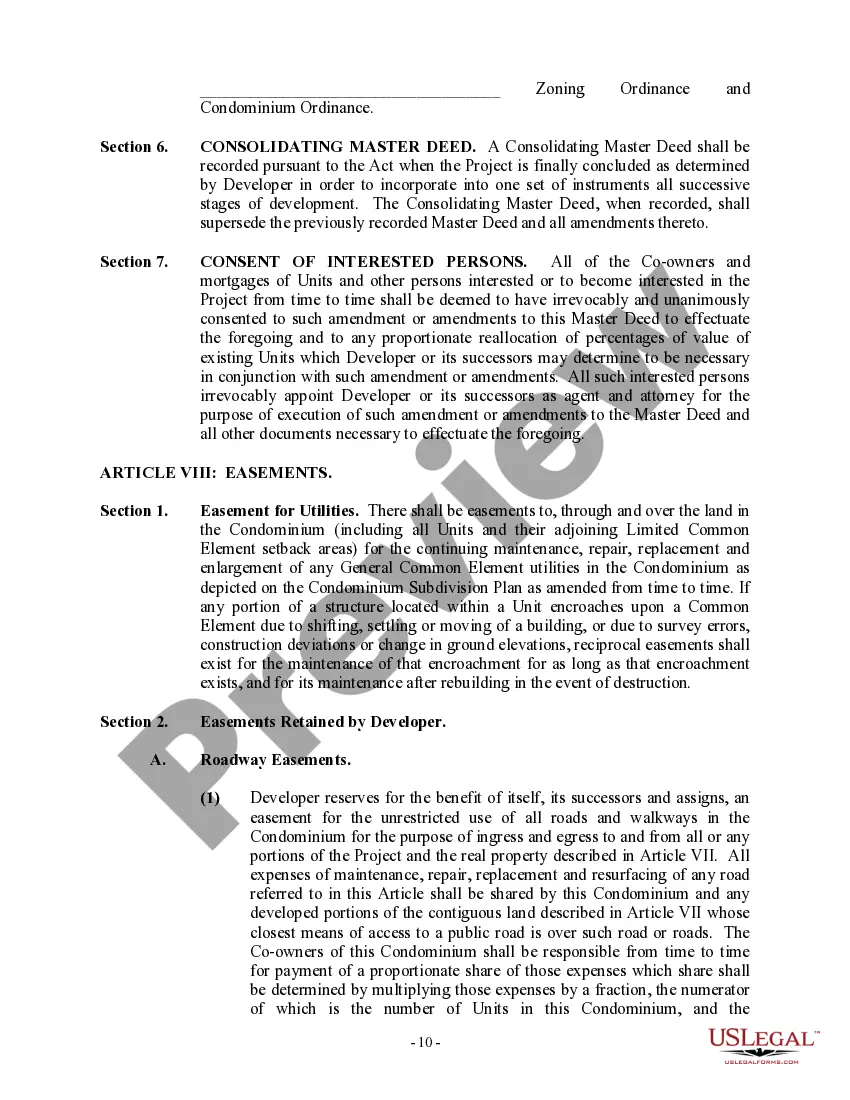
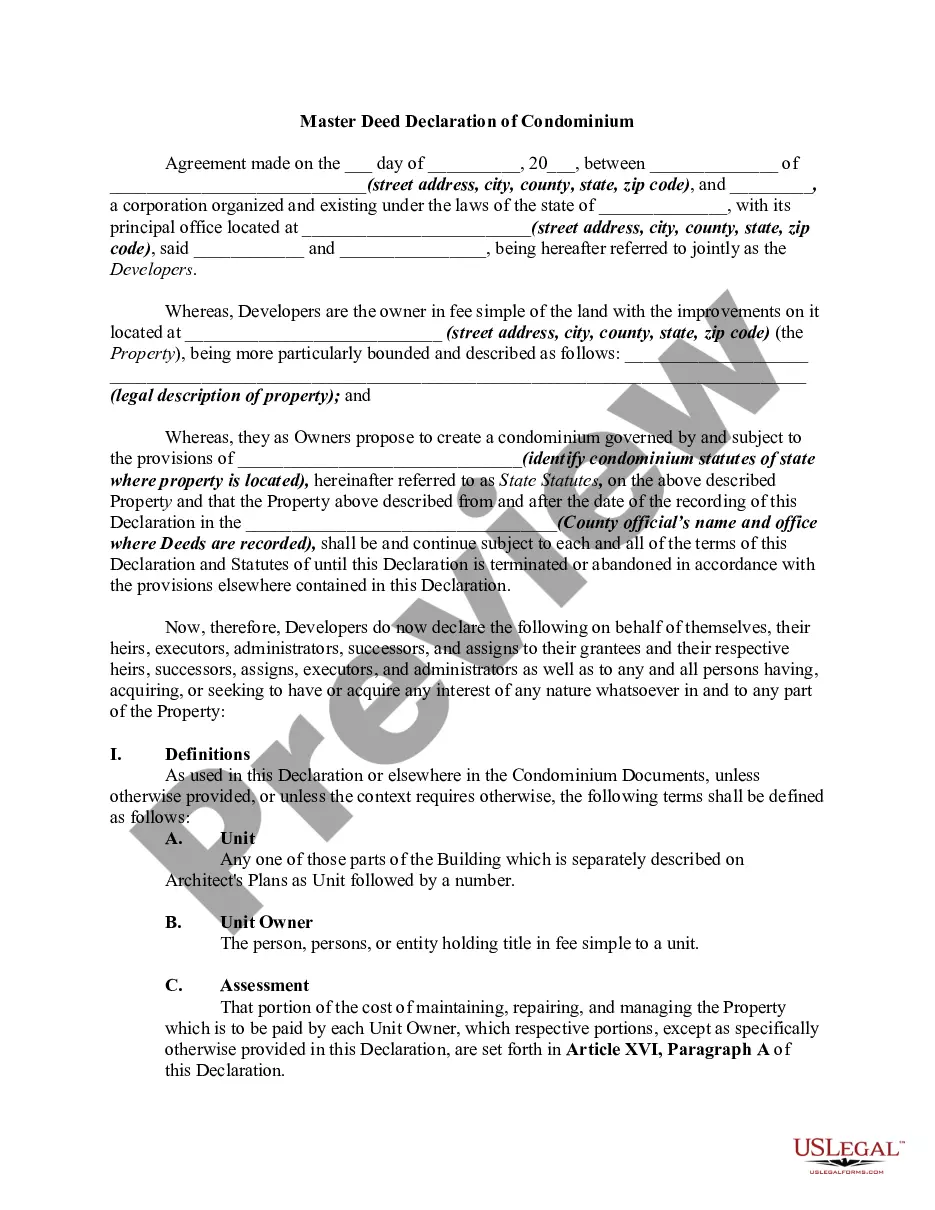
Master Deed For A Condominium In North Carolina
Description



Get your form ready online
Our built-in tools help you complete, sign, share, and store your documents in one place.
Make edits, fill in missing information, and update formatting in US Legal Forms—just like you would in MS Word.
Download a copy, print it, send it by email, or mail it via USPS—whatever works best for your next step.
Sign and collect signatures with our SignNow integration. Send to multiple recipients, set reminders, and more. Go Premium to unlock E-Sign.
If this form requires notarization, complete it online through a secure video call—no need to meet a notary in person or wait for an appointment.
We protect your documents and personal data by following strict security and privacy standards.

Make edits, fill in missing information, and update formatting in US Legal Forms—just like you would in MS Word.

Download a copy, print it, send it by email, or mail it via USPS—whatever works best for your next step.

Sign and collect signatures with our SignNow integration. Send to multiple recipients, set reminders, and more. Go Premium to unlock E-Sign.

If this form requires notarization, complete it online through a secure video call—no need to meet a notary in person or wait for an appointment.

We protect your documents and personal data by following strict security and privacy standards.
Looking for another form?




Form popularity
FAQ
I want to get a copy of the deed to my land. How can I do that? Go to your Register of Deeds Office and look at the document there. Find your Register of Deeds in: Your phone book under county government. Look it up online. Many counties have their real property (land) records online. Go to the county website.
In North Carolina, there are three main types of deeds: (1) general warranty deed; (2) special warranty deed; and (3) quitclaim deed. Each of these main types of deeds are used for different purposes. The general warranty deed is the most common type of deed used in North Carolina.
A deed must state the name and address for the current owner making the transfer (the grantor) and the new owner receiving the property (the grantee). A deed with more than one grantor or grantee must include the names and addresses of all parties.
Inium is a Latin word that means "Owning property together." That's what it is like when someone buys a condo unit. They have an "interest" in the land beneath the building, but the building's association owns the actual land.
Drafting of legal documents, including deeds, mortgages, and other transaction documents must be prepared by a NC attorney. NCGS § 84-2.1.
Your inium doesn't have a lifespan, but the corporation managing it has one. In the Philippines, 50 years is the lifespan of all companies and corporations, big or small. However, the corporation can still be renewed for another 50 years, so your inium ownership does not necessarily end at that point.
To summarize, title is the legal concept of ownership over property. A deed is the actual document that transfers ownership rights from one party to another party. While this may seem like a subtle and highly technical difference, it is also very important.
To fill out an NC Quitclaim Deed, provide the names of the grantor and grantee, a legal description of the property, the date of the transfer, and have it signed and notarized.
Before a deed or deed of trust prepared in North Carolina may be recorded, it must reflect the name of the draftsman on the first page. The first page should contain a "Return to" name and address along with a self addressed stamped envelope. Deeds must contain the grantees mailing address for the Tax department.
"A deed seeking to convey an interest in land "is void unless it contains a description of the land sufficient to identify it or refers to something extrinsic by which land may be identified with certainty." Overton v. Boyce, 289 N.C. 291, 293, 221 S.E.2d 347, 348 (1976).
