Condominium Bylaws Condo For Hoa In Philadelphia
Description



Get your form ready online
Our built-in tools help you complete, sign, share, and store your documents in one place.
Make edits, fill in missing information, and update formatting in US Legal Forms—just like you would in MS Word.
Download a copy, print it, send it by email, or mail it via USPS—whatever works best for your next step.
Sign and collect signatures with our SignNow integration. Send to multiple recipients, set reminders, and more. Go Premium to unlock E-Sign.
If this form requires notarization, complete it online through a secure video call—no need to meet a notary in person or wait for an appointment.
We protect your documents and personal data by following strict security and privacy standards.

Make edits, fill in missing information, and update formatting in US Legal Forms—just like you would in MS Word.

Download a copy, print it, send it by email, or mail it via USPS—whatever works best for your next step.

Sign and collect signatures with our SignNow integration. Send to multiple recipients, set reminders, and more. Go Premium to unlock E-Sign.

If this form requires notarization, complete it online through a secure video call—no need to meet a notary in person or wait for an appointment.

We protect your documents and personal data by following strict security and privacy standards.
Looking for another form?

Form popularity
FAQ
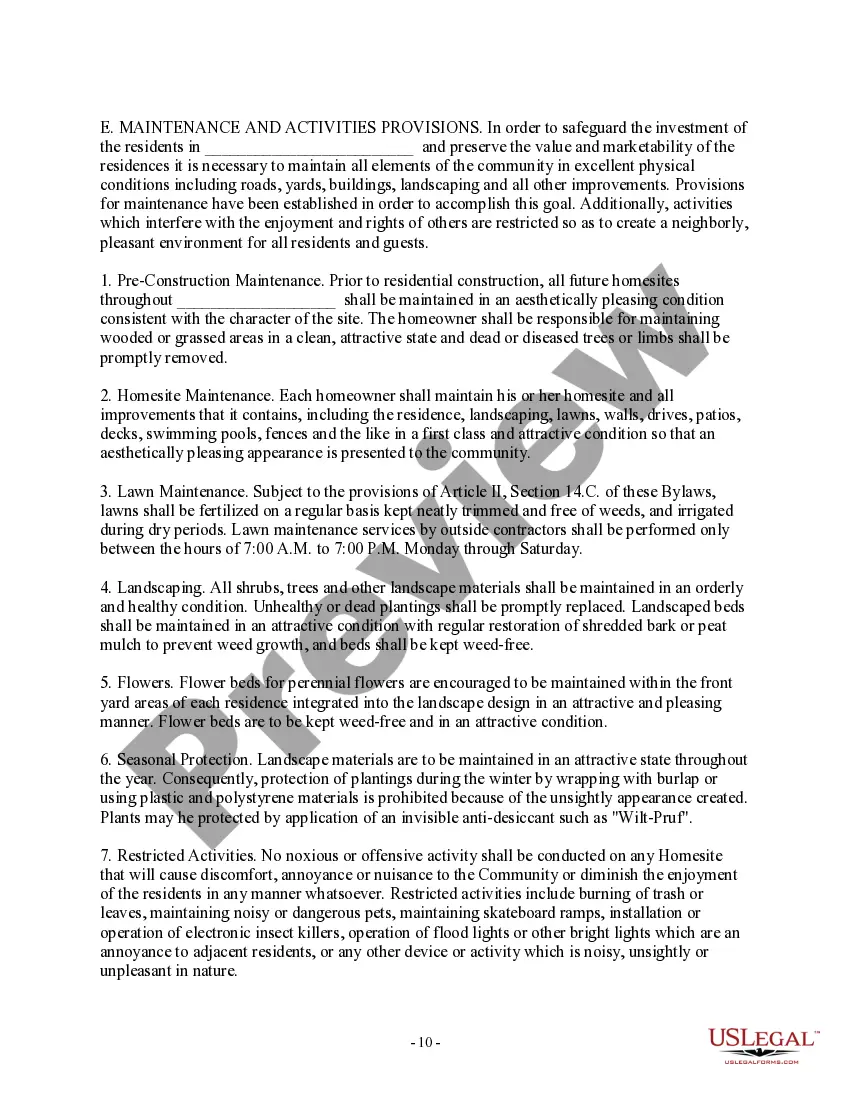
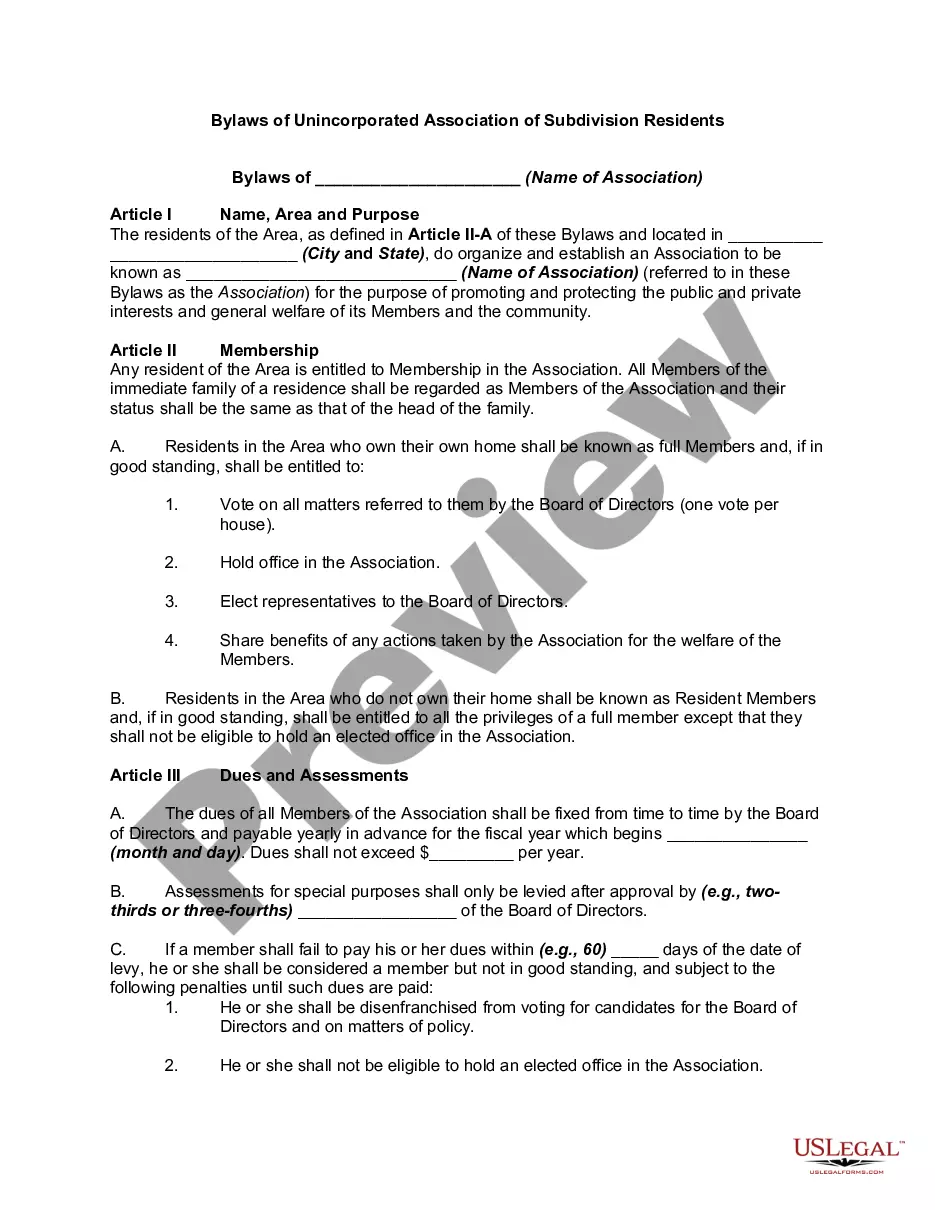
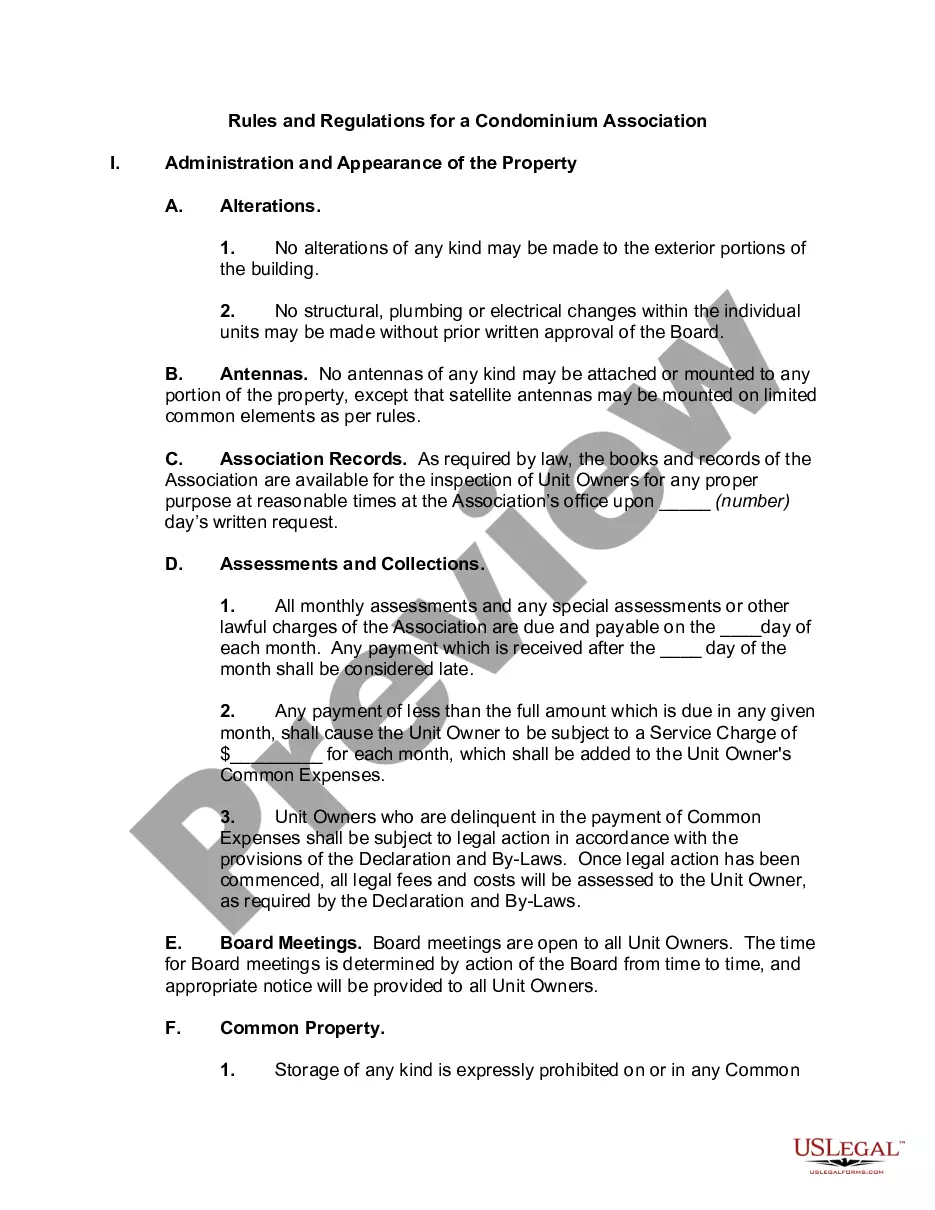
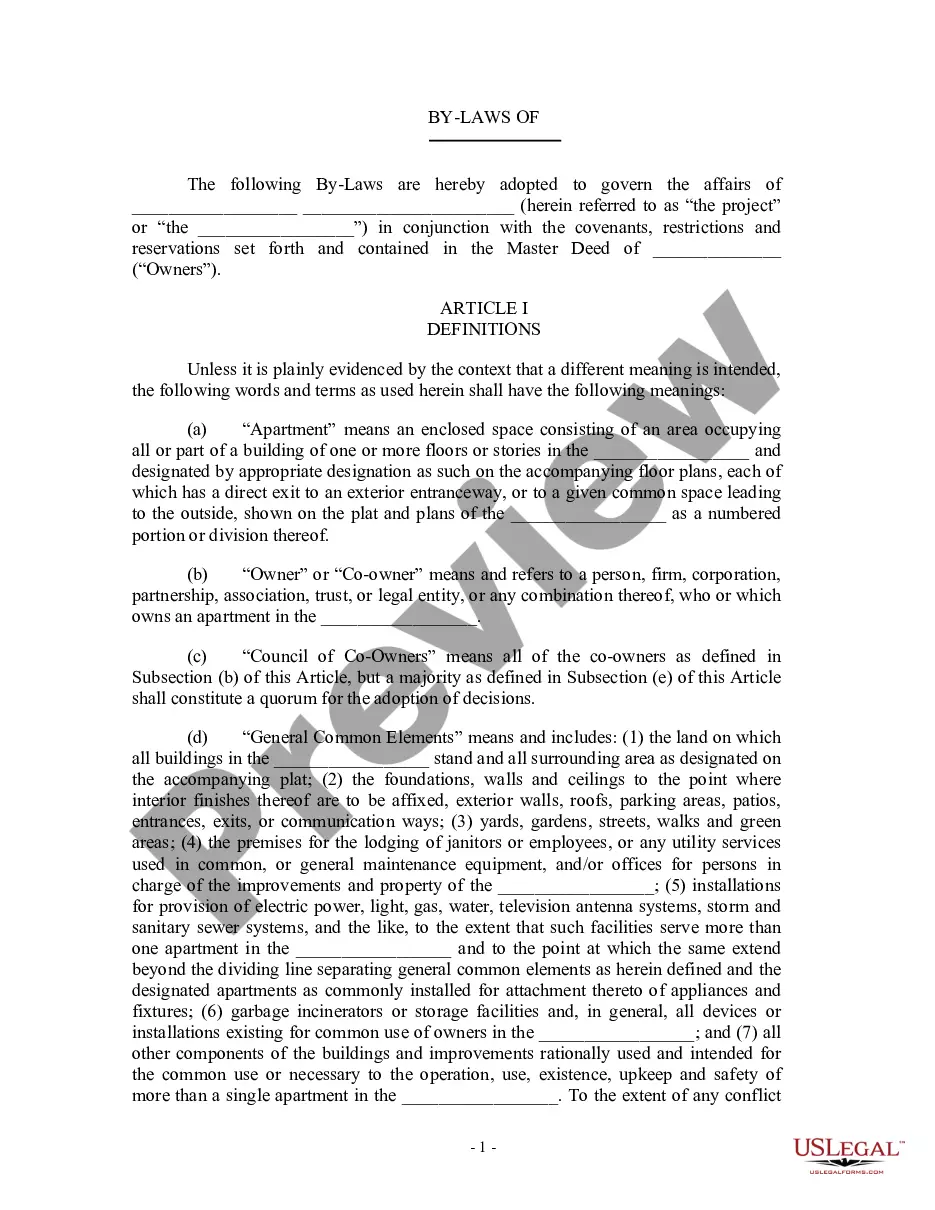
The inium bylaws govern the structure and operation of the association. They contain information regarding board meetings, elections, board terms, voting procedures, and the like. The bylaws are more about the management of the association than the rules that govern it and its members.
Tips on How to Get Copies of HOA Documents Contact your association directly. Most associations provide online access to all community documents, if you are an existing member of the community. Talk to your neighbors. Send your association a written request for inspection of the association's official records.
In California, the decision's totally up to the board. A compilation is the lowest level. The results of that review must be distributed to the membership within 120 days of year end. So owners could ask the board for an audit instead of the review. But that would be up to the board.
Typically, homeowners will need to submit a written request to the HOA board, the body responsible for maintaining these records. Though, some associations will accept a phone call or a simple email. Remember to write your request using a friendly yet professional tone instead of a demanding one.
Pennsylvania state law stipulates that homeowners have the right to inspect and copy the association records. The scope of this inspection includes, but is not limited to, financial records, minutes from meetings, and other official documents.
While an HOA's governing documents tend to be more specific, some state laws indicate an association's default maintenance responsibilities. California is one example, with Civil Code Section 4775 stating that an HOA is responsible for common area repairs, maintenance, and replacements unless otherwise provided in the ...
In general, homeowners can request HOA documents that cover the following: Governing documents, including the CC&Rs, bylaws, articles of incorporation, community plat, and operating rules; All board and membership meeting minutes and notices; Membership lists; All insurance policies of the association;
Generally speaking, the declaration is the document that creates the inium. The bylaws spell out the day-to-day operations of the association. If your association is more than 10 years old and the bylaws have remained unchanged, board members may want to consider making updates.
In Pennsylvania, homeowner associations (HOAs) are governed by specific state laws to maintain order and regulate affairs within planned communities. These regulations are primarily outlined in the Uniform Planned Community Act (UPCA), codified in Title 68, Chapters 51-54 of the Pennsylvania statutes.
Which state has the most HOAs? In 2024, Florida has the most homes belonging to HOAs. Out of 8.9 million homes in Florida, 3.9 million of those are in HOAs–which is about 45%. This number is closely followed by Colorado, with 893K homes in HOAs out of 2.3 million homes–a rate of 38.6%.
