Educational Assistance Employees With Mental Health Issues In Nevada
Description

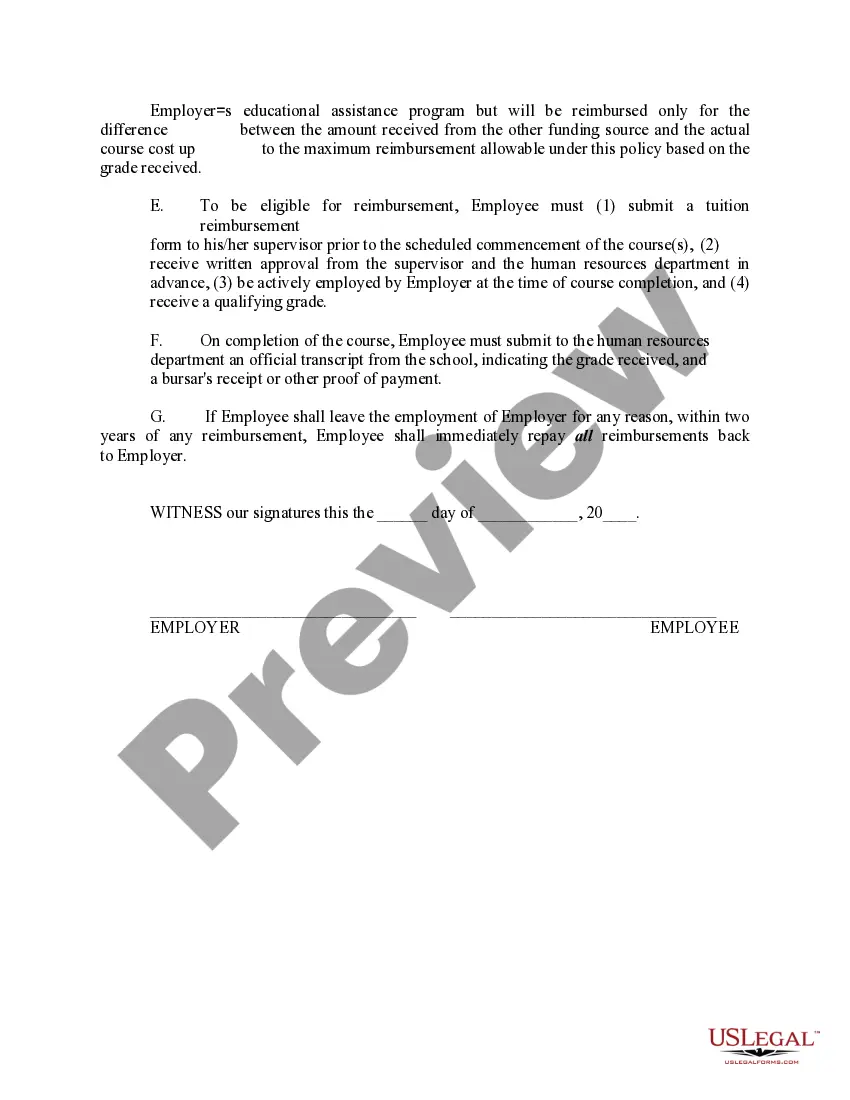
Get your form ready online
Our built-in tools help you complete, sign, share, and store your documents in one place.
Make edits, fill in missing information, and update formatting in US Legal Forms—just like you would in MS Word.
Download a copy, print it, send it by email, or mail it via USPS—whatever works best for your next step.
Sign and collect signatures with our SignNow integration. Send to multiple recipients, set reminders, and more. Go Premium to unlock E-Sign.
If this form requires notarization, complete it online through a secure video call—no need to meet a notary in person or wait for an appointment.
We protect your documents and personal data by following strict security and privacy standards.

Make edits, fill in missing information, and update formatting in US Legal Forms—just like you would in MS Word.

Download a copy, print it, send it by email, or mail it via USPS—whatever works best for your next step.

Sign and collect signatures with our SignNow integration. Send to multiple recipients, set reminders, and more. Go Premium to unlock E-Sign.

If this form requires notarization, complete it online through a secure video call—no need to meet a notary in person or wait for an appointment.

We protect your documents and personal data by following strict security and privacy standards.
Looking for another form?









Form popularity
FAQ
You are not required at any point during the interview to disclose your illness history, nor on the job if you so choose. Be prepared though that an employer may ask about your ability to perform certain tasks that will touch on issues impacted by mental health, such as high pressure situations or conflict resolution.
I'm having a hard time with my mental health and need to take a sick day today. Thank you for your understanding.” Alternatively, you might say, “I'm feeling burnt out and am planning to take a sick day to take care of my mental health.
Be clear and concise, stating the specifics of how your mental health problems are impacting your work. The point here is to keep it professional and appropriate--your boss is not a therapist or close friend, so you need to stick to what matter's to the workplace.
Budget more time than you think you'll need so that the conversation isn't cut short. Be clear about the impact your mental health challenges are having at work. If the cause is work-related, share that also. As much as possible, come with suggestions for how your manager or HR can help you.
What to Do If Your Mental Health is Affecting Your Work Acknowledge the Problem. Speak to Someone You Trust at Work. Contact Your EAP. See a Doctor or Therapist. Consider Taking Some Time Off. Take Care of Yourself. Practice In-the-Moment Coping Strategies. Talk to Your Boss About Adjustments.
Ask simple, open and non-judgmental questions and let people explain in their own words how their mental health problem manifests, the triggers, how it impacts on their work and what support they need.
Get professional help You can speak to your GP, call a support line or contact Priory directly for world class private mental healthcare. There are many effective treatments for stress, anxiety and depression that will enable you to learn ways of coping and allow you to manage your working life in the long-term.
If you need time off for your mental health Example: 'I have been having some struggles with my mental health lately. If I were to come into the office today, I could not provide anything near my usual quality of work.
For employees, calling an EAP gives them access to confidential counseling services that can help them manage stress, anxiety, depression, or other personal issues that may be affecting their work performance or overall wellbeing.
Nevada: Financial Assistance Resources for Families Child Care Financial Assistance. Temporary Assistance for Needy Families (TANF) ... Children's Health Insurance Program (CHIP) ... Women, Infants, and Children (WIC) ... Supplemental Nutritional Assistance Program (SNAP formerly Food Stamps) ... Low Income Energy Assistance Program.
