Tuition Assistance For Employees In Illinois
Description

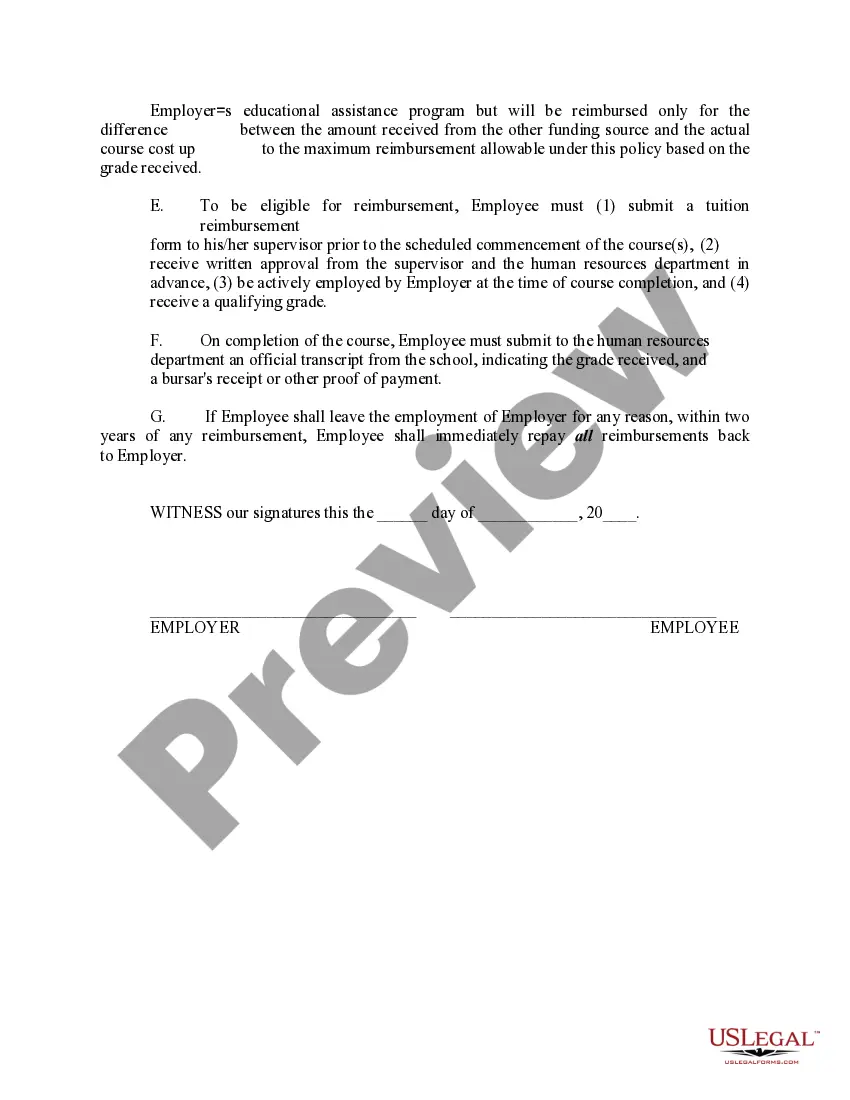
Get your form ready online
Our built-in tools help you complete, sign, share, and store your documents in one place.
Make edits, fill in missing information, and update formatting in US Legal Forms—just like you would in MS Word.
Download a copy, print it, send it by email, or mail it via USPS—whatever works best for your next step.
Sign and collect signatures with our SignNow integration. Send to multiple recipients, set reminders, and more. Go Premium to unlock E-Sign.
If this form requires notarization, complete it online through a secure video call—no need to meet a notary in person or wait for an appointment.
We protect your documents and personal data by following strict security and privacy standards.

Make edits, fill in missing information, and update formatting in US Legal Forms—just like you would in MS Word.

Download a copy, print it, send it by email, or mail it via USPS—whatever works best for your next step.

Sign and collect signatures with our SignNow integration. Send to multiple recipients, set reminders, and more. Go Premium to unlock E-Sign.

If this form requires notarization, complete it online through a secure video call—no need to meet a notary in person or wait for an appointment.

We protect your documents and personal data by following strict security and privacy standards.
Looking for another form?







Form popularity
FAQ
The University of Illinois requires that you be a bona fide resident of Illinois as determined by the University using factors in this Policy, for one calendar year prior to the term for which you are applying for resident status.
Start by providing details of your insurance policy and coverage. Next, you'll need to make a clear request for reimbursement and provide details of all medical expenses. Including receipts and details of all parties involved is critical to ensure rapid repayment.
Tuition reimbursement (also known as tuition assistance) is an employee benefit through which an employer pays for a predetermined amount of continuing education credits or college coursework to be applied toward a degree.
Create a Strong Pitch for Tuition Reimbursement Approach your request like a formal negotiation. Be prepared with a clear, well-structured case outlining the skills you'll gain and how they'll benefit your team and company.
An EAP— sometimes called a tuition reimbursement program—enables employers to fund their employees' higher education courses. For example, you might choose to fully or partially fund your employees' undergraduate or graduate degrees, professional development or skills-building courses, or vocational certifications.
The tuition waiver benefit for a child of an employee attending the University of Illinois provides the following benefits and has the following limitations: A 50 percent tuition waiver, excluding fees, for up to four years, each year consisting of two semesters and one summer term.
The Illinois Department of Revenue also offers tuition reimbursement, day care, and training opportunities.
In most cases, prior approval is required from your employer before enrollment. You'll also want to confirm whether your employer requires you to remain employed for a specified period after the course is completed. Make sure you check with HR so you're not left with unexpected tuition obligations.