Educational Assistance Programme Employees With Disabilities In Hillsborough
Description

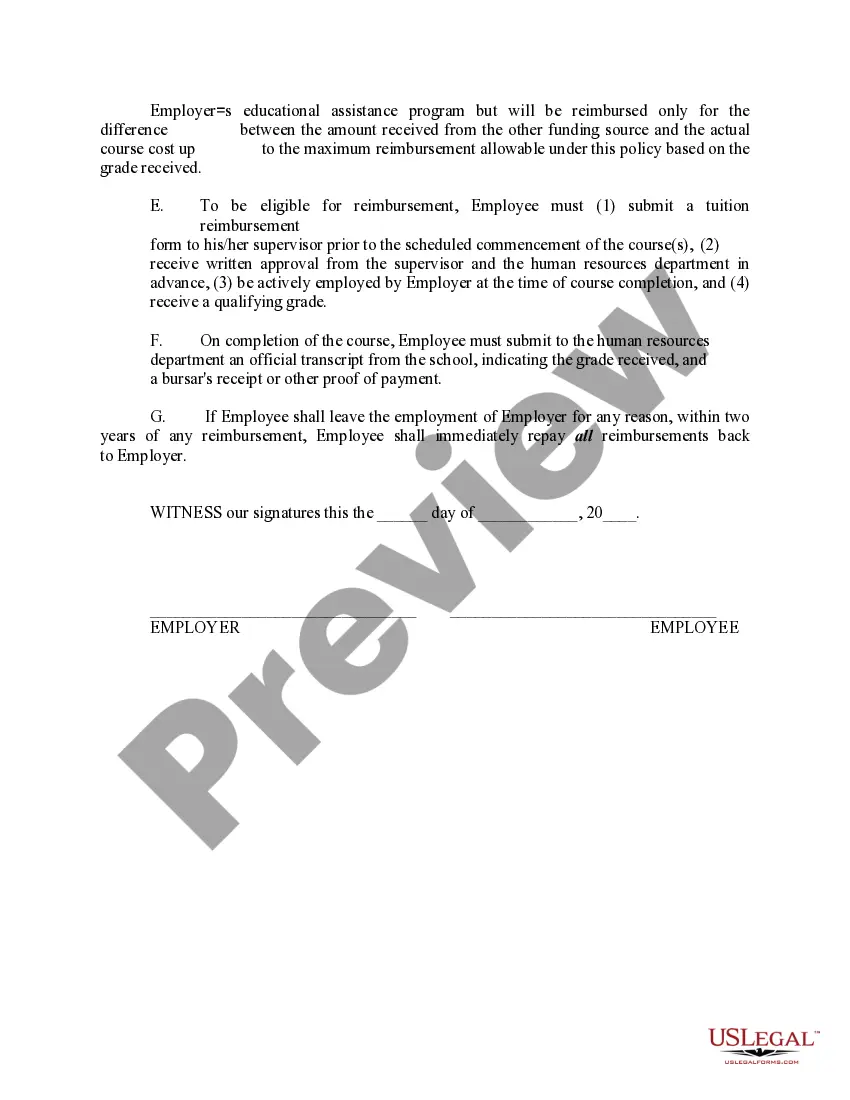
Get your form ready online
Our built-in tools help you complete, sign, share, and store your documents in one place.
Make edits, fill in missing information, and update formatting in US Legal Forms—just like you would in MS Word.
Download a copy, print it, send it by email, or mail it via USPS—whatever works best for your next step.
Sign and collect signatures with our SignNow integration. Send to multiple recipients, set reminders, and more. Go Premium to unlock E-Sign.
If this form requires notarization, complete it online through a secure video call—no need to meet a notary in person or wait for an appointment.
We protect your documents and personal data by following strict security and privacy standards.

Make edits, fill in missing information, and update formatting in US Legal Forms—just like you would in MS Word.

Download a copy, print it, send it by email, or mail it via USPS—whatever works best for your next step.

Sign and collect signatures with our SignNow integration. Send to multiple recipients, set reminders, and more. Go Premium to unlock E-Sign.

If this form requires notarization, complete it online through a secure video call—no need to meet a notary in person or wait for an appointment.

We protect your documents and personal data by following strict security and privacy standards.
Looking for another form?








Form popularity
FAQ
Integrated education aims to educate some special needs children alongside regular students with some support, while inclusive education aims to educate all children who have been excluded from education by providing special infrastructure, curriculum, and trained staff to meet their diverse needs.
While both approaches aim to bring students with disabilities into the mainstream classroom, integration system expects students to adapt to the pre-existing structure, while inclusion ensures that the existing education system will adapt to each student.
In more traditional special education settings, many kids are “pulled out” for related services like speech therapy or for other specialized instruction. An inclusive class often brings speech therapists, reading specialists, and other service providers into the classroom.
The Hillsborough County Public Schools Prekindergarten ESE Program provides services for approximately 2,800 children, ages three to five, who have a developmental delay/disability which requires specialized instruction.
In an inclusive classroom, students and teachers in general education work with students and teachers in special education. Understood identifies these four benefits: Inclusion tailors education for all types of learners. Inclusion decreases the differences among students.
The fundamental difference is that the Special Education Model is based on taking the student to the support services in a series of possible settings segregated from other students, whereas the Inclusive Education Model is based on taking the support services to the student in one setting, the regular classroom.
The program provides up to $40,000.00 to assist income-eligible first-time homebuyers to achieve the dream of homeownership.
The Extended Learning Program (ELP) provides academic support for students after school. When is ELP? After school on Tuesdays and Thursdays from -6 pm.
