Educational Assistance Employees With Mental Health Issues In Bronx
Description

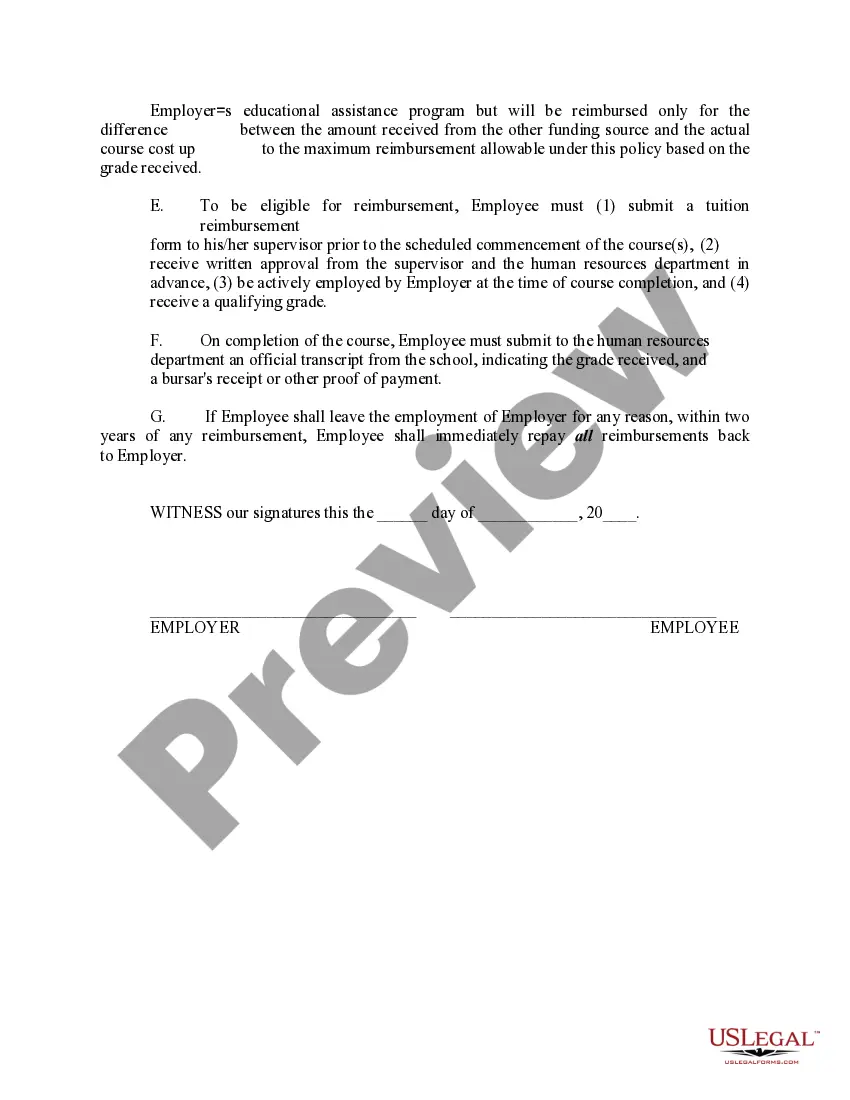
Get your form ready online
Our built-in tools help you complete, sign, share, and store your documents in one place.
Make edits, fill in missing information, and update formatting in US Legal Forms—just like you would in MS Word.
Download a copy, print it, send it by email, or mail it via USPS—whatever works best for your next step.
Sign and collect signatures with our SignNow integration. Send to multiple recipients, set reminders, and more. Go Premium to unlock E-Sign.
If this form requires notarization, complete it online through a secure video call—no need to meet a notary in person or wait for an appointment.
We protect your documents and personal data by following strict security and privacy standards.

Make edits, fill in missing information, and update formatting in US Legal Forms—just like you would in MS Word.

Download a copy, print it, send it by email, or mail it via USPS—whatever works best for your next step.

Sign and collect signatures with our SignNow integration. Send to multiple recipients, set reminders, and more. Go Premium to unlock E-Sign.

If this form requires notarization, complete it online through a secure video call—no need to meet a notary in person or wait for an appointment.

We protect your documents and personal data by following strict security and privacy standards.
Looking for another form?







Form popularity
FAQ
Here are some self-care tips: Get regular exercise. Just 30 minutes of walking every day can boost your mood and improve your health. Eat healthy, regular meals and stay hydrated. Make sleep a priority. Try a relaxing activity. Set goals and priorities. Practice gratitude. Focus on positivity. Stay connected.
There are many ways you can help a friend, relative or colleague who has a mental health problem: Talking about mental health. Set time aside with no distractions. Let them share as much or as little as they want to. Don't try to diagnose or second guess their feelings. Keep questions open ended. Talk about self-care.
The 5Cs are competence, confidence, character, caring, and connection. The anxiety dimensions are Social anxiety, Physical symptoms, Separation anxiety, and Harm avoidance.
Be positive – focus on what employees can do, rather than what they can't. Work together and involve people in finding solutions as much as possible. Remember people are often the expert when it comes to identifying the support or adjustment they need and how to manage their triggers for poor mental health.
If you find you are not able to work due to a mental health condition, short- or long-term, connect with a social service provider that can address your needs. Having a fulfilling job that you are able to perform can do wonders to improve mental health.
The two-pronged approach to take when your boss may be experiencing mental health issues is to 1) find strategies that reduce the stress their illness causes for you; 2) do what you can to encourage your boss to seek wellness. Finally, if none of these work, my advice to you is to take care of your own mental health.
Recognize their feelings and express your understanding back to them. Don't be afraid to relate on a personal level. Ask them what they can do to get better. Encourage them to seek support or talk to someone.
You can apply for Temporary Assistance: Visit your local department of social services or Job Center. In writing: Print and mail or fax the application form to your local department of social services.
Households in NYC may apply for an ESNA grant at any local Benefits Access Center (BAC). An eligibility interview will be conducted and the applicant will need to provide documentation to verify the household's eligibility.
