Sample Invoice For Speaking Engagement In San Antonio
Description

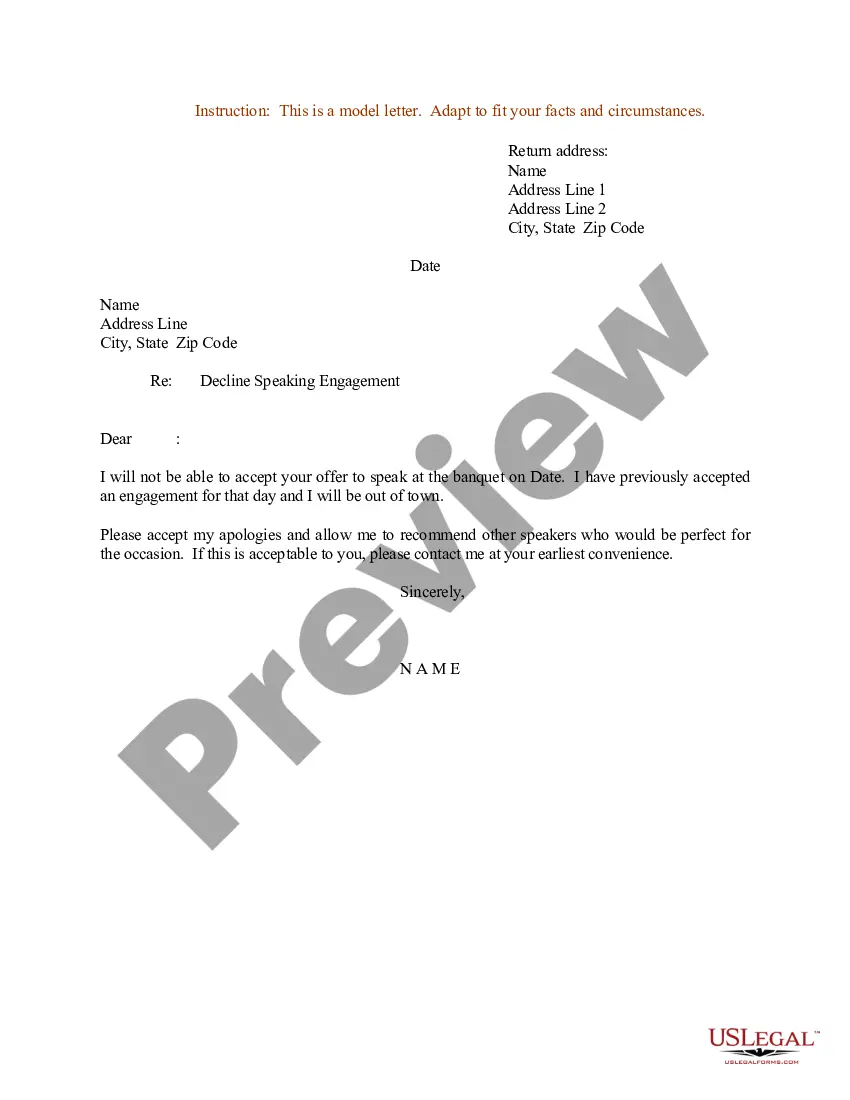


Get your form ready online
Our built-in tools help you complete, sign, share, and store your documents in one place.
Make edits, fill in missing information, and update formatting in US Legal Forms—just like you would in MS Word.
Download a copy, print it, send it by email, or mail it via USPS—whatever works best for your next step.
Sign and collect signatures with our SignNow integration. Send to multiple recipients, set reminders, and more. Go Premium to unlock E-Sign.
If this form requires notarization, complete it online through a secure video call—no need to meet a notary in person or wait for an appointment.
We protect your documents and personal data by following strict security and privacy standards.

Make edits, fill in missing information, and update formatting in US Legal Forms—just like you would in MS Word.

Download a copy, print it, send it by email, or mail it via USPS—whatever works best for your next step.

Sign and collect signatures with our SignNow integration. Send to multiple recipients, set reminders, and more. Go Premium to unlock E-Sign.

If this form requires notarization, complete it online through a secure video call—no need to meet a notary in person or wait for an appointment.

We protect your documents and personal data by following strict security and privacy standards.
Looking for another form?







Form popularity
FAQ
A musician invoice needs to include: your name, address and other contact details. the name and address of the person or business you're invoicing. a unique invoice number. details of the services provided. the total due for those services. details of the payment methods which you accept.
Start with the basics: your name, address, and contact details, followed by the client's information. Then, describe the services rendered, including dates, venue, and other relevant details. Specify the total amount due, including taxes if applicable, and the due date for payment.
A proforma invoice is a preliminary bill or estimated invoice which is used to request payment from the committed buyer for goods or services before they are supplied. A proforma invoice includes a description of the goods, the total payable amount and other details about the transaction.
To make an invoice, you'll need to create a professional document that outlines the services you complete for your clients, provides contact details for both your business and your client's business, and includes the amount owed for your work and the invoice due date.
Invoices should contain information about: you the artist. your billing address. your client or customer. their taxable address. your tax reference code (UTR - unique tax reference code if in the UK) the tax date for the product or service rendered. description of the artwork provided or artistic service rendered.
Set up formatting. The first step in making any invoice is to set up how it will look. Add your business information. Enter your client's information. Add an invoice number and date. Specify a payment due date. List products and services provided (line items) ... Calculate the total amount due. Outline your terms and conditions.
You can type up any kind of piece of paper and call it an invoice. Making some simple sort of letterhead for yourself that has your address, ph #, web info etc and some indication of what you do is a good idea. At the top put the contact name, company name and full address of who the invoice is being sent to.
To write a musician invoice, list the services provided with enough detail for the client to understand the charges. Include line items for each service, with quantities, rates, and subtotals, then calculate the total. Add your payment terms, such as due date, late fees, and accepted payment methods.
When filling out an artist invoice, include your business name and contact information, the client's details, a description of the artwork or service provided, and the associated costs. Make sure to specify payment terms, due dates, and any additional charges such as taxes or shipping, if applicable.

