Letter Speaking Engagement Without Disclosures In North Carolina
Description
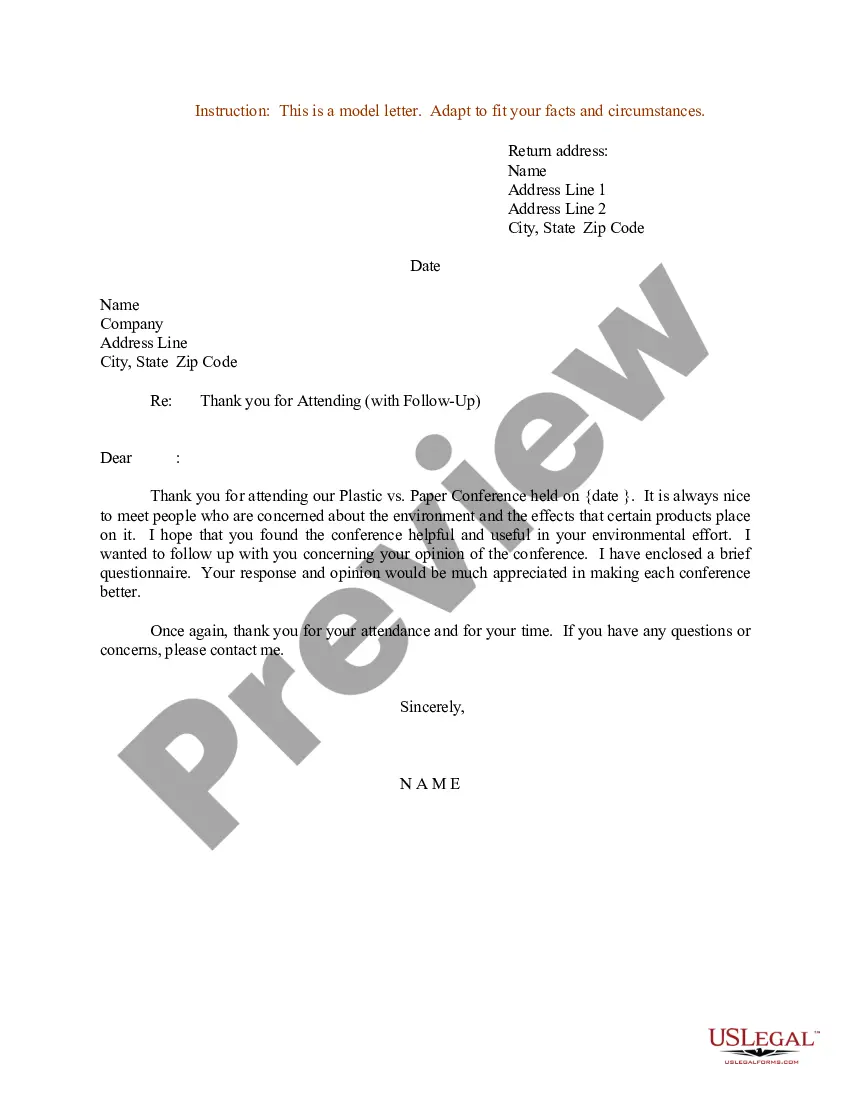
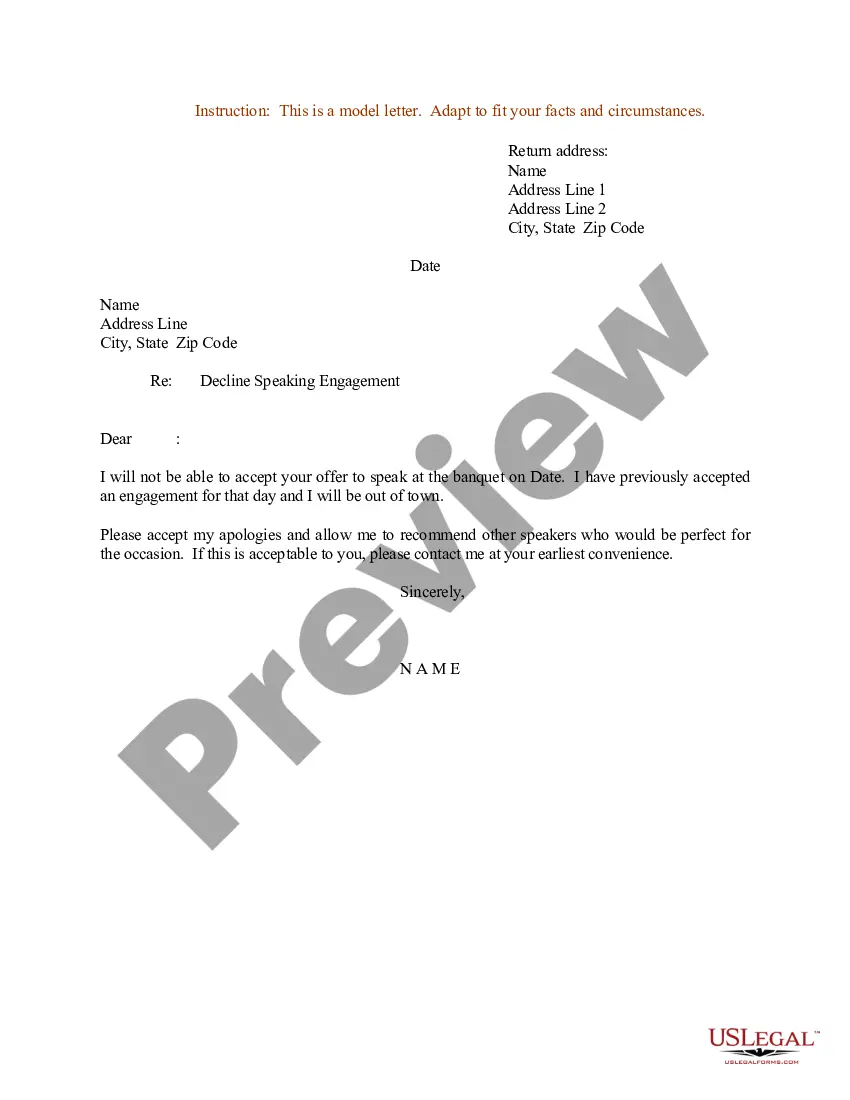
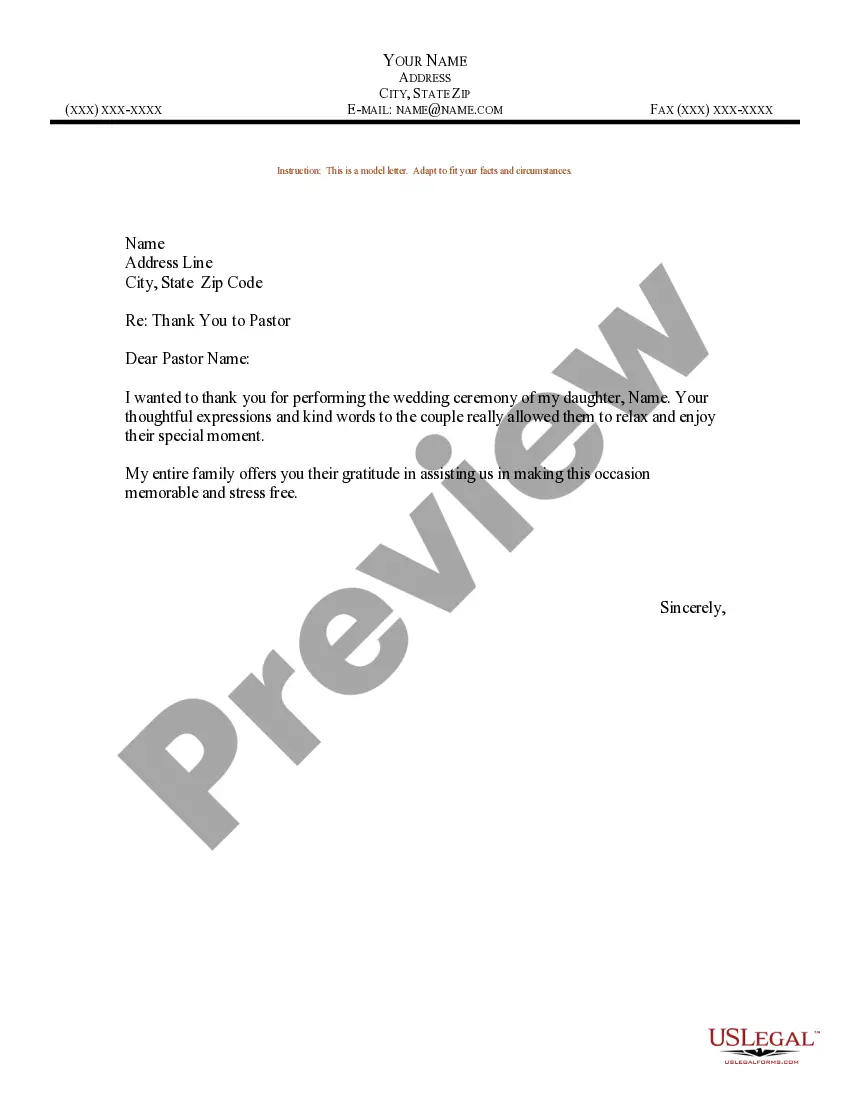
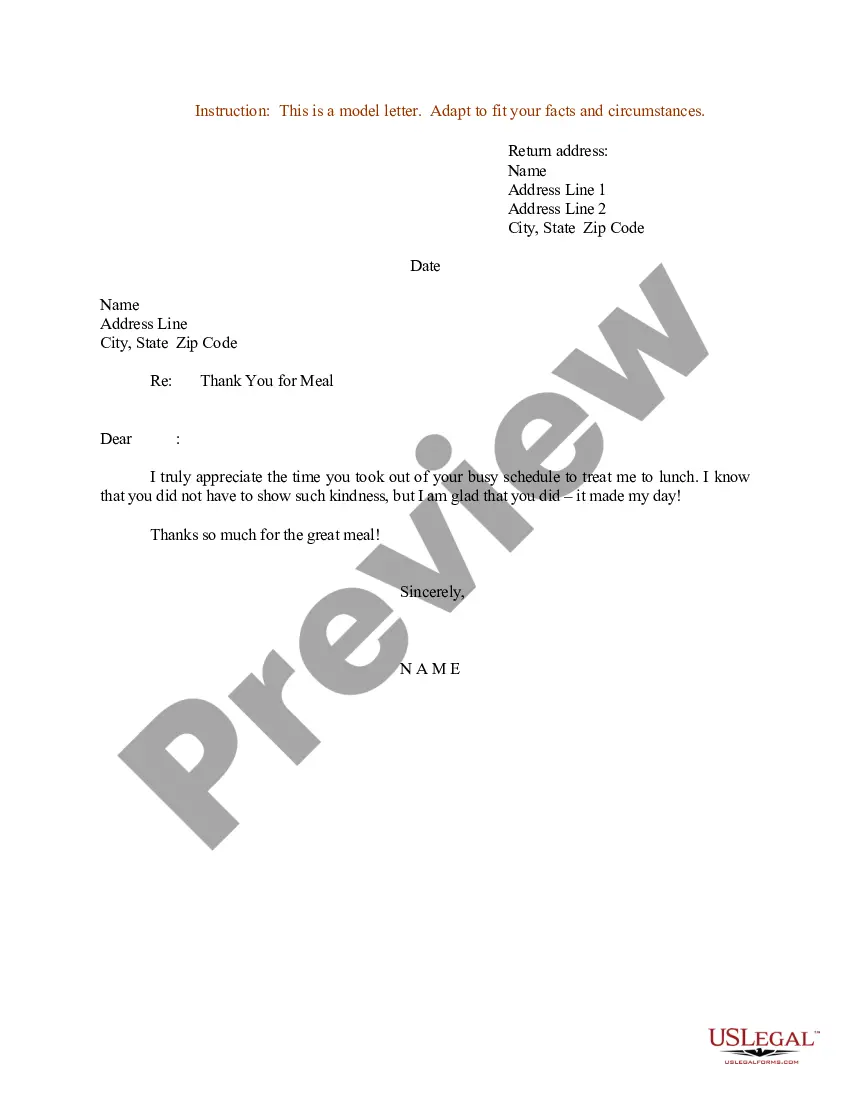
Get your form ready online
Our built-in tools help you complete, sign, share, and store your documents in one place.
Make edits, fill in missing information, and update formatting in US Legal Forms—just like you would in MS Word.
Download a copy, print it, send it by email, or mail it via USPS—whatever works best for your next step.
Sign and collect signatures with our SignNow integration. Send to multiple recipients, set reminders, and more. Go Premium to unlock E-Sign.
If this form requires notarization, complete it online through a secure video call—no need to meet a notary in person or wait for an appointment.
We protect your documents and personal data by following strict security and privacy standards.

Make edits, fill in missing information, and update formatting in US Legal Forms—just like you would in MS Word.

Download a copy, print it, send it by email, or mail it via USPS—whatever works best for your next step.

Sign and collect signatures with our SignNow integration. Send to multiple recipients, set reminders, and more. Go Premium to unlock E-Sign.

If this form requires notarization, complete it online through a secure video call—no need to meet a notary in person or wait for an appointment.

We protect your documents and personal data by following strict security and privacy standards.
Looking for another form?
Form popularity
FAQ
(a) During the representation of a client, a lawyer shall not communicate about the subject of the representation with a person the lawyer knows to be represented by another lawyer in the matter, unless the lawyer has the consent of the other lawyer or is authorized to do so by law or a court order.
Which of the following best describes the attorney-client privilege? An attorney cannot be compelled to, nor volunteer to, reveal confidential communications made by the client to the attorney.
(a) A lawyer shall not reveal information acquired during the professional relationship with a client unless the client gives informed consent, the disclosure is impliedly authorized in order to carry out the representation or the disclosure is permitted by paragraph (b).
Common Interest Doctrine in North Carolina. The doctrine of common interest allows parties with a shared legal interest to preserve confidentiality while collaborating in pursuit of their joint interest. The doctrine is most frequently utilized in lawsuits with multiple defendants.
The work product doctrine prohibits an adverse party from compelling "the discovery of documents and other tangible things that are 'prepared in anticipation of litigation' unless the party has a substantial need for those materials and cannot 'without undue hardship . . .
The lawyer may reveal confidential client information only when the client gives informed consent, to comply with a court order, or when another exception under the Rules of Professional Conduct applies. N.C. Rules of Prof'l Conduct RR. 1.6(a), 1.6(b).
Substitution of Criminal Defense Counsel Opinion rules that another member of a lawyer's firm may substitute for the lawyer in defending a criminal case if there is no prejudice to the client and the client and the court consent.
In dealing on behalf of a client with a person who is not represented by counsel, a lawyer shall not state or imply that the lawyer is disinterested.
Rule 4.2 applies to lawyers “in representing a client.” This means that unless you currently represent someone whose interests are adverse to the prospective client, Rule 4.2 does not prohibit a disinterested lawyer from providing a second opinion to someone who is currently represented by counsel.
Rule 4.2, commonly known as the “anti-contact” rule, generally prohibits a lawyer who is representing a client in a matter from communicating about the subject matter of the representation with a person the lawyer knows is represented in the same matter unless the represented person's lawyer consents.

